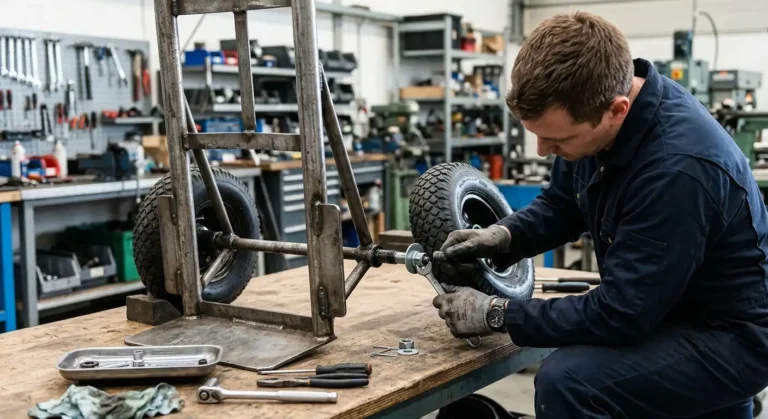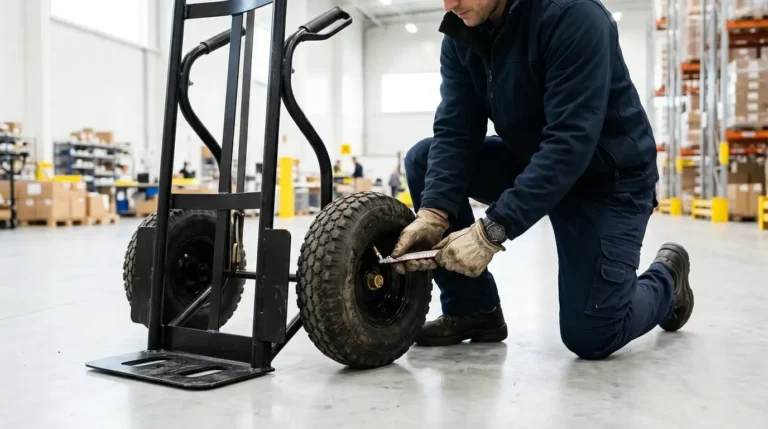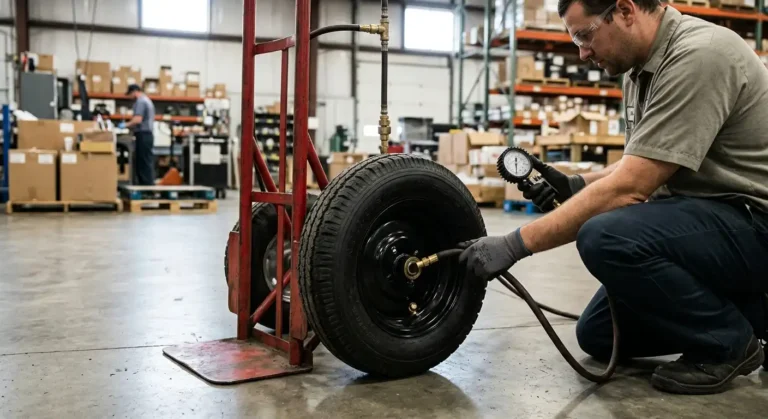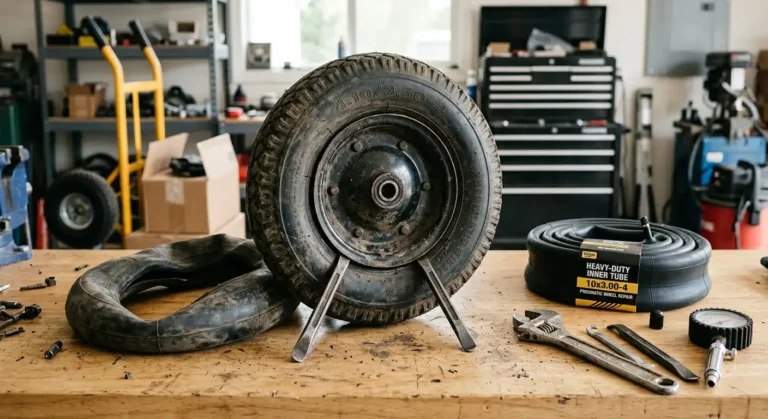

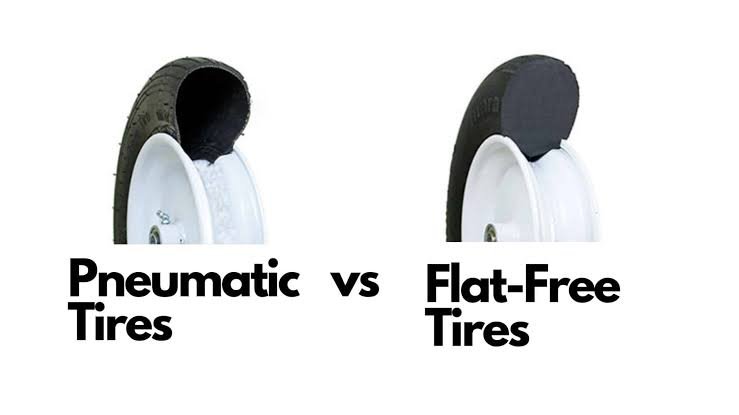
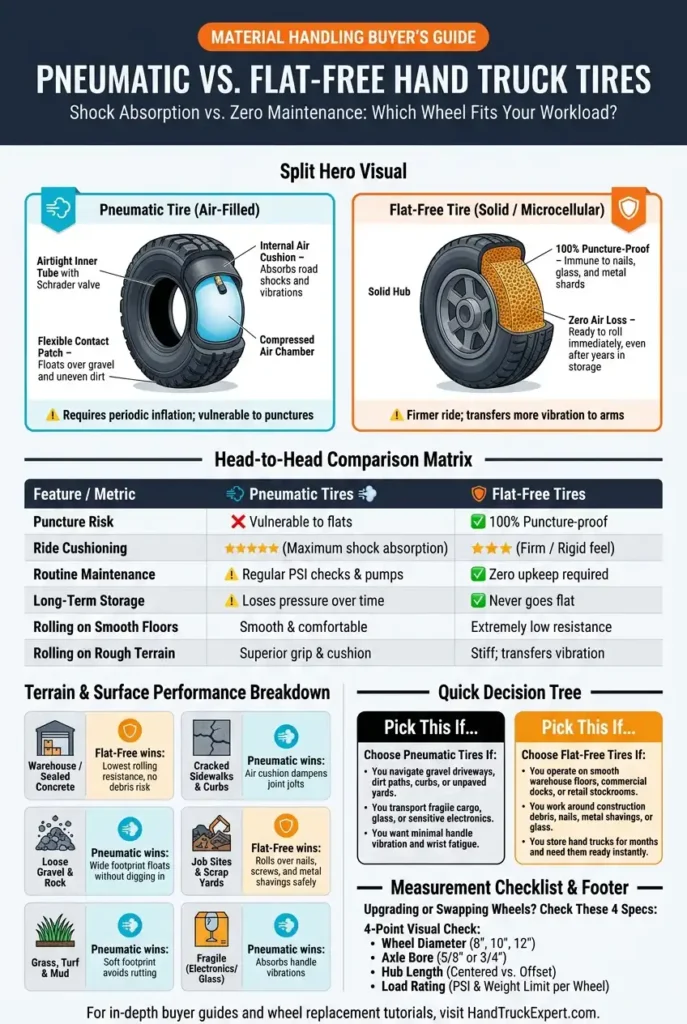
Pneumatic and flat free tires are the two most common wheel options available for hand trucks. The main difference comes down to how they handle air. Pneumatic tires use compressed air inside an inner tube or tubeless tire body, providing natural bounce and shock absorption.
Flat free tires use solid or microcellular materials that never need air pressure, eliminating the threat of a flat tire entirely.
Choosing the right option depends on your work surfaces, your load weights, your comfort preferences, and how much time you want to spend on maintenance.
Pneumatic Hand Truck Tires Explained
Pneumatic hand truck tires rely on compressed air to hold their shape and support weight. Their construction is similar to a small car or bicycle tire, consisting of a rubber tread shell and an airtight inner core.
The air chamber acts like an internal suspension system. When a pneumatic tire rolls over a bump, rock, or door threshold, the compressed air gives slightly, absorbing the impact before it transfers into the frame of the hand truck.
This cushioning provides a soft, forgiving ride that protects fragile cargo and reduces strain on the operator. It makes pneumatic hand truck tires an excellent choice for outdoor jobs, rough ground, and unpaved terrain where shock absorption matters.
The primary drawback is air loss. Pneumatic tires can puncture from nails, sharp metal, or glass. They also naturally lose air pressure over time and require routine inflation.
Flat Free Hand Truck Tires Explained
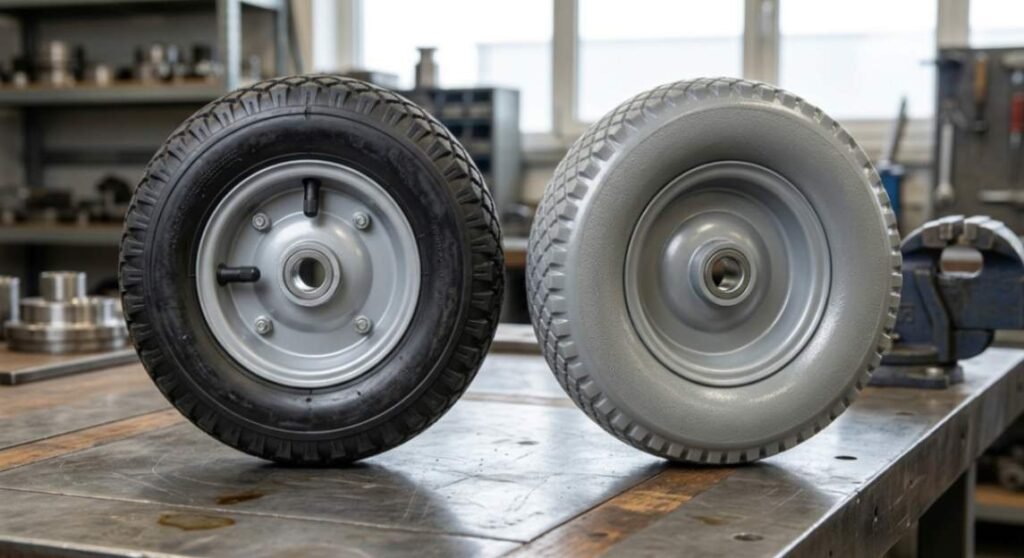
Flat free hand truck tires do not rely on air pressure to hold their shape. Instead, they use solid polyurethane, dense microcellular foam, or specialized rubber compounds.
Because these tires have no internal air chamber, they cannot be punctured, pinched, or deflated. They resist sharp debris, nails, metal shavings, and harsh chemicals that would easily destroy a standard air filled tire.
Flat free designs vary across different manufacturers. Some use dense solid rubber, while others use lightweight polyurethane foam filled with millions of microscopic air pockets. Foam filled designs mimic some of the bounce of air tires while remaining completely solid.
Regardless of the internal design, flat free tires deliver a firmer ride than pneumatic tires. Their main advantage is reliability and minimal maintenance, making them ready to roll at a moment’s notice.
Pneumatic vs Flat Free Tires: Quick Comparison
| Feature | Pneumatic Tires | Flat Free Tires |
| Air Requirement | Yes | No |
| Flat Risk | Yes | None |
| Ride Comfort | Soft and cushioned | Firm |
| Routine Maintenance | Regular air checks | None |
| Rough Terrain Performance | Excellent | Moderate |
| Smooth Surface Performance | Good | Excellent |
| Outdoor Use | Ideal for uneven ground | Ideal where puncture risks exist |
| Indoor Use | Good | Excellent |
| Puncture Resistance | Low | High |
| Operator Convenience | Moderate | High |
| Heavy Load Suitability | High when properly rated | High when properly rated |
The biggest distinction between the two types comes down to shock absorption versus maintenance. Pneumatic tires provide superior cushioning and a smoother ride over rough ground. Flat free tires trade a small amount of that softness for complete freedom from air pumps, pressure checks, and sudden flat tires.
Ride Comfort and Handling
The difference in ride comfort becomes obvious the moment you move a heavy load over an uneven surface.
Pneumatic tires absorb vibrations before they reach your hands and wrists. When you hit a cracked sidewalk or a raised threshold, the tire deflects, rolling smoothly over the obstacle without bouncing the frame. If you frequently move fragile items like electronics, glass, or stacked boxes, the softer ride of pneumatic tires keeps the cargo stable and reduces shifting.
Flat free tires deliver a firmer, stiffer feel. On a smooth concrete floor, you will barely notice a difference. On rough surfaces, broken asphalt, or gravel, a flat free tire transfers more vibration into the hand truck handles.
While modern microcellular foam tires absorb some vibration, they still feel noticeably stiffer than air filled tires under heavy loads.
Punctures and Maintenance
Maintenance demands represent one of the clearest dividing lines between these two hand truck wheel types.
Pneumatic hand truck tires require regular upkeep. You must check air pressure periodically to ensure the tires roll efficiently and maintain their rated load capacity. If a pneumatic tire sits in a cold garage or storage shed for months, it will likely lose pressure and require an air compressor or hand pump before you can use it. Sharp objects on a job site can cause sudden flats that bring your work to a complete stop.
Flat free hand truck tires remove air maintenance entirely. You can store the hand truck for years in freezing or hot conditions without checking pressure. They never develop slow leaks, and you can roll directly over nails, staples, and metal shavings without concern.
While flat free tires can eventually wear down, crack, or suffer hub bearing damage over years of heavy use, they will never leave you stranded with a flat tire in the middle of a job.
Performance on Different Surfaces
Different working environments highlight the strengths of each tire type.
Warehouse Floors
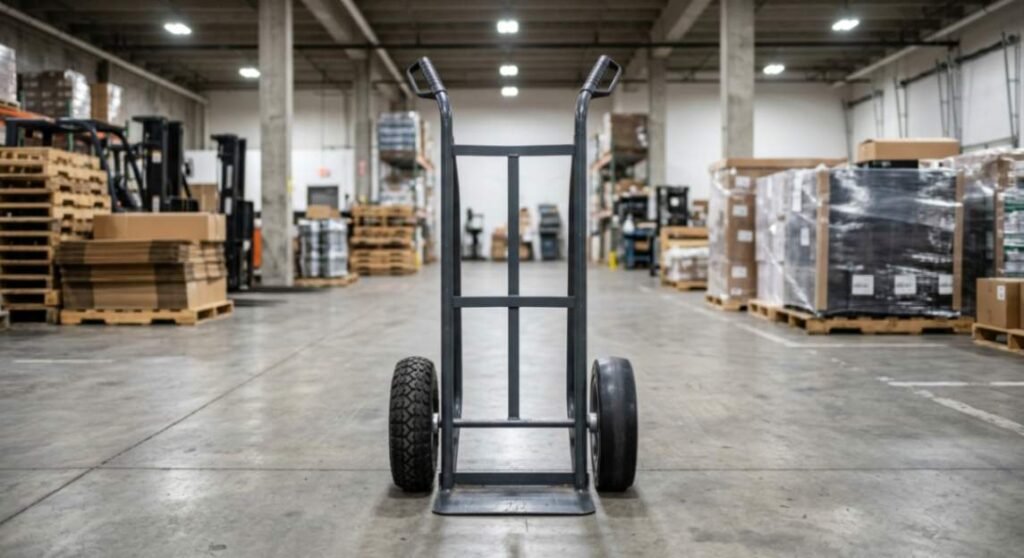
Smooth, sealed concrete warehouse floors are the ideal environment for flat free tires. The firm material offers low rolling resistance, making it easy to push and steer heavy loads. Pneumatic tires also work well indoors, but the puncture resistance and zero maintenance of flat free tires make them the preferred choice for indoor logistics.
Concrete and Sidewalks
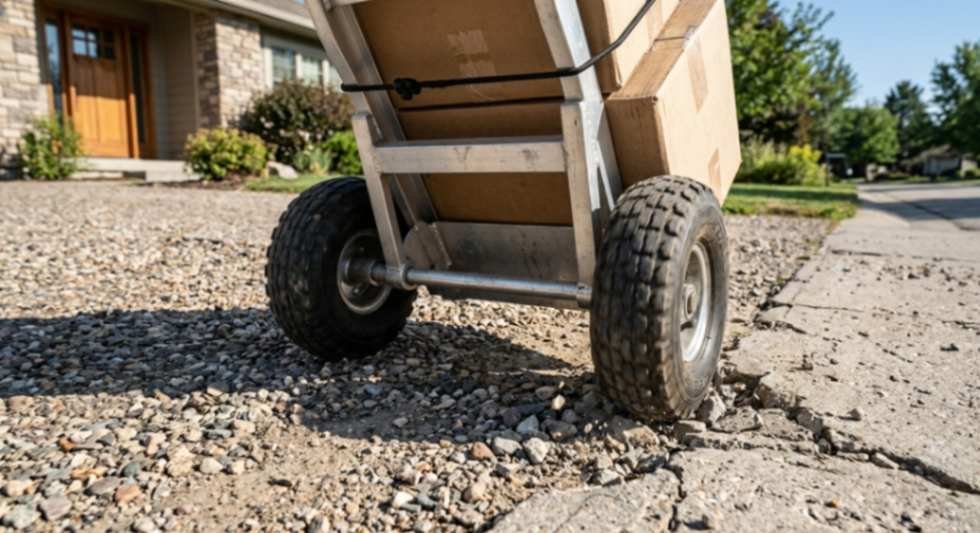
On standard outdoor concrete sidewalks, both options perform well. If the concrete has deep expansion joints or cracks, pneumatic tires roll over those gaps with less jarring feedback. If the area contains construction debris, flat free tires provide peace of mind.
Asphalt
Fresh, smooth asphalt works great with either tire type. Older, weathered asphalt with loose stones and small potholes is much easier to navigate with pneumatic tires, which conform to the rough surface rather than bouncing over it.
Gravel
Gravel poses a challenge for any hand truck. Pneumatic tires perform significantly better in gravel because their flexible contact patch floats over loose stones instead of digging in. A wider pneumatic tire helps distribute weight across loose rocks, preventing the wheels from sinking.
Grass and Dirt
Firm turf and hard packed dirt can handle either tire. However, soft grass, mud, or loose soil favor pneumatic hand truck tires. Their softer footprint provides better traction and avoids cutting deep ruts into the ground.
Uneven Outdoor Surfaces
On construction sites, unpaved yards, and broken terrain, pneumatic hand truck tires hold a clear advantage. They roll over rocks, roots, and curbs with greater stability and less effort from the operator.
Weight Capacity and Heavy Loads
A common misconception is that solid or flat free tires automatically hold more weight than pneumatic tires. In reality, tire construction material alone does not determine how much weight a hand truck can carry.
Weight capacity depends on several combined components:
- The individual tire ply and load rating
- The diameter and width of the wheel
- The strength of the wheel hub and bearings
- The axle diameter and material
- The design and material of the hand truck frame
Both pneumatic and flat free tires are available in light duty, medium duty, and heavy duty ratings. To safely transport heavy cargo, always check the manufacturer load rating stamped on the tire sidewall as well as the overall rating outlined in your Hand Truck Weight Capacity Guide. Never exceed the lowest rated component on your hand truck, whether that is the tire, the axle, or the frame.
Pneumatic Tires: Pros and Cons
Pros:
- Superior cushioning and shock absorption
- Smoother ride over bumps and cracks
- Better traction on rough, unpaved terrain
- Less vibration transferred to cargo and operator
- Easier to pull across loose gravel and grass
Cons:
- Vulnerable to punctures and leaks
- Requires regular air pressure checks
- Can go flat during storage
- May require tube patches or tire replacement
Flat Free Tires: Pros and Cons
Pros:
- Never go flat or lose air pressure
- Completely puncture proof against nails and debris
- Zero routine tire maintenance
- Always ready for immediate use
- Low rolling resistance on smooth surfaces
Cons:
- Firmer ride with less shock absorption
- Transfers more vibration on rough terrain
- Can feel heavy depending on the core material
- Ride quality varies widely by manufacturer design
Which Is Better for Indoor Use?

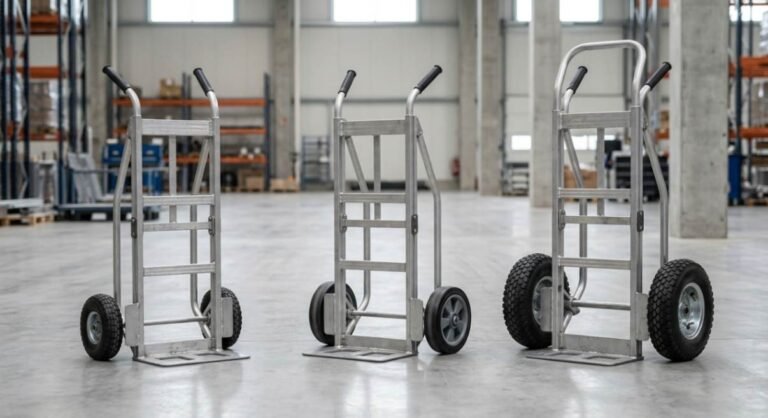
For indoor environments like warehouses, retail stockrooms, commercial garages, and fulfillment centers, flat free tires are generally the better choice.
Indoor floors are typically flat and smooth, meaning you do not need the extra shock absorption provided by air tires. In these settings, the convenience of a tire that never loses air pressure outweighs any minor difference in ride softness. You can grab the hand truck after months of sitting in a corner and put it straight to work.
Pneumatic tires can still be used indoors without issue. They are particularly helpful if you regularly move fragile merchandise or need to roll across tall warehouse expansion joints and metal dock plates. However, for everyday indoor utility, flat free wheels provide the best balance of speed, low rolling resistance, and zero maintenance.
If you are outfitting equipment for tight indoor aisles, pairing the right tires with an agile frame from our 2 Wheel vs 4 Wheel Hand Trucks breakdown will give you the best maneuverability.
Which Is Better for Outdoor Use?
For outdoor use, pneumatic tires are usually the better choice for overall performance and comfort.
Outdoor jobs often involve uneven sidewalks, asphalt, dirt paths, gravel driveways, and curbs. The air cushioning in pneumatic tires makes pushing and pulling heavy loads across these surfaces much easier on your arms and back. Cargo stays settled, and the hand truck does not bounce violently over obstacles.
However, job site conditions matter. If your outdoor work takes place on demolition sites, roofing projects, or scrap yards littered with nails, broken glass, and metal shavings, flat free hand truck tires are the safer practical choice. You sacrifice some ride comfort to ensure your tires never puncture in the middle of a delivery.
Which Is Better for Heavy Loads?
Neither tire type is inherently better for heavy loads. Both styles come in heavy duty configurations capable of carrying hundreds of pounds per wheel.
When moving heavy machinery, appliances, or bulk materials, the key is matching the tire load rating to the job. Look at the maximum weight rating printed directly on the tire sidewall. A hand truck with two tires rated at 300 pounds each provides a combined wheel capacity of 600 pounds, assuming the axle and frame can support that weight.
When moving heavy loads on steel frames, such as those detailed in our Aluminum vs Steel Hand Trucks comparison, ensure your tire hubs use high quality ball bearings or roller bearings. The bearing quality often has a bigger impact on rolling effort under heavy weight than whether the tire holds air.
Can You Replace Pneumatic Tires With Flat Free Tires?
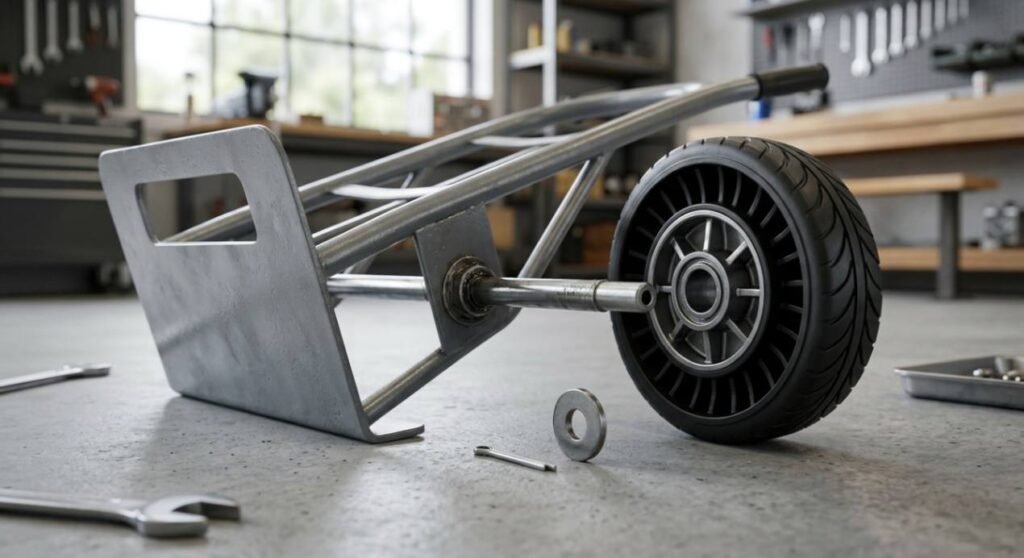
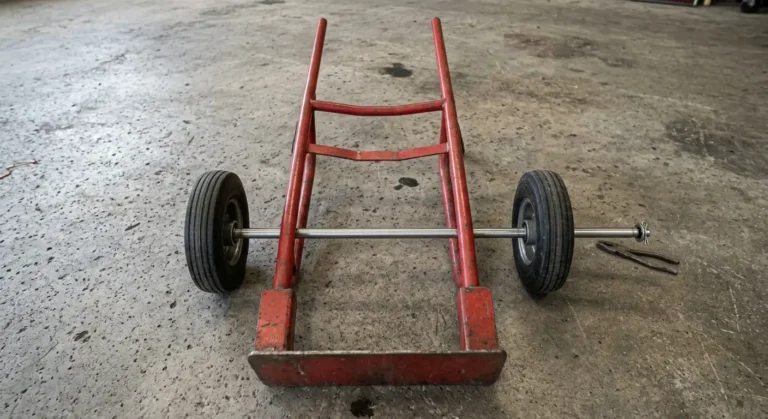
Yes, you can easily replace pneumatic hand truck tires with flat free tires. Many hand truck owners make this upgrade to eliminate flat tire problems permanently.
Before buying replacement wheels, verify these essential measurements:
- Wheel Diameter: Measure the total height of your current tire from top to bottom. Common hand truck sizes include 8 inch, 10 inch, and 12 inch wheels. Check our Hand Truck Wheel Size Guide for help measuring correctly.
- Axle Diameter: Measure the thickness of your hand truck axle shaft. The most common axle sizes are 5/8 inch and 3/4 inch. The inner bearing diameter of the new wheel must match your axle.
- Hub Length: Measure the width through the center hole of the wheel hub. The replacement wheel hub must match your axle space so the retaining pin or lock nut fits securely.
- Tire Width and Clearance: Ensure the replacement tire width fits within your hand truck frame without rubbing against the stair climbers or side rails.
- Load Rating: Make sure the replacement tires meet or exceed the weight rating of your original wheels.
Most manufacturers design replacement flat free wheels to direct fit standard hand truck frames, making the swap a simple project using basic hand tools.
Which Should You Choose?
Use these practical guidelines to make your decision:
Choose pneumatic tires if:
- You frequently use your hand truck on gravel, grass, dirt, or broken pavement.
- You regularly transport fragile goods, electronics, or stacked boxes that need cushioning.
- You want the smoothest ride with the least amount of handle vibration.
- You do not mind checking tire pressure and keeping an air pump nearby.
Choose flat free tires if:
- You work primarily in warehouses, garages, retail floors, or paved driveways.
- You work around construction debris, nails, metal shavings, or sharp objects.
- You store your hand truck for long periods and need it ready at any second.
- You want zero tire maintenance and no flat tire disruptions.
Verdict
Pneumatic hand truck tires provide superior shock absorption and smoother handling across uneven terrain, making them ideal for rough outdoor conditions where comfort matters. Flat free tires eliminate air pressure checks and puncture risks entirely, making them the best option for smooth surfaces, indoor facilities, and busy work environments where reliability and low maintenance take priority.
Frequently Asked Questions
Neither tire is universally better. Pneumatic tires provide superior shock absorption, making them better for rough terrain and fragile loads. Flat free tires eliminate flats and air maintenance, making them better for smooth floors, storage convenience, and areas with sharp debris.
Yes. Pneumatic tires can puncture from nails, thorns, or sharp debris. They also lose air pressure naturally over time through the valve stem or rubber pores, especially when stored in unheated garages or cold warehouses during winter months.
Yes, flat free tires work well outdoors on concrete, asphalt, and hard surfaces. They are especially useful around construction sites where sharp debris could puncture an air tire. However, they deliver a stiffer ride on rough ground compared to pneumatic tires.
Pneumatic tires are significantly better for rough terrain. The compressed air allows the tire to flex and absorb bumps, rocks, and cracks. This reduces bouncing, provides better traction on loose soil or gravel, and keeps the load stable.
Yes. You can swap pneumatic tires for flat free wheels as long as you match the tire diameter, axle size, hub length, and load rating. Many replacement wheels are designed specifically as direct bolt on upgrades for standard hand trucks.
Flat free tires require much less maintenance. They never need air pressure monitoring, pump refills, tube patching, or flat repairs. Once installed, they remain ready to use regardless of how long the hand truck sits in storage.