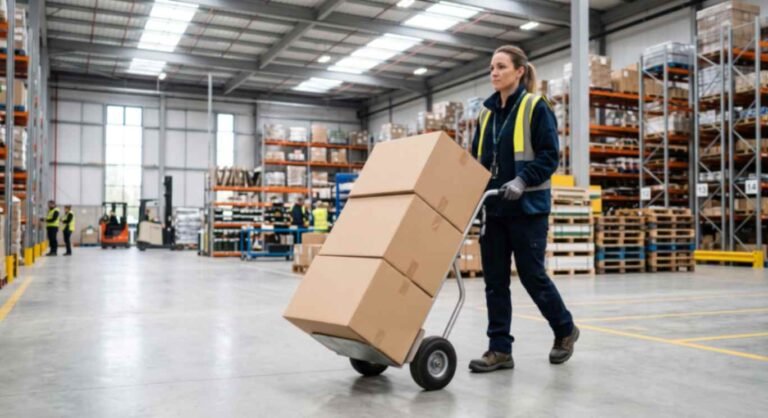

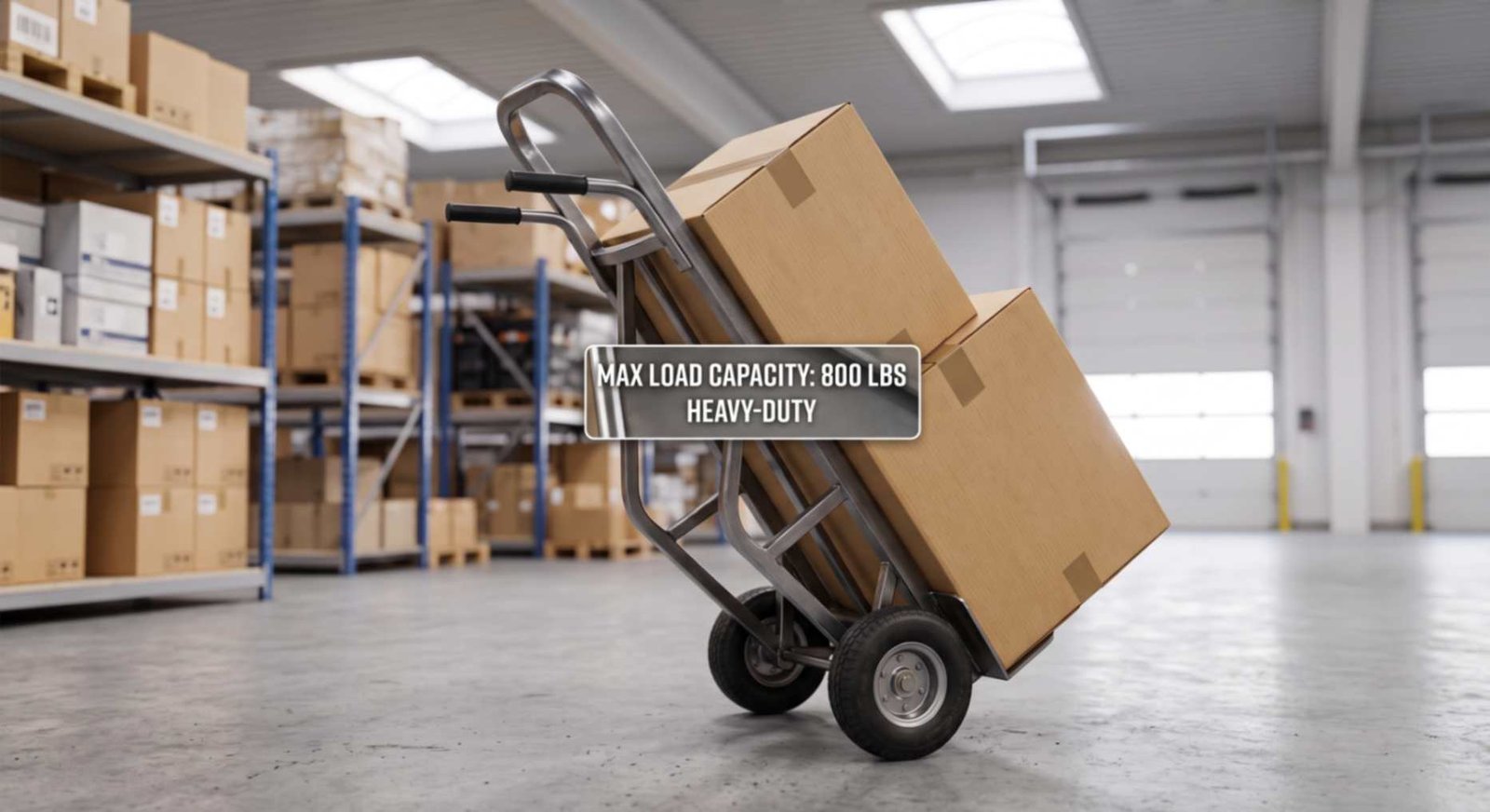
A typical hand truck can carry between 150 and 1,000 pounds, depending on its design, materials, and build quality. Lightweight personal models hold around 150 to 300 pounds, standard models handle 500 to 600 pounds, and industrial units carry 800 to 1,000 pounds or more.
Choosing the correct hand truck weight capacity keeps your moves efficient, prevents equipment breakdown, and protects you from injury.
What Is Hand Truck Weight Capacity?
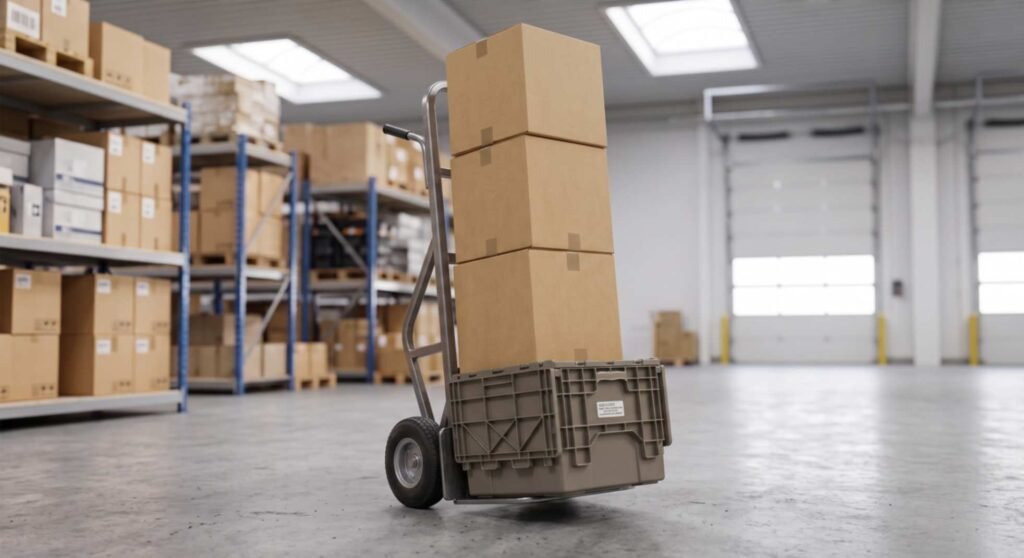
Hand truck weight capacity refers to the maximum load limit set by the manufacturer. It represents the highest amount of weight the frame, axle, wheels, and nose plate can safely support under normal operating conditions.
There is a difference between maximum rated capacity and a practical working load:
- Rated Capacity: The absolute limit tested under controlled, balanced conditions on flat ground.
- Working Load: The weight you can realistically balance, steer, push, or pull without losing control.
A model rated for 600 pounds might hold that weight statically, but moving a 600-pound load over rough ground requires significant physical effort and control. Capacity ratings differ across models due to variations in metal thickness, weld quality, axle strength, and wheel materials.
Common Hand Truck Weight Capacities
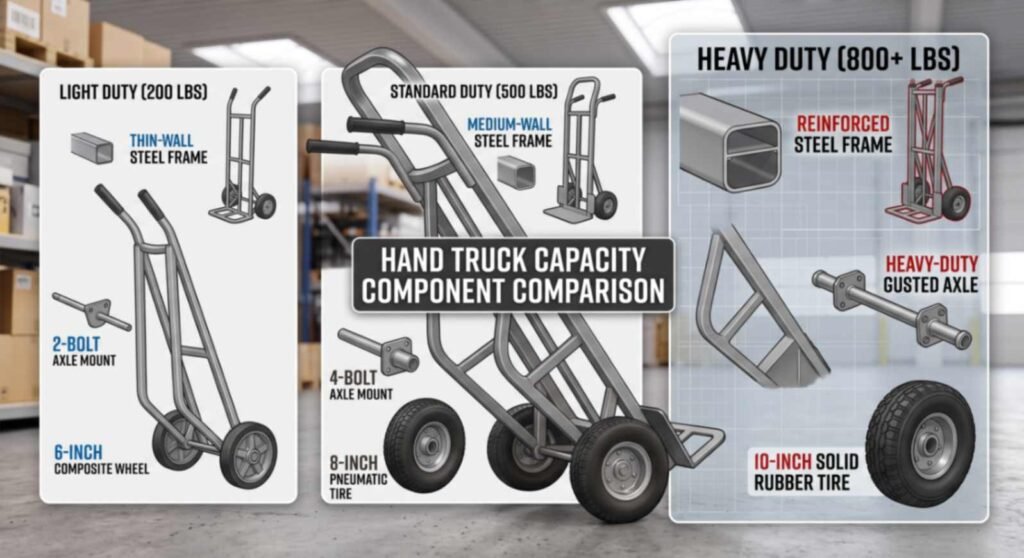
Hand truck load capacity varies across different categories. Below are the general ranges commonly found on the market.
| Hand Truck Type | Typical Capacity | Common Uses |
| Light Duty (Folding / Personal) | 100 to 300 lbs | Moving small boxes, luggage, light parcels |
| Standard Duty (Utility) | 300 to 600 lbs | General deliveries, office moves, medium boxes |
| Heavy Duty (Commercial) | 600 to 1,000 lbs | Major appliances, furniture, industrial equipment |
| Specialty / Industrial | 1,000+ lbs | Vending machines, heavy machinery, drums |
Note: These figures are general examples. The manufacturer’s stated capacity for a specific model always takes priority over broad categories.
How Much Weight Can a Hand Truck Actually Carry?
A hand truck can carry between 150 pounds and 1,000 pounds, depending on their build, frame, and configuration. Lightweight folding carts often top out around 150 to 300 pounds, standard models handle 500 to 600 pounds, and heavy-duty industrial units can reach 800 to 1,000 pounds or more.
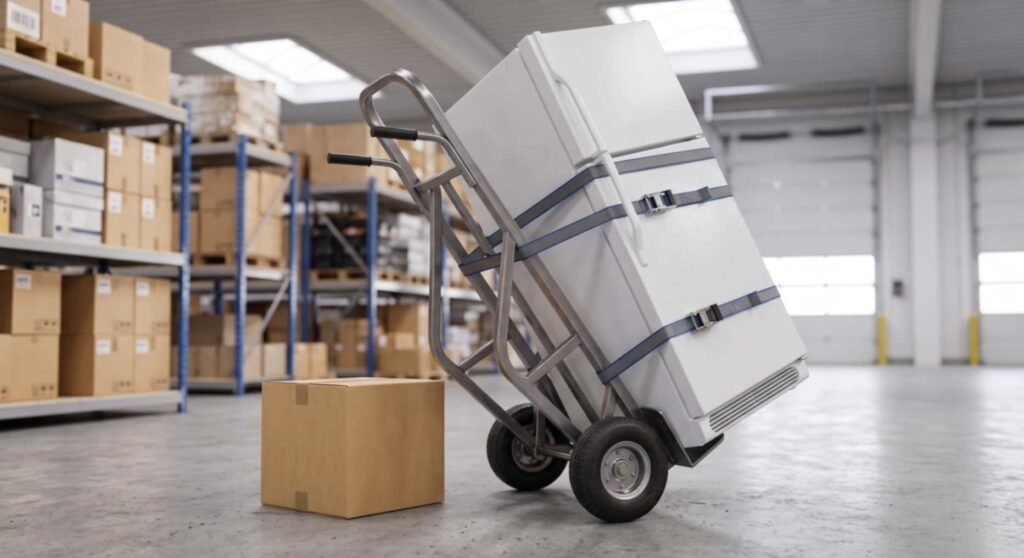
The actual weight you can transport safely depends on several working factors beyond the printed number: Check our detailed guide on how much weight can a hand truck hold and carry?
- Frame and Axle Strength: Thick steel frames carry more weight than thin folding frames. (For more details on materials, see our guide on aluminum vs steel hand trucks.)
- Load Size and Center of Gravity: A compact 400-pound engine block feels much more stable than a tall, top-heavy 400-pound cabinet.
- Ground Conditions: Gravel, grass, cracked pavement, and wet surfaces increase rolling resistance.
- Ramps and Inclines: Moving a load uphill or downhill requires extra braking control, reducing the practical weight you can manage.
- Stairs: Navigating steps concentrates the entire weight onto one wheel or edge at an angle, increasing stress on the equipment.
Even if a hand truck is rated for a specific maximum weight, uneven terrain or awkward load dimensions can make that limit impractical to handle alone.
How to Choose the Right Weight Capacity?
To pick the correct model, use this practical process:
- Identify your heaviest regular item. Make a realistic estimate of the heaviest object you expect to move regularly.
- Add a capacity buffer. If your heaviest regular load is around 400 pounds, choose a model rated for 500 or 600 pounds. Choosing a rating right at your maximum load leaves zero margin for error and wears out components faster.
- Account for physical strength and terrain. Pick a capacity that matches the physical demands of your typical moving route.
Hand Truck Capacity for Common Jobs
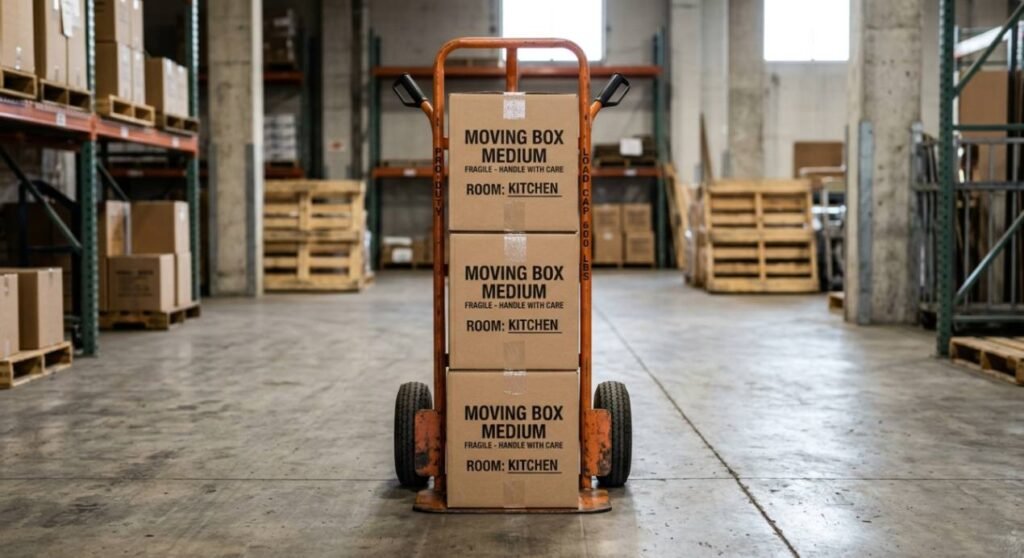
Different tasks present different handling challenges:
- Moving Boxes: Standard boxes are usually light, but stacked boxes shift easily. A 300- to 500-pound capacity is usually plenty.
- Appliances (Refrigerators, Washers): Appliances are bulky and heavy. Look for heavy-duty ratings (600 to 800+ pounds) with built-in strap attachments.
- Furniture: Couches and dressers are awkward rather than excessively heavy. Stability and nose plate depth matter as much as raw capacity.
- Warehouse Materials and Machinery: Moving solid metal parts, tooling, or crates demands commercial ratings of 800 to 1,000+ pounds.
- Water Jugs and Kegs: Dense, liquid-filled containers concentrate high weight into a small footprint, requiring sturdy nose plates.
Does Wheel Type Affect Weight Capacity?
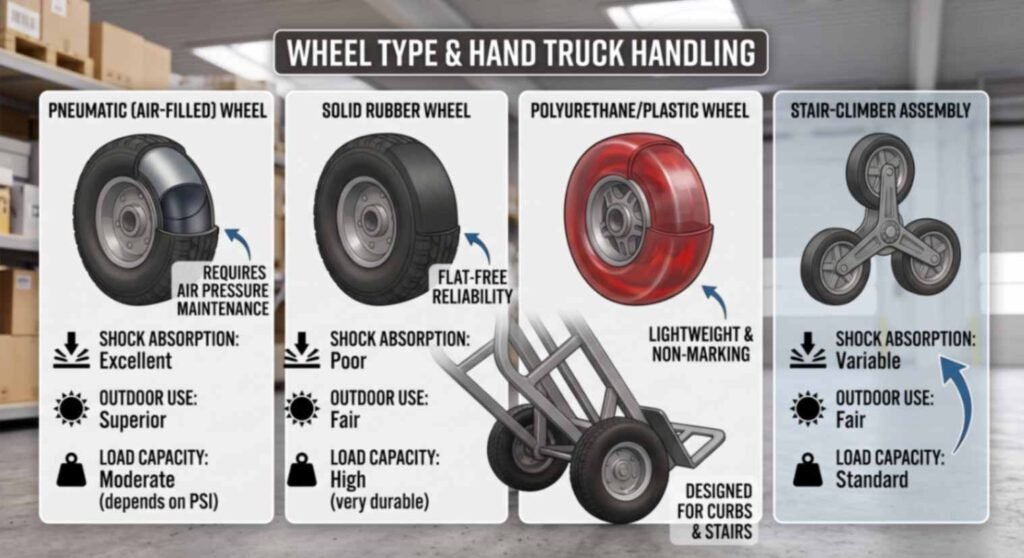
Wheel type influences how smoothly a hand truck rolls, but the overall weight capacity is determined by the whole unit:
- Pneumatic Tires (Air-Filled): Excellent for absorbing shock on rough outdoor ground. They must stay properly inflated to support heavy loads.
- Solid Rubber Wheels: Flat-free, durable, and reliable for smooth indoor floors and warehouse environments.
- Plastic / Polyurethane Wheels: Lightweight and common on light-duty or folding models; best suited for flat, hard surfaces.
- Stair-Climbing Wheel Assemblies: Multi-wheel rotating hubs that help step up curbs and stairs, though they do not automatically increase the frame’s load limit.
Always rely on the manufacturer’s overall capacity rating rather than assuming a specific tire type allows for heavier loads.
Two-Wheel vs. Four-Wheel Capacity
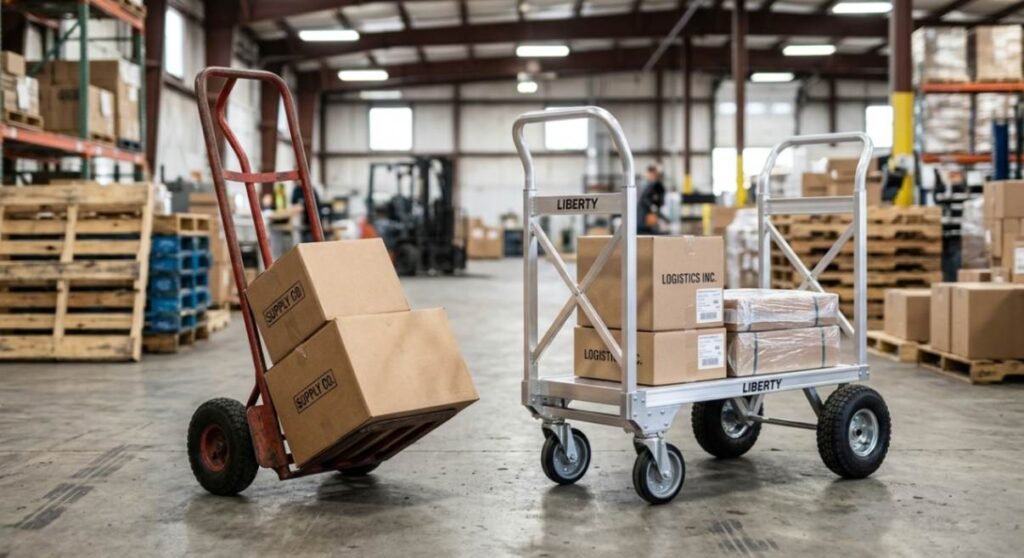
Two-wheel and four-wheel hand trucks distribute weight differently:
- Two-Wheel Mode: You balance the load over the axle by tilting the frame back. The operator supports a portion of the load’s weight.
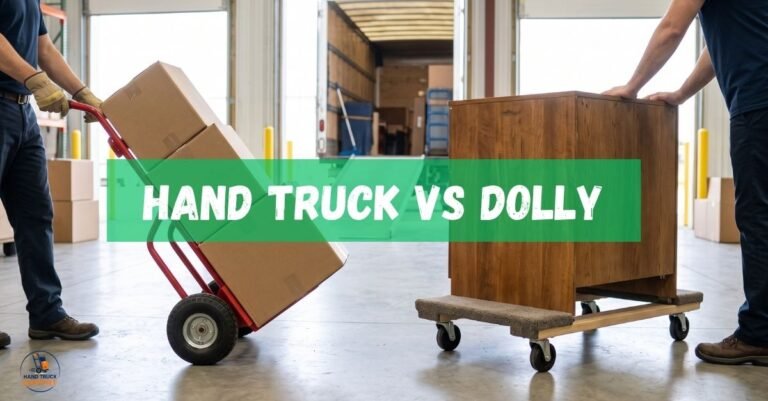
- Four-Wheel (Platform) Mode: Convertible models fold down into a platform cart where four wheels support 100% of the weight directly on the ground, functioning similarly to a traditional flat dolly. (If you aren’t sure which style suits your move, check out our guide on hand truck vs dolly.)
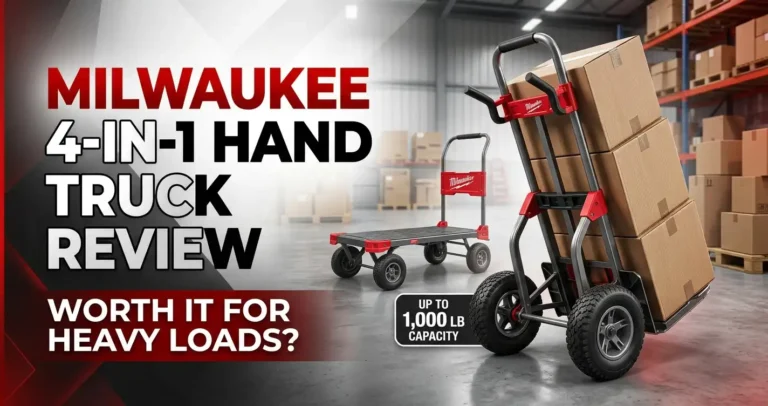
Convertible models often list two separate capacity ratings: one for two-wheel use (e.g., 500 pounds) and a higher rating for four-wheel platform use (e.g., 800 pounds). For a complete comparison, read our breakdown on 2 wheel vs 4 wheel hand trucks.
What Happens If You Overload a Hand Truck?
Exceeding the rated capacity can lead to:
- Frame Bending or Welds Cracking: High stress can permanently warp the vertical frame or shear the base plate.
- Axle and Wheel Failure: Bent axles cause tires to rub against the frame, locking up the wheels.
- Loss of Control and Tipping: An overloaded frame flexes, making the load unstable and difficult to balance.
- Operator Strain: Stopping, turning, and balancing an overloaded truck increases the risk of back or muscle strains.
How to Check a Hand Truck’s Weight Rating?
To find the certified weight limit for your equipment, check these sources:
- Specification Label: Look for a metal plate or printed sticker on the back of the frame, handle, or axle beam.
- User Manual: The technical specifications section lists maximum static and dynamic capacities.
- Manufacturer Model Number: Search the specific model number on the manufacturer’s official website.
Direct manufacturer data is always more reliable than general internet estimates.
Does Load Position Affect Hand Truck Capacity?
Proper load placement determines how much weight you can safely move:
- Keep heavy items low: Place the heaviest items directly on the nose plate to keep the center of gravity close to the axle.
- Center the load: Distribute weight evenly from side to side to stop the truck from pulling to one side.
- Stack close to the frame: Keep the mass resting against the vertical rails rather than leaning forward.
- Avoid excessive overhang: Loads sticking out too far forward act as a lever, pulling the handles upward and making the weight much harder to balance.
- Secure tall stacks: Use cargo straps to keep stacked boxes from sliding off during transit.
Frequently Asked Questions
Most consumer models hold between 150 and 600 pounds, while commercial and industrial hand trucks hold between 600 and 1,000 pounds or more. The exact limit depends on the specific model.
For standard home and office use, a capacity of 300 to 500 pounds covers most furniture, boxes, and small appliances. For heavy moving or warehouse work, look for 600 to 800 pounds.
Yes, standard-duty and heavy-duty utility hand trucks can handle 500 pounds. However, light-duty and compact folding hand trucks are usually rated well below this limit. Always check your model’s rating label.
Only heavy-duty commercial, industrial, or appliance hand trucks built with reinforced steel frames can carry 1,000 pounds. Standard consumer models cannot support this weight.
Exceeding the limit can bend the frame, bow the axle, pop or damage tires, and cause the load to tip, creating safety risks for the user.
Wheel size affects roll efficiency and clearance over rough ground, but it does not change the manufacturer’s stated weight limit for the entire hand truck assembly.