
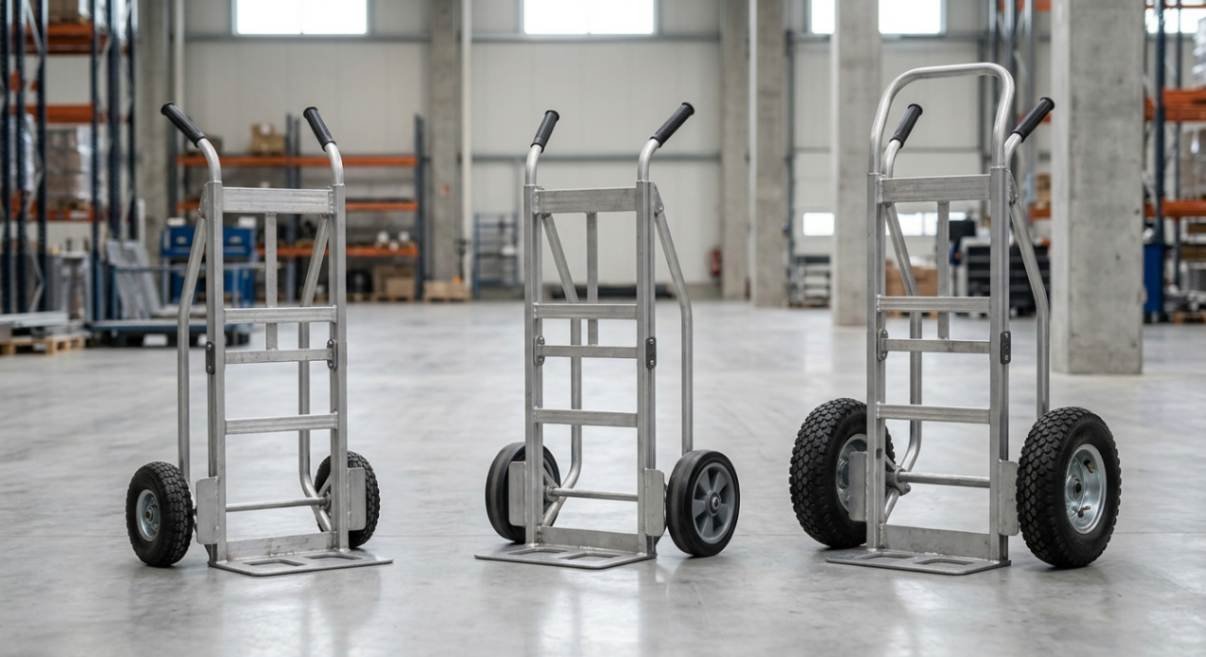
Hand truck wheel size directly affects how easily your hand truck rolls over obstacles, navigates tight corners, stays balanced, and handles heavy cargo.
As a general rule, larger wheels roll over rough terrain, cracks, and outdoor obstacles with less effort. Smaller wheels take up less room, reduce overall weight, and offer nimble handling in tight indoor corridors. However, wheel diameter is only one piece of the puzzle. Tire material, tread width, frame geometry, and total load weight all work together to determine real world performance.
What Does Hand Truck Wheel Size Mean?
Wheel size is measured by two primary dimensions: diameter and width.
- Wheel diameter is the total height of the wheel from top to bottom edge. Diameter determines ground clearance and how easily the wheel climbs over cracks, cords, and door thresholds.
- Wheel width is the thickness of the tire tread across the contact patch. A wider wheel distributes weight over a broader surface area, improving stability and preventing the hand truck from sinking into soft ground like dirt or grass.
Most standard hand trucks use wheel diameters ranging from 4 inches up to 12 inches or more, with 8 inch and 10 inch models being the most common.
Common Hand Truck Wheel Sizes
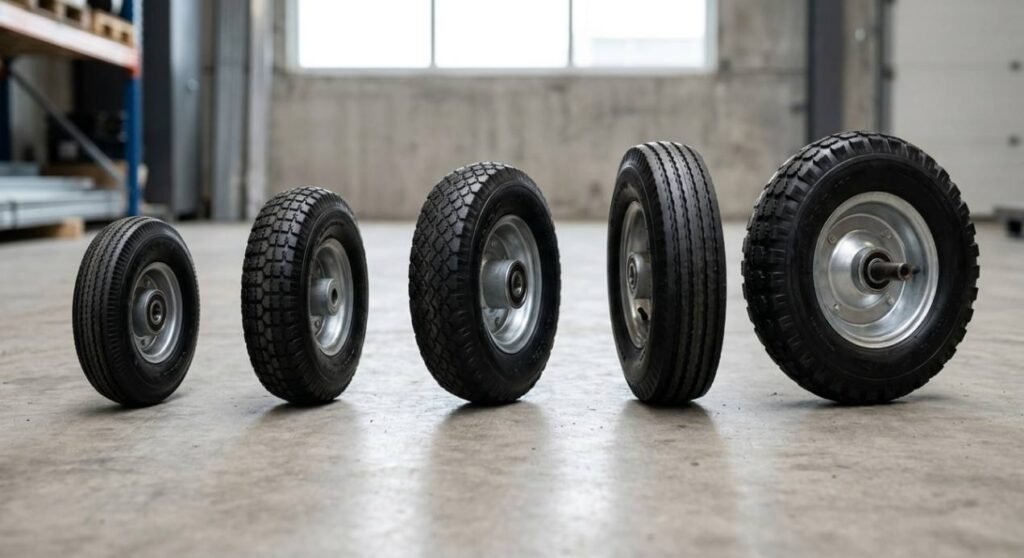
The right diameter depends entirely on your working environment and typical payload.
| Wheel Diameter | Typical Applications | Best Surfaces | Primary Advantage |
| 4 to 5 inches | Compact folding carts, office delivery, light parcels | Polished concrete, tile, hardwood, linoleum | Maximum maneuverability and compact storage |
| 6 inches | Stockroom replenishment, light industrial carts | Smooth warehouse floors, level commercial surfaces | Compact profile with improved load stability |
| 8 inches | General delivery, appliance moving, retail logistics | Smooth concrete, low pile carpet, flat asphalt | Balanced blend of indoor control and roll capability |
| 10 inches | Freight handling, construction, residential moving | Rough concrete, asphalt, hard packed gravel, grass | Excellent obstacle clearance and easy rolling |
| 12 inches and larger | Heavy duty outdoor hauling, landscaping, job sites | Loose gravel, turf, mud, deep cracks, rough dirt | Rolls over large outdoor obstructions with minimal effort |
Remember that size alone does not dictate total performance. An 8 inch solid rubber tire behaves very differently from an 8 inch air filled tire under a heavy load. Always consider the tire construction alongside its dimensions.
How Wheel Size Affects Hand Truck Performance?
The mechanical difference between small and large wheels comes down to leverage and rolling resistance.
Larger Wheels
Larger wheels provide superior ground clearance and reduce the physical effort needed to pull a load over an obstacle. Because the curved outer edge meets obstructions at a shallower angle, large wheels roll across cracks, door thresholds, and uneven expansion joints instead of catching on them. They excel outdoors where terrain is unpredictable.
Smaller Wheels
Smaller wheels keep the hand truck closer to the floor, which lowers the center of gravity and can make balancing tall items easier on flat surfaces. They require very little clearance to rotate, allowing you to turn tightly inside narrow storage rooms, elevators, and delivery truck beds. On rough or broken ground, however, small wheels can get stuck abruptly in shallow grooves.
Best Hand Truck Wheel Size for Different Surfaces
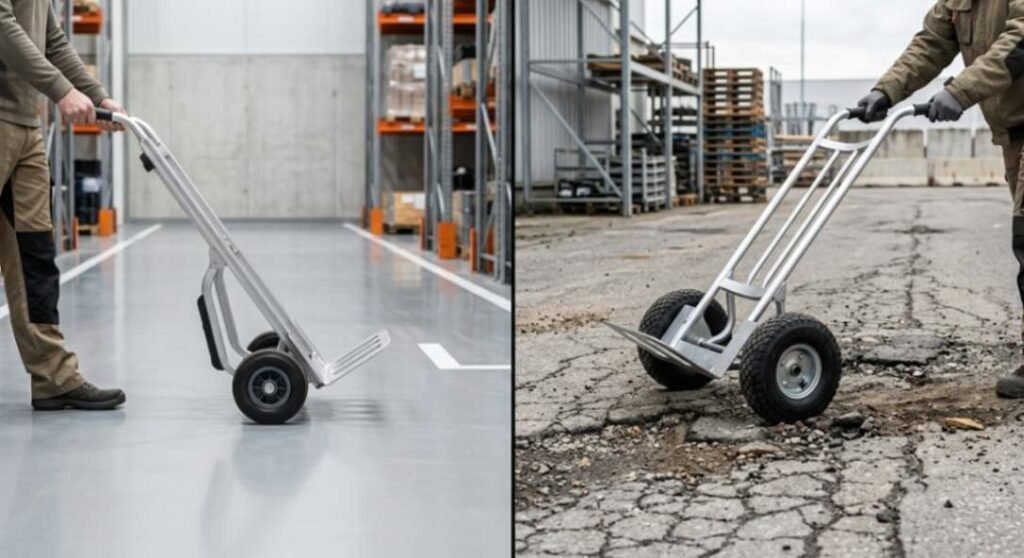
Different working floors demand specific wheel diameters to maintain control and reduce strain.
Smooth Warehouse Floors
Polished concrete and flat indoor surfaces create very little rolling resistance. Wheels measuring 6 to 8 inches are ideal here because they offer fast turns, great control, and ample load stability without adding unnecessary bulk to the frame.
Concrete Floors
Outdoor loading docks, parking lots, and standard concrete pavements often have small pits, expansion lines, and texture. An 8 inch or 10 inch wheel provides the necessary diameter to bridge these minor imperfections smoothly without jolting the cargo.
Uneven Pavement
Broken asphalt, curbs, and sidewalk cracks require a minimum 10 inch wheel. The larger diameter prevents the wheel from dropping into dips, saving you from having to yank the hand truck out of surface cracks.
Gravel and Rough Outdoor Surfaces
Loose gravel and crushed stone shift under pressure. You need a 10 to 12 inch wheel with a wide contact profile. Narrow or small wheels sink into gravel, creating heavy drag and making the cart nearly impossible to pull.
Grass
Turf presents soft, uneven resistance. A 10 inch or 12 inch pneumatic tire is the best choice for grass. The large diameter rolls across natural bumps while the pneumatic cushion prevents the tires from digging into soft soil.
Stairs
Standard hand trucks with large wheels are not built for climbing stairs safely. While a 10 inch wheel bumps up a single curb relatively easily, navigating a full flight of stairs requires a dedicated stair climbing hand truck equipped with a rotating three wheel cluster or stair glides. For more details on specialized frame layouts, check our guide on 2 Wheel vs 4 Wheel Hand Trucks
.
Does Load Weight Affect the Wheel Size You Need
Load weight is critical, but you should not choose wheel diameter based on weight alone. A heavy payload does not automatically require the tallest wheel on the market.
Selecting the right setup for heavy weight involves several interconnected factors:
- Manufacturer load rating: The axle, wheel hubs, bearings, and frame must be rated for your maximum expected weight. Review our Hand Truck Weight Capacity Guide for specific rating breakdowns.
- Center of gravity: Taller wheels lift the base plate higher off the ground, which raises the load height and can make ultra heavy stacks feel tippy during turns.
- Tire material: Solid and flat free compounds resist heavy compression, while pneumatic tires can squat under maximum capacity if underinflated.
- Frame strength: Match the load to the frame material. Read our breakdown of Aluminum vs Steel Hand Trucks to balance frame weight and strength.
Use wheel size to solve surface challenges, and rely on tire ratings and frame specs to handle the actual weight.
Hand Truck Wheel Size vs Wheel Type
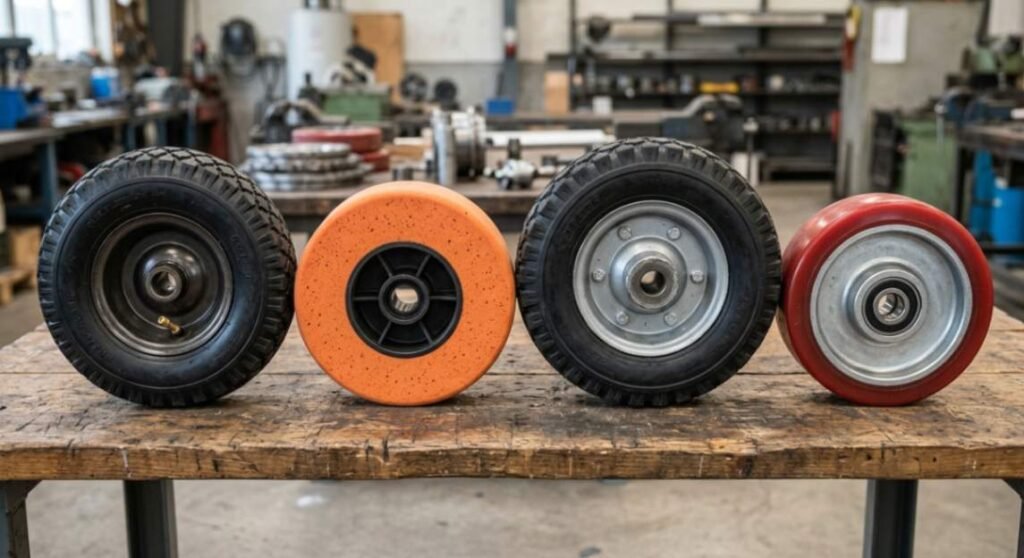
Two wheels sharing the exact same 10 inch diameter will perform completely differently depending on how they are built.
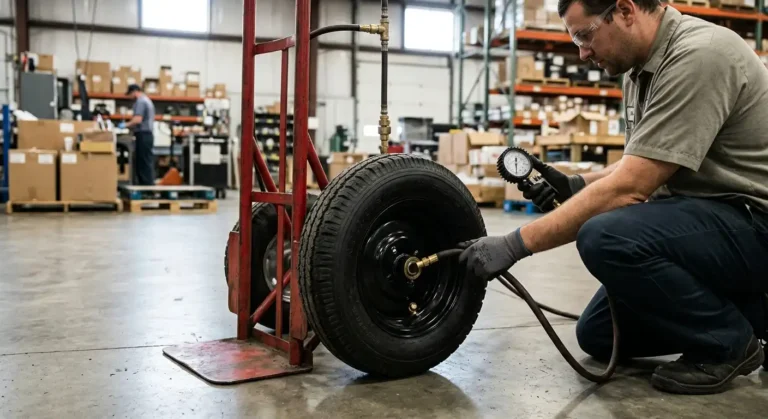
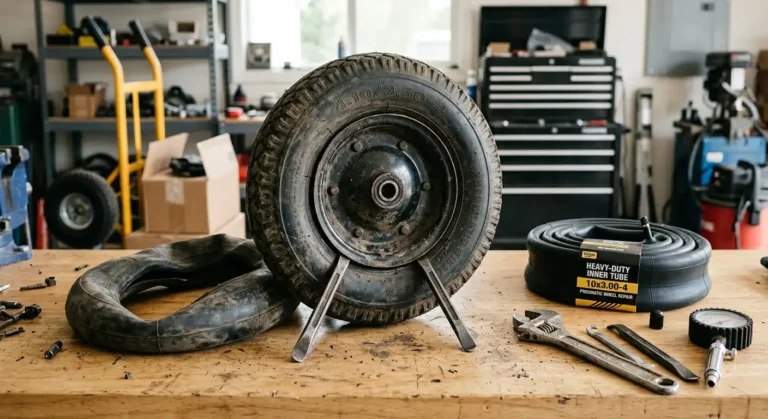
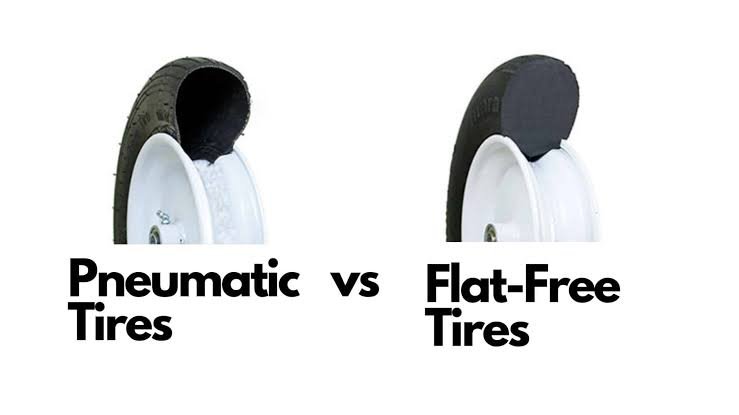
- Pneumatic tires: Air filled rubber tires provide excellent shock absorption and superior traction on rough outdoor terrain. They deliver a smooth ride over bumps, though they carry the risk of punctures and require routine air pressure maintenance.
- Flat free tires: Made from solid polyurethane foam, flat free tires never go flat. They mimic the cushion of air filled tires reasonably well, though they can develop temporary flat spots if left stationary under heavy loads for weeks.
- Solid rubber tires: Extremely durable, wear resistant, and puncture proof. They handle heavy abuse in industrial environments, though they transfer more vibration and bumpiness to your hands when rolling over rough ground.
- Plastic or hard wheels: Rigid wheels made from polyolefin or hard plastics roll effortlessly on perfectly smooth indoor floors and carry heavy weight without deformation, but they are loud and jarring on rough asphalt.
- Polyurethane wheels: Excellent for commercial indoor spaces. Polyurethane provides high load limits, resists chemical spills, rolls quietly, and will not scuff or mark delicate finished floors.
If you are debating between an upright cart and a horizontal platform, see our comparison on Hand Truck VS Dolly.
Best Wheel Size for Indoor vs Outdoor Use
Matching wheel size to your primary work environment prevents daily frustration.
Indoor Use
Indoor work prioritizes maneuverability, floor protection, and compact storage. Standard 6 inch to 8 inch solid rubber or polyurethane wheels work best. They provide tight turning radiuses in narrow hallways, clear standard interior doors easily, and keep the cart lightweight.
Outdoor Use
Outdoor hauling demands ground clearance, shock absorption, and obstacle navigation. Opt for 10 inch to 12 inch pneumatic or flat free wheels. The expanded diameter rolls over gravel, grass, and weathered concrete, while wider treads prevent the cart from bogging down in soft ground.
How to Choose the Right Hand Truck Wheel Size?
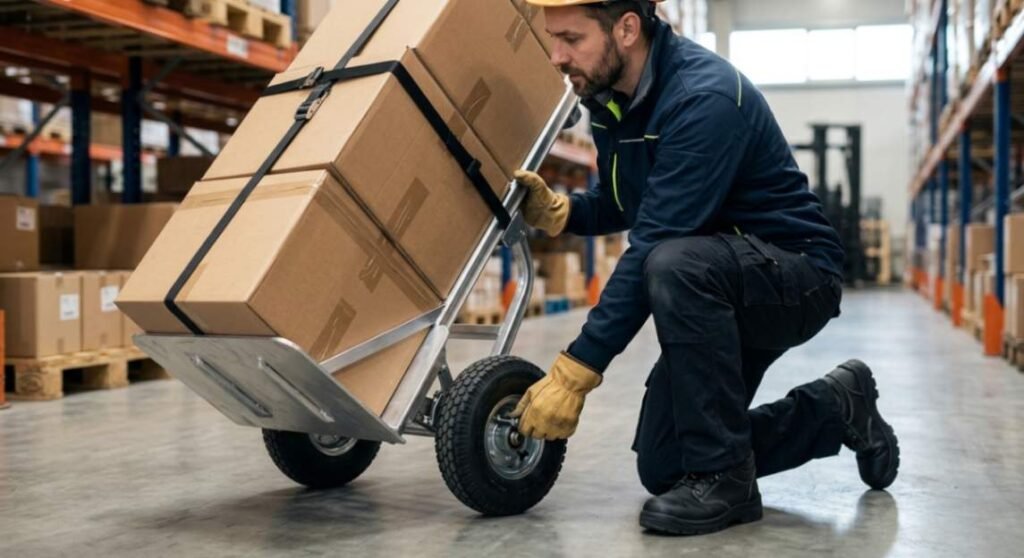
Follow this straightforward decision process when selecting your wheel setup:
- Map your typical work location: Determine if you operate primarily inside warehouses, across outdoor job sites, or along mixed delivery routes.
- Examine the terrain: Look for floor transitions, cracks, curbs, gravel, or thresholds along your standard path.
- Prioritize maneuverability versus clearance: Choose smaller 6 to 8 inch wheels for tight spaces, or larger 10 to 12 inch wheels to roll over bumps.
- Select the correct tire material: Choose solid or polyurethane tires for smooth, puncture prone indoor floors, and pneumatic or flat free tires for rough outdoor surfaces.
- Verify load capacity and hub dimensions: Check the manufacturer rating, axle diameter, and hub length before buying or replacing wheels.
Are Bigger Hand Truck Wheels Better?
Not always. Bigger wheels are usually better on uneven surfaces, while smaller wheels can be easier to maneuver in tight indoor spaces.
Larger wheels provide clear benefits for outdoor work, such as effortless rolling over rocks, better clearance over curbs, and smoother transport over turf. However, they also add significant weight to the frame, widen the cart footprint, and raise the load bed. If you work primarily inside retail stores, offices, or narrow storage spaces, oversized wheels make the hand truck clunky and awkward to guide through tight doorways.
Common Mistakes When Choosing Hand Truck Wheel Size
Avoid these frequent errors when outfitting your equipment:
- Choosing purely by diameter: Buying a large wheel without considering whether you need air cushioning, solid rubber durability, or non marking floor protection.
- Ignoring work clearance: Installing large wheels that hit the cart frame or prevent the hand truck from fitting into delivery vans and service elevators.
- Neglecting load ratings: Assuming a larger replacement wheel automatically holds more weight than a smaller, heavy duty industrial wheel.
- Overlooking axle fit: Purchasing replacement wheels without measuring the axle diameter, bore size, and hub offset of your current hand truck frame.
- Using standard carts on stairs: Expecting large diameter wheels to make a standard two wheel hand truck safe for moving appliances up staircases.
Frequently Asked Questions
For all around utility, a 10 inch wheel is the most versatile option. It rolls over common outdoor obstacles like curbs and gravel while remaining manageable enough for most indoor spaces.
A 10 inch or 12 inch pneumatic or flat free tire is ideal for outdoor use. The tall diameter and wide profile handle broken asphalt, loose gravel, and lawn turf with minimal resistance.
Smooth indoor concrete works well with 6 inch to 8 inch solid rubber or polyurethane wheels. Rough or outdoor concrete with expansion joints and cracks is better served by 8 inch to 10 inch wheels.
A 10 inch wheel rolls over rough ground, thresholds, and curbs much more easily than an 8 inch wheel. However, an 8 inch wheel keeps the hand truck more compact and easier to store in tight spaces.
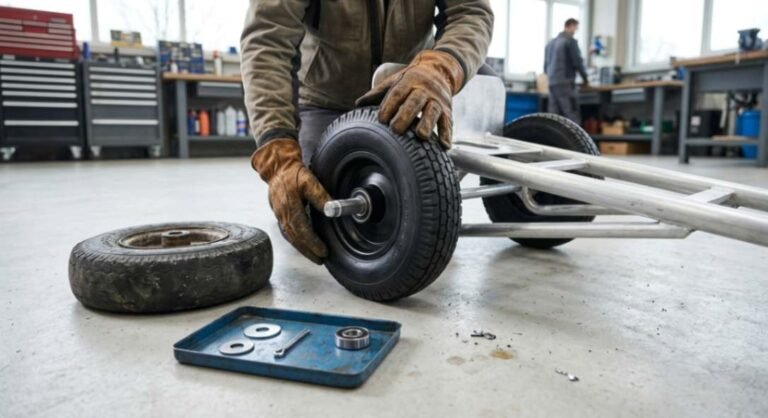
You can replace them only if the hand truck frame has adequate clearance around the wheel wells and the new wheels match your axle diameter and hub length.
Larger wheels reduce rolling friction and make it easier to push heavy loads over cracks and rough surfaces, but they do not increase the maximum weight capacity of the cart frame.
Pneumatic wheels are air filled, offering great shock absorption and outdoor traction, but they can puncture. Solid wheels are puncture proof and maintenance free, but provide a firmer, bumpier ride on rough ground.