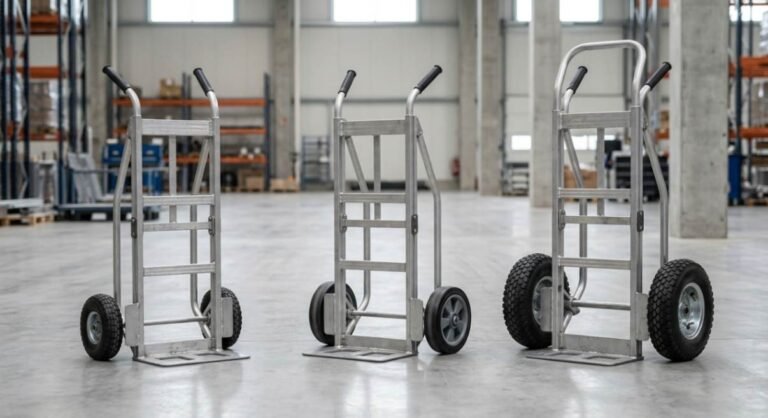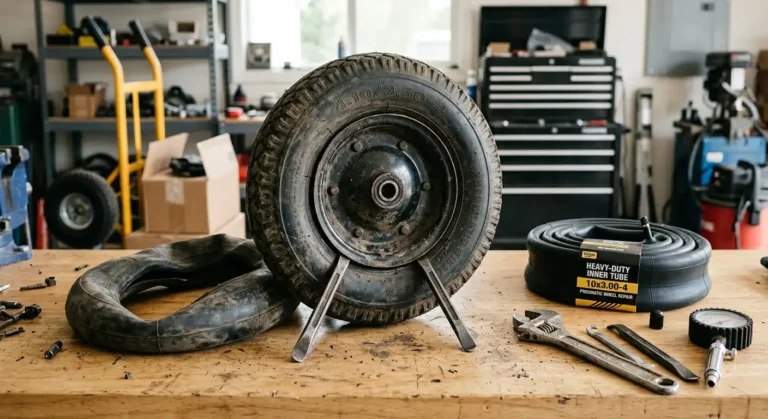

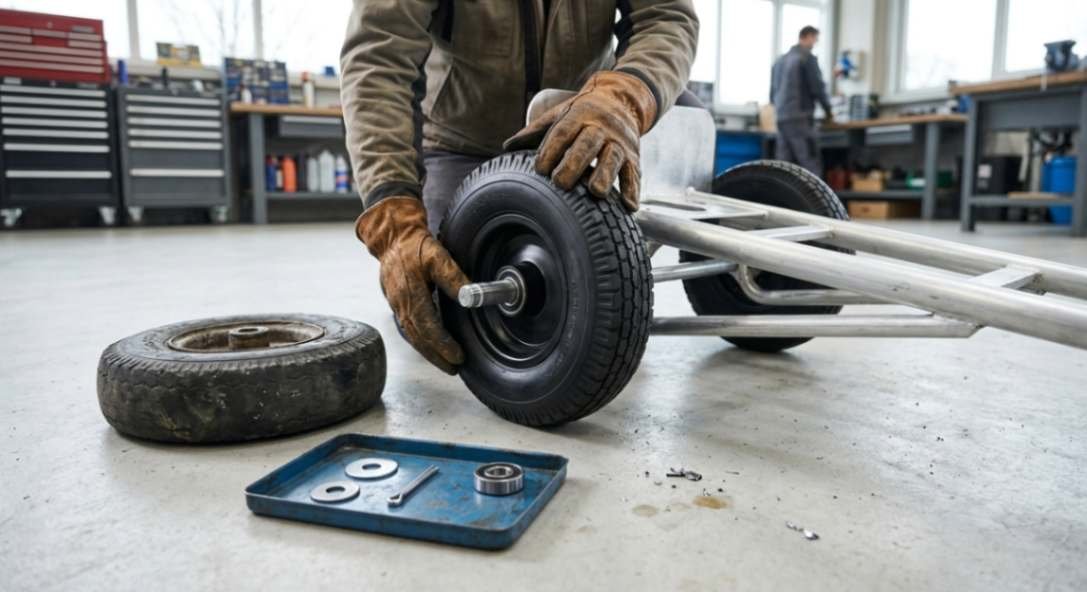
A flat, cracked, or wobbly wheel can quickly bring your work to a complete stop. You do not need to discard the entire hand truck just because a tire goes flat or a bearing wears out. Most hand trucks are designed so you can replace the wheel assembly with basic tools. The exact replacement steps depend on the specific mounting hardware your hand truck uses, but the general repair process is straightforward. With the correct replacement wheel and a few basic tools, you can complete the job safely in under thirty minutes.
To replace a hand truck wheel, secure the frame on a flat surface, remove the retaining hardware holding the wheel to the axle, slide the old wheel off, inspect the axle for wear, install the matching replacement wheel along with any original washers or spacers, secure the hardware, and test the hand truck under a light load. Hand truck models use different hardware, including cotter pins, roll pins, retaining rings, or locknuts, so always identify your specific mounting style before starting.
When Should You Replace Hand Truck Wheels?
Hand truck wheels endure heavy weight and rough ground, which causes wear over time. You should replace your hand truck wheels if you notice any of the following signs:
- Cracks or splits in a solid rubber or polyurethane tire
- Worn, thin, or damaged tread that slips easily
- A pneumatic tire that constantly loses air or goes flat
- A wheel that wobbles excessively from side to side while rolling
- A wheel that binds, grinds, or refuses to rotate smoothly
- Grinding noises coming from inside the wheel hub
- Visible damage or free play in the wheel bearing or bushing
- A bent, warped, or cracked wheel hub
The wheel is not always the only component causing problems. If the axle is bent, the axle bracket is cracked, or the frame is distorted, installing a new wheel will not solve the issue. Check all surrounding components to ensure the hand truck frame remains structurally sound.
If your equipment has a completely different frame layout or four flat casters, check the difference between a hand truck and a dolly to find the right repair instructions.
What You Need to Replace a Hand Truck Wheel?
You do not need a large workshop to change hand truck wheels, but having the right tools nearby makes the job much easier. The exact tools you need will depend on how the manufacturer secured the wheel to the axle.
Common tools and supplies include:
- A matching replacement wheel
- Work gloves and safety glasses
- Pliers or needle-nose pliers for cotter pins
- An adjustable wrench or socket set for threaded nuts
- A flat screwdriver or retaining ring pliers for retaining clips
- A rubber mallet to help free stubborn components
- Penetrating oil to loosen rusted or corroded parts
- Clean rags to wipe down the axle
Not every hand truck requires all of these tools. For instance, if your hand truck uses cotter pins, you only need pliers, whereas a bolted axle requires wrenches.
How to Choose the Correct Replacement Wheel?
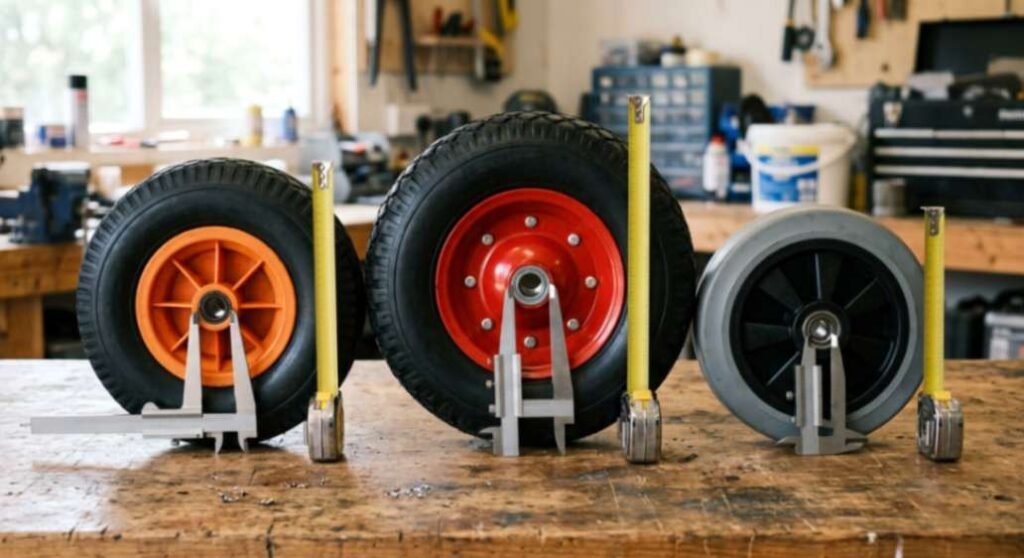
Finding the right replacement wheel is the most critical part of this repair. Hand truck wheels are not universal, and purchasing a wheel based solely on outer diameter will often result in a part that does not fit your axle.
Before purchasing, take the following measurements:
- Wheel Diameter: Measure straight across the center of the wheel from outer tread edge to outer tread edge. Common sizes include 8 inches, 10 inches, and 12 inches.
- Wheel Width: Measure the width of the tire tread from side to side.
- Axle or Bore Size: Measure the inside diameter of the hole in the center of the wheel hub. Common axle diameters include 5/8 inch, 3/4 inch, and 1/2 inch. The bore must match your axle diameter precisely to prevent dangerous wobbling or binding.
- Hub Length: Measure the total distance through the center hole from one side of the hub to the other. If the hub is too long, the retaining hardware will not fit onto the axle. If it is too short, the wheel may slide back and forth excessively unless you add spacers.
- Bearings or Bushings: Check whether your current wheel uses sealed ball bearings, roller bearings, or plain bushings. The replacement must match your axle style.
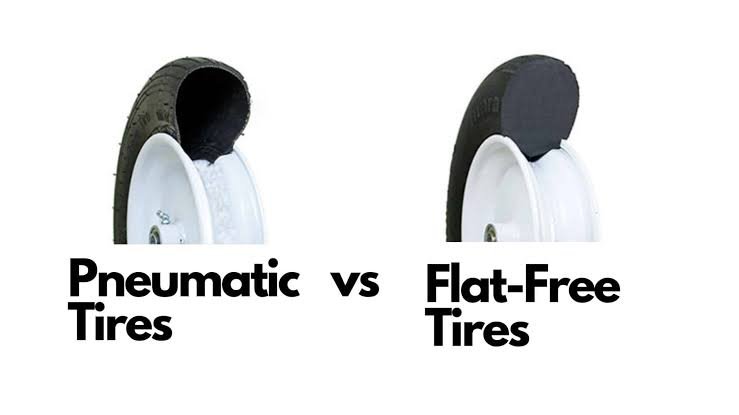
- Tire Construction: Choose the construction that fits your work environment. Common options include air-filled pneumatic tires, solid rubber tires, and flat-free polyurethane foam tires.
- Load Capacity: Check the weight rating on the tire sidewall or product specifications. The combined load rating of both wheels should always exceed the maximum weight capacity of the hand truck frame.
The most reliable way to select the right part is to look up the model number of your hand truck in the manufacturer parts manual. Before ordering a replacement, see our Hand Truck Wheel Size Guide to learn what measurements matter.
How to Replace Hand Truck Wheels?
Follow these step-by-step instructions to replace a damaged wheel safely.
1. Secure the Hand Truck
Remove any cargo from the hand truck. Lay the hand truck flat on a workbench or horizontally on the floor with the wheels facing up. Make sure the frame rests on a stable, flat surface so it cannot shift, roll, or fall while you work. Wear work gloves to protect your hands and safety glasses to protect your eyes from loose dirt or flying clips.
2. Identify How the Wheel Is Secured
Look closely at the end of the axle outside the wheel hub. Manufacturers use several different methods to keep wheels on the axle:
- Cotter Pin: A metal pin split down the middle with its legs bent outward.
- Retaining Ring or E-Clip: A spring steel ring seated inside a groove on the axle.
- Threaded Nut or Locknut: A standard hex nut or nylon insert locknut threaded onto the axle tip.
- Roll Pin or Drive Pin: A hollow steel pin pressed through a hole in the axle.
Identify which fastener your hand truck uses before applying force.
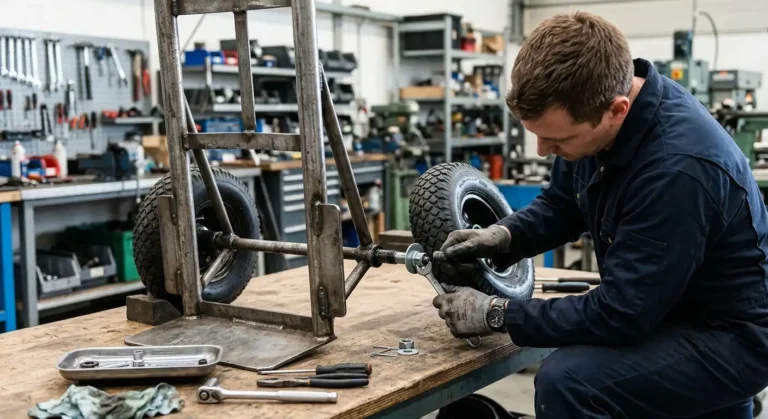
3. Remove the Old Wheel
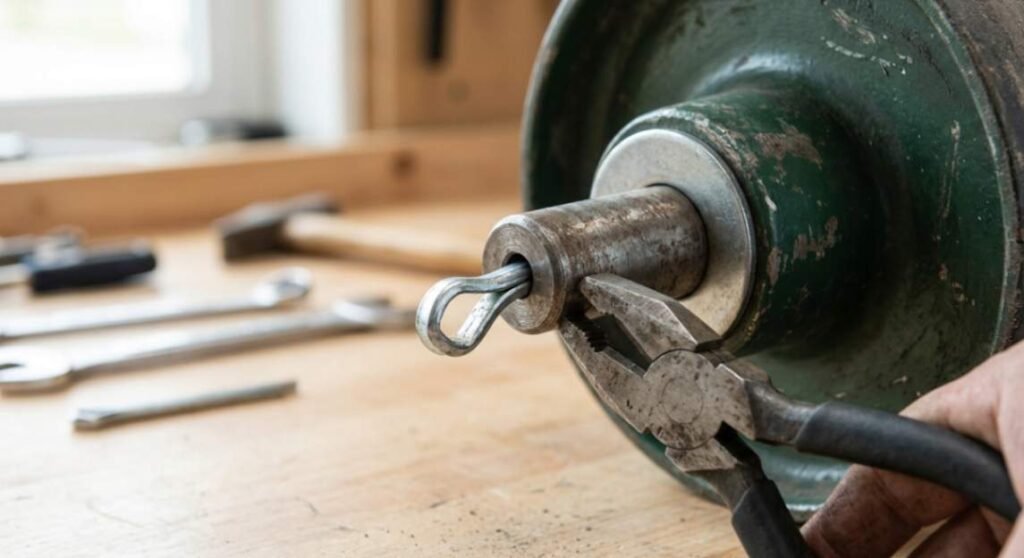
Remove the retaining hardware carefully:
- For cotter pins, use pliers to straighten the bent legs, then pull the pin straight out of the hole.
- For retaining rings, use retaining ring pliers or a flat screwdriver to gently pry the ring out of its axle groove.
- For threaded nuts, hold the axle steady and loosen the nut with an appropriate wrench or socket.
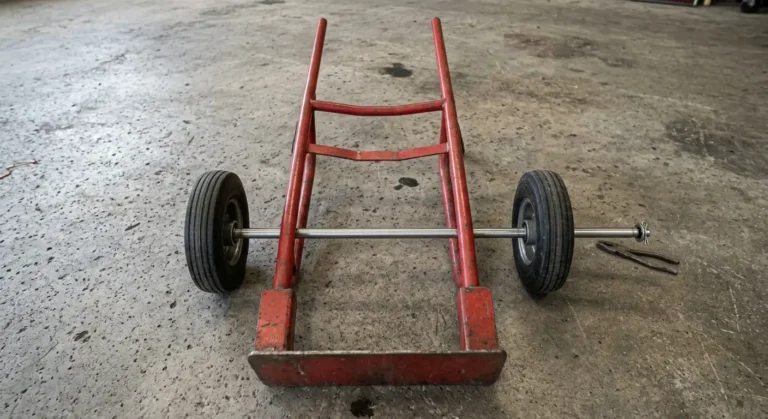
Once the fastener is off, slide the outer washer off the axle. Keep all washers and spacers arranged in the exact order they were removed. Slide the old wheel off the axle shaft. If the wheel resists, do not strike it violently. Corrosion or dirt may be holding it in place.
4. Inspect the Axle and Other Parts
Wipe the bare axle clean with a rag. Inspect the metal shaft for deep grooves, heavy rust, or bends. Check any existing washers, spacers, axle brackets, and frame welds. If the axle is bent or worn thin, a new wheel will still wobble and wear out prematurely. Replace bent axles or damaged mounting hardware before installing a new wheel. Worn wheels or loose hardware can be especially dangerous when using a hand truck on stairs, where sudden wheel failure risks drops.
5. Install the New Wheel
Compare your new replacement wheel with the old one to verify that the hub length, bore size, and overall diameter match. Slide any inner washers or spacers back onto the axle shaft first. Slide the new wheel onto the axle with the valve stem or designated hub side facing outward. Place the outer washer back onto the axle.
Reinstall the retaining hardware. If using a new cotter pin, slide it through the axle hole and bend the legs back firmly around the axle. If using a locknut, tighten it according to manufacturer specifications or until snug without pinching the wheel hub. The hardware must securely hold the wheel in place without restricting rotation.
6. Check the Wheel
Spin the newly installed wheel by hand. It should rotate smoothly without grinding or excessive drag. Note that some brand-new bearings have normal light resistance from grease seals. Wiggle the wheel gently from side to side along the axle. There should be minimal side play, and the tire must not rub against the hand truck frame or axle brackets.
7. Test the Hand Truck

Set the hand truck upright on its wheels. Roll it forward and backward across a flat floor without any weight to confirm smooth tracking. Next, place a light, stable load on the nose plate and roll the hand truck several yards. Check that the truck remains stable, rolls easily, and produces no abnormal noises or loose hardware movement.
How to Replace Pneumatic Hand Truck Wheels?
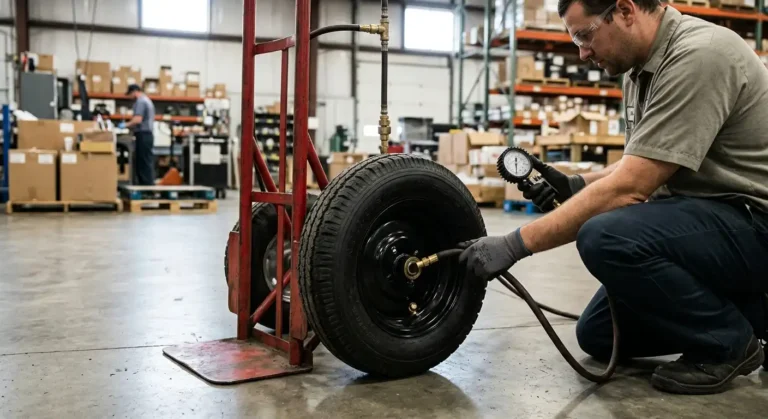
Pneumatic hand truck wheels contain air-filled inner tubes or tubeless pneumatic tires mounted to a metal or plastic rim. If your hand truck has a flat tire, determine whether you need to replace the complete wheel assembly or simply install a new inner tube.
Replacing the complete wheel assembly follows the same steps outlined above: remove the axle hardware, swap the entire wheel, and reinstall the hardware. If you are installing a complete pneumatic wheel, check the tire sidewall for the manufacturer recommended inflation pressure. Use a manual hand pump or regulated air source to inflate the tire to that exact specification. Never exceed the maximum pressure listed on the tire sidewall, as overinflation can crack the wheel rim or cause the tire to burst.
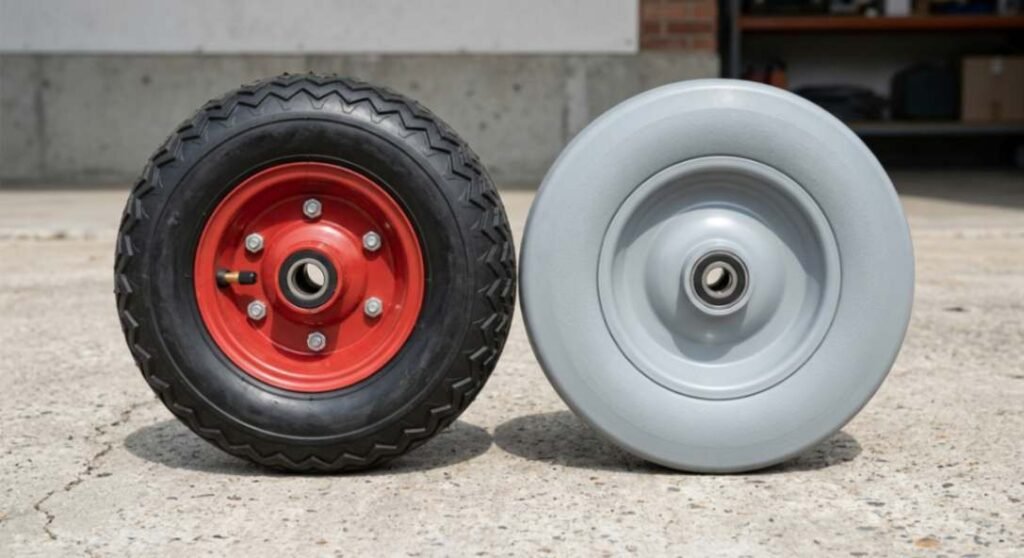
How to Replace Flat Free Hand Truck Wheels?
Flat free wheels are made of solid rubber, polyurethane foam, or semi-pneumatic materials that never require air and cannot go flat. Replacing a flat-free wheel uses the same mechanical process as any other hand truck wheel.
However, you must confirm that the flat free replacement matches your axle diameter, hub length, outer diameter, and load requirements. To understand the performance trade-offs between air-filled and solid options, read our guide on Pneumatic vs Flat Free Tires before making your purchase.
How to Remove a Stuck Hand Truck Wheel?
Over time, moisture and dirt can cause a wheel hub to seize onto a steel axle. If you have removed the retaining pin or nut but the wheel refuses to budge, use these safe removal steps:
- Clean away visible dirt, rust, and debris from the exposed axle end with a wire brush.
- Apply a generous amount of penetrating oil directly where the wheel bore meets the axle shaft.
- Allow the penetrating oil to sit for at least fifteen to twenty minutes so it can seep into the seized surfaces.
- Grasp the wheel firmly with both hands and wiggle it back and forth while pulling outward.
- If it remains stuck, place a block of wood against the inner hub and tap the wood lightly with a rubber mallet while rotating the wheel.
Never strike the axle, wheel rim, or hand truck frame directly with a heavy steel hammer. Excessive force can mushroom the axle tip, damage the internal bearings, or bend the frame. If the wheel cannot be removed safely with penetrating oil and light tapping, consider replacing the entire axle assembly or taking the tool to a repair shop.
How to Know What Size Hand Truck Wheel You Need?
To find the correct size wheel, take three essential measurements from your existing hand truck:
- Tire Markings: Look at the raised text on the sidewall of your existing tire. Many tires show size strings such as 4.10/3.50-4 or 10×2.125. These numbers indicate tire dimensions and rim diameter.
- Axle Diameter: Remove the retaining fastener and measure the thickness of the axle shaft using a caliper or ruler. Common sizes are 5/8 inch and 3/4 inch.
- Hub Width: Measure through the center hole from one outer edge of the bearing hub to the other edge.
Do not rely solely on tire markings, because two wheels with identical tire sizes can have completely different axle bore sizes or hub lengths. Always cross-reference your measurements with the manufacturer replacement parts catalog for your specific hand truck model.
Can You Replace Hand Truck Wheels Yourself?
Most people can easily replace hand truck wheels at home with standard hand tools. Doing the repair yourself saves money and extends the usable life of your equipment.
A do-it-yourself repair makes sense when:
- The retaining hardware is accessible and easy to remove.
- The axle shaft and hand truck frame are straight and undamaged.
- You can readily identify and purchase the matching replacement parts.
You should seek professional repair or consider replacing the entire unit if the hand truck frame is cracked or bent, the axle is severely corroded or deformed, or the structural brackets have failed. Operating a hand truck with damaged structural components is unsafe, regardless of how new the wheels are. To ensure your equipment matches your daily tasks, check our Hand Truck Weight Capacity Guide.
Common Mistakes to Avoid
Avoid these frequent errors when replacing your wheels:
- Buying by Diameter Alone: Choosing a wheel that matches the height of your old wheel but has the wrong bore size or hub length.
- Losing Washers and Spacers: Misplacing the original spacers that keep the wheel aligned away from the frame.
- Overtightening Locknuts: Tightening an axle nut so hard that it crushes the wheel hub and prevents the wheel from spinning.
- Reusing Damaged Cotter Pins: Reinstalling weakened, bent cotter pins that can snap during use.
- Ignoring Axle Wear: Mounting a brand-new wheel onto a deeply grooved or bent axle shaft.
- Skipping the Load Test: Immediately placing a heavy load onto a newly repaired hand truck without testing it first.
Frequently Asked Questions
Most commercial and residential hand trucks feature replaceable wheels mounted on standard axles. However, some specialized or molded plastic carts use proprietary, non-serviceable wheel designs. Convertible models often use a mix of fixed axle wheels and swivel casters; read our breakdown of 2 wheel vs 4 wheel hand trucks for multi-position hardware tips. Check your hand truck model documentation to verify that replacement parts are supported.
Measure the outer wheel diameter, tire width, center bore diameter, and hub length. Compare these dimensions with your manufacturer replacement parts list to find an exact match.
You typically need pliers for cotter pins, a wrench or socket set for nuts, a flat screwdriver or clip tool for retaining rings, work gloves, safety glasses, and penetrating oil if parts are rusted.
You can replace a single wheel if the new wheel matches the remaining wheel in diameter, width, hub dimensions, and tread design. However, if the old wheels have seen heavy use, inspect the opposite wheel closely, as it may also be near the end of its service life.
Remove all retaining hardware, clean surface rust from the axle, apply penetrating oil, wait twenty minutes, and gently wiggle the wheel while pulling outward. Use a rubber mallet against a wood block only when gentle force is needed.
A hand truck wheel should rotate smoothly without grinding, catching, or wobbling. Some resistance is normal, especially on wheels with sealed precision bearings or thick grease packing.
Yes. If the axle is straight, smooth, and free of heavy rust or deep wear grooves, you only need to replace the wheel assembly. Replacing hand truck wheels is a simple repair that restores smooth mobility and ensures safety during heavy lifting tasks. Taking accurate measurements of your axle diameter, hub length, and wheel size guarantees a proper fit. Always secure the hand truck properly, keep your hardware organized, and perform a light test roll before returning the equipment to regular service.
Yes, you can switch to flat free wheels as long as the replacement matches your hand truck axle size, hub length, frame clearance, and required load rating.