
Inflating a pneumatic hand truck tire is usually a simple job when the tire is in good condition and you know the correct inflation pressure. You need a pressure gauge, a compatible pump or air compressor, and the pressure specification for your particular tire.
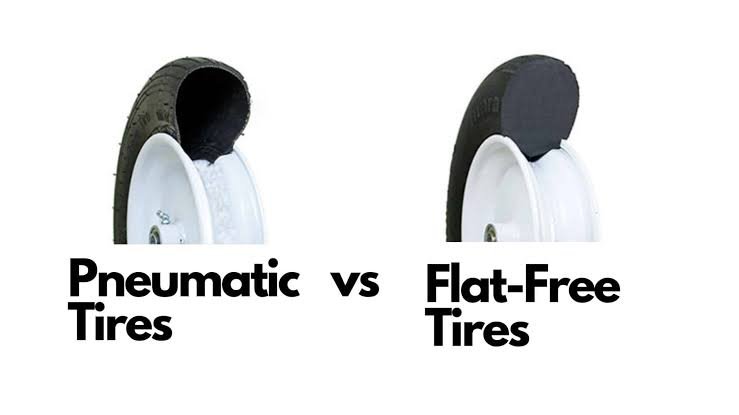
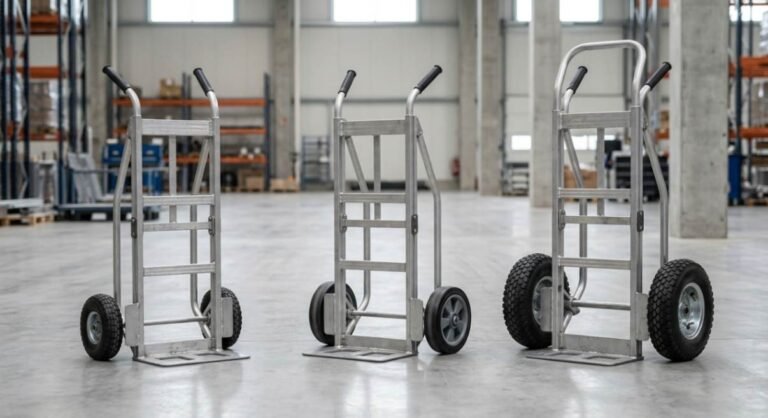
Before adding air, check what type of tire you have. Pneumatic tires contain air and need inflation, while flat free, solid rubber, and foam filled tires do not require normal air inflation. Never guess the correct pressure based only on how firm the tire feels. The tire and hand truck manufacturer’s specifications should guide the process.
What You Need to Inflate a Hand Truck Tire?
You only need a few basic items:
- A tire pressure gauge
- A compatible hand pump or floor pump
- An air compressor if you prefer powered inflation
- The correct connection for the tire valve
- The valve cap
- The manufacturer’s recommended inflation pressure
A pressure gauge is especially useful because a tire can look reasonably inflated while still being below its recommended pressure. It also helps prevent accidental overinflation.
Check Whether Your Hand Truck Tire Needs Air
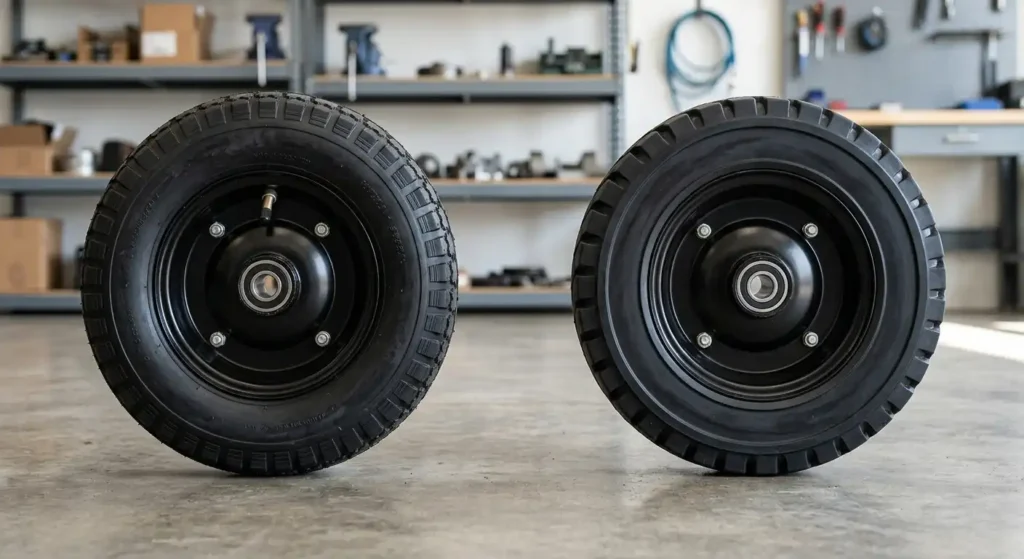
A pneumatic hand truck tire may need air if it looks visibly low, flexes excessively under normal use, or makes the hand truck harder to roll. However, these signs are only clues.
The best way to check hand truck tire pressure is with a pressure gauge. Compare the measured pressure with the specification provided for your particular tire or hand truck.
Do not rely on squeezing the tire with your hand. Tire construction, size, temperature, and load can affect how a tire feels.
How to Inflate a Hand Truck Tire?
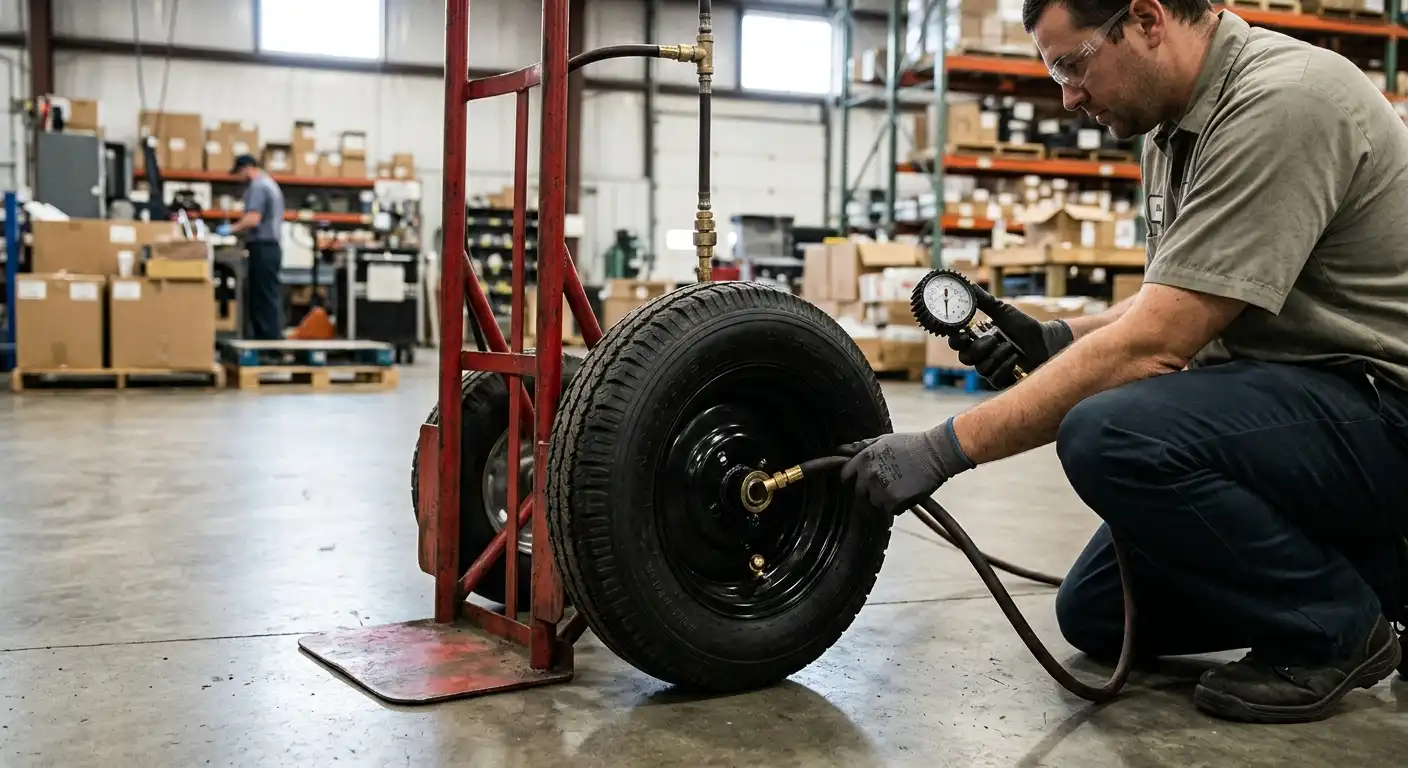
To inflate hand truck tires, first unload the hand truck and check that the tire is pneumatic and undamaged. Remove the valve cap, check the current pressure with a tire gauge, and find the recommended pressure from the tire or hand truck manufacturer. Attach a compatible pump or air compressor, add air gradually, recheck the pressure, and replace the valve cap.
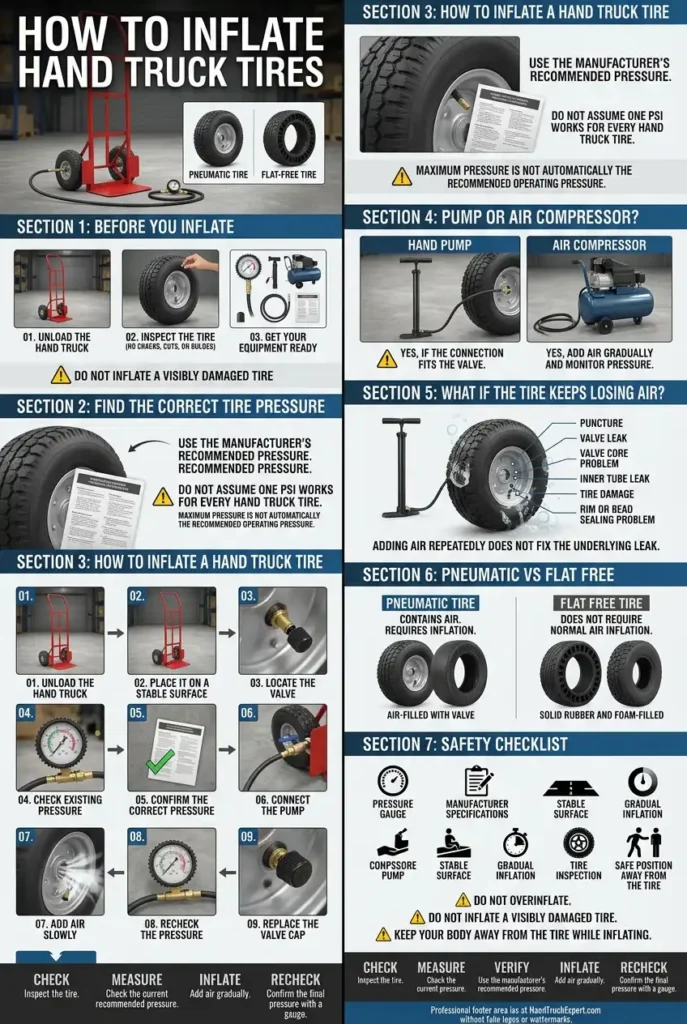
Follow these steps when adding air to an already installed pneumatic tire.
1. Unload the Hand Truck
Remove heavy loads from the hand truck before inflating the tire. Working with an unloaded hand truck makes it easier to inspect the wheel and reduces unnecessary load on the equipment.
2. Place the Hand Truck on a Stable Surface
Put the hand truck on a stable, level surface where it will not unexpectedly move. Keep the area around the wheel clear so you can reach the valve safely.
3. Locate the Valve
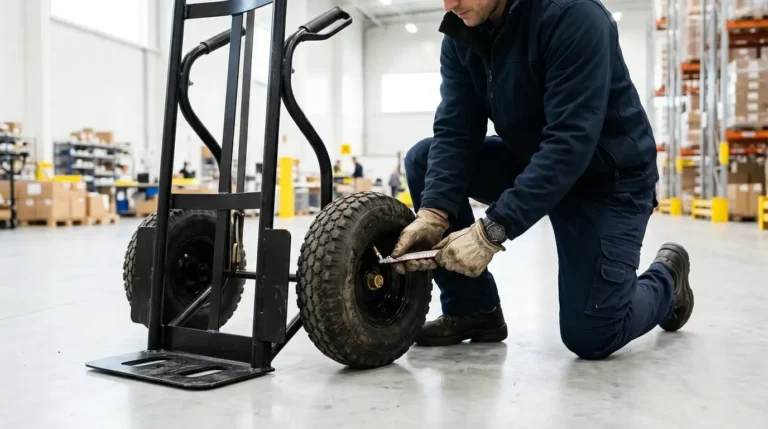
Find the tire valve on the wheel and remove the valve cap.
Many pneumatic hand truck tires use a Schrader type valve, but do not assume every hand truck has the same valve arrangement. Check the valve on your specific tire before choosing a pump or inflation fitting.
4. Check the Existing Tire Pressure
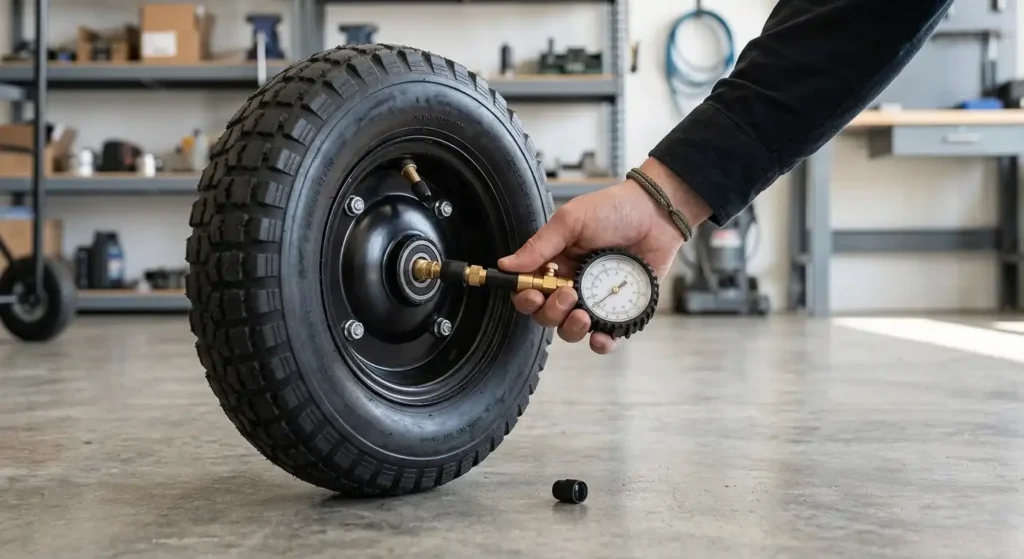
Press your pressure gauge firmly onto the valve and check the reading.
Knowing the starting pressure gives you a reference point and helps prevent accidentally adding too much air.
5. Find the Correct Tire Pressure
This is the most important part of the process. Check the tire sidewall, tire manufacturer information, hand truck manual, or manufacturer specifications for the correct inflation pressure. Do not assume that every hand truck tire uses the same pressure.
Also, do not confuse a maximum pressure marking with the recommended operating pressure. A tire’s maximum pressure is the highest permissible pressure for that tire under the applicable specification. The recommended pressure for a particular application can be lower.
Never exceed the tire manufacturer’s stated maximum pressure.
6. Connect the Pump or Air Compressor
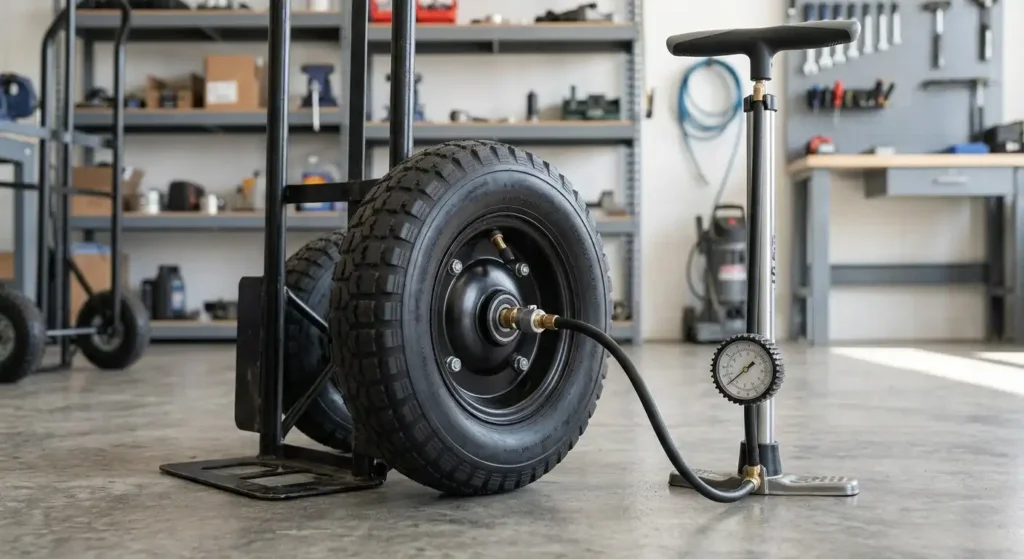
Attach your pump or compressor fitting securely to the valve. Make sure the connection is properly seated so air enters the tire rather than escaping around the valve.
7. Add Air Slowly
Add air in short bursts, especially when using an air compressor.
Adding air gradually gives you time to monitor the pressure and reduces the chance of accidentally going past the recommended level. Keep checking the pressure rather than relying on the compressor’s tank or regulator setting.
8. Recheck the Pressure
Remove the inflation fitting and check the pressure with your gauge.
If the pressure is still below the recommended level, add a small amount of air and check it again. If you have added too much, release a small amount and recheck.
9. Replace the Valve Cap
Once the tire reaches the correct pressure, reinstall the valve cap securely. The cap helps protect the valve from dirt and can help prevent pressure loss.
How Much Air Should a Hand Truck Tire Have?
There is no single correct PSI for every hand truck tire.
The proper hand truck tire pressure depends on the specific tire, wheel, equipment, and manufacturer’s instructions. Check the tire sidewall and the hand truck manufacturer’s specifications before inflating.
Do not choose a pressure simply because the tire feels firm or because another hand truck uses that pressure. Also remember that the maximum pressure printed on a tire is not automatically its recommended operating pressure.
Can You Use a Bike Pump to Inflate a Hand Truck Tire?
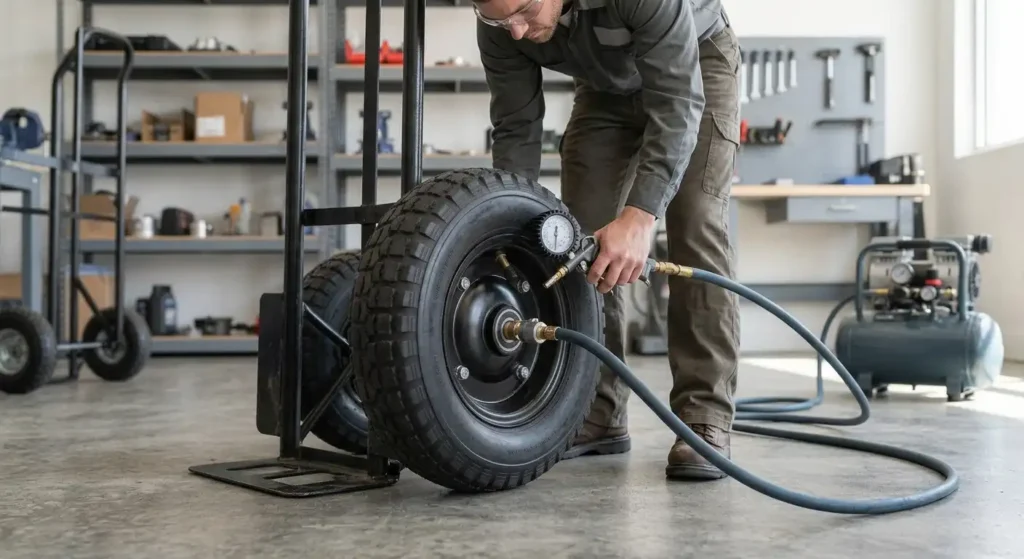
Yes, a bike pump can generally be used to put air in a pneumatic hand truck tire if the pump connection is compatible with the tire valve.
A hand pump may require more effort than an air compressor, particularly if the tire is significantly low. Work slowly and use a pressure gauge to check the pressure as you inflate.
The important point is valve compatibility. Do not assume that every hand truck tire uses the same valve type.
Can You Use an Air Compressor to Inflate a Hand Truck Tire?
Yes, an air compressor can be convenient for inflating pneumatic hand truck tires.
Use a compatible inflation fitting and add air gradually. Check the tire pressure frequently with a gauge and stop when the recommended pressure is reached.
Do not assume that the pressure shown on the compressor automatically represents the correct hand truck tire pressure. The tire and equipment specifications should determine the target pressure.
Compressed air can create serious hazards when tires or wheel components are damaged or improperly serviced. OSHA requirements for tire servicing emphasize appropriate pressure control and keeping people out of hazardous areas during inflation. Those rules are aimed at specific workplace tire servicing situations, so they should not be treated as a universal procedure for ordinary hand truck use.
What If a Hand Truck Tire Will Not Hold Air?
If a pneumatic tire loses air soon after inflation, adding more air is not a permanent solution. The tire needs to be inspected for the source of the leak.
Possible causes include:
- A puncture
- A leaking valve
- A damaged valve core
- A leaking inner tube, where applicable
- A sealing problem between the tire and rim
- A cracked or deteriorated tire
The correct repair depends on the tire construction and the location of the damage. If the tire or wheel is significantly damaged, replacement may be safer than continued inflation.
Why Does My Hand Truck Tire Keep Losing Air?
A hand truck tire that repeatedly loses pressure may have a puncture, valve leak, tube leak, damaged tire, or a problem where the tire seals against the rim.
A small change in pressure can occur with temperature changes, but persistent pressure loss should not simply be ignored. If you repeatedly need to inflate the same tire, inspect it for a leak rather than continuing to add air. Tire manufacturers also identify punctures, leaking valves, and other damage as possible causes of pressure loss.
How to Check a Hand Truck Tire for a Leak?
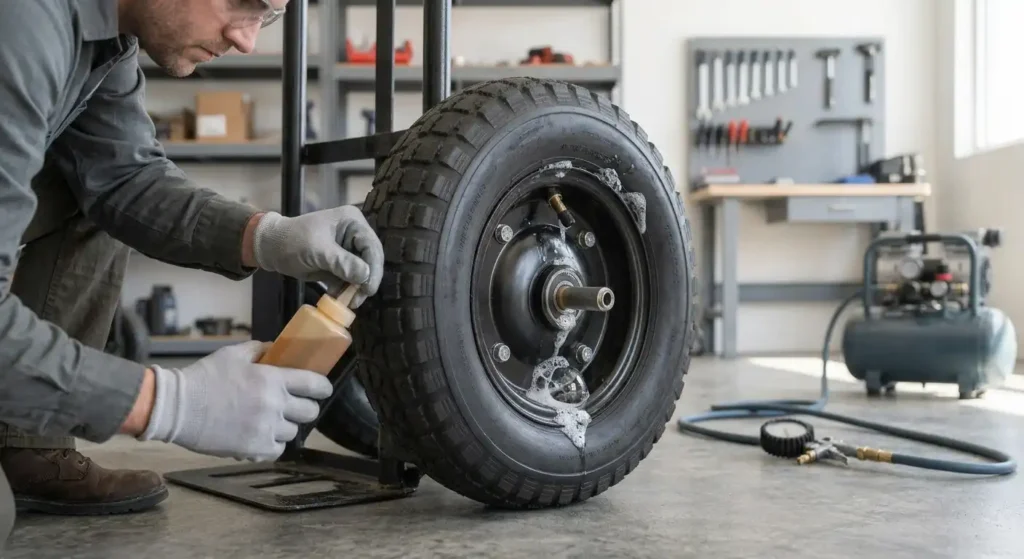
After bringing the pneumatic tire to its correct pressure, inspect the tire, valve, and visible wheel area. You can apply a small amount of soapy water around the valve and suspected leak areas. Escaping air may create bubbles that help identify the leak.
Never use a flame to look for escaping air. If you find a significant leak or visible tire damage, stop using the tire until it has been properly repaired or replaced.
Do Flat Free Hand Truck Tires Need Air?
No. Flat free tires are designed to operate without normal air inflation. Solid rubber tires also do not require air, and foam filled tires are not normally inflated with air.
If your hand truck has one of these tire types, trying to inflate it will not solve a rolling problem. Instead, inspect the tire and wheel for wear or damage.
If you are unsure which type you have, a guide to pneumatic and flat free hand truck tires can help you identify the difference.
Hand Truck Tire Inflation Safety Tips
Keep these basic precautions in mind:
- Do not inflate a visibly damaged tire.
- Never exceed the manufacturer’s pressure specification.
- Use a reliable pressure gauge.
- Add compressed air gradually.
- Keep your body away from the tire while inflating.
- Follow the tire and hand truck manufacturer’s instructions.
- Do not improvise with damaged wheels or tires.
- Replace badly cracked, deteriorated, or severely damaged tires.
Tire inflation should never be treated as simply filling a container with air. Serious tire failures have occurred when damaged tires were inflated or pressure was not properly controlled.
When Should You Replace a Hand Truck Tire Instead of Inflating It?
Inflation is not the right solution when the tire has serious physical damage.
Consider repair or replacement if you find deep cuts, severe cracking, a damaged sidewall, exposed cords, major deformation, persistent air leakage, or a damaged wheel or rim.
Do not inflate a tire simply to see whether it will hold pressure if it is visibly unsafe. If the tire or wheel assembly is damaged, follow the manufacturer’s repair or replacement recommendations.
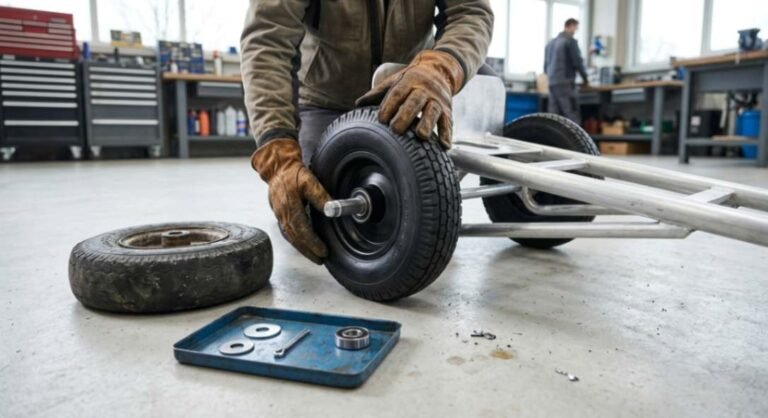
For related maintenance information, you can also see how to change a hand truck tire and how to replace hand truck wheels.
Frequently Asked Questions
Unload the hand truck, inspect the pneumatic tire, check its pressure, find the manufacturer’s recommended pressure, and add air gradually with a compatible pump or compressor. Recheck the pressure with a gauge.
There is no universal PSI. Use the recommended inflation pressure specified for your particular tire and hand truck. Do not confuse the tire’s maximum pressure with its recommended operating pressure.
Yes, if the pump connection is compatible with the tire valve. It may take more effort than using a compressor.
Yes. Use the correct fitting, add air gradually, and monitor the pressure with a gauge. Never exceed the manufacturer’s pressure specification.
A persistent leak may come from a puncture, valve, valve core, inner tube, tire, or rim sealing problem. Find and address the leak instead of repeatedly adding air.
No. Flat free, solid rubber, and foam filled tires are designed to operate without normal air inflation.
There is no universal inflation schedule. Check the pressure periodically and whenever the tire appears low or the hand truck becomes harder to roll. Follow the manufacturer’s maintenance recommendations.
Yes, if the tire is designed for normal inflation and is already properly installed. Remove heavy loads, place the hand truck on a stable surface, inspect the tire first, and use the correct pressure specification.
For broader equipment maintenance and operating advice, see how to use a hand truck safely and the hand truck weight capacity guide.