
The correct hand truck tire pressure depends entirely on the specific pneumatic tire and the manufacturer recommendations for your equipment. There is no single universal PSI for every hand truck. Some small utility tires operate around 30 PSI, while heavy duty tires with higher ply ratings may require 50 PSI or more. Always check the tire sidewall or equipment manual to confirm the exact pressure needed.
What Is the Correct Hand Truck Tire Pressure?
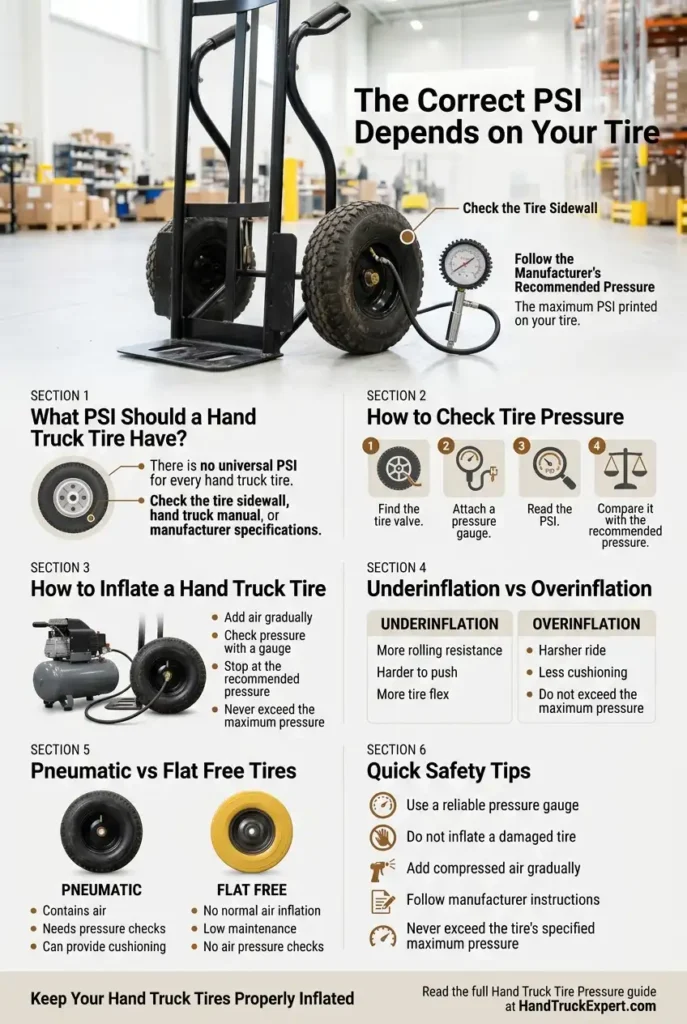
The correct hand truck tire pressure is the specific operating pressure recommended by the tire or equipment manufacturer for that exact model. Because pneumatic hand truck tires come in different sizes, ply ratings, and load capacities, no single pressure number applies to every hand truck.
A critical detail many equipment owners miss is the difference between recommended operating pressure and maximum pressure:
- Recommended Operating Pressure: The ideal pressure level for normal rolling, stability, and load transport.
- Maximum Pressure: The absolute safety limit stamped on the tire sidewall. This number indicates the highest pressure the tire can safely hold under load, not necessarily the pressure you should use every day.
Never determine tire pressure by squeezing the tire with your hand or kicking the rubber. A tire can feel rock hard to human touch while remaining ten to fifteen pounds below its proper operating pressure. Always use an accurate pressure gauge.
How Much PSI Does a Hand Truck Tire Need?
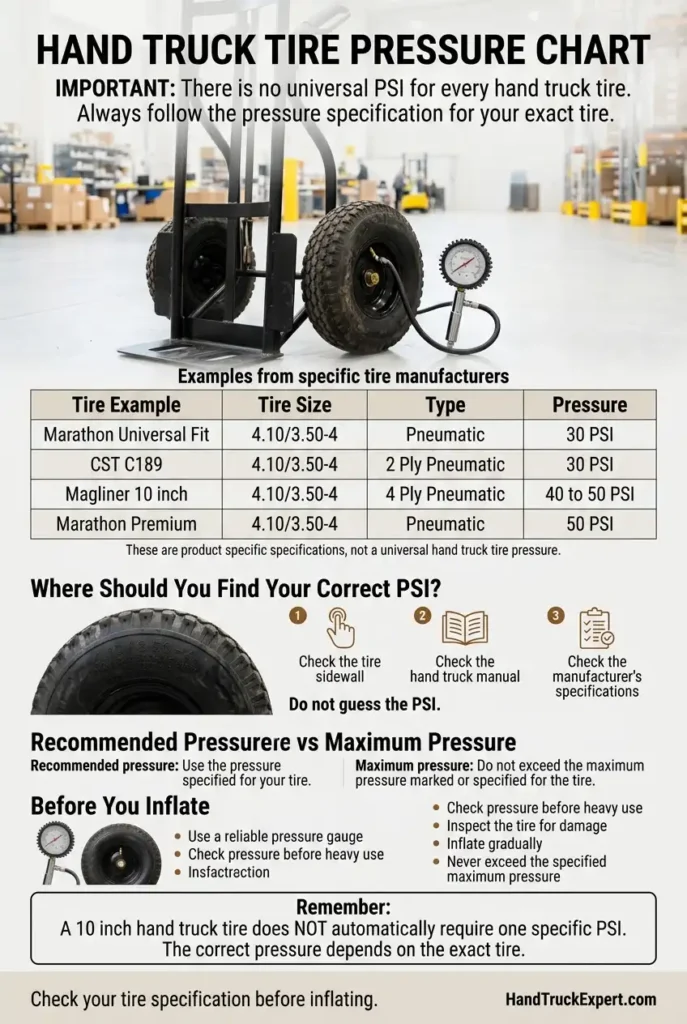
The specific PSI a pneumatic hand truck tire needs depends on tire size, internal construction, ply rating, and intended load capacity.
A lightweight two ply tire designed for general household use has very different pressure requirements than a four ply commercial tire built for industrial transport. Thicker tires with higher ply ratings generally support heavier loads and often require higher air pressure to maintain their shape under weight.
Because of these structural variations, never guess the PSI for your tires. Two tires that look identical from the outside may have completely different internal reinforcement and require different inflation levels. Use the exact pressure specification established for your specific tire model.
Hand Truck Tire Pressure Chart
Where Can You Find the Correct PSI?
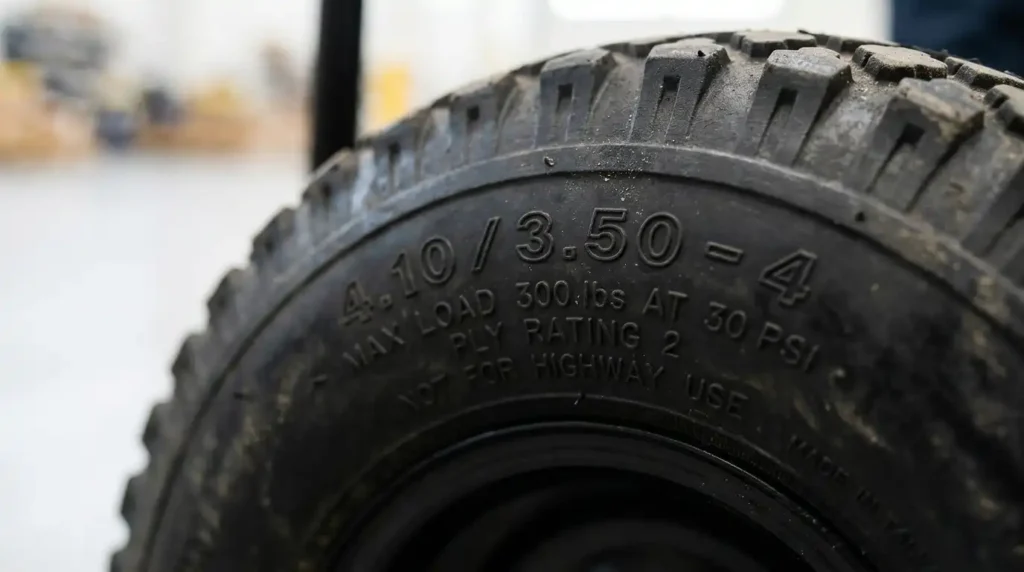
When you need to find the correct tire pressure for your hand truck, check these sources in order:
- The tire sidewall: Look closely at the raised lettering molded into the rubber. Many tires display the maximum cold pressure rating or a specific inflation range.
- The hand truck owner manual: The original equipment manual usually lists the recommended operating pressure for the stock tires.
- The hand truck manufacturer specifications: Check the product specification sheet on the manufacturer website using the model number of your cart.
- The tire manufacturer specifications: If you replaced the original tires with aftermarket rubber, check the tire manufacturer technical data sheet.
If the markings on an old tire are completely worn off and you cannot find documentation, do not guess. Contact the hand truck manufacturer or install a replacement tire with clear, legible specifications.
How to Check Hand Truck Tire Pressure?
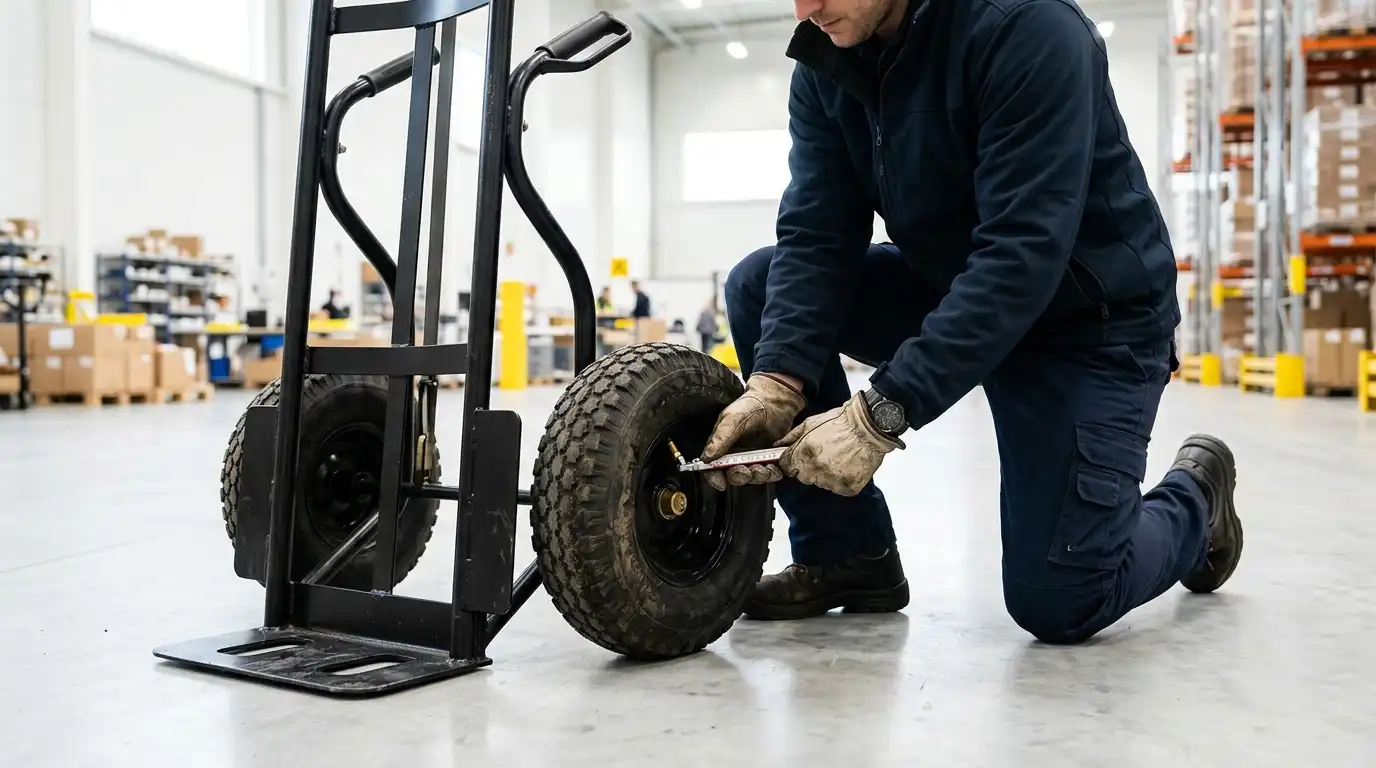
Checking tire pressure takes less than two minutes and prevents uneven handling. Use an accurate pencil gauge or a digital tire pressure gauge designed for low to medium pressure ranges.
- Park the hand truck on a level, stable floor and lean it safely against a wall or lay it flat on its back.
- Locate the valve stem on the wheel hub.
- Unscrew the protective plastic valve cap.
- Press the pressure gauge straight and firmly onto the valve stem to prevent air leakage while reading.
- Read the pressure display on the gauge.
- Compare that reading with the manufacturer specification.
- Add air with a pump or release air by pressing the small center pin inside the valve stem if necessary.
- Screw the valve cap back on tightly to keep dirt and moisture out of the valve core.
How to Inflate a Hand Truck Tire?
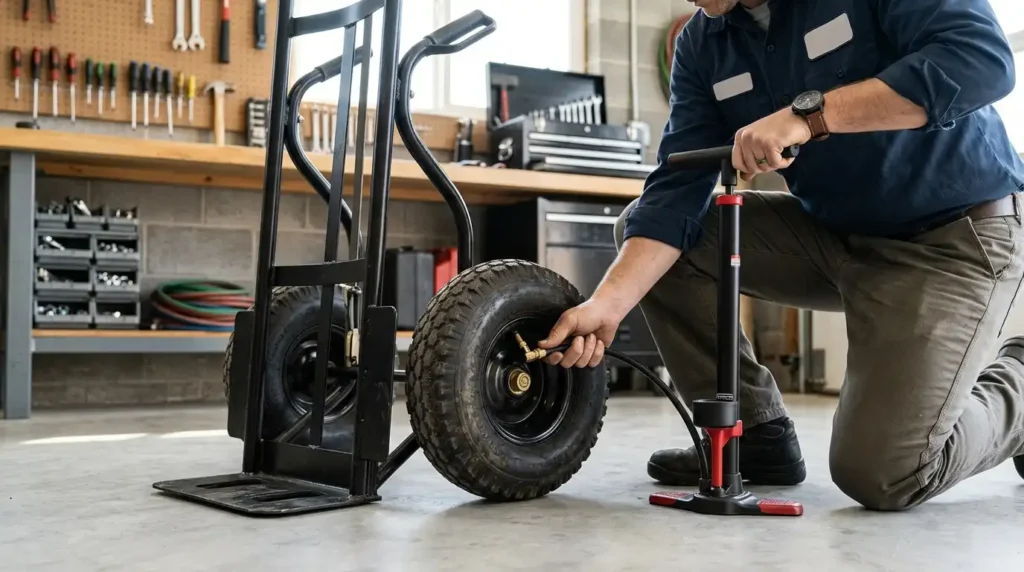
Pneumatic hand truck tires have small air volumes. They fill rapidly, meaning an unregulated high pressure air compressor can overinflate and damage a hand truck tire in less than two seconds.
Use a manual bicycle floor pump or a hand pump whenever possible. Manual pumps give you complete control and make it easy to avoid sudden overinflation. If you choose to use an air compressor, adjust the line regulator to a low setting and add air in brief, controlled bursts. Check the pressure with your gauge after every short burst.
Stop immediately once the tire reaches the manufacturer recommended operating pressure. Do not inflate past the maximum limit marked on the sidewall. Review our practical guide on how to inflate hand truck tires for detailed inflation techniques.
Always inspect the wheel before adding air. If the rubber shows deep weather cracking, the rim is bent, or the valve stem is torn, stop inflating. A compromised wheel can fail under pressure. When a tire is damaged beyond safe use, learn how to change a hand truck tire to install a safe replacement.
What Happens When a Hand Truck Tire Is Underinflated?
Underinflated tires create significant physical challenges during manual material handling:
- Increased rolling resistance: A soft tire flattens out against the floor, creating a wider contact patch that increases friction.
- Higher physical exertion: The operator must use significantly more muscular force to push, pull, and turn the cart.
- Premature tire wear: Underinflation causes the tire shoulders to carry too much weight, leading to uneven tread wear and internal cord damage.
- Rim slipping: Extremely low pressure can allow the tire bead to slip around the rim or pinch the inner tube.
Workplace safety research by OSHA notes that underinflated or unevenly inflated hand truck tires substantially increase the push and pull forces needed to move materials, which directly raises the risk of operator fatigue and back strain.
What Happens When a Hand Truck Tire Is Overinflated?
Putting too much air into a hand truck tire creates a different set of hazards:
- Harsh ride quality: An overinflated tire loses its ability to absorb floor shocks, transferring vibrations directly into the frame and the cargo.
- Instability over obstacles: Overly hard tires bounce violently when rolling over thresholds, dock plates, and gravel, increasing the risk of dropping fragile goods.
- Reduced traction: A crowned tire has a smaller surface contact area, reducing grip on slick warehouse concrete.
- Component stress: Pushing tire pressure past the manufacturer maximum rating puts unnecessary stress on the rubber casing, bead wire, and wheel rim.
Maintain the recommended pressure rather than filling the tire to absolute capacity.
Does the Load Affect Hand Truck Tire Pressure?
Cargo weight changes how much a pneumatic tire flexes, but you should not increase tire pressure beyond the stated limits just because you are moving a heavy load.
Every hand truck has a rated load capacity, and every tire has a maximum load rating tied to a specific maximum pressure. Never exceed the rated capacity of the cart or the maximum pressure rating on the tire sidewall to compensate for heavy weight. Review our guide on how to use a hand truck to ensure proper load positioning and safe handling.
Make sure both tires carry identical pressure. Uneven pressure causes the hand truck to pull toward the softer side, making heavy loads difficult to balance and steer.
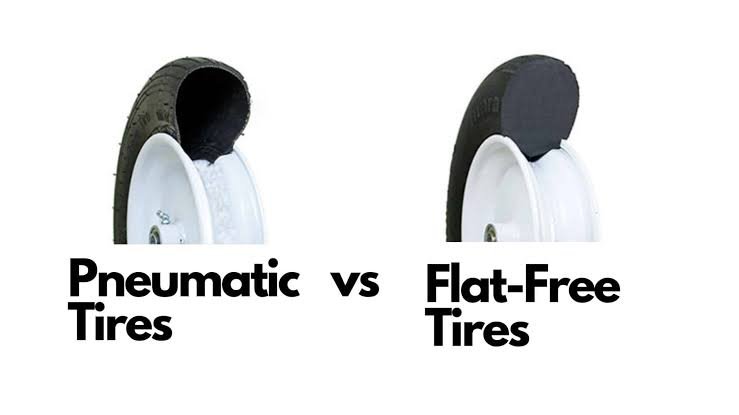
Pneumatic vs Flat Free Hand Truck Tires
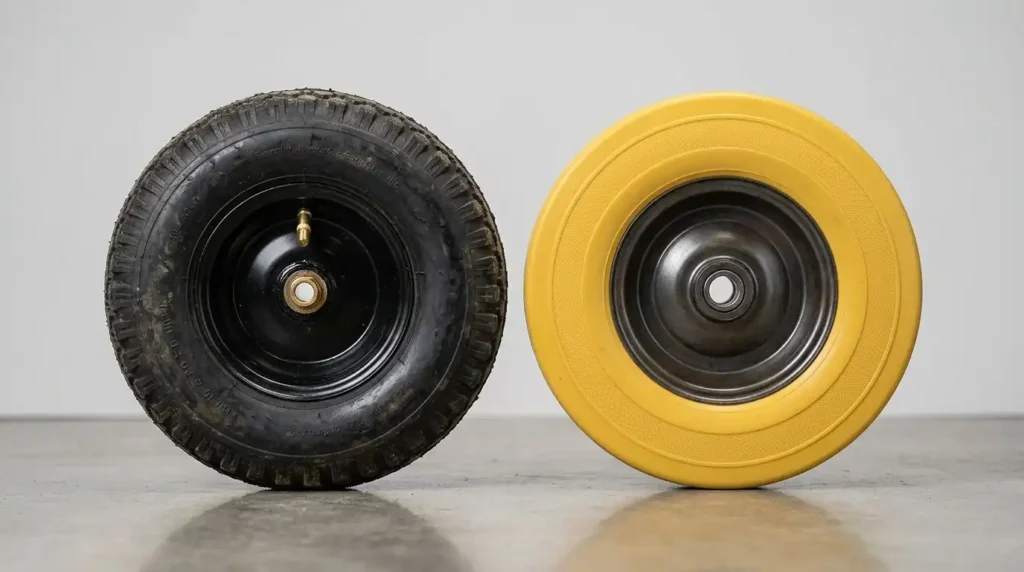
Not all hand truck tires use compressed air. Understanding which tire style you have prevents unnecessary maintenance mistakes:
- Pneumatic tires: These tires use an internal air bladder or tubeless casing filled with compressed air. They provide shock absorption, smooth rolling over rough surfaces, and light weight, but they require periodic pressure checks and air inflation.
- Flat free tires: These solid or semi pneumatic tires are made from dense polyurethane foam or solid rubber. They never go flat, do not contain air chambers, and require no pressure settings or air pumps.
If you are tired of maintaining air pressure or dealing with punctured tubes, read our comparison of pneumatic vs flat free tires to determine which option fits your workspace.
How Often Should You Check Hand Truck Tire Pressure?
Tire inspection schedules depend on how often you use the equipment. Small pneumatic tires naturally lose air pressure over time through valve cores and microscopic rubber pores, even when the hand truck sits idle.
- Workplace hand trucks: OSHA guidance for general industry material handling suggests inspecting hand trucks and checking tire pressure quarterly, or more frequently under continuous daily warehouse operation.
- Residential hand trucks: Check tire pressure before moving heavy items or after retrieving the cart from seasonal storage.
- After service: Always check pressure immediately after installing a new tube, repairing a puncture, or mounting a new wheel.
Check tire pressure whenever the hand truck feels sluggish or pulls to one side during transport.
Frequently Asked Questions
A hand truck tire should be inflated to the specific operating pressure recommended by the manufacturer, which commonly falls between 24 and 50 PSI depending on tire size and ply rating. There is no universal PSI for every model.
The PSI printed on the tire sidewall is usually the maximum safe pressure rating under full load, not the recommended everyday operating pressure. Check your hand truck manual for the ideal operating number and never exceed the sidewall limit.
Yes, overinflating a hand truck tire makes the cart bounce unpredictably over bumps, reduces tire traction, and risks damaging the wheel rim or casing.
Remove the valve stem cap, press a standard tire pressure gauge firmly onto the valve, and read the measurement. Adjust the air level until it matches the manufacturer specification.
No, flat free tires are constructed from solid rubber or closed cell polyurethane foam and do not require air pressure or valve maintenance.
Check tire pressure quarterly for commercial workplace carts, before moving heavy loads at home, and whenever the hand truck becomes noticeably harder to push.