
Moving heavy boxes, appliances, furniture, or other bulky items does not have to be difficult when you have the right equipment. A hand truck can make lifting and transporting heavy loads easier, safer, and more efficient. However, not all hand trucks are designed for the same jobs. From traditional two-wheel hand trucks and convertible models to stair climbing hand trucks and platform carts, each type serves a different purpose.
I’m Michael Carter, and I’m here to help you understand the different types of hand trucks, their common uses, and the features that matter most when choosing one. Whether you need a hand truck for home use, warehouse work, moving appliances, or handling heavy loads, this guide will help you find the right option for your needs.
So, lets get started:
What Is a Hand Truck?
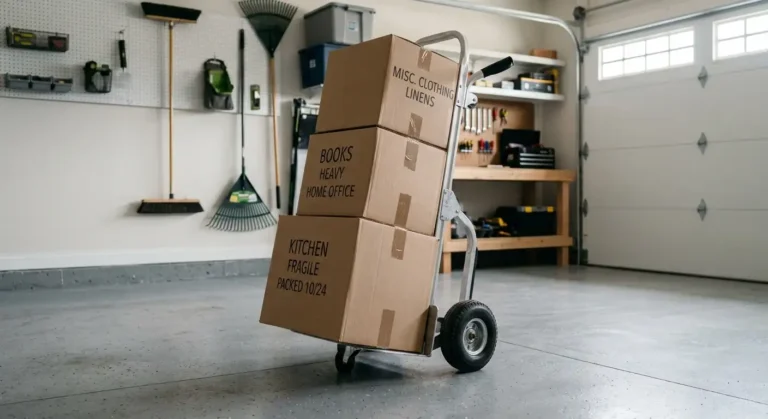
Hand trucks are manual material handling tools built with an upright frame, handles, wheels, and a bottom toe plate or load platform, depending on the design. A typical two wheel model carries a load when tilted back onto its wheels. While guides on HandTruckExpert.com show how these tools reduce the need to carry heavy objects by hand, they do not remove all lifting effort.

- Folding toe plate for compact storage
- 1000 lb. capacity as cart, 800 lb. as truck
- Converts without pins or tools
- Solid, maintenance-free never flat tires
What Is a Hand Truck Used For?
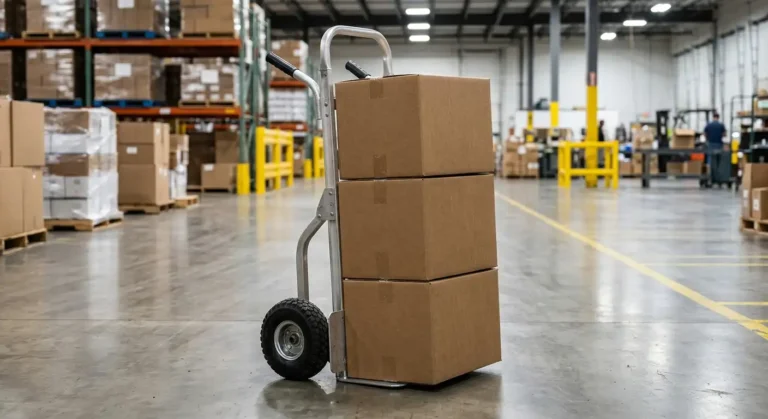
People use a hand truck to move heavy, awkward, or stacked items over short distances. Common tasks include:
- Moving cardboard boxes and packages
- Transporting household appliances, furniture, and supplies
- Handling goods in warehouses and retail shops
- Delivering products to homes or businesses
Every load must stay within the equipment’s rated capacity. Because no single model suits every task, choosing the right tool depends on the load, its shape, the surface, and the distance.
Types of Hand Trucks
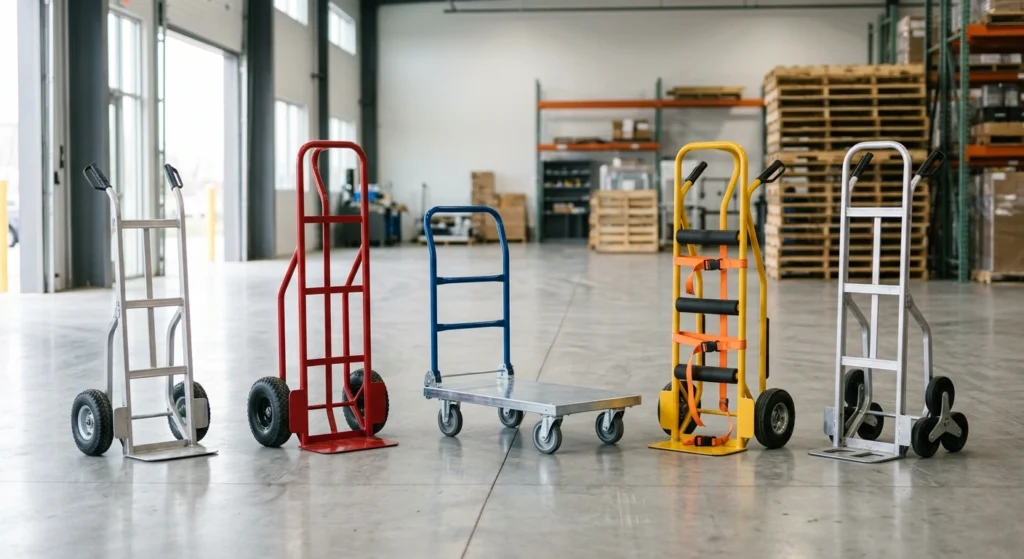
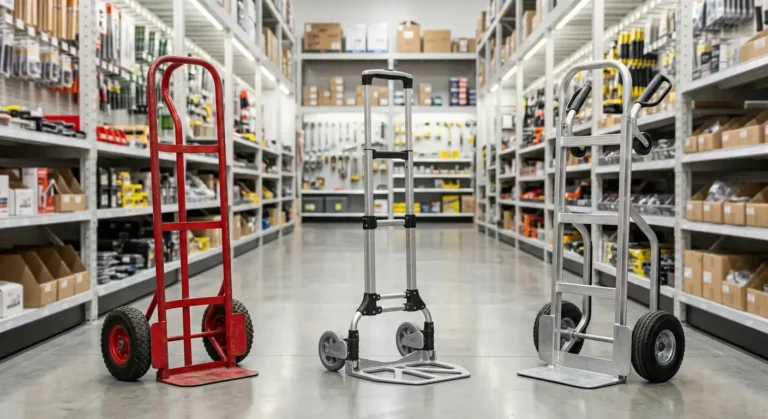
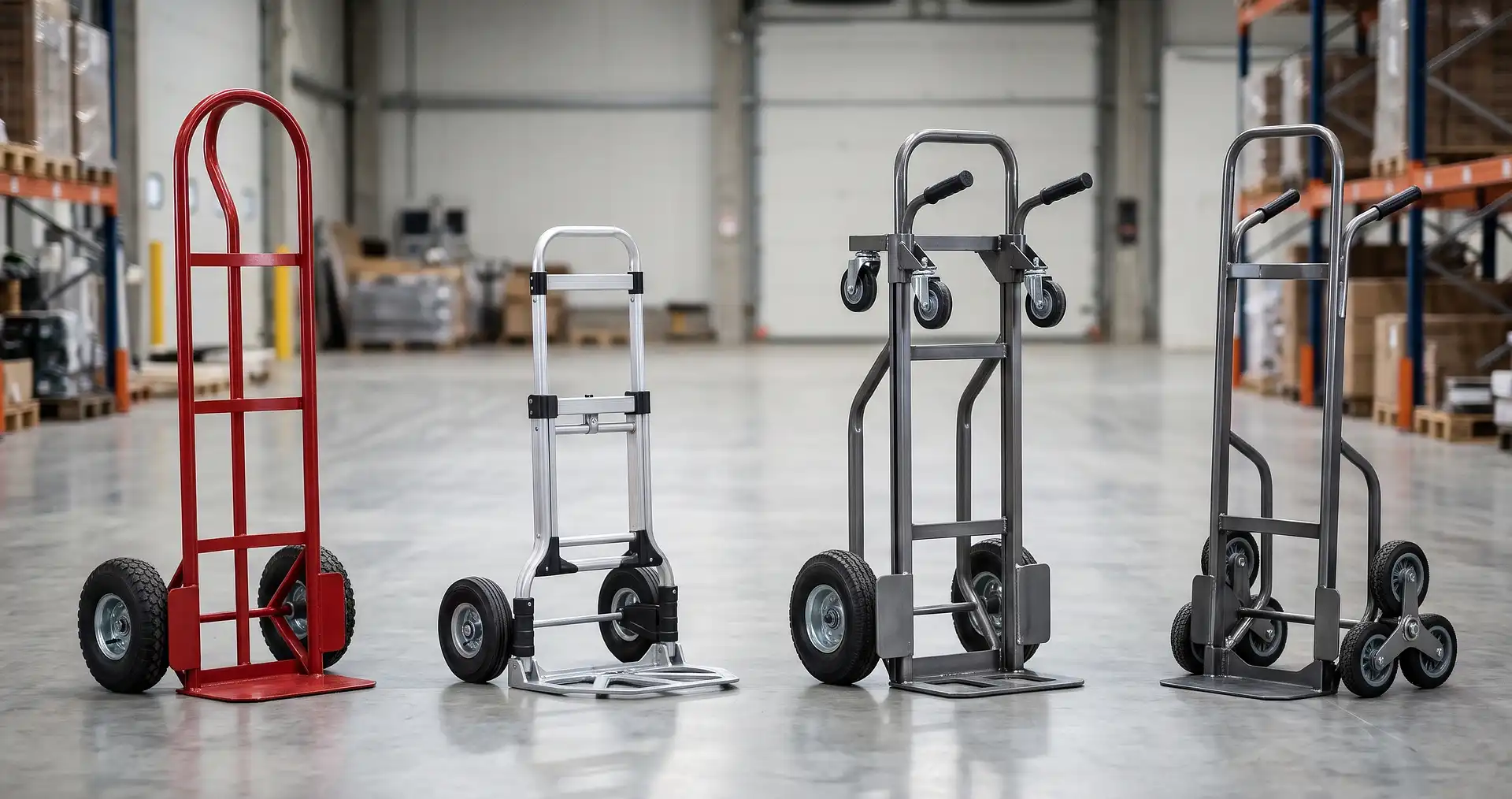
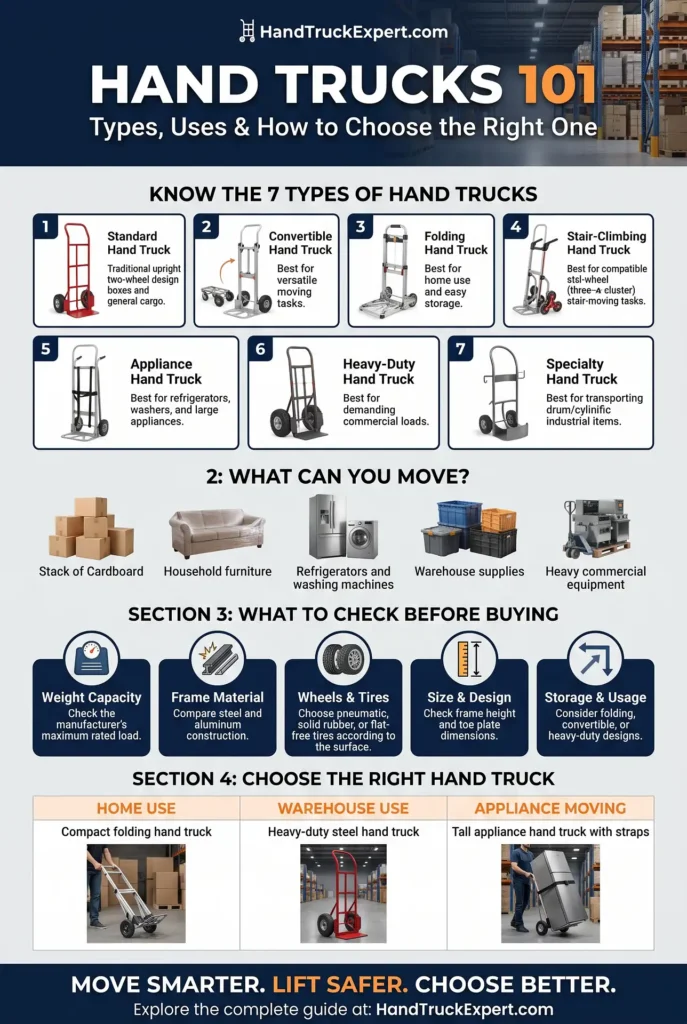
Manufacturers produce several configurations for different tasks, and specific features vary by model:
- Standard two-wheel hand trucks: Upright frames built for moving stacked boxes and general cargo.
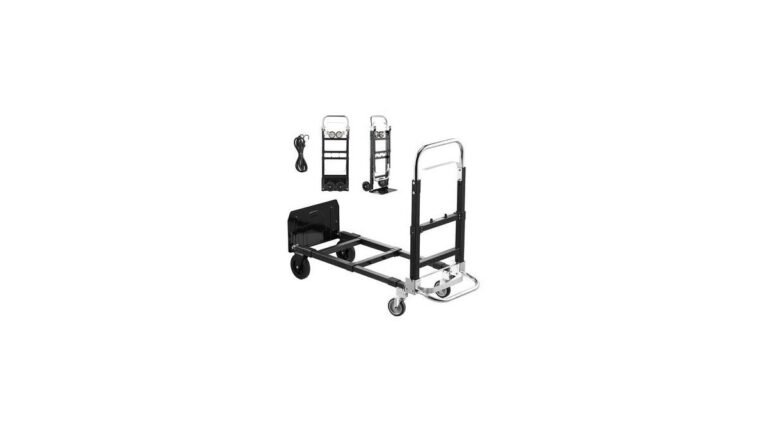
- Four-wheel convertible hand trucks: Models that switch between an upright two-wheel position and a horizontal four-wheel platform configuration, depending on their design.
- Folding hand trucks: Compact units that collapse flat for storage in vehicle trunks or closets.
- Stair-climbing hand trucks: Equipment fitted with rotating wheel clusters or motorized tracks designed for compatible steps.
- Appliance hand trucks: Tall frames often equipped with load straps and side rails for large machines.
- Heavy-duty hand trucks: Reinforced frames designed for higher weight ratings.
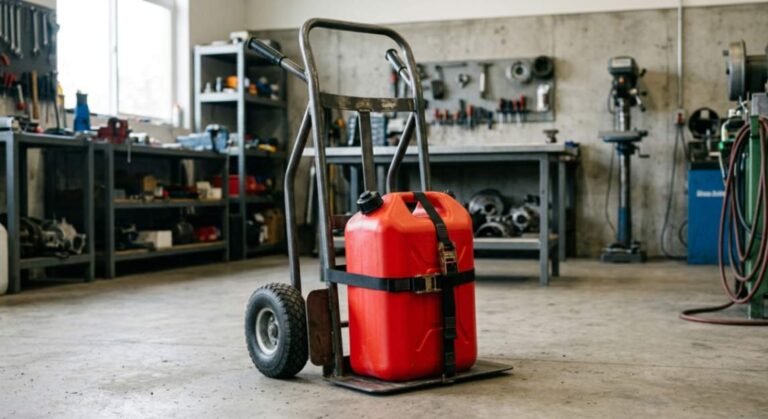
- Specialty hand trucks: Custom frames shaped for specific items like drums, pails, or gas cylinders.
Many categories overlap. A folding model may also be convertible, and an appliance model may be built for heavy loads. Review the different types of hand trucks to compare each design.
Hand Truck Materials and Construction
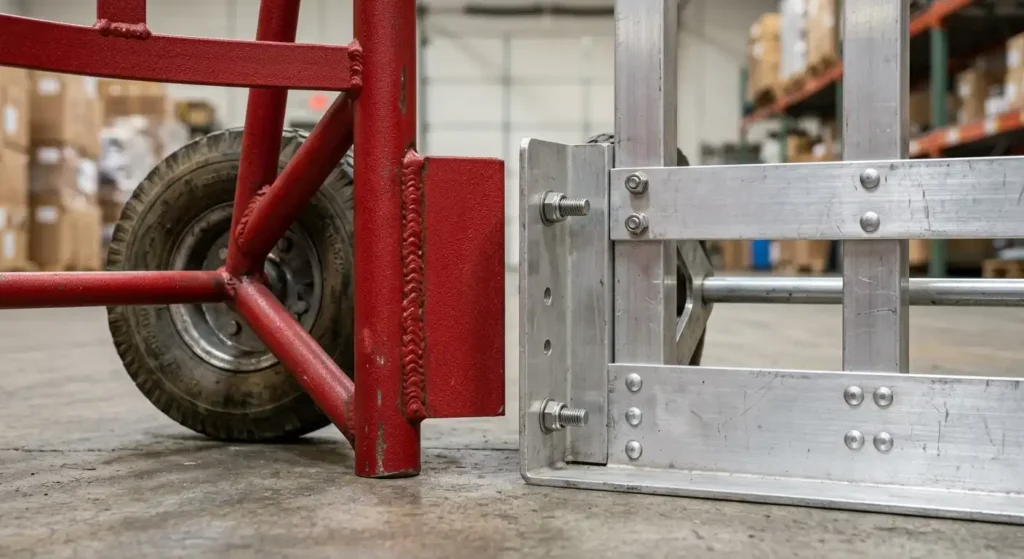
Most hand trucks are built from steel or aluminum. Steel models are often chosen for strength and demanding warehouse or delivery work. Aluminum models are often chosen for lower equipment weight, corrosion resistance, and easier handling between stops.
However, actual strength, durability, and carrying capacity depend on the overall design, construction quality, frame geometry, toe plate, handle, axle, wheels, fasteners, and manufacturer rating. Read our guide on aluminum vs steel hand trucks to compare both materials.
Hand Truck Wheels and Tires
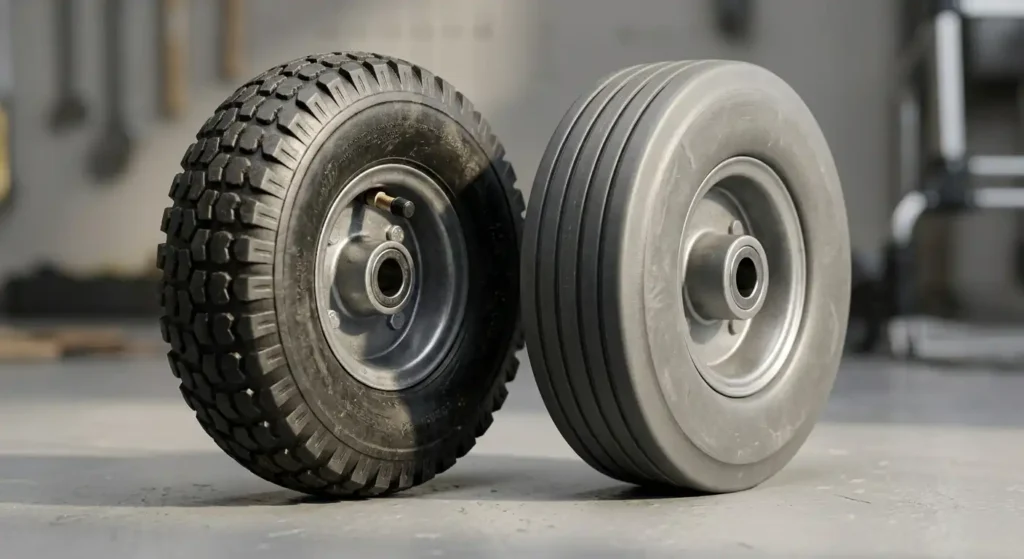
Wheel selection affects cushioning, maintenance, puncture resistance, and rolling effort across different surfaces:
- Pneumatic tires: Air-filled tires that cushion loads over uneven outdoor ground, though they require air pressure maintenance and can puncture.
- Solid rubber tires: Puncture-resistant wheels suited for smooth indoor floors, offering less shock absorption on rough surfaces.
- Flat-free tires: Non-pneumatic foam or polyurethane tires that cannot go flat while offering moderate cushioning.
Performance varies by tire compound, tread, and wheel bearing design. Compare pneumatic versus flat free tires to match your surface conditions.
Hand Truck Weight Capacity and Size
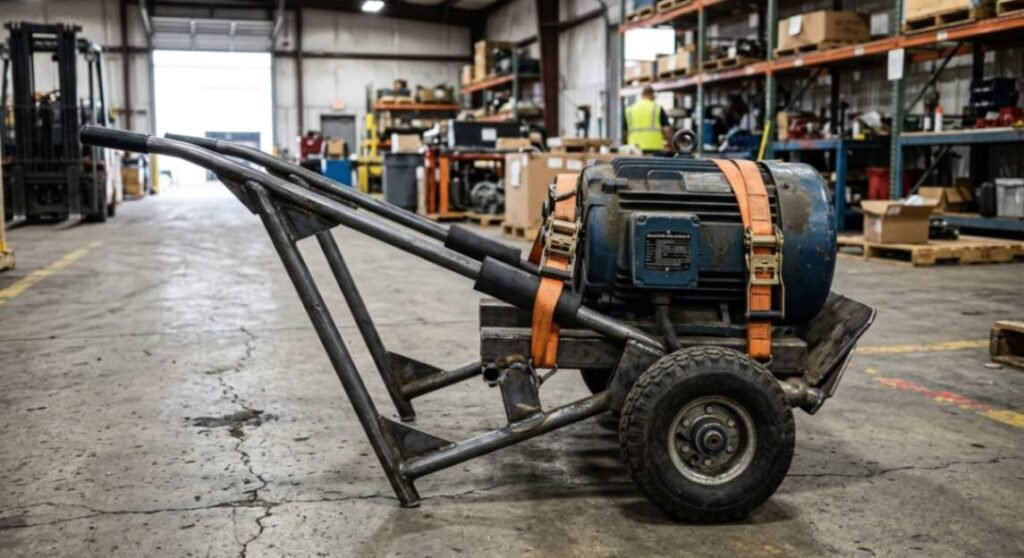
Every hand truck has a rated load capacity set by its manufacturer, and users must never exceed this limit. Physical dimensions are equally important for safe balance and intended use. Toe plate width and depth, frame height, load dimensions, and wheel placement determine whether an item sits securely on the frame.
A load may fall within the stated weight limit yet still be unsuitable if it is too wide, unstable, or difficult to secure. Read more about hand truck weight capacity before selecting a model.
How to Use a Hand Truck Safely?

Following OSHA materials handling guidance and your product manual helps reduce handling hazards:
- Inspect the frame, wheels, and fasteners before use.
- Check the load weight against the manufacturer’s rated capacity.
- Place the toe plate fully under the load as intended.
- Keep the load stable, placing heavy items at the bottom, and secure it when necessary.
- Tilt and move the hand truck according to the manufacturer’s instructions.
- Maintain a clear path and control the load when turning or stopping.
Stairs require extra caution, and users must not assume a standard hand truck is safe for steps. See our guides on how to use a hand truck and using a hand truck on stairs.
Best Hand Truck for the Money
- Folding toe plate for larger loads and compact storage
- 1000 lb. capacity as 4-wheel cart and platform cart
- 800 lb. capacity as 2-wheel hand truck
- One-hand conversion, no pins or tools needed

- 600 lb. capacity with durable steel construction
- Matte black powder-coat resists rust and corrosion
- 10 in. pneumatic tires roll over rough surfaces
- Nonmarking tires leave no marks on finished floors

- Lightweight aluminum frame supports up to 309 lb
- Telescoping handle extends up to 47.2 inches
- Oversized loading plate holds larger items
- 7-inch PP + EVA wheels roll quietly

- 6 wheels in tough TPE material resist wear
- 2 fixed front wheels plus 4 swivel wheels
- Adjustable platform fits items of various sizes
- Two elastic ropes secure items during transport

- Durable steel frame
- Quick conversion with no pins or tools
- Use as 2-wheel hand truck or 4-wheel cart
- Folds flat for transport and storage

- 3-in-1 design converts with no bolts or screws
- 440LBS capacity in 2-wheel mode
- 770LBS capacity in 4-wheel lifting mode
- TPR and PP tri-wheel system for stair climbing

- 3-in-1 converts from 2-wheel to 4-wheel with no tools
- Steel frame supports up to 500 lbs in 4-wheel mode
- 220 lbs capacity in 2-wheel mode
- Two 4-inch 360° swivel front wheels with brakes

- Sold as 1 Each
- One-hand conversion for 3 different uses
- Two wheel hand truck or assisted hand truck or four wheel hand cart
- For transporting supplies or equipment

- No assembly required, ready to use out of the box
- 2-wheel upright hand truck holds 300 lbs
- 4-wheel platform dolly holds 600 lbs
- Includes two bungee cords

- 1000 lb. capacity as 4-wheel cart and platform cart
- 800 lb. capacity as 2-wheel hand truck
- Folding toe plate for larger loads and compact storage
- Solid maintenance-free never flat 10" tires
Review our in detailed guide on the best hand trucks for the money.
Hand Truck vs. Dolly vs. Cart
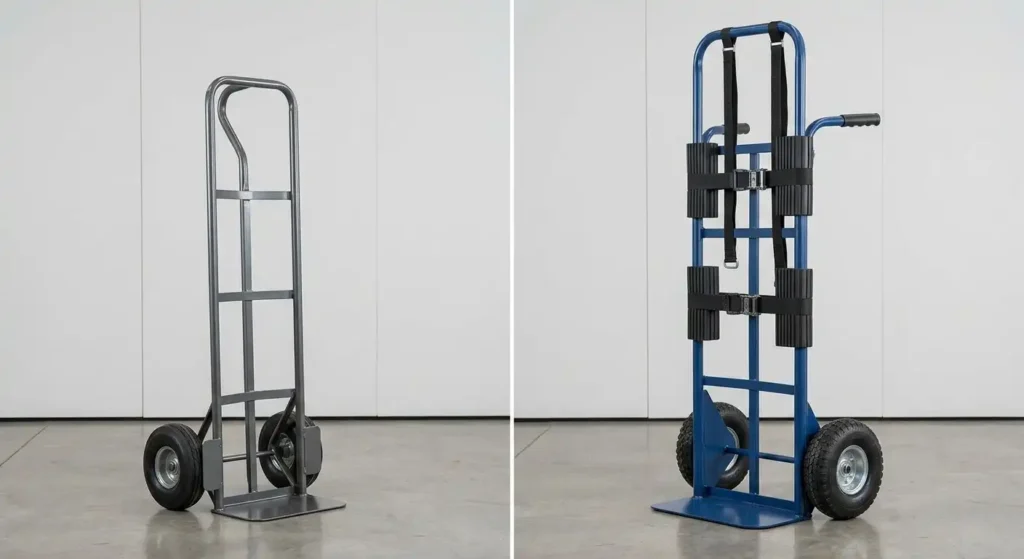
These tools support and move loads in distinct ways:
- Standard hand truck: Supports a load on a bottom toe plate and rolls on two wheels when tilted backward.
- Platform dolly: Supports a load on a low horizontal four-wheel platform without an upright frame.
- Utility cart: Features one or more horizontal shelves or platforms and a handle for pushing on four wheels.
Equipment designs vary, and convertible models can serve more than one purpose. Compare a hand truck vs dolly to pick the right tool based on load shape, stability, workspace, and maneuverability.
How to Choose the Right Hand Truck?
Use this checklist to match a hand truck to your tasks:
- Maximum load weight: Select a rated capacity that safely covers your heaviest loads.
- Load dimensions and shape: Match the frame height and toe plate size to your cargo.
- Frequency of use: Daily commercial work demands heavier construction than occasional household tasks.
- Indoor or outdoor surfaces: Choose wheel and tire types suited to your floors or outdoor terrain.
- Material and design: Weigh steel versus aluminum construction, and decide whether a folding, convertible, or stair climbing design fits your workflow.
- Storage, budget, and maintenance: Check available storage space and ongoing tire or hardware upkeep needs.
Review our detailed guide on how to choose the right hand truck.
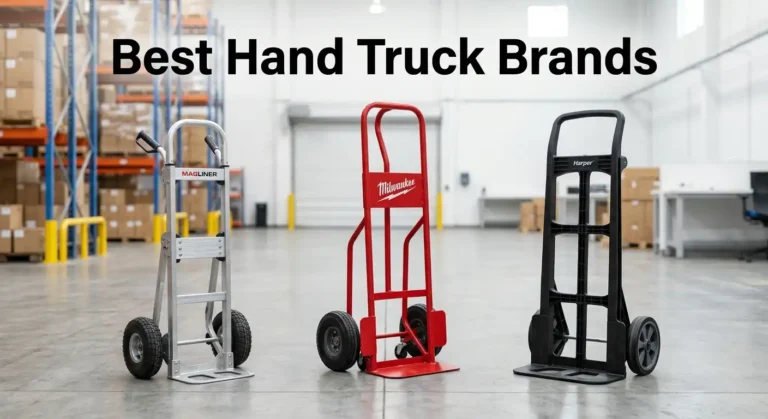
Best Hand Truck Brands
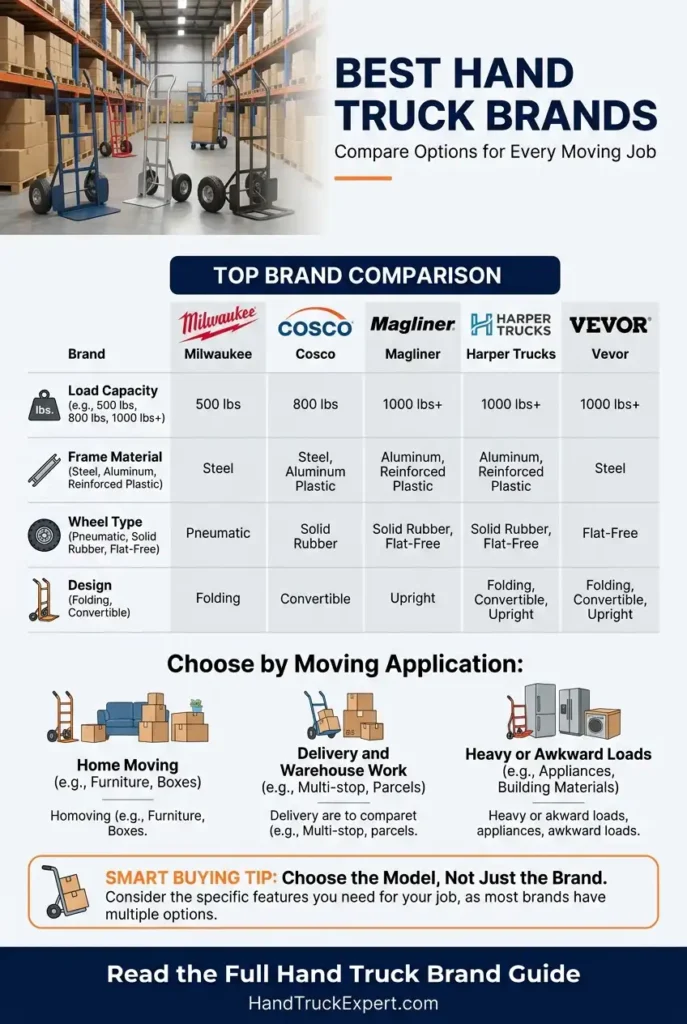
| Brand | Best For | Relevant Product Types | Main Buying Consideration |
| Milwaukee | Heavy duty utility and contractor tasks | Standard upright steel, convertible steel, appliance dollies | Durable powder coated steel construction, though frame weights are heavier. |
| Magliner | High volume commercial distribution and route delivery | Modular aluminum two wheel trucks, convertible hand trucks, stair climbers | Lightweight ergonomic aluminum components; higher initial investment cost. |
| Cosco | Versatile home, office, and light commercial moving | Multi position convertible trucks, compact folding hand trucks | Excellent multi-functional value, though limited for ultra-heavy industrial loads. |
| Harper Trucks | Corrosion resistant general utility and industrial use | Injection molded glass filled nylon, welding steel hand trucks | Lightweight composite frames that resist chemicals, rusting, and metal fatigue. |
| VEVOR | Specialty moving tasks and budget-conscious transport | Stair climbing hand trucks, folding aluminum trucks, convertible models | High feature versatility at low price points; weight capacities require verification per model. |
| Wesco | Industrial manufacturing, warehouse, and drum handling | Heavy duty steel, aluminum, machine movers, specialized drum trucks | Commercial durability built for rigorous environments; generally higher price points. |
You should prioritize suitability, capacity, stability, and safe handling rather than price alone when comparing hand truck brands.
Common Uses and Limitations
While standard models handle stacked moving boxes and warehouse cases well, tall refrigerators, washers, and bulky furniture present extra challenges. As noted in OSHA ergonomics resources, heavy or awkward loads often require specialized equipment or assistance.
Large items may need an appliance hand truck with straps or help from a second person. Stairs, uneven ground, and unstable loads also increase handling difficulty.
Hand Truck Maintenance
Routine inspections help keep equipment in safe working order. Check regularly for bent or cracked frames, loose or missing fasteners, worn tires and wheels, axle or bearing problems, and proper pneumatic tire pressure where applicable. Never use damaged equipment, and always follow the manufacturer’s inspection and maintenance instructions.
Frequently Asked Questions
It helps you move suitable loads on wheels instead of carrying the entire load by hand.
A typical hand truck uses an upright frame and bottom toe plate that tilts onto two wheels, whereas a dolly supports items on a low, horizontal four-wheel platform.
Capacity varies widely by model, material, and design. Always check and follow the manufacturer’s rated capacity for your specific hand truck.
Only equipment specifically designed and approved for the intended stair use should be considered, and the manufacturer’s instructions and load limits must be followed.
Neither material is universally better. The right choice depends on load requirements, equipment design, portability, durability, and intended use.
Conclusion
Selecting the right hand truck depends on your load, rated capacity, wheel type, terrain, and intended use. Always check the manufacturer’s specifications and safety instructions before buying or operating material handling equipment.
Authoritative References
- Occupational Safety and Health Administration (OSHA) – Materials Handling and Storage: Provides workplace safety standards and guidance on inspecting equipment, respecting rated capacities, and maintaining stable loads. Link: https://www.osha.gov/materials-handling
- Occupational Safety and Health Administration (OSHA) – Ergonomics: Outlines ergonomic principles for manual material handling and using mechanical assist devices to reduce physical strain. Link: https://www.osha.gov/ergonomics
- National Institute for Occupational Safety and Health (NIOSH) – Ergonomics and Musculoskeletal Disorders: Details safe lifting practices, load stability factors, and equipment considerations when moving heavy materials. Link: https://www.cdc.gov/niosh/ergonomics/index.html
- MHI (Material Handling Industry) – Ergonomic Assist Systems and Equipment (EASE): Industry resource covering definitions and safe operational practices for manual two-wheel hand trucks, carts, and dollies. Link: https://www.mhi.org/ease