
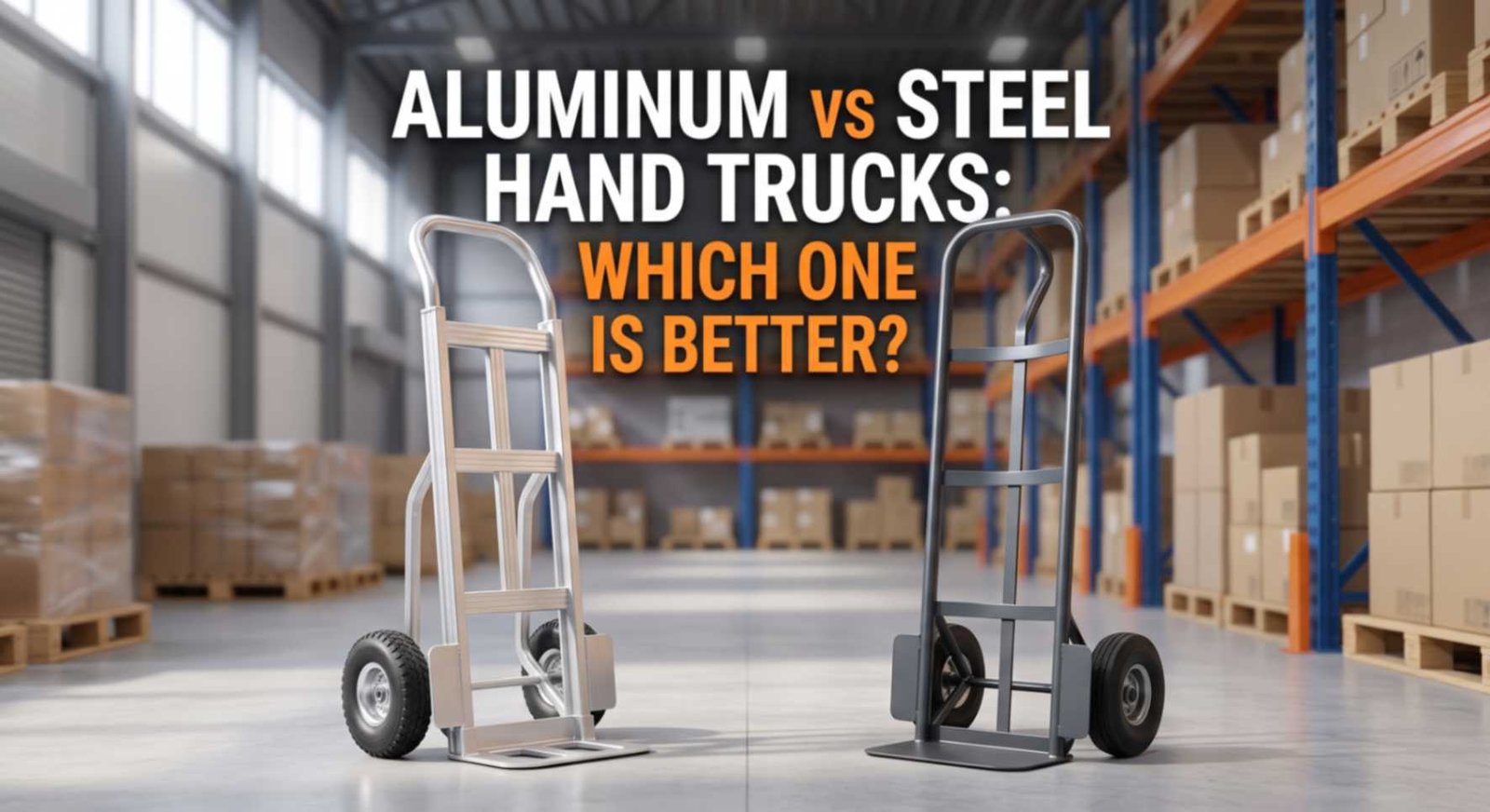
Material selection directly dictates equipment weight, ergonomic strain, load capacity, and long term durability. When choosing between aluminum and steel hand trucks, neither material serves as a universally superior choice for every material handling scenario.
Steel hand trucks are often attractive for demanding, stationary, or high-impact applications where frame rigidity and substantial structural mass are priorities. Conversely, aluminum hand trucks are frequently preferred when lower equipment weight, daily portability, and natural corrosion resistance are essential.
The right choice depends on the complete engineering of the hand truck including frame geometry, wall thickness, axle construction, and certified manufacturer specifications rather than the raw material alone.
Evaluating how these two metals perform across different working environments will help determine the optimal tool for your specific operational needs.
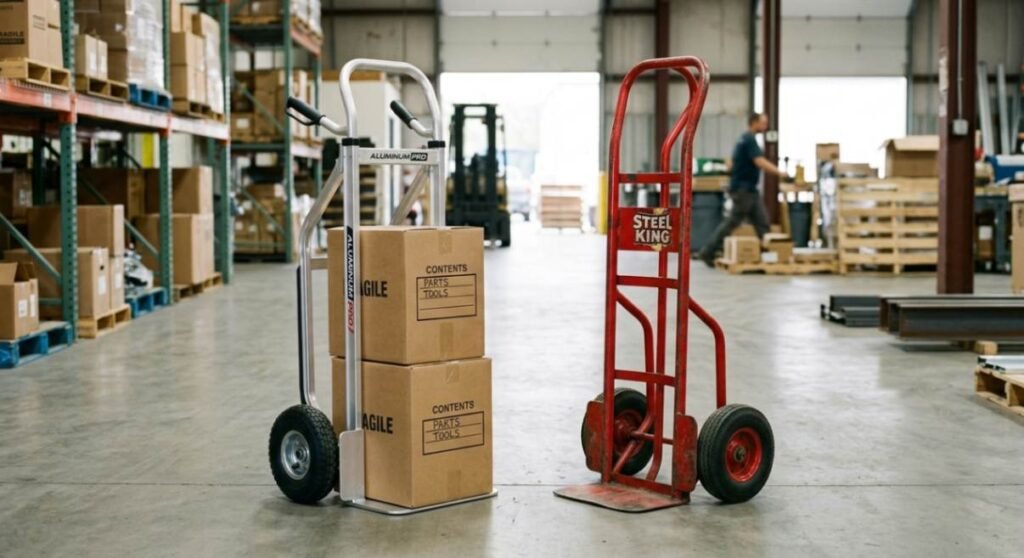
Aluminum vs Steel Hand Trucks: Quick Comparison
| Feature | Aluminum Hand Truck | Steel Hand Truck |
| Equipment Weight | Generally lighter | Generally heavier |
| Material Strength | High strength-to-weight ratio | High overall strength and rigidity |
| Portability | Excellent for transport and lifting | Moderate; heavier to hoist repeatedly |
| Corrosion Resistance | Naturally corrosion-resistant | Dependent on protective coatings |
| Heavy-Duty Suitability | Model-dependent engineering | Frequently selected for demanding tasks |
| Maneuverability | Lower empty weight aids handling | Dictated by load distribution and wheels |
| Outdoor Suitability | High natural resistance to moisture | Requires intact paint or galvanization |
| Price Point | Varies by alloy, design, and modularity | Varies by gauge, finish, and build |
| Maintenance | Low frame maintenance | Requires monitoring for paint chips and rust |
| Best Suited For | Route delivery, mobile trades, wet areas | High-impact hubs, static warehouse use |
These comparisons reflect typical production standards. A heavy gauge aluminum frame can outperform an entry level thin walled steel frame, just as a specialized tubular steel cart can offer superior torsional stiffness under extreme off-center loads.
What Is an Aluminum Hand Truck?
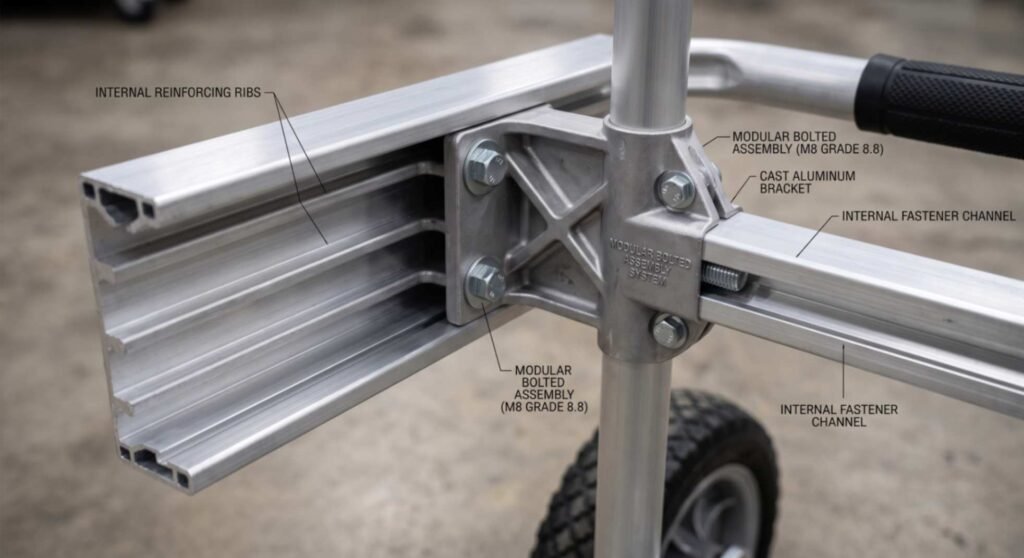
An aluminum hand truck is constructed using structural aluminum alloys frequently 6000-series alloys like 6061-T6 engineered to maximize structural integrity while reducing total equipment mass. Aluminum has roughly one-third the density of steel, allowing manufacturers to create thick, rigid structural channels and extruded tubular frames that remain lightweight.
These hand trucks are primarily utilized in dynamic work environments where operators must repeatedly lift, maneuver, or transport the empty equipment alongside cargo. Route delivery drivers, beverage distributors, and field technicians rely heavily on aluminum models because lowering tare weight reduces physical fatigue across repetitive work cycles.
Advantages of Aluminum Hand Trucks
- Lightweight Frame Dynamics: The lower density of aluminum reduces physical exertion when pushing empty carts, tilting back heavy loads, or maneuvering through tight retail aisles.
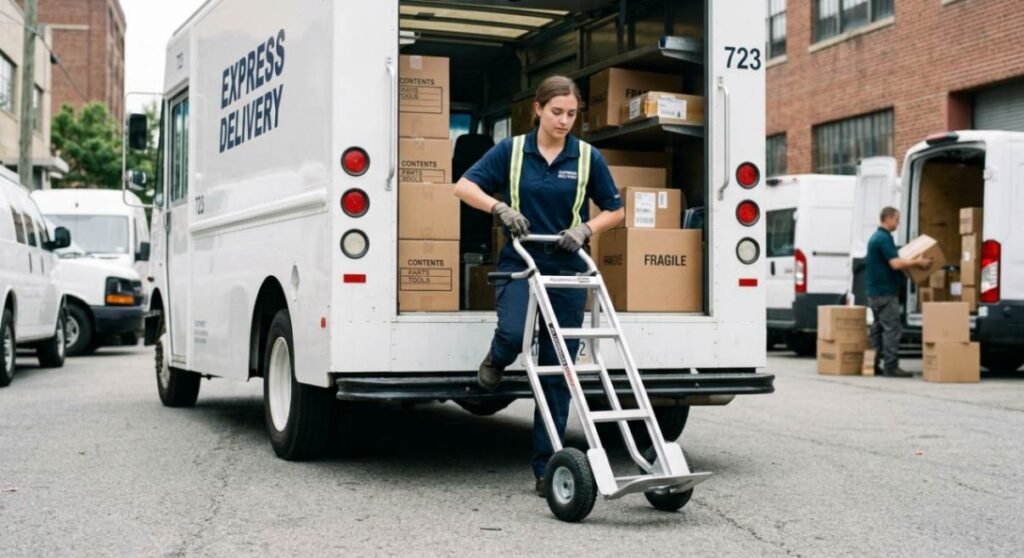
- Vehicle Loading Efficiency: Lighter equipment allows delivery personnel to hoist the hand truck in and out of step vans, box trucks, and service vehicles with significantly less lower-back strain.
- Inherent Corrosion Resistance: Aluminum forms a microscopically thin, self-repairing aluminum oxide film upon contact with oxygen, preventing deep-seated rust in damp environments.
- Modular Assembly Options: Many professional aluminum models utilize bolted, interlocking modular components rather than permanent welds, allowing users to replace individual toe plates, stair climbers, or handles if damaged.
Disadvantages of Aluminum Hand Trucks
- Higher Material and Production Costs: High-grade extruded alloys and precision assembly often result in a higher upfront purchase price compared to basic welded steel units.
- Lower Torsional Flex Resistance: Under extreme, uneven point loads, aluminum frames can experience higher elastic deflection than heavy-gauge structural steel.
- Specialized Repair Requirements: If an aluminum structural member cracks or bends, field-repairing it requires dedicated TIG welding equipment and technical expertise, whereas steel is more universally weldable.
What Is a Steel Hand Truck?
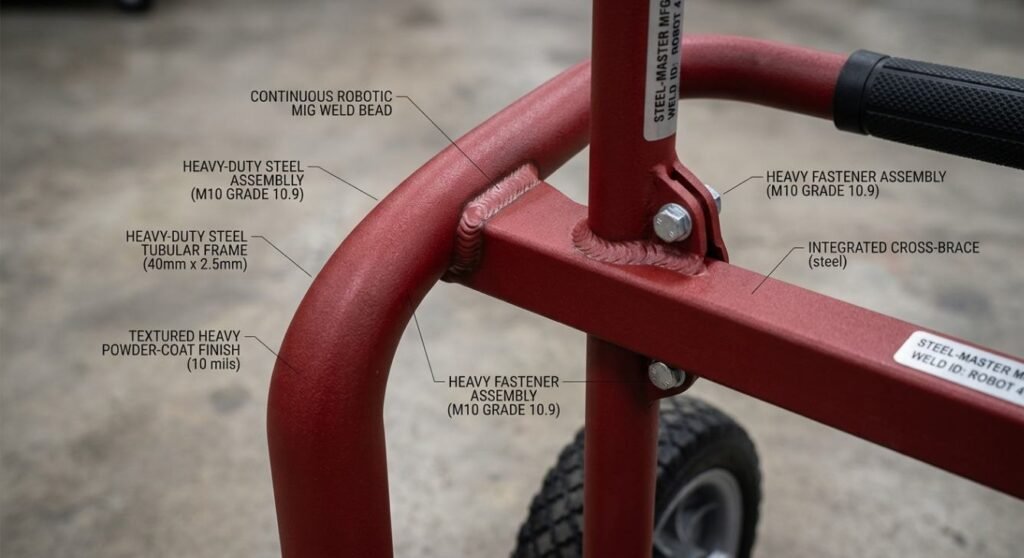
A steel hand truck is built using carbon steel or alloy steel tubing, solid bar stock, and stamped or cast steel toe plates. Steel is prized in industrial manufacturing for its high modulus of elasticity, exceptional yield strength, and structural rigidity under extreme compressive and torsional stresses.
Steel models are the industry benchmark in static industrial facilities, factory floors, and heavy fabrication shops. Because steel provides substantial mass and structural resistance to abrasion and gouging, it excels in rugged environments where equipment is subjected to rough handling, mechanical loading docks, and severe mechanical impacts.
Advantages of Steel Hand Trucks
- Exceptional Rigidity and Stiffness: Steel resists frame deflection under concentrated, tall, or uneven loads, providing a firm, stable base for moving dense items like machinery and crated goods.
- High Impact and Abrasion Resistance: Steel frames can withstand severe impacts from loading-dock edges, warehouse racking, and rough freight without cracking.
- Cost-Effective Raw Manufacturing: Basic tubular steel construction is economical to produce, often making standard steel hand trucks more budget-friendly initially.
- Straightforward Maintenance and Repair: Steel components can be easily straightened, reinforced, or re-welded in standard industrial maintenance shops using standard MIG or stick welding processes.
Disadvantages of Steel Hand Trucks
- Higher Equipment Mass: The substantial weight of steel increases physical strain when the equipment must be manually lifted into trucks or carried up stairwells without a load.
- Vulnerability to Surface Oxidation: Steel oxidizes rapidly when exposed to moisture and air. If the protective powder coating or paint chips, rust will form on the exposed base metal.
- Operator Fatigue Over Long Shifts: Pushing and pulling a heavier empty frame over long delivery routes compounds ergonomic strain over an entire workday.
Aluminum vs Steel Hand Trucks: Key Differences
Weight
The core mechanical distinction between these materials is density: structural steel weighs approximately 490 lbs/cu ft, whereas structural aluminum weighs roughly 168 lbs/cu ft.
In real-world terms, a standard industrial aluminum hand truck typically weighs between 18 and 30 pounds, while an equivalently dimensioned steel hand truck ranges from 35 to 55 pounds or more.
Consider a route delivery driver executing 25 stops daily, lifting the hand truck out of a delivery vehicle at every stop. Over an entire work shift, lifting an extra 20 pounds of steel frame weight equates to hoisting an additional 500 pounds of dead weight solely from the tool itself. In mobile operations, lower equipment weight directly impacts operator endurance and safety.
Strength
Material strength must be evaluated across yield strength, tensile strength, and structural rigidity:
- Yield Strength: The stress level at which a material permanently deforms. High-grade structural steel possesses a higher ultimate yield point than standard commercial aluminum.
- Strength-to-Weight Ratio: Aluminum delivers a remarkable strength-to-weight ratio, allowing engineers to thicken the structural walls and add internal reinforcing ribs without creating an excessively heavy product.
- Rigidity (Modulus of Elasticity): Steel is roughly three times stiffer than aluminum. Under heavy, off-balance loads, a steel frame will exhibit less flex or twist than an aluminum frame of identical dimensions.
A well-engineered aluminum frame with extruded box channels can match the practical load performance of a tubular steel frame, proving that lightweight construction does not equate to structural weakness.
Load Capacity
A common material-handling misconception is that steel hand trucks automatically possess higher load capacities than aluminum models. Material composition alone does not dictate capacity.
A hand truck’s working load limit is governed by the weakest link in its mechanical assembly:
- Toe Plate Design: Stamped vs. cast plates, plate thickness, and gusset reinforcement.
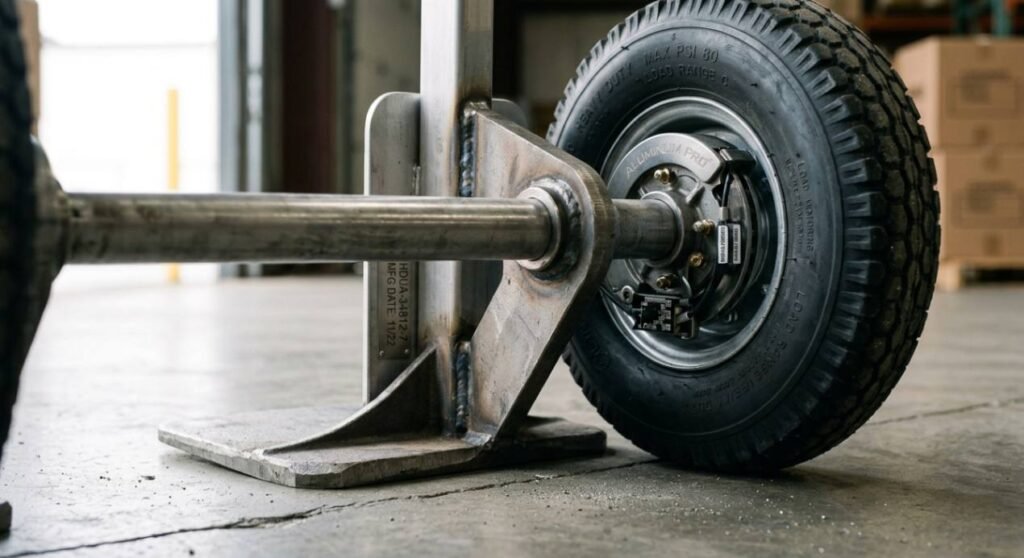
- Axle and Spindle Diameter: Cold-rolled solid steel axles withstand bending far better than hollow thin-wall axles.
- Wheel and Tire Ratings: Pneumatic, flat-free polyurethane, and solid rubber wheels each have distinct dynamic load ratings.
- Joint Fastening Method: High-tensile cross-bolts, aircraft-grade locknuts, and structural robotic welds define frame cohesion under shear stress.
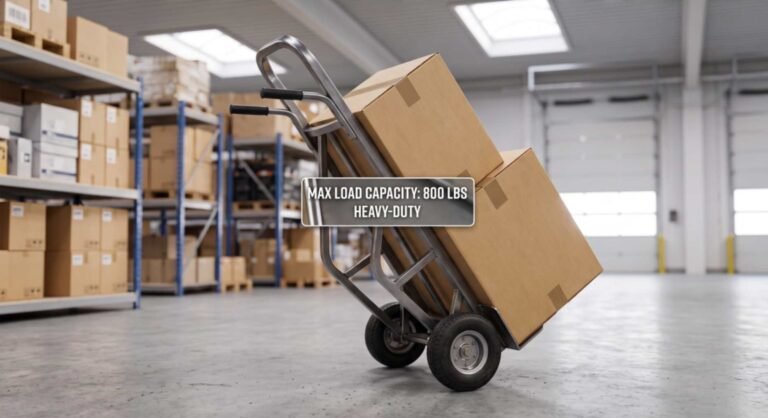
Both aluminum and steel commercial hand trucks are widely available in rated working capacities ranging from 500 lbs to over 1,000 lbs. Always rely on the manufacturer’s certified load rating plate rather than assuming capacity based on frame metal.
Durability
Durability represents an equipment’s ability to withstand long-term environmental and physical degradation:
- Impact and Gouge Durability: Steel excels in environments with high physical abuse, such as scraping against concrete curbs, dragging over metal thresholds, or sustaining impacts from dropped freight.
- Environmental Durability: Aluminum excels against atmospheric exposure, standing water, and road salt, which rapidly degrade unprotected ferrous metals.
- Fatigue Life: Steel has a distinct mechanical endurance limit; cyclic loads below this threshold will not cause structural fatigue failure. Aluminum lacks a true fatigue limit, meaning cyclic high-stress loads over decades can eventually lead to micro-cracking at structural stress risers if overloaded.
Corrosion Resistance
When steel is exposed to moisture, road salts, or high humidity, iron molecules oxidize into iron oxide (rust). This progressive reaction flakes away surface metal, exposing deeper layers to structural deterioration. Steel hand trucks rely entirely on barrier protections, such as:
- Powder coating
- Enamel paint
- Industrial galvanization (zinc immersion)
If cargo scrapes the paint down to bare metal, oxidation begins immediately unless touched up.
Aluminum naturally reacts with atmospheric oxygen to form a hard, microscopic passivation layer of aluminum oxide ($Al_2O_3$). This layer halts deep corrosion, making aluminum hand trucks naturally suited for rainy conditions, commercial kitchens, refrigerated walk-in coolers, and coastal environments.
However, aluminum can still suffer galvanic corrosion if brought into direct, wet contact with dissimilar active metals without proper isolators.
Maneuverability
While wheel selection largely governs rolling resistance, the frame’s tare weight directly controls the physical effort required to initiate movement, stop momentum, and balance tilted cargo.
A lighter aluminum hand truck allows the operator to allocate physical effort toward stabilizing the actual freight rather than fighting the cart’s structural mass. This dynamic becomes especially noticeable when navigating narrow retail hallways, swinging around residential doorframes, or guiding loads over curbs.
Conversely, the heavier base mass of a steel cart can provide a lower center of gravity when maneuvering top-heavy or tall cylindrical machinery on level warehouse concrete.
Price
The initial acquisition cost of a hand truck reflects the cost of raw materials and manufacturing processes:
- Steel Hand Trucks: Standard welded steel utility carts require less expensive raw materials and straightforward manufacturing, making basic models accessible at lower initial price points. Specialized industrial steel models with heavy-duty stair climbers or extended toe plates sit at higher price tiers.
- Aluminum Hand Trucks: Extruded structural aluminum, precision machining, and specialized modular hardware generally increase baseline manufacturing costs.
Buyers must evaluate total operational value over the equipment’s lifecycle. An aluminum hand truck that prevents driver fatigue and avoids rust-related replacement can easily offset its initial price premium over years of continuous commercial service.
Maintenance
- Aluminum Maintenance: Minimal frame upkeep. Inspect bolted cross-members periodically for fastener torque, clear debris from wheel bearings, and lubricate the axle spindles. Aluminum does not require painting or rust-inhibitor sprays.
- Steel Maintenance: Requires periodic surface monitoring. Scratches, gouges, and chipped paint from handling heavy cargo should be cleaned, primed, and coated with protective enamel to halt rust propagation. Welds must be inspected for hairline stress cracks in high-impact hubs.
- Universal Maintenance: For both materials, inspect wheel bearings, maintain pneumatic tire pressure, check toe-plate mounting integrity, and ensure handle grips remain firmly secured.
Which Is Better for Different Jobs?
Best for Heavy-Duty Warehouse Work
Recommendation: Steel (or Heavy-Duty Reinforced Aluminum)
In permanent warehouse facilities where hand trucks remain on smooth, flat concrete slabs, the weight of the frame is secondary to structural toughness. Steel hand trucks tolerate impacts from pallet jacks, forklifts, and metal racking without critical structural deformation.
However, heavy-duty extruded aluminum models with reinforced channel frames perform exceptionally well in high-throughput distribution centers when speed and ergonomics are valued.
Best for Delivery Drivers
Recommendation: Aluminum
Route delivery drivers encounter constant lifting cycles. Aluminum hand trucks significantly reduce repetitive strain injuries when pulling equipment from exterior vehicle racks, climbing curbs, or navigating stair sets across multiple daily drop-offs. The natural weather resistance of aluminum also protects the cart when mounted on exterior truck racks exposed to rain and road spray.
Best for Moving Appliances
Recommendation: Steel (Specialized Appliance Hand Trucks)
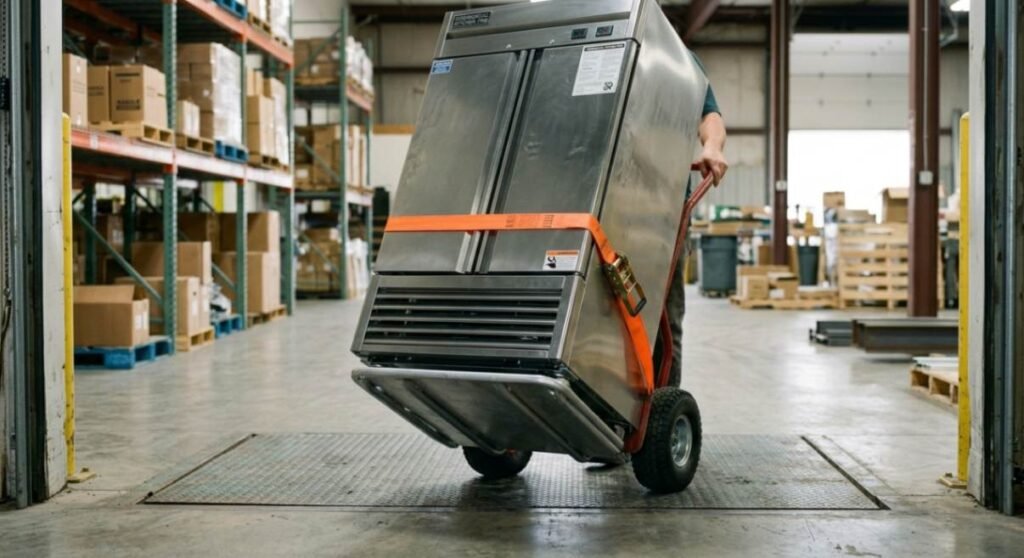
Moving major appliances (commercial freezers, washing machines, ranges) demands extreme frame rigidity and specialized structural additions. Dedicated appliance hand trucks are predominantly engineered from heavy-gauge tubular steel. The substantial frame resists torsional twist when shifting uneven internal compressor weights, while integrated stair-climbing belts, wide toe plates, and manual winch straps ensure load security.
Best for Moving Boxes
Recommendation: Aluminum or Steel (Task-Dependent)
- Commercial Courier/Logistics: Aluminum is optimal for high-volume, multi-box parcel routes where low tare weight allows faster manual staging.
- Home/Office Relocation: A standard tubular steel hand truck provides a dependable, economical solution for moving stacked corrugated boxes and small furniture across standard transitions.
Best for Outdoor Use
Recommendation: Aluminum
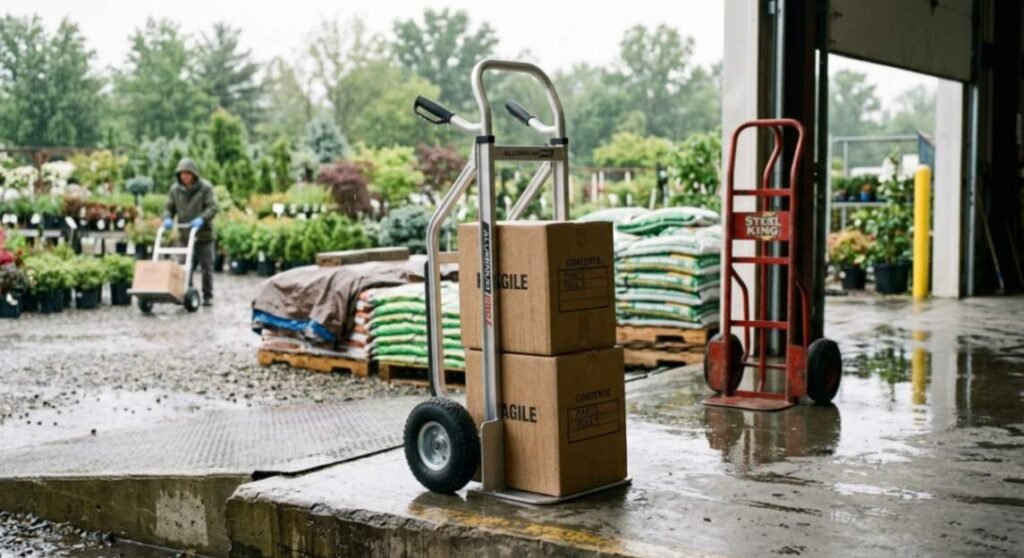
Outdoor terrain presents continuous moisture, dirt, and variable weather. Aluminum hand trucks handle rain, dew, and outdoor storage without rotting or rusting. If steel equipment is deployed outdoors, ensure it features a continuous hot-dip galvanized coating or an uncompromised industrial powder-coat finish to prevent premature oxidation.
Best for Wet or Humid Environments
Recommendation: Aluminum
In operations involving marine facilities, garden nurseries, chemical washdown rooms, meatpacking plants, and commercial walk-in refrigeration, moisture is a constant hazard. Aluminum’s natural passivation layer prevents structural decay without requiring toxic anti-rust paint coatings that can chip into sensitive food-grade environments.
Best for Frequent Loading and Unloading
Recommendation: Aluminum
Field service personnel, mobile event crews, and mobile technicians who continually stow equipment inside vans, pickup beds, or utility trailers will benefit immediately from an aluminum frame. Lower equipment weight reduces manual lifting strain and minimizes collateral scuffs to vehicle interior trim.
Best for Industrial Applications
Recommendation: Steel
Foundries, scrap recycling yards, metal fabrication facilities, and heavy industrial plant maintenance environments present severe abrasive and impact hazards. Steel frames can absorb direct strikes from dropped structural beams, endure rough towing brackets, and withstand high-heat proximity that could compromise the temper of structural aluminum alloys.
Is Aluminum Strong Enough for a Hand Truck?
Yes. High-grade aluminum alloys are exceptionally strong and more than capable of handling severe commercial material-handling tasks.
The misconception that aluminum is structurally weak stems from confusing lightweight materials with thin, low-density household items. Commercial aluminum hand trucks utilize specialized structural alloys (such as 6061-T6 or 6063-T6), which feature yield strengths comparable to mild structural carbon steels.
By extruding aluminum with engineered internal ribs, thicker wall cross-sections, and reinforced stress gussets, manufacturers build aluminum hand trucks with certified load ratings reaching 800 to 1,000 pounds or more. As long as the rated capacity matches the payload, aluminum provides structural strength equal to demanding professional tasks.
Does Steel Always Have a Higher Weight Capacity Than Aluminum?
No. Steel does not automatically provide a higher load capacity than an aluminum hand truck.
A hand truck’s maximum working capacity is determined by its overall structural engineering, not merely the atomic density of its frame metal. For example:
- A lightweight, thin-walled welded steel hand truck engineered for retail home use may carry a rated capacity of only 300 to 400 pounds.
- A commercial-grade, heavy-channel extruded aluminum hand truck can carry certified capacities of 800 to 1,000 pounds.
The strength of any cart depends on structural wall thickness, toe-plate bracket engineering, axle diameter, wheel hub bearings, and fastener sheer ratings. A well-designed aluminum hand truck frequently carries a higher certified rating than an entry-level steel model.
Aluminum vs Steel Hand Trucks: Which Should You Buy?
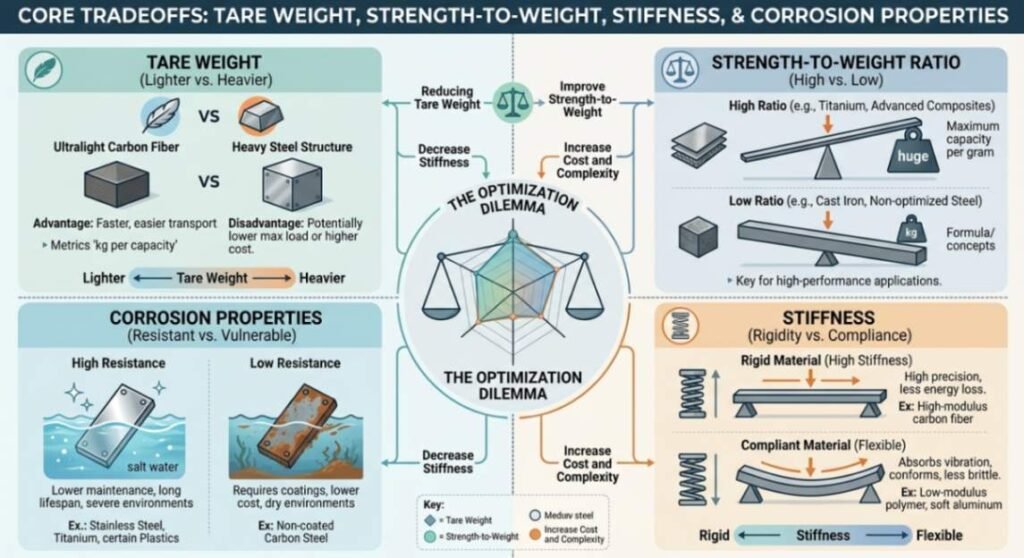
Choose Aluminum If You Prioritize:
- Low Equipment Mass: You want to minimize physical lifting effort when handling the empty cart.
- Daily Portability: You frequently transport the cart inside vans, step decks, utility beds, or trunk compartments.
- Corrosion Resistance: The cart will operate in wet environments, outdoor rain, coastal regions, or refrigerated facilities.
- Ergonomics Over Long Shifts: You run fast-paced parcel or beverage delivery routes with continuous stops.
Choose Steel If You Prioritize:
- Maximum Frame Rigidity: You need zero frame deflection when tilting dense, heavy, or uneven machinery.
- Rough Industrial Durability: The equipment will endure severe impacts, loading dock drops, and abrasive factory floors.
- Specialized Appliance Handling: You require integrated ratcheting straps, stair climber belts, and heavy steel back-rails.
- Initial Acquisition Cost: You want a straightforward, budget-conscious hand truck for stationary workshop or warehouse tasks.
Focus on Product Specifications If:
- You are handling precise payload weights exceeding 600 pounds.
- You are operating on loose gravel, soft dirt, or deep turf (which requires large-diameter pneumatic or wide balloon tires).
- You regularly transport tall freight up flights of stairs (requiring integrated stair-climber channel rails).
- You require a continuous handle for one-handed control or dual-pin handles for tall cargo stabilization.
What to Look for When Buying an Aluminum or Steel Hand Truck?
Weight Capacity
Examine the manufacturer’s certified working load limit (WLL). Ensure the cart’s rating exceeds your maximum expected payload with a comfortable margin to account for dynamic shock loads (e.g., rolling off a curb or over a warehouse expansion joint).
Overall Hand Truck Weight
Assess who will be operating the equipment and how often it must be lifted. A 45-pound cart can become a liability if an operator must lift it overhead into a truck bed several dozen times a day, whereas a 22-pound aluminum frame prevents cumulative muscular strain.
Frame Construction
Inspect how the frame members connect:
- Welded Assemblies: Common in steel; provides permanent rigidity but cannot be easily disassembled for individual part replacement.
- Modular Bolted Assemblies: Common in high-end aluminum; allows users to replace a single worn toe plate, handle, or frame rail without discarding the entire cart.
- Cross-Brace Geometry: Look for curved cross-members if moving round cylinders and drums, or flat cross-members for stabilizing square cartons.
Toe Plate Size and Design
The toe plate (nose plate) transfers the payload’s weight to the frame.
- Extruded/Cast Aluminum: Features raised traction cleats to keep boxes from sliding forward.
- Forged/Stamped Steel: Offers thin, tapered leading edges that slide easily beneath dense, heavy crates.
- Deep Folding Plates: Optional folding toe plate extensions allow users to support large, low-density boxes without tipping.
Wheel Type and Size
Wheels dramatically influence rolling resistance, stability, and maneuverability across various surfaces:
- Pneumatic (Air-Filled): Delivers superior shock absorption over rough outdoor gravel, cracked asphalt, and turf. Requires air pressure maintenance.
- Solid Rubber: Highly durable, zero-maintenance wheels ideal for smooth indoor warehouse concrete. Provides poor shock absorption over rough ground.
- Flat-Free Microcellular Polyurethane: Combines the cushion of air-filled tires with the puncture-proof reliability of solid rubber.
Handle Design
Select a handle configuration matched to your load profile:
- Continuous Loop (P-Handle): Enables simple, secure one-handed pulling and maneuvering, allowing the operator to open doors with their free hand.
- Dual Handles: Standard rubber-gripped handles that provide strong two-handed leverage when breaking back heavy square loads.
- Flow-Back Handles: Curved tubular continuous grips that offer multiple hand-placement heights when ascending or descending inclines.
Straps and Load Security
For moving appliances, industrial gas cylinders, or tall filing cabinets, look for integrated ratcheting poly-web straps mounted directly to the frame uprights to lock cargo securely against the back-rails.
Corrosion Protection
For steel hand trucks, evaluate the surface finish. Industrial powder coatings provide far superior chip resistance compared to standard spray paint. For severe washdown areas, verify if zinc-plated fasteners and galvanized frames are available.
Foldability and Storage
Collapsible folding hand trucks feature telescoping aluminum frame tubes and folding toe plates. These provide space-saving utility for passenger vehicle trunks and small service vans, though they sacrifice maximum load capacity compared to rigid industrial frames.
Convertible Design
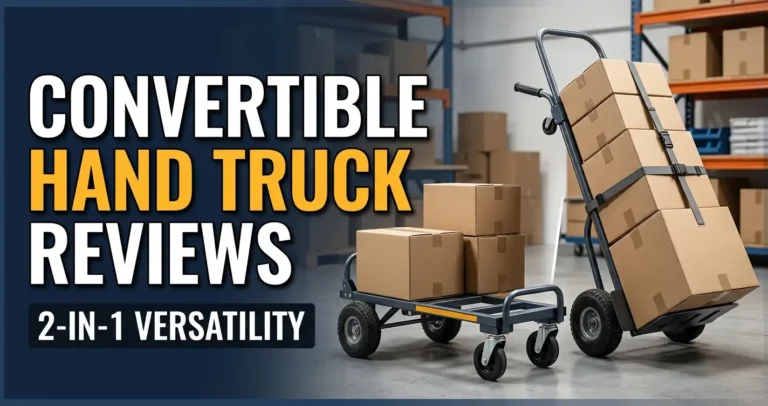
Convertible 2-in-1 or 3-in-1 hand trucks utilize quick-release locking pins to switch between a standard vertical 2-wheel hand truck and a flat 4-wheel platform cart. Aluminum is the predominant material for convertibles because low weight is crucial when transforming the frame.
Warranty and Support
Review the manufacturer’s commercial warranty coverage. Reputable commercial brands offer multi-year warranties and sell replacement components (bearings, stair climbers, nose plates, axles), preventing the need to replace the entire cart when a single component wears out.
Intended Environment
Match the cart’s structural profile directly to the operating floor surface, moisture level, chemical exposure, and seasonal weather patterns of your job site.
Pros and Cons of Aluminum Hand Trucks
Pros
- Substantially Lighter Tare Weight: Reduces daily physical exertion, lower-back strain, and operator fatigue.
- Inherent Corrosion Resistance: Natural aluminum oxide film resists moisture, rain, and humidity without rusting.
- Superior Ergonomics: Easier to balance, turn, reposition, and stop when handling empty or moderately loaded carts.
- Modular Component Replacement: Premium models use bolted assemblies, allowing quick field repair of individual parts.
Cons
- Higher Purchase Cost: Advanced structural alloys and modular machining generally carry a higher upfront price.
- Slightly Lower Torsional Stiffness: Can exhibit minor frame flex under off-center, extreme concentrated loads.
- Specialized Welding Requirements: Damaged structural members cannot be easily repaired using standard workshop welders.
Pros and Cons of Steel Hand Trucks
Pros
- High Structural Rigidity: Delivers exceptional resistance to torsional twisting under off-center, dense loads.
- Rugged Impact Resistance: Resists heavy abrasion, drops, gouges, and rough contact with concrete surfaces.
- Cost-Effective Initial Investment: Simpler manufacturing makes heavy-duty steel models budget-friendly.
- Universal Repairability: Can be quickly straightened, modified, or repaired using common industrial MIG welding tools.
Cons
- Significantly Heavier Dead Weight: Requires greater physical effort to lift into vehicles, carry, or hoist over obstacles.
- Requires Active Rust Prevention: Scratched paint or chipped powder coatings quickly expose raw steel to surface oxidation.
- Increased Long-Shift Fatigue: Moving heavier empty equipment compounds physical strain over extended delivery shifts.
Common Mistakes When Choosing a Hand Truck Material
Choosing Based Only on Material
Never assume aluminum is exclusively light-duty or steel is exclusively heavy-duty. Material is only one variable in complete equipment engineering; always compare certified capacities, wall thicknesses, and joint designs.
Ignoring the Manufacturer’s Capacity Rating
Never estimate a cart’s strength by tapping the frame. Always read the manufacturer’s certified working load limit (WLL) label to verify it safely accommodates your heaviest regular cargo.
Ignoring Wheel Design
The best frame material will underperform if paired with the wrong wheels. Small, hard wheels drag through gravel and lock up on expansion joints, while large pneumatic or flat-free tires roll effortlessly over curbs and debris.
Forgetting About the Working Environment
Purchasing an ungalvanized steel cart for use in a seaside nursery, beverage cooler, or outdoor chemical yard will result in premature rust and structural degradation.
Ignoring the Weight of the Hand Truck
Buying a 50-pound steel cart for a multi-stop parcel delivery route creates unnecessary fatigue. Always factor in how many times the empty equipment will be lifted into a vehicle each day.
Buying More Capacity Than You Actually Need
Selecting a 1,200-pound capacity steel beast to move 40-pound corrugated office file boxes adds unnecessary dead weight, increases bulk, and reduces daily maneuverability. Select the tool tailored to your real-world load envelope.
Decision Matrix: Material Selection
Use this matrix to guide your equipment choice based on operational priorities:
| If You Prioritize… | Consider… | Why |
| Lower Equipment Weight | Aluminum | Aluminum has roughly one-third the density of steel, significantly reducing dead weight. |
| Frequent Vehicle Transport | Aluminum | Lighter frames dramatically reduce back strain during repeated loading into vans or trucks. |
| Corrosion Resistance | Aluminum | Naturally develops a protective oxide layer that resists rust in wet, humid, or cooler environments. |
| Heavy-Duty Appliance Moves | Steel | High structural rigidity resists torsional deflection; dedicated models feature stair belts and straps. |
| High Frame Stiffness | Steel | Higher modulus of elasticity delivers exceptional structural stiffness under tall, dense loads. |
| Outdoor Weather Exposure | Aluminum | Resists atmospheric moisture and road salt without requiring constant paint maintenance. |
| Rough Industrial Use | Steel | Substantial frame mass withstands severe physical gouging, loading-dock drops, and impacts. |
| High-Volume Delivery Routes | Aluminum | Maximizes delivery speed and preserves driver energy by cutting total rolling mass. |
| Specific Load Capacity | Check Ratings | Engineering, axle size, and wheel bearings determine capacity more than frame metal alone. |
Aluminum vs Steel Hand Trucks: Final Verdict
The decision between aluminum vs steel hand trucks centers on a clear operational tradeoff: equipment portability and corrosion resistance versus structural rigidity and impact toughness.
- Choose an aluminum hand truck if you operate on dynamic delivery routes, frequently transport equipment inside vehicles, navigate outdoor weather and humid environments, or prioritize ergonomic comfort to reduce physical fatigue.
- Choose a steel hand truck if your operations are centralized in an industrial warehouse, involve heavy appliance or machinery moving where frame stiffness is critical, or require an economical, impact-resistant cart for severe shop abuse.
The most effective hand truck is not defined by which metal sounds stronger on paper, but by how accurately its rated capacity, toe-plate dimensions, handle ergonomics, and wheel configuration align with the physical demands of your daily work. If you’re interested then also read hand truck vs dolly truck guide.
Frequently Asked Questions
Neither material is universally better. Aluminum is typically better for delivery drivers, mobile technicians, and wet environments where low weight and rust resistance are paramount. Steel is often better for stationary warehouses, appliance moving, and high-impact industrial plants where frame rigidity and impact resistance are top priorities.
Yes. Commercial aluminum hand trucks constructed from structural alloys (such as 6061-T6) feature thick extruded walls and internal reinforcing ribs. Many heavy-duty aluminum models carry certified load capacities ranging from 500 to over 1,000 pounds.
Yes. Because structural steel is roughly three times denser than aluminum, a standard steel hand truck typically weighs between 35 and 55 pounds, compared to an equivalently sized aluminum hand truck that weighs roughly 18 to 30 pounds.
Lifespan depends on the operating environment. Aluminum generally lasts longer in wet, humid, or outdoor conditions because it does not rust. Steel hand trucks can last longer in high-impact industrial settings where equipment is subjected to heavy gouging, concrete drops, and severe mechanical abrasion, provided the paint is maintained.
No, aluminum does not rust because it contains no iron. However, it naturally forms a microscopic aluminum oxide surface film that protects it from deep atmospheric corrosion.
Yes. Many heavy-duty aluminum hand trucks are engineered and certified to haul loads of 800 to 1,000 pounds or more. Load capacity is determined by overall structural design, axle thickness, toe-plate engineering, and wheel ratings rather than metal type alone.
Not automatically. While steel as a raw metal possesses higher ultimate tensile strength, the actual load capacity of a finished hand truck depends on manufacturing engineering, wall thickness, wheel hubs, and toe-plate bracing. A commercial aluminum hand truck often has a higher rated capacity than an entry-level consumer steel cart.
Yes, especially for professionals who handle cargo daily. Although aluminum hand trucks often carry a higher upfront purchase price than standard steel models, the ergonomic benefits, reduced physical fatigue, modular replacement components, and rust-free lifespan provide high long-term commercial value.