
When using hand trucks, dollies, or carts, safe operation comes down to four basic practices: selecting the right tool for the job, inspecting the equipment before loading it, balancing the weight properly, and maintaining full control while in motion. Manual material handling equipment saves time and reduces physical strain, but improper use can lead to crushed fingers, strained backs, damaged goods, or runaway loads.
Whether you work in a commercial warehouse, deliver parcels, run a construction site, or move heavy furniture at home, using these tools correctly protects both you and the items you carry. This guide covers pre-use inspections, loading rules, body positioning, surface navigation, and common operating mistakes so you can move heavy or awkward items safely every time.
What Should You Check Before Using a Hand Truck, Dolly, or Cart?
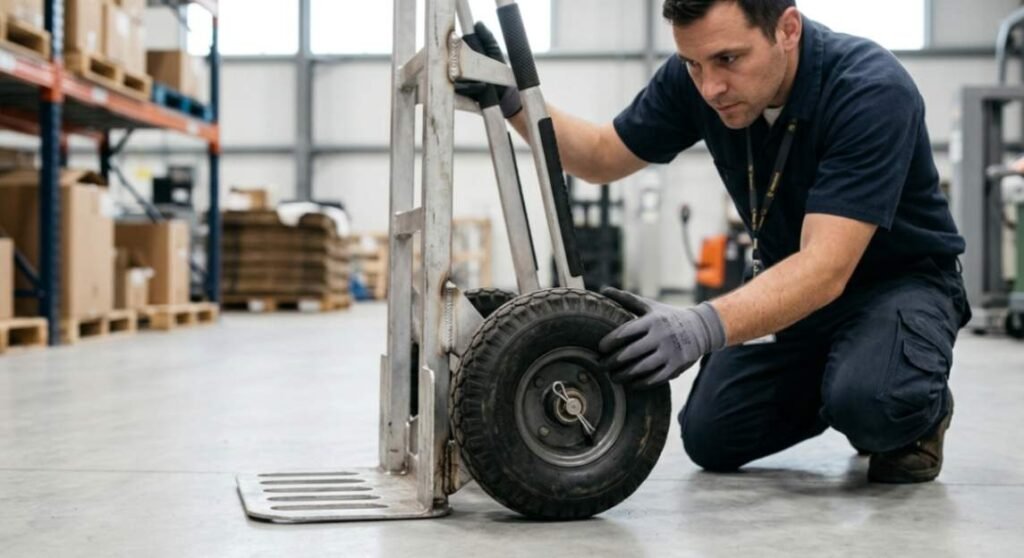
Before placing a single box onto a piece of equipment, take a minute to perform a quick visual and mechanical inspection. Skipping this step is one of the fastest ways to encounter equipment failure mid-transit.
Check the following key items before every use:
- Rated weight capacity: Check the manufacturer label or data plate on the frame. Never guess the limit.
- Tires and wheels: Inspect wheels for cracks, flat spots, worn tread, or debris wrapped around the axle. For pneumatic tires, check the air pressure against the manufacturer rating. Low tire pressure makes heavy loads much harder to push. If you notice severe wear, learn How to Replace Hand Truck Wheels before putting the tool into service.
- Frame and welds: Look for cracks, bends, metal fatigue, or rust along the frame joints.
- Handles and grips: Confirm grips are tight, clean, dry, and free of grease or oil.
- Nose plate or deck platform: Check for bends, cracks, or warping that could prevent a load from resting flat.
- Brakes and straps: Test integrated wheel brakes if equipped, and verify that built-in safety straps or ratchet mechanisms latch firmly.
- The travel path: Look ahead along your route for floor cracks, grease spills, cords, doorway thresholds, and blind corners.
Damaged equipment requires significantly more effort to roll and steer. If any component is cracked, bent, or missing, remove the equipment from service immediately.
Choose the Right Equipment for the Load
Not every piece of material handling gear works for every type of cargo. Using the wrong tool makes loads unstable and increases the chance of a tip-over. Review what each tool is designed to do before choosing one:
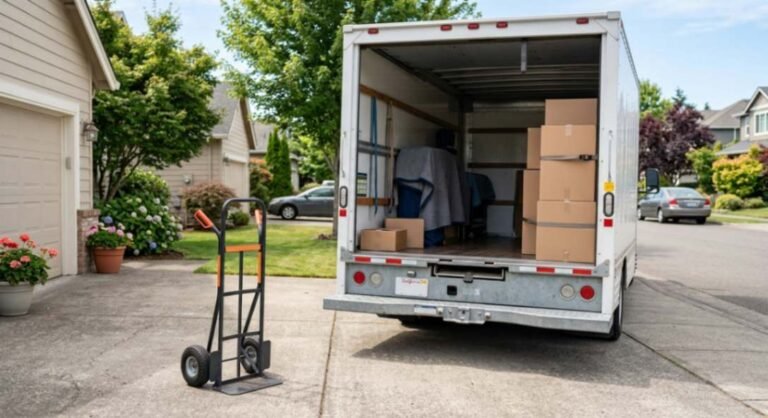
- Two-wheel hand trucks: Ideal for tall, stackable items such as storage boxes, crates, and small barrels. They tilt backward onto two wheels to balance the load over the axle. To understand their construction and variations, check our guide on What Is a Hand Truck?.
- Four-wheel furniture dollies: Flat, low-profile wooden or steel frames with four swivel casters. They work best for bulky, heavy, flat-bottomed objects like dressers, desks, and pianos. If you are debating between two styles, review our breakdown on Hand Truck vs Dolly.
- Platform carts (flatbeds): Open platforms with one or two push handles. Best for moving multiple loose boxes, totes, or medium-weight supplies across flat floors.
- Appliance dollies: Heavy-duty hand trucks featuring built-in tension straps, rub rails to protect finishes, and stair climbers. If you plan to move large kitchen units, read our step-by-step walkthrough on How to Move a Refrigerator With a Hand Truck.
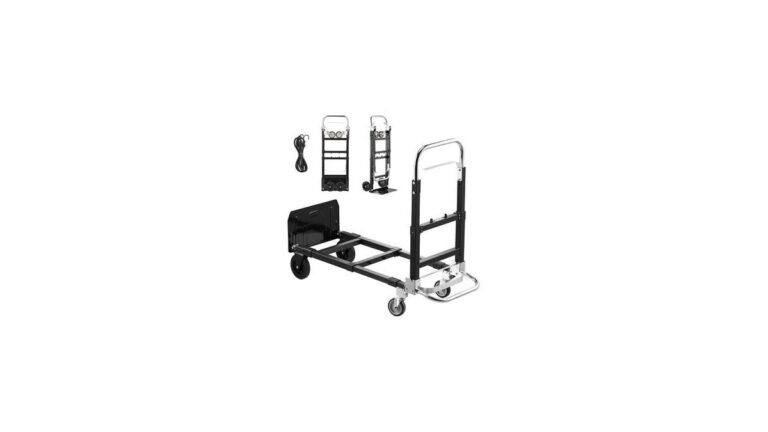
- Stair-climbing hand trucks: Equipped with rotating three-wheel assemblies or rubber tracking belts to roll over step edges.
Always match the equipment to the weight, dimensions, center of gravity, destination, and surface conditions of the load.
How to Load a Hand Truck, Dolly, or Cart Safely?

Proper loading keeps the center of gravity low and stable, which helps you steer without fighting the equipment.
Follow these loading principles:
- Check the load rating first: Consult our Hand Truck Weight Capacity Guide and never exceed the manufacturer’s maximum limit. A rated capacity applies only to evenly distributed weight, not point loads concentrated on one corner.
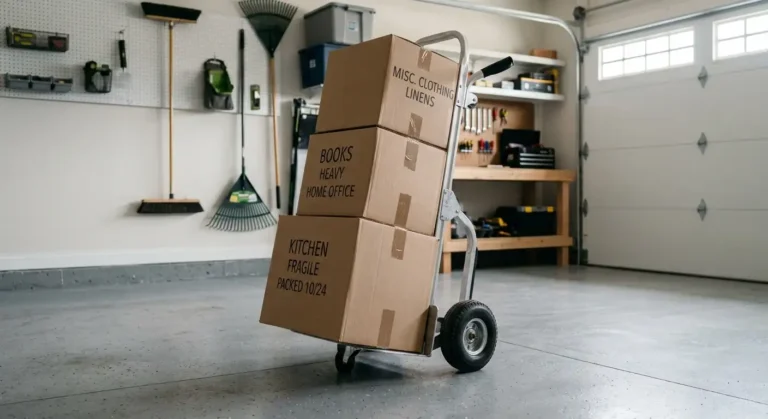
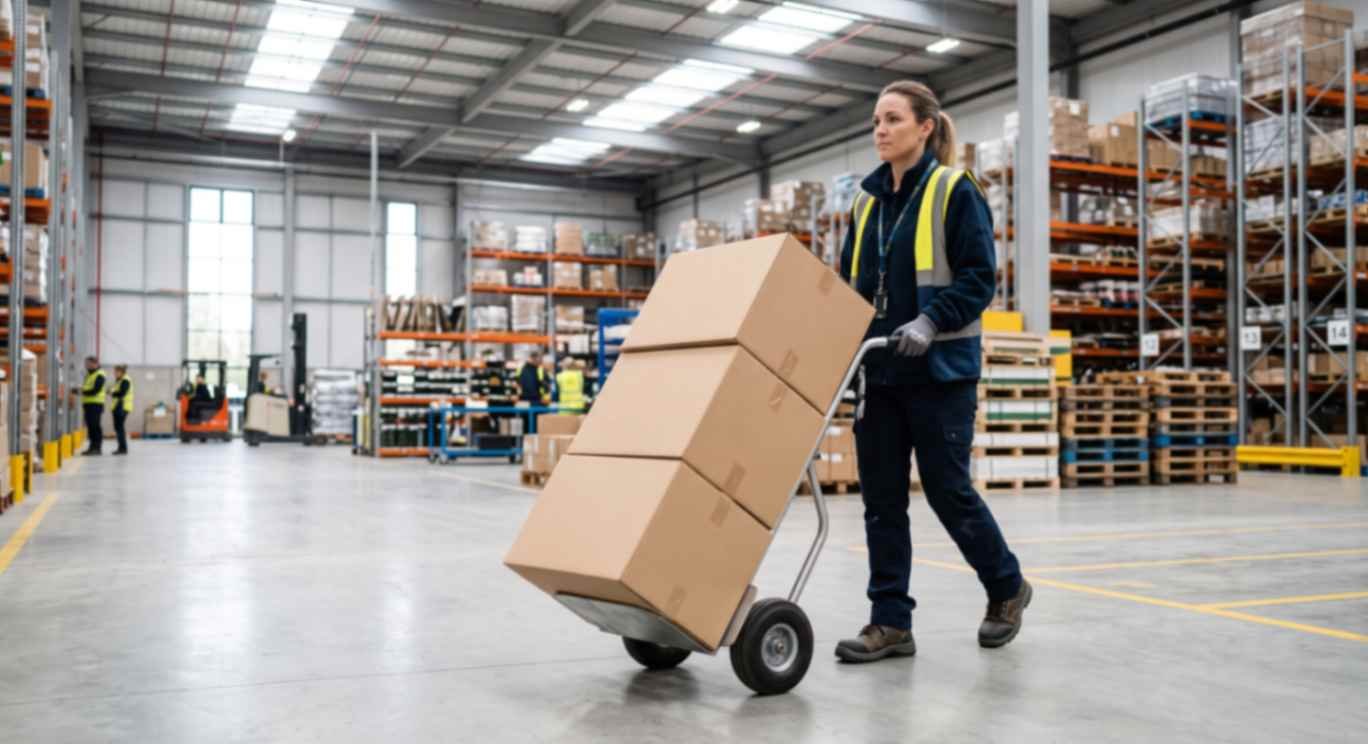
- Put heavy items on the bottom: Place the heaviest, densest boxes at the base, right above the nose plate or cart deck. Place lighter items on top. This keeps the center of gravity low and reduces the chance of tipping.
- Center the weight: Align the load evenly between the wheels. An off-center load pulls hard to one side, straining your wrists and increasing the risk of a spill on turns.
- Seat the load fully back: Push the bottom box all the way against the vertical frame or backrest so it cannot slide forward off the nose plate.
- Keep your view clear: Never stack boxes so high that you cannot see directly over or around the load along your path of travel.
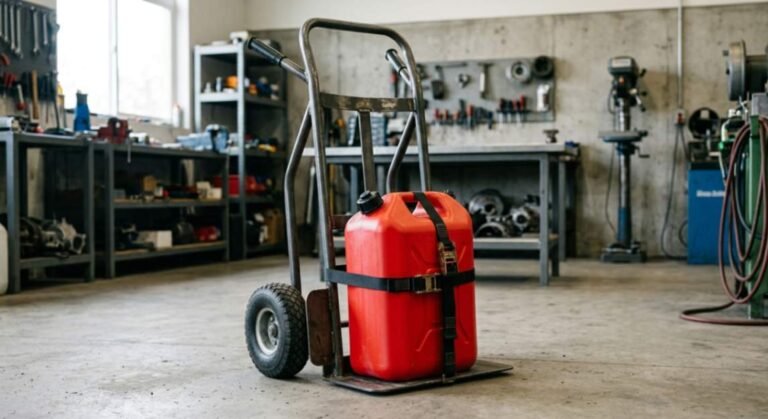
- Secure awkward or tall loads: Use dedicated cargo straps, bungee cords, or ratchet straps to secure tall, rounded, or unstable items directly to the equipment frame when the unit is designed for restraints.
- Do not overload the nose plate: If an item hangs significantly over the front edge of a nose plate without support, it can bend the plate or cause the hand truck to snap forward unexpectedly.
Use Proper Body Position When Moving the Load

Operating manual equipment safely requires correct body mechanics. Ergonomic positioning reduces fatigue and protects your lower back, shoulders, and legs from sudden strain.
- Set your stance before tilting: When tipping a loaded two-wheel hand truck back, place one foot on the axle or wheel bracket (if the manufacturer design permits), grasp the handles firmly with both hands, and pull back smoothly using your body weight rather than wrenching with your lower back.
- Keep a firm, neutral grip: Hold the handles with your wrists straight. Do not let your hands twist at awkward angles while steering.
- Push when practical: OSHA guidance and general ergonomics favor pushing carts and platform trucks rather than pulling them. Pushing allows you to use your large leg muscles, keeps your spine in a neutral posture, and prevents the cart from rolling into your ankles or legs if you stop suddenly.
- Pulling exceptions: On two-wheel hand trucks, pulling backward is standard when descending certain ramps or navigating tight doorways where you need to guide the tool cleanly. Always keep your travel speed slow when pulling.
- Avoid sudden turns and quick stops: Momentum builds quickly with heavy cargo. Approach corners slowly and make wide, controlled turns to keep top-heavy boxes from sliding off.
- Never catch a falling load: If a load begins to tip or fall, let it go. Trying to catch heavy boxes or appliances often causes severe hand, back, or foot injuries. Step clear immediately.
Moving Hand Trucks, Dollies, and Carts on Different Surfaces
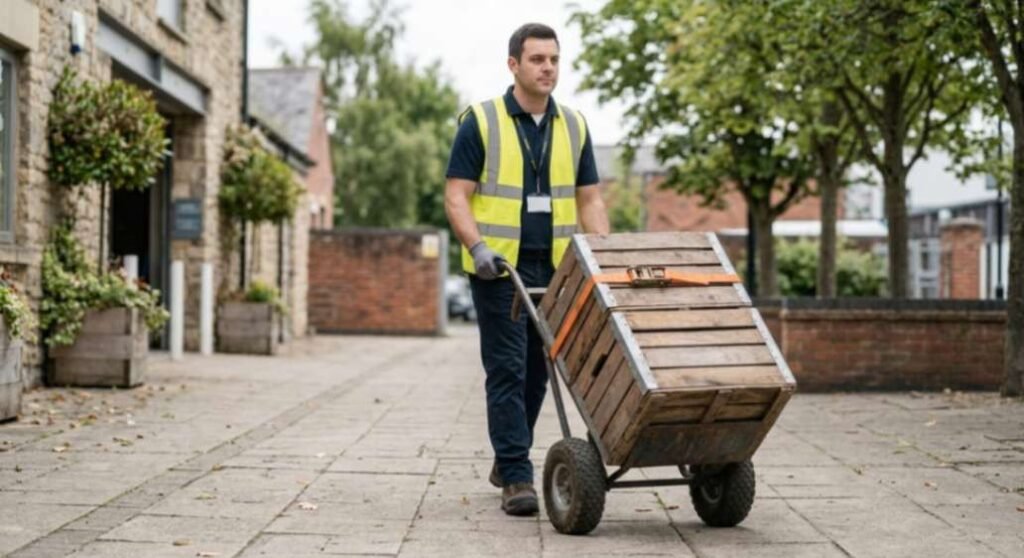
Surface conditions dramatically change how wheels roll, steer, and stop. A load that feels manageable on polished concrete can become difficult or hazardous on rough asphalt or wet tile.
- Smooth, dry concrete and tile: Standard hard rubber, polyurethane, or plastic wheels roll easily here with minimal rolling resistance. Keep an eye out for small floor joints, drain grates, and slick spots.
- Uneven outdoor ground, dirt, and gravel: Hard casters can sink or jam on loose gravel and uneven grass. Pneumatic (air-filled) or large flat-free semi-pneumatic wheels perform much better outdoors by absorbing bumps and rolling over small rocks. Review our comparison on Pneumatic vs Flat Free Tires to understand the differences, and check the Hand Truck Wheel Size Guide to pick the proper wheel diameter for rough terrain.
- Wet, oily, or icy surfaces: Moisture and grease destroy traction. Walk at a reduced pace, shorten your stride, and keep both hands on the equipment handles to prevent slipping.
- Thresholds, door tracks, and floor transitions: Never ram a loaded hand truck or cart into a raised door threshold. Approach transitions straight on, reduce your speed, and lift or ease the front wheels over the bump one set at a time.
- Curbs and single steps: When going up a curb with a standard two-wheel hand truck, turn around, back up to the curb, and pull the wheels up smoothly while using your legs. When going down a curb, keep the load tilted back and step down first, easing the wheels down gently.
What About Stairs and Ramps?
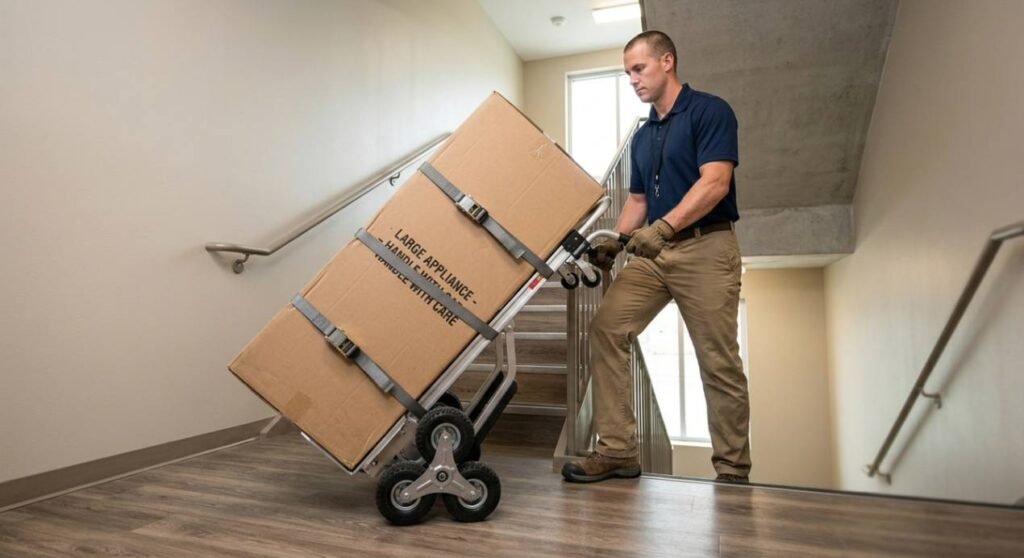
Moving heavy loads on stairs and steep slopes presents serious safety risks. Standard carts, flat dollies, and basic hand trucks are not designed for regular stair travel and can easily get out of control.
- Do not use standard carts or dollies on stairs: Four-wheel platform carts and flat furniture dollies must never be taken on staircases. Use an elevator, a mechanical hoist, or an approved ramp instead.
- Use purpose-built equipment for steps: If you must transport heavy items across a flight of stairs, use a specialized stair-climbing hand truck equipped with rotating tri-wheels or continuous rubber crawler treads. Learn the complete procedure in our dedicated guide on How to Use a Hand Truck on Stairs.
- Secure the cargo with straps: Any item moved on stairs or steep slopes must be strapped directly to the hand truck frame. Vibration from step edges easily shakes loose boxes free.
- Handling ramps and inclines: When moving up a ramp, push the load forward in front of you while leaning slightly into the incline. When moving down an incline, stay uphill from the equipment if using a two-wheel hand truck, walking backward slowly with the load tilted toward you so you control its descent. For four-wheel carts, keep yourself uphill if pulling, or walk slowly behind it with your hands on the handbrake or handle if pushing.
- Get a spotter: For heavy appliances or tall loads on stairs and steep ramps, always work with a partner who can act as a spotter and help steady the load from a safe position.
Common Mistakes to Avoid
Avoiding simple operating mistakes keeps your workspace safe and prevents cargo damage.
- Exceeding the rated capacity: Overloading bends toe plates, cracks welds, and flattens tires.
- Loading the equipment unevenly: Placing weight toward one side causes hand trucks to twist out of your grip and makes carts difficult to steer.
- Blocking your line of sight: Stacking boxes past eye level forces you to walk blindly into people, equipment, or obstacles.
- Using equipment with damaged wheels: Worn bearings or flat tires multiply the physical force needed to push a load.
- Moving too fast: Running or walking too quickly prevents you from stopping safely if an obstacle appears suddenly.
- Ignoring slippery or cracked floors: Hitting floor cracks or oil patches at normal speed can suddenly stop the wheels and launch the cargo forward.
- Failing to secure tall or round loads: Moving gas cylinders, drums, or tall furniture without straps invites tip-overs.
- Using the wrong tool for the task: Using a two-wheel hand truck to move a wide sofa, or a flat dolly to move loose stacked boxes.
- Forcing oversized loads through narrow doors: Failing to measure door clearances results in crushed hands and damaged doorframes.
- Ignoring the manufacturer manual: Bypassing operating rules, lubrication schedules, and inflation guidelines.
These mistakes compromise your control over the equipment. When you lose control of a heavy load, gravity and momentum take over, leading directly to dropped cargo and workplace injuries.
When Should You Not Use a Hand Truck, Dolly, or Cart?
Do not use manual material handling equipment under the following conditions:
- The equipment shows visible structural damage, such as cracked welds, loose handles, or bent axles.
- The wheels are seized, cracked, missing chunks of tread, or severely underinflated.
- The combined weight of your cargo exceeds the verified load rating on the manufacturer label.
- The load cannot be balanced, centered, or safely secured against rolling or sliding.
- Your travel route is blocked by open construction, deep mud, steep unprotected drop-offs, or standing liquids.
- The load is so tall or wide that you cannot see where you are walking or guide the cart safely through doorways.
- You do not have the physical strength or trained assistance to control the load safely on an incline.
- The job requires specialized machinery, such as a pallet jack, forklift, or motorized stair climber.
If you do not own the right heavy-duty equipment for a one-time move, review our recommendations on Where to Rent Hand Trucks to get the correct tool rather than improvising with an unsafe substitute.
Hand Truck vs Dolly vs Cart: Which Should You Use?
Select the right equipment based on the shape, size, and weight of your load:
| Equipment Type | Common Use | Typical Wheel Setup | Best Surface |
| Two-Wheel Hand Truck | Stacked boxes, crates, small barrels | 2 wheels (pneumatic or solid) | Smooth floors, thresholds, mild ramps |
| Four-Wheel Furniture Dolly | Heavy, flat-bottomed furniture, pianos | 4 swivel casters | Flat, smooth indoor surfaces |
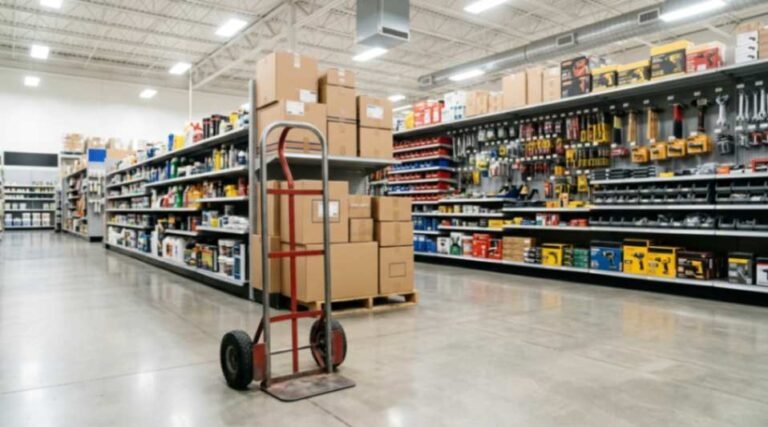
| Platform Cart (Flatbed) | Multiple loose cartons, stock picking | 2 fixed wheels, 2 swivel casters | Warehouses, wide hallways, level aisles |
| Appliance Dolly | Refrigerators, washers, heavy uprights | 2 wheels with stair-climber belts | Smooth floors, stairs (with straps) |
| Stair-Climbing Hand Truck | Moving boxes or gear across multi-floor steps | Tri-star wheels or track treads | Stairwells, steps, curbs |
Frequently Asked Questions
Yes. Exceeding the manufacturer rated capacity can bend the nose plate, warp the axle, blow out pneumatic tires, or crack structural welds. Always check the capacity label on the frame before loading heavy items.
Yes. Placing heavy items on the bottom lowers the overall center of gravity. This makes the cart more stable, easier to steer, and far less likely to tip over during sharp turns or sudden stops.
For four-wheel carts and platform dollies, OSHA generally favors pushing because it keeps your back in a strong posture and prevents the cart from hitting your legs. For two-wheel hand trucks, pulling is normal when backing down curbs or guiding through tight spots.
No. Standard hand trucks lack the protective stair belts, tri-wheel assemblies, and dedicated strap systems needed to handle stair treads safely. Only use equipment specifically designed or approved by the manufacturer for stair transport.
Weight limits vary widely depending on the frame material and design. Lightweight consumer models typically handle 150 to 300 lbs, standard commercial steel units carry 500 to 800 lbs, and heavy-duty industrial models can support 1,000 lbs or more. Always check the rating plate.
Inspect the frame for cracks or loose fasteners, make sure all four casters rotate and swivel freely, verify the carpet or rubber pads are intact to prevent slippage, and confirm the load weight is within the rated capacity.
Yes, but only if the hand truck has appropriate wheels. Large-diameter pneumatic or semi-pneumatic tires roll over grass, dirt, and gravel effectively, whereas small, hard rubber or plastic wheels easily dig in and stop abruptly.
Stack boxes evenly, place heavier items at the bottom, keep the height below eye level, and never let items overhang the deck edges excessively. Use cargo straps or stretch wrap for tall or unstable stacks.
Operating hand trucks, dollies, and carts safely comes down to preparation and control. Always select the right tool for the job, inspect the frame and wheels before loading, stay well within the manufacturer’s rated capacity, and keep your travel path clear. By maintaining proper body mechanics, securing unstable loads, and respecting stairs and uneven surfaces, you can move heavy cargo efficiently while protecting yourself and your workplace from injury.