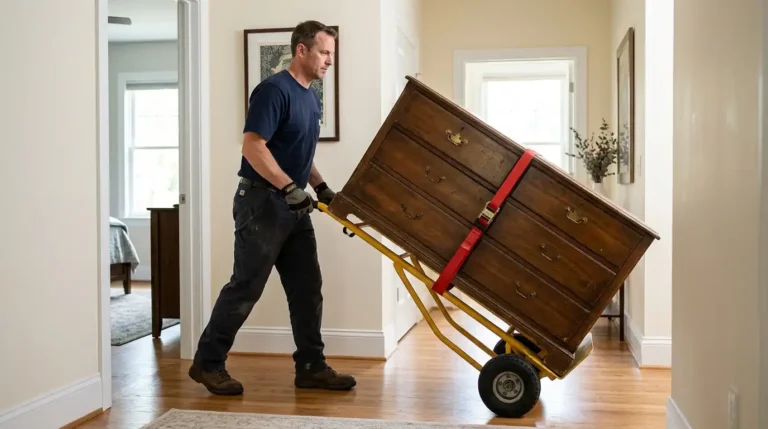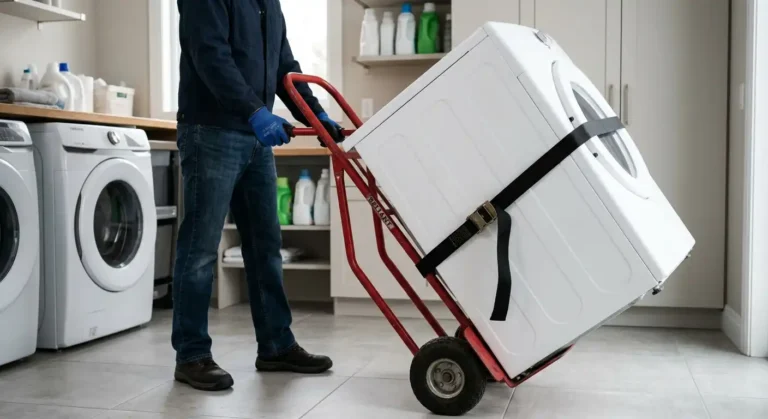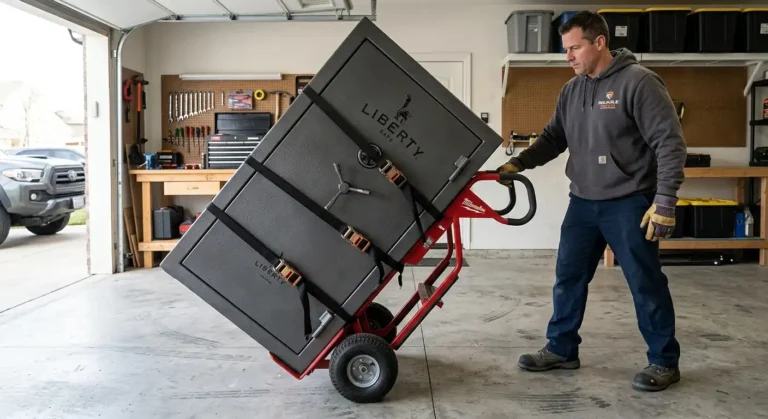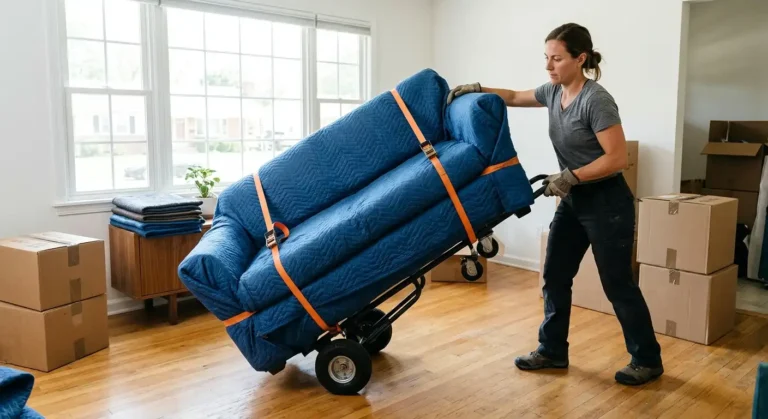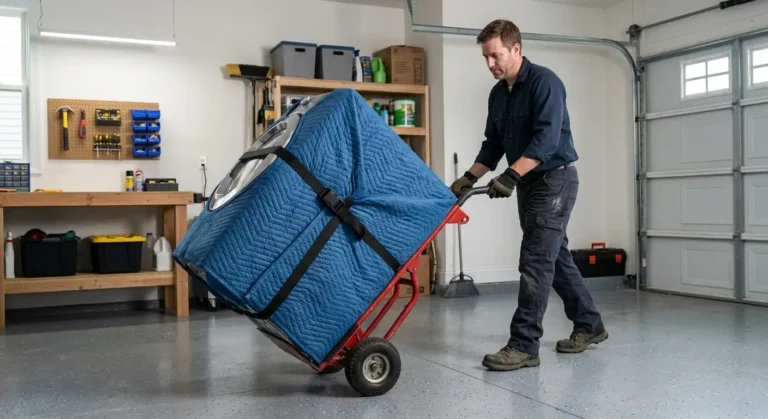

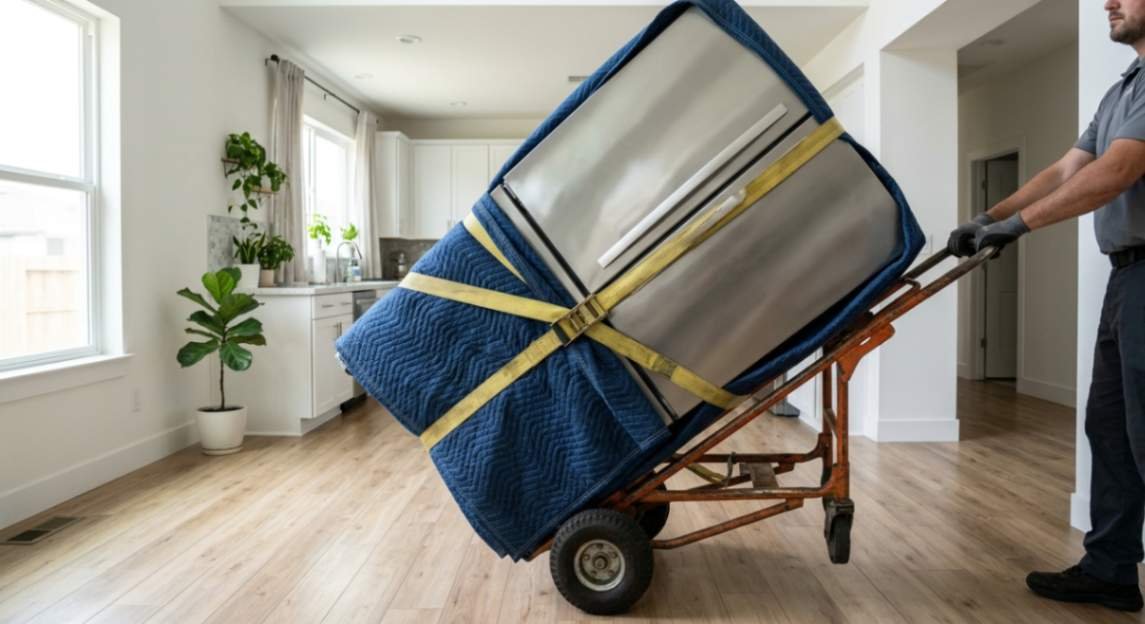
To move a refrigerator with a hand truck, first empty, defrost, and unplug the unit, securing the doors shut with stretch wrap and wrapping the exterior in moving blankets. Slide the hand truck toe plate completely under the side of the refrigerator, strap the appliance tightly to the frame using a heavy-duty ratchet strap, and slowly tilt the dolly back toward you with one foot bracing the axle.
Keep the load balanced over the wheels, roll forward at a slow and controlled pace with a helper spotting the path, and ease the base gently to the floor once in position.
This guide covers everything you need to know about how to move a refrigerator with a hand truck safely, including prep work, loading steps, maneuvering through doorways, and handling stairs without damaging your home or appliance.
What You Need to Move a Refrigerator?
Having the right tools prevents injuries, protects floors, and keeps your refrigerator working properly. Gather these essential supplies before you start:
- Appliance hand truck: A heavy duty hand truck with a tall frame, built-in strap system, and stair climbers. Ensure its weight capacity safely exceeds your refrigerator’s weight. (See our Hand Truck Weight Capacity Guide for detailed ratings.)
- Strong moving straps: Essential for locking the appliance tight against the metal frame so it cannot shift.
- Moving blankets: Thick padding to protect the exterior finish, door handles, and home walls from scratches and dents.
- Work gloves: Heavy duty grip gloves to protect your hands and provide firm control on the hand truck handles.
- Packing tape or stretch wrap: Used to secure moving blankets and keep doors closed without damaging the appliance finish.
- Floor protection: Neoprene runners, hardboard sheets, or heavy cardboard to protect hardwood, vinyl, and tile flooring from wheel marks and scratches.
- A helper: Moving a full-size refrigerator safely requires at least two people to spot the load, guide clearance, and assist on inclines.
Prepare the Refrigerator Before Moving

Skipping the prep work is one of the fastest ways to damage an appliance or cause an accident. Complete each preparation step before positioning your moving equipment.
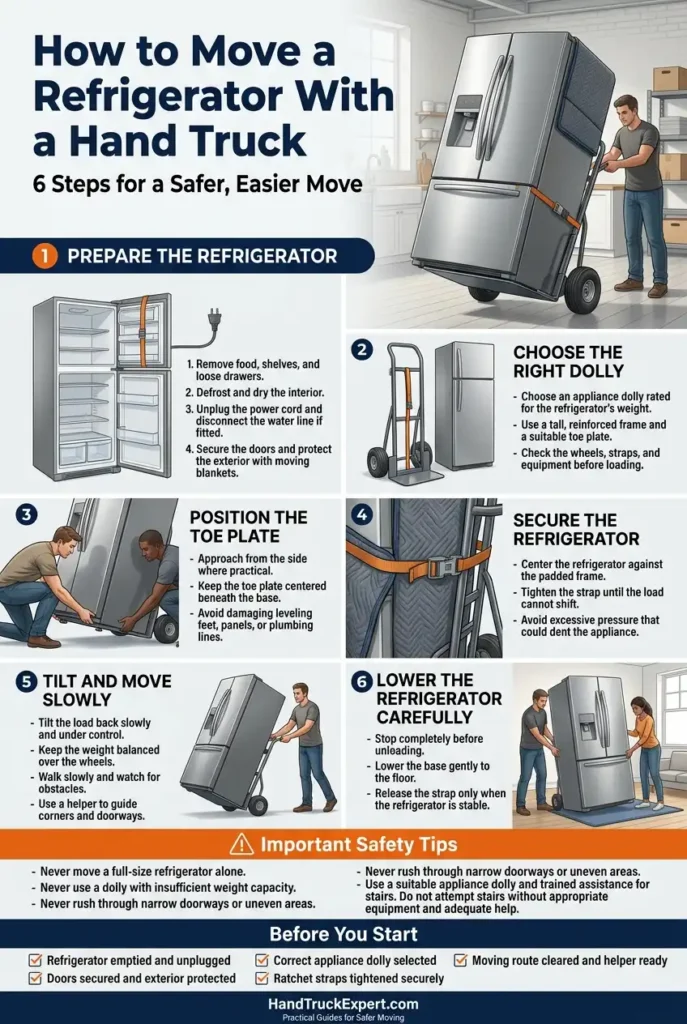
Empty the Refrigerator
Remove all food, drinks, condiments, and ice trays. Next, take out all interior glass shelves, crisper drawers, and door bins. Packing these loose interior components separately lightens the refrigerator and prevents internal parts from shifting, cracking, or breaking during transport.
Defrost the Freezer
Turn off the refrigerator and allow the freezer compartment to defrost completely at least 24 hours before moving day. Melted frost can leak during transit, creating dangerous slip hazards or causing internal water damage. Wipe down all interior surfaces with a dry towel so no standing water remains.
Disconnect the Refrigerator
Unplug the power cord and secure it to the back panel with painter tape so it will not drag on the floor. If your refrigerator has an ice maker or water dispenser, shut off the water valve behind the unit and disconnect the supply line. Drain any remaining water from the internal reservoir into a small bucket.
Secure the Doors
Keep the doors and freezer drawers tightly closed during the move. Wrap high quality moving stretch wrap around the entire exterior of the unit, or run a heavy duty strap around the perimeter. Avoid putting strong adhesive packing tape directly onto stainless steel or painted surfaces, as it can pull off finishes or leave sticky residue.
Protect the Refrigerator
Drape heavy duty moving blankets over the top, front, and exposed sides of the refrigerator. Secure the blankets firmly in place with stretch wrap or wide rubber moving bands. Pay extra attention to corners, electronic control panels, and door handles, which are the most vulnerable to impact damage.
Choose the Right Hand Truck
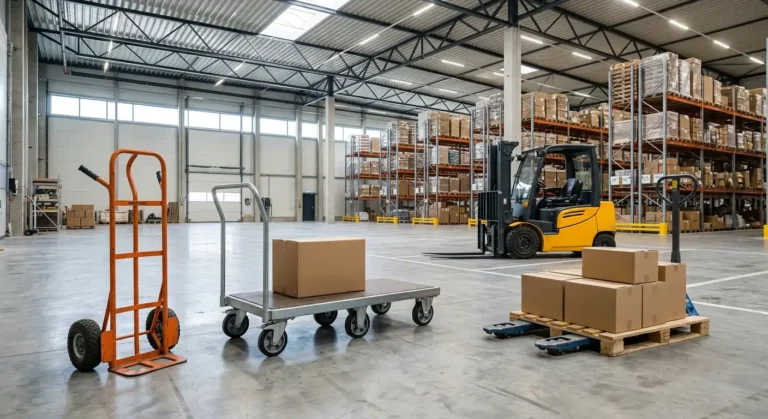
Not all hand trucks are built to handle large appliances. Understanding the difference between a standard utility hand truck and an appliance dolly is essential for a safe move. (For a full comparison of styles, review our guide on Hand Truck vs Dolly and 2 Wheel vs 4 Wheel Hand Trucks). A standard utility hand truck is designed for boxes and smaller freight. It usually features a shorter frame, a shallow toe plate, and smaller wheels that can tip easily under a tall, top-heavy load.
An appliance dolly is engineered specifically for heavy loads like refrigerators. It features:
- A tall, reinforced steel frame to fully support tall appliances.
- A deep, heavy duty toe plate that slides firmly under the base.
- Built-in ratchet straps to lock the appliance securely to the frame.
- Integrated stair climber tracks on the back of the frame to glide over step edges.
- Non-marking rubber tires that roll smoothly under immense weight. (Read our breakdown on Pneumatic vs Flat Free Tires for more details.)
For any full-size or modern French door refrigerator, always choose a heavy duty appliance dolly.
How to Move a Refrigerator With a Hand Truck?
Follow these step-by-step instructions to load, balance, roll, and unload the refrigerator safely.
- Position the Hand Truck
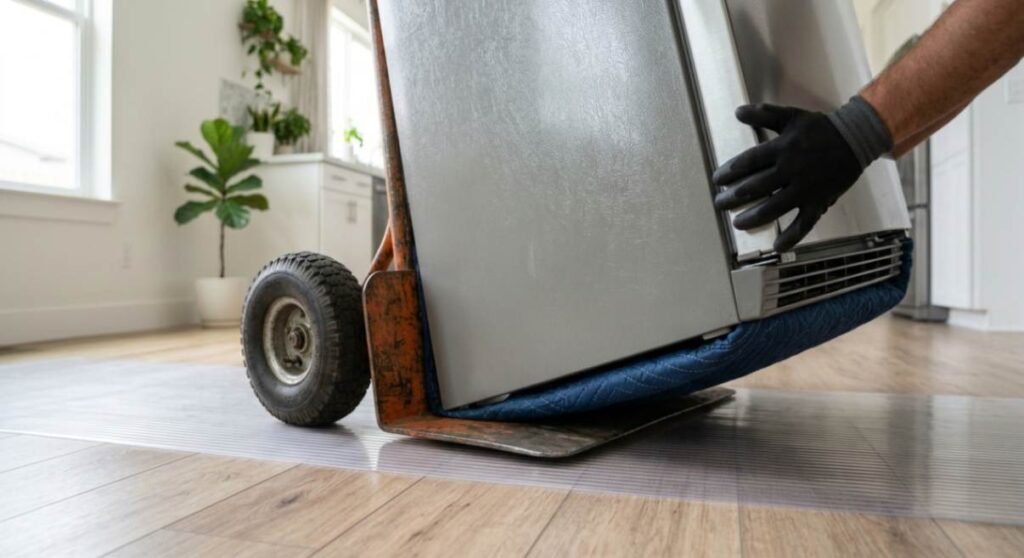
Place the hand truck flat against one side of the refrigerator rather than the front. Loading from the side provides better balance and protects delicate front doors and digital screens from direct pressure against the metal frame. Align the center of the hand truck with the center of the appliance. - Tilt the Refrigerator Carefully
Have your helper stand on the opposite side to steady the appliance. Tilt the top of the refrigerator slightly away from the hand truck just enough to raise the base an inch or two off the floor. Keep this tilt minimal and controlled. - Slide the Toe Plate Underneath
Slide the hand truck’s metal toe plate all the way under the base of the refrigerator until the back frame rests flush against the padded side of the unit. Ensure the toe plate is centered and fully supporting the base without pressing against leveling legs or fragile plumbing lines. - Secure the Refrigerator
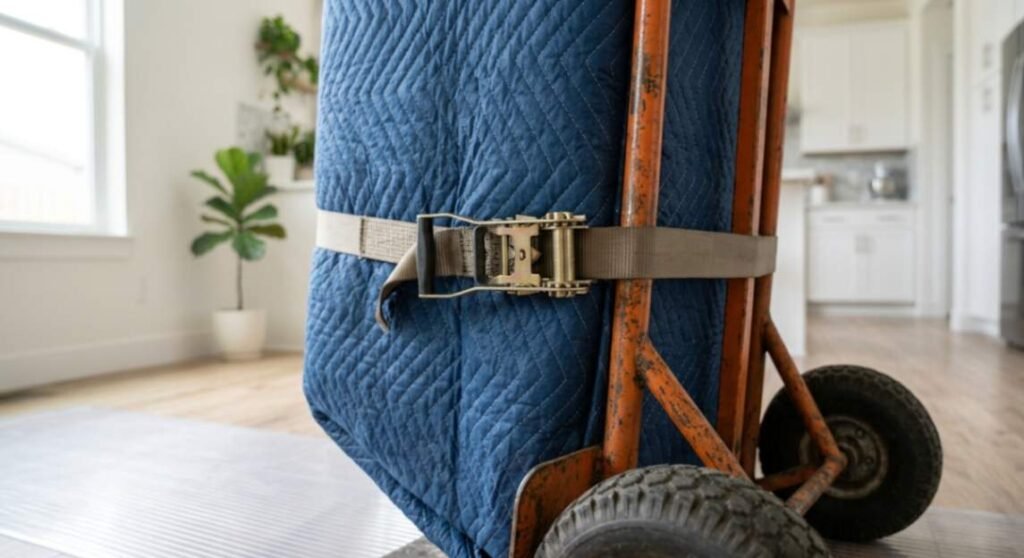
Wrap the heavy duty ratchet strap around the middle of the refrigerator and hook it into the appliance dolly frame. Tighten the ratchet mechanism until the appliance is held firmly against the frame with zero wobble. The strap should be very snug, but avoid over-tightening to the point where it dents the metal panels. - Tilt the Hand Truck Back
Place one foot firmly on the axle of the hand truck to anchor the wheels. Grip the handles firmly, communicate with your helper, and pull the handles back toward your body to tilt the load onto the wheels. Balance the center of gravity over the wheels so the weight rests on the dolly rather than your arms. - Move Slowly
Push the hand truck forward at a slow, controlled walking pace. Keep your knees slightly bent and maintain a firm grip on the handles. Have your helper walk ahead to check for obstacles, clear pathways, and help stabilize the top of the load across uneven floors, thresholds, and transitions. - Lower the Refrigerator Carefully
Once you reach your destination, bring the hand truck to a complete stop. Place your foot back onto the axle, slowly guide the handles upward, and let the base of the refrigerator gently touch down on the floor. Release the ratchet straps, tilt the refrigerator slightly, and slide the toe plate out from under the base.
How to Move a Refrigerator Through Doorways?
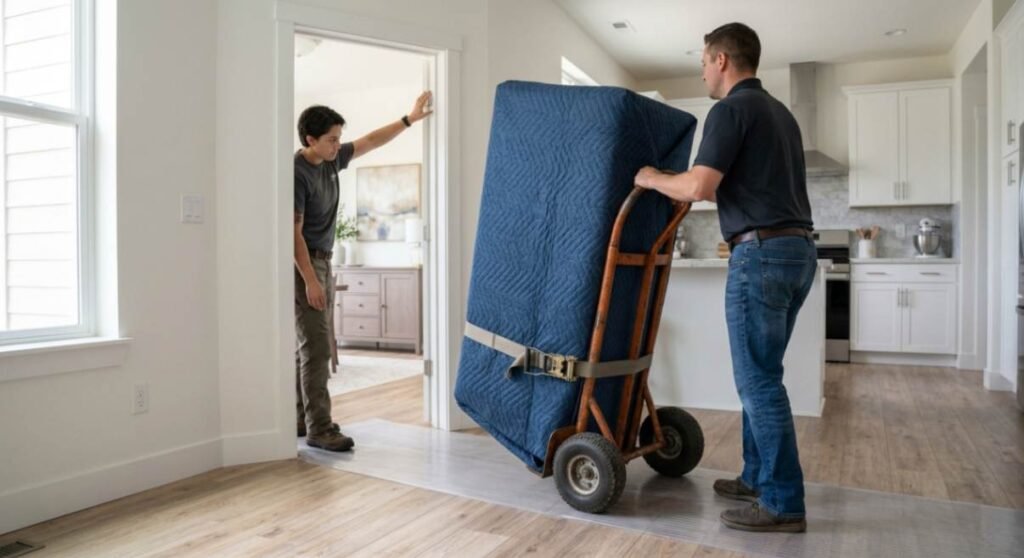
Narrow entryways require careful planning to avoid damaging door jambs and appliance edges:
- Measure both the refrigerator depth and the doorway width before moving anything.
- Account for protruding door handles and hinges in your measurements.
- Remove interior doors from their hinges if you need an extra inch or two of clearance.
- Lay heavy floor protection runners across the threshold to avoid catching the dolly wheels.
- Approach the doorway straight on, not at an angle.
- Have your helper stand on the other side of the opening to guide the corners and call out clearances.
- If the refrigerator still cannot fit, remove the refrigerator doors by following the manufacturer instructions in your user manual.
How to Move a Refrigerator Up or Down Stairs?
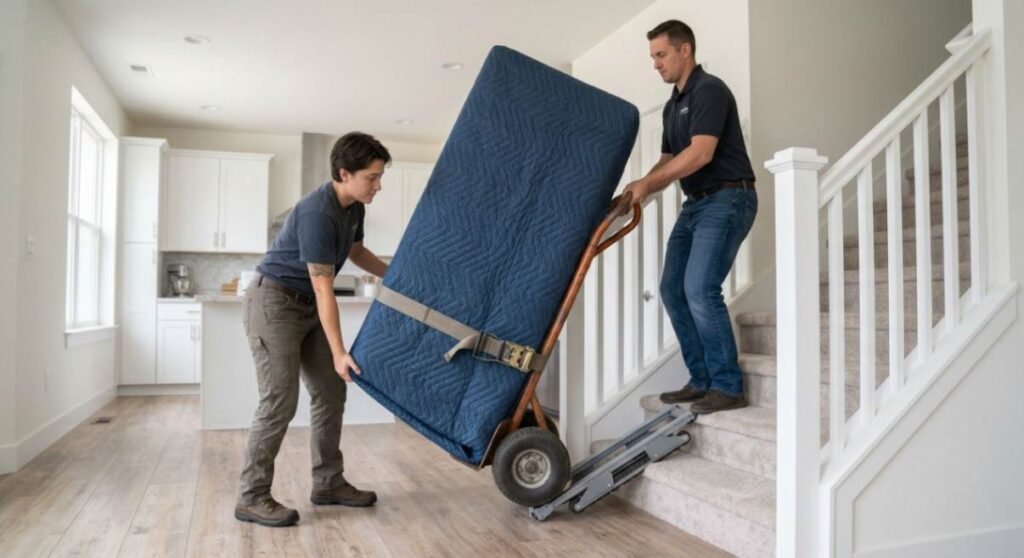
Moving a heavy appliance on stairs carries a high risk of injury and property damage. Never attempt to move a refrigerator on stairs alone. (Review our dedicated tutorial on How to Use a Hand Truck on Stairs before attempting this.)
- Use an appliance dolly with stair climbers: These built-in belt tracks allow the dolly to roll over stair noses rather than slamming down on each step.
- Use at least two or three capable adults: One person operates the hand truck from the higher position, while one or two helpers assist and stabilize from the lower steps.
- Keep the dolly uphill: When moving downstairs, roll the dolly backward with the operator above the load on the higher step, easing the wheels down one step at a time. When moving upstairs, the operator pulls the dolly backward up the steps while the helpers lift and push from below.
- Take one step at a time: Move slowly, establish solid footing on each tread, and never let the load gain downward momentum.
- Keep communication clear: Call out every step before moving to ensure everyone is in position.
Can You Lay a Refrigerator Down to Move It?
Transporting a refrigerator in a fully upright position is always the best and safest approach.
Refrigerators contain liquid compressor oil and chemical refrigerant. When a unit is laid flat on its side or back, compressor oil can drain out of the pump mechanism and enter the cooling lines. If the unit is powered on with oil in the cooling tubes, the compressor can suffer catastrophic mechanical failure.
Some manufacturers allow specific models to be laid on a designated side for transport, while others strictly forbid it. Always check your model’s user manual before laying a refrigerator down. If you must transport a refrigerator horizontally, allow it to stand completely upright in its final location for the full duration recommended by the manufacturer before plugging it in, allowing all oil to drain back into the compressor housing.
How to Move a Refrigerator Without Damaging It?
Preventing cosmetic and structural damage comes down to thorough padding and steady handling:
- Wrap the entire exterior in padded moving blankets and secure them tightly with stretch wrap.
- Tape thick cardboard or foam guards to door frames, corners, and tight hallway walls.
- Never drag or slide the bare metal feet of a refrigerator directly across hardwood or tile floors.
- Avoid excessive tilt angles that can put severe pressure on the internal motor mounts.
- Always keep the appliance centered over the hand truck axle to prevent tipping.
Frequently Asked Questions
A standard hand truck can sometimes handle a small, compact dorm fridge, but it is unsafe for a full-size unit. Large refrigerators require an appliance dolly with a tall frame, heavy weight capacity, built-in ratchet straps, and stair climbers.
You need an appliance hand truck rated for at least 600 to 800 pounds with a frame tall enough to support the upper half of the unit. The toe plate must be deep enough to fully seat the base of the refrigerator without bending.
One person should not attempt to move a standard full-size refrigerator alone. While one person handles the hand truck, a helper is necessary to guide clearance, manage balance, and spot tight corners.
Yes, but you must use an appliance hand truck equipped with stair climber tracks, heavy duty straps, and at least two or three strong helpers. Move one step at a time and maintain complete control over the load.
Wrap heavy duty moving straps around the middle of the padded refrigerator and lock them into the hand truck frame using the built-in ratchet system. Pull the straps taut so the appliance cannot shift or slide during movement.
Yes, upright transport is always recommended to prevent compressor oil from leaking into the sealed cooling lines. If upright transport is impossible, check your manufacturer instructions for approved transport angles.
Final Takeaway
Moving a heavy refrigerator does not have to be hazardous or overwhelming. By choosing a dedicated appliance hand truck, emptying and securing the unit properly, and rolling at a steady, deliberate pace, you can complete the job safely. Always prioritize safety, use protective blankets and straps, and rely on a helper rather than taking unnecessary risks on tight doorways or stairs.
Also Read:
- How to Move a Couch With a Hand Truck?
- How to Move a Mattress With a Hand Truck?
- How to Move Heavy Boxes With a Hand Truck?
- How to Move Heavy Furniture With a Hand Truck?
- How to Move a Washing Machine With a Hand Truck?
- How to Move a Dryer With a Hand Truck?
- How to Move a Heavy Appliance With a Hand Truck?
- How to Move a Heavy Safe With a Hand Truck?