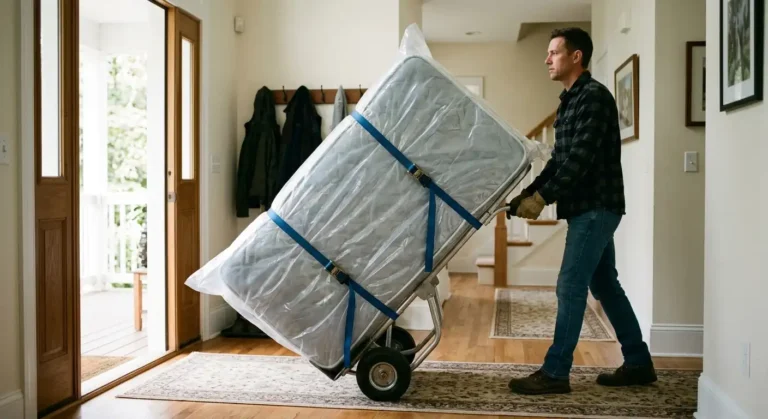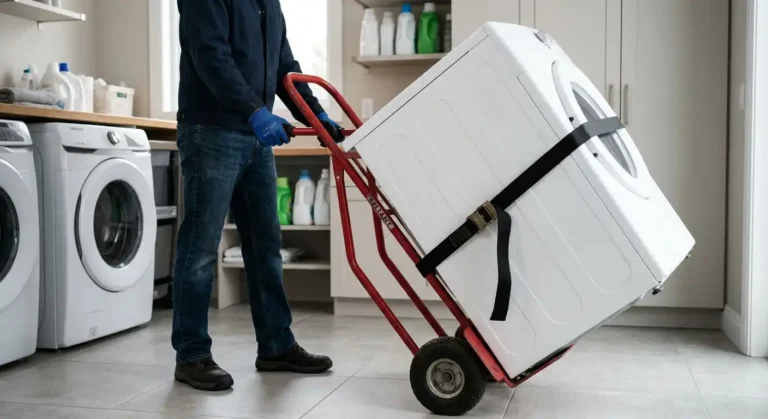

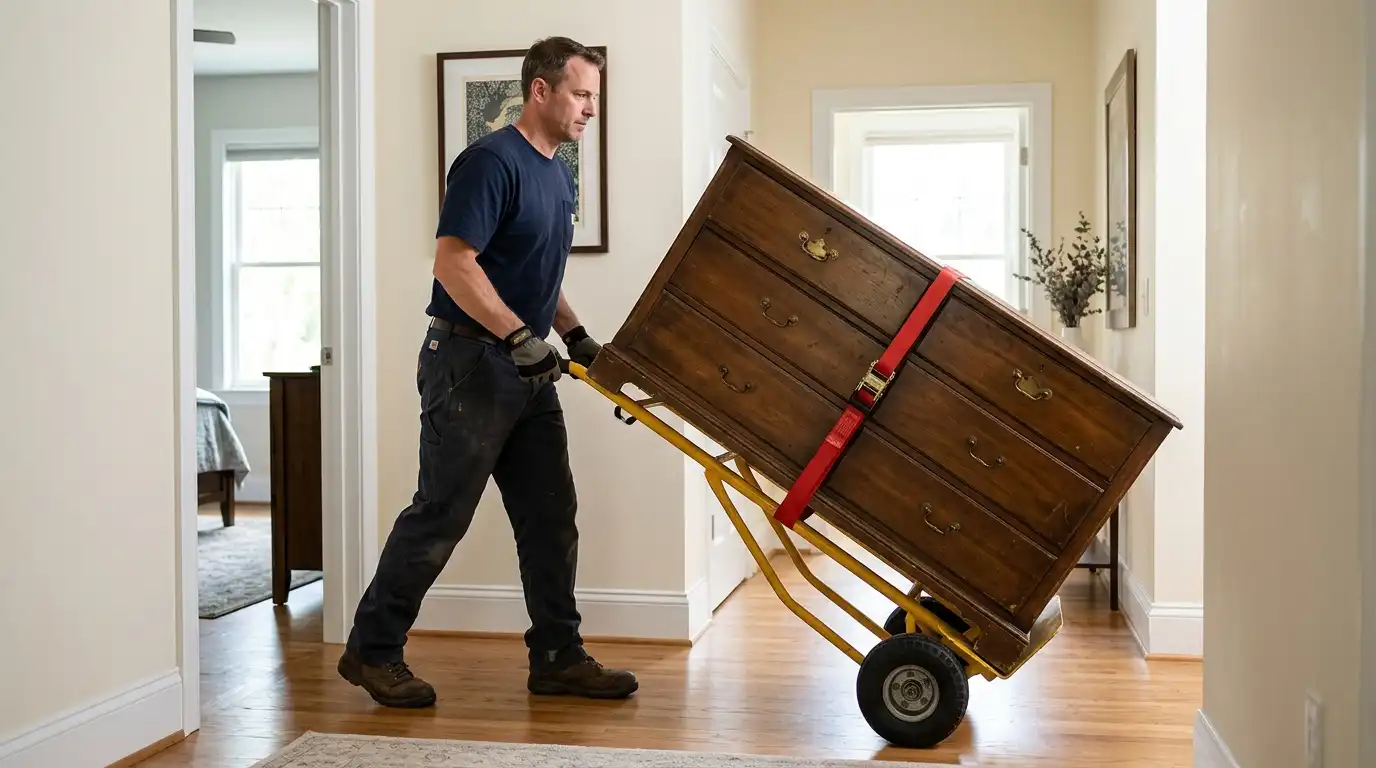
Heavy furniture can often be moved with a suitable hand truck when the load is properly prepared, supported, secured, and kept within the equipment’s rated capacity. Using the proper technique protects your back, prevents damage to your home, and keeps your load fully under control.
How do you move heavy furniture with a hand truck?
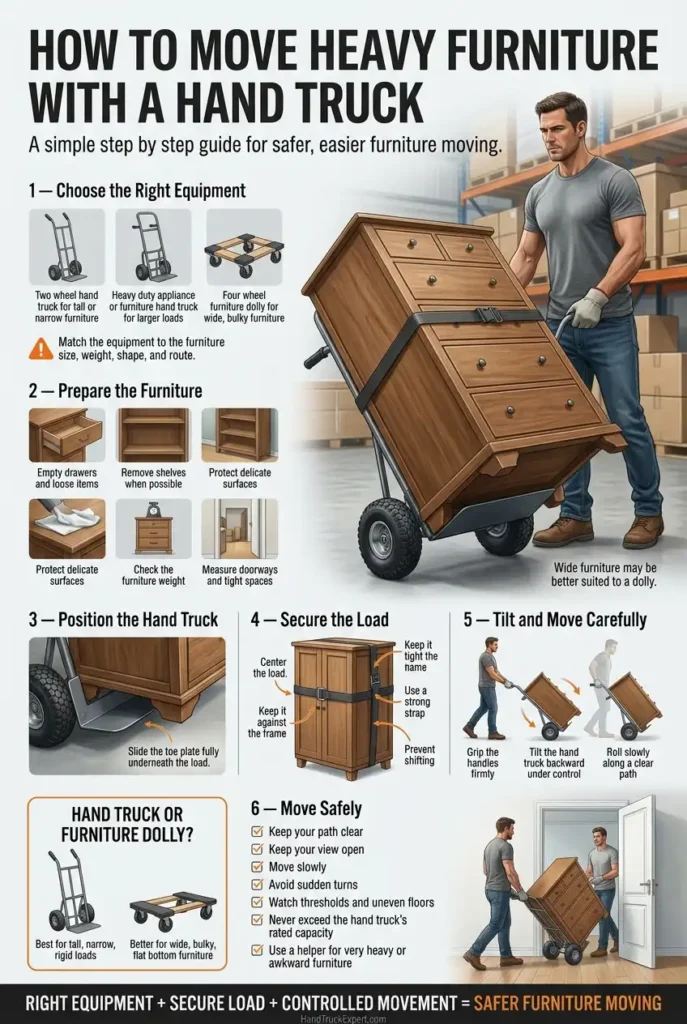
Choose a suitable hand truck rated for your item’s weight. Empty and prepare the furniture, then clear and measure your route. Slide the toe plate under the center of the item, secure it to the frame with a strap, and carefully tilt it back onto the wheels. Move slowly while maintaining full control, and always use specialized equipment or extra help for stairs or unstable loads.
Choose the Right Hand Truck
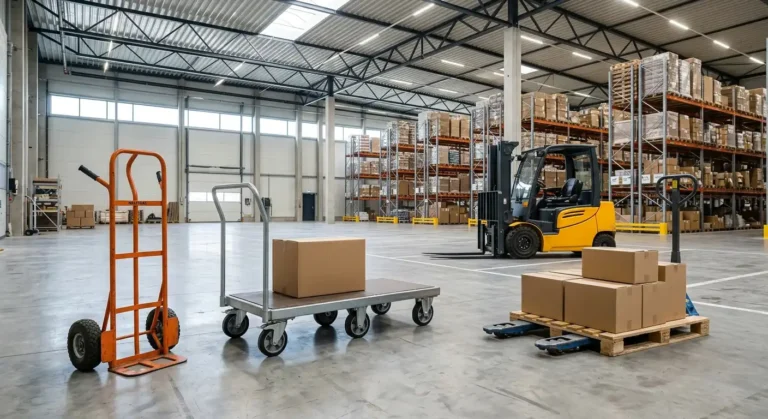
Before moving anything, confirm that your equipment is up to the job. Hand trucks come in different styles and weight ratings, so matching the tool to the load is essential:
- Rated Capacity: Never exceed the load limit printed on the hand truck frame.
- Toe Plate Size: A larger toe plate provides better support for deep cabinets and dressers.
- Wheel Type: Pneumatic air-filled tires absorb bumps on outdoor paths or uneven thresholds, while solid rubber wheels work well on flat indoor floors.
- Frame Style: Standard two-wheel steel or aluminum models work for most items, but heavy or bulky loads may benefit from an appliance hand truck with built-in straps or a convertible cart.
Selecting the wrong tool makes the job unsafe. To better understand your options, learn how to choose the right hand truck before starting your move.
Also read How to Move a Mattress With a Hand Truck?
Prepare the Furniture Before Moving It
Preparing your furniture reduces unnecessary weight and keeps items stable on the frame:
- Empty all contents: Take out clothes, books, and loose items. Removing contents lowers the total weight and prevents items from shifting inside.
- Remove loose parts: Take out adjustable shelves, detachable glass panels, or unattached drawers when practical.
- Secure doors and drawers: If you leave drawers or cabinet doors in place, secure them with stretch wrap or painters tape so they do not slide open during transit.
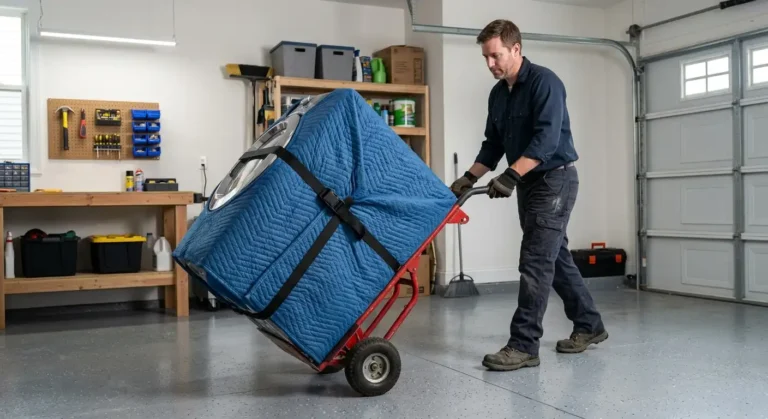
- Protect surfaces: Wrap finished wood, leather, or glass with moving blankets to prevent scratches from the metal frame or straps.
Check the Moving Route
A blocked pathway creates unnecessary risks while holding a heavy load. Before tilting your furniture, walk the entire path from start to finish.
Measure doorway widths, hallway turns, and ceiling clearances against the dimensions of your loaded hand truck. Clear away rugs, floor mats, toys, and electrical cords. If your route includes ramps, thresholds, or narrow turns, plan where you will step and turn before you lift.
Position the Hand Truck Under the Furniture
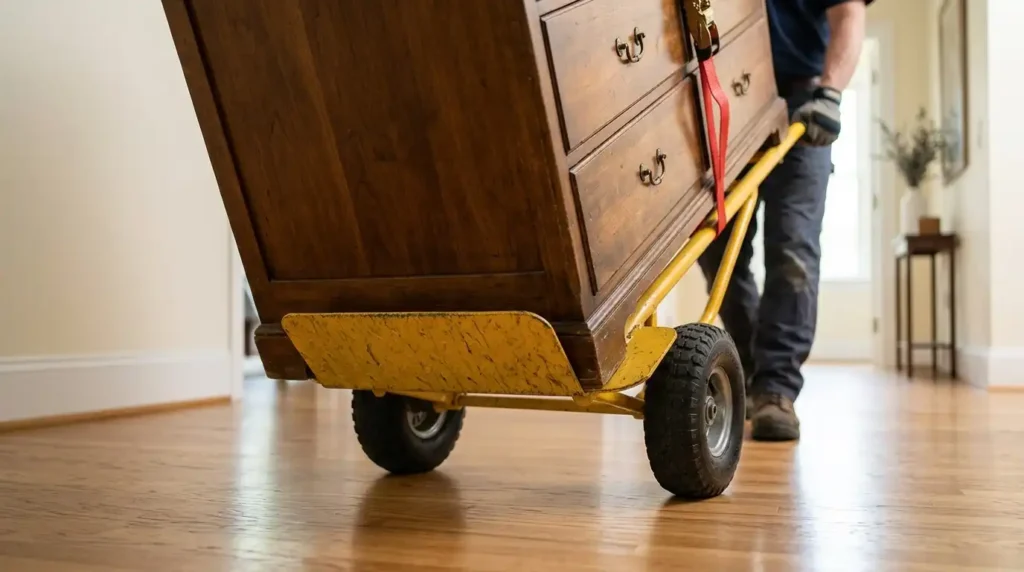
Proper positioning ensures the load remains stable once tilted:
- Roll the hand truck directly up to the center of the furniture piece.
- Slide the toe plate underneath the base as far as it will naturally go.
- Keep the piece centered horizontally over the toe plate so weight is evenly distributed across both wheels.
- Ensure the furniture rests directly against the vertical frame rails without leaving gaps.
Secure the Furniture to the Hand Truck
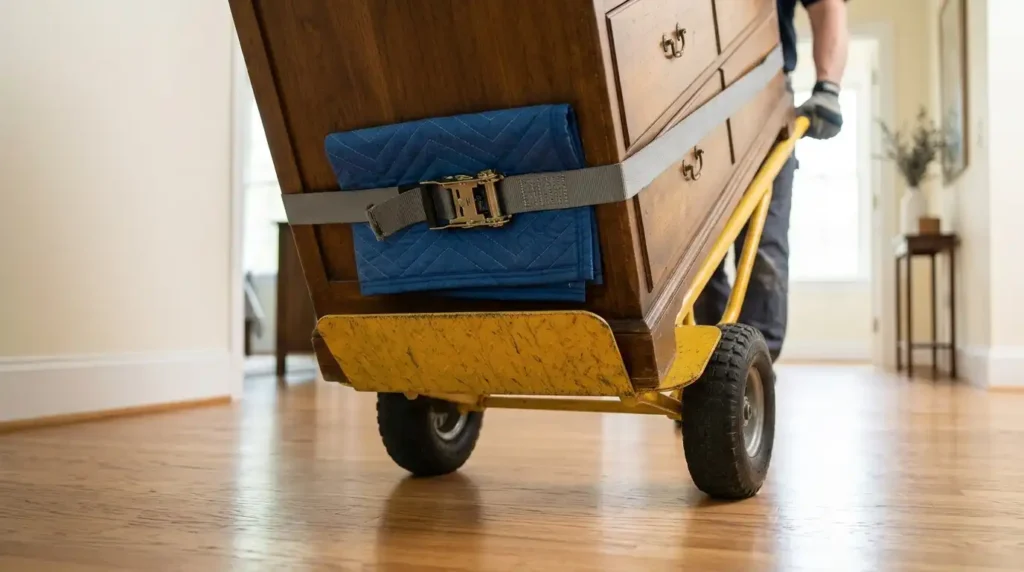
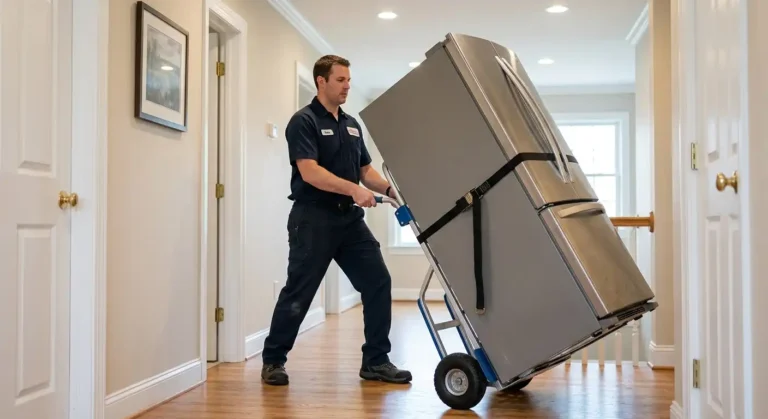
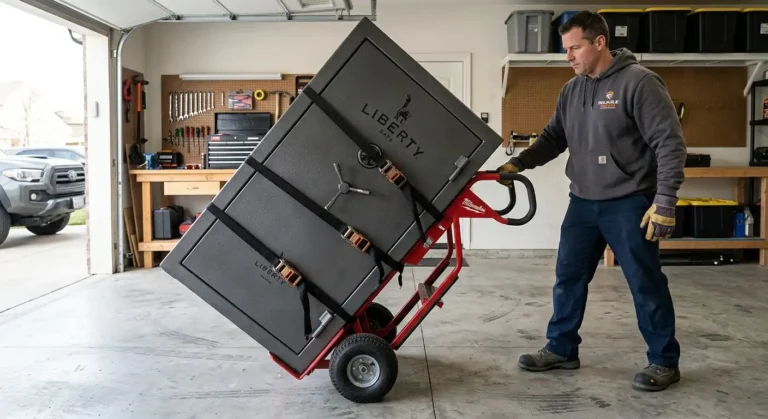
Unsecured furniture can slip off the toe plate or tip sideways. Wrap a durable load-securing strap around the furniture and the hand truck frame.
Position the strap across a solid structural part of the item rather than weak decorative trim. Tighten the strap until the furniture and frame move as a single unit. Place padding under the strap buckles to keep from marring delicate wood or fabric finishes.
Important Control Note: Equipment rated capacity is not a guarantee that one person can safely handle the load. A hand truck may be rated for 600 pounds, but factors like furniture height, center of gravity, floor slope, and personal strength dictate whether one person can maintain physical control.
Tilt the Furniture Onto the Wheels
Tilting requires steady control, not sudden force:
- Stand behind the hand truck with a firm, balanced stance.
- Place your hands firmly on the handle grips.
- Place one foot against the axle or tire to hold the bottom stable.
- Pull the handles back smoothly toward your body to tilt the load back onto the wheels.
- Stop tilting once the weight balances naturally over the axle.
Never jerk or yank the handles backward, as an unstable load can shift or pull you over.
Move the Furniture Slowly
Once balanced, push the hand truck forward at a controlled walking pace. Pushing allows you to see the path ahead and keeps your body behind the load. Pulling should be reserved for tight maneuvers where pushing is impractical, as pulling makes it harder to stop if the load shifts.
Maintain a two-handed grip, avoid sudden stops or sharp turns, and keep your eyes on the path ahead. If you need to review basic operational guidelines, see our guide on how to use a hand truck.
Move Heavy Furniture Through Doorways
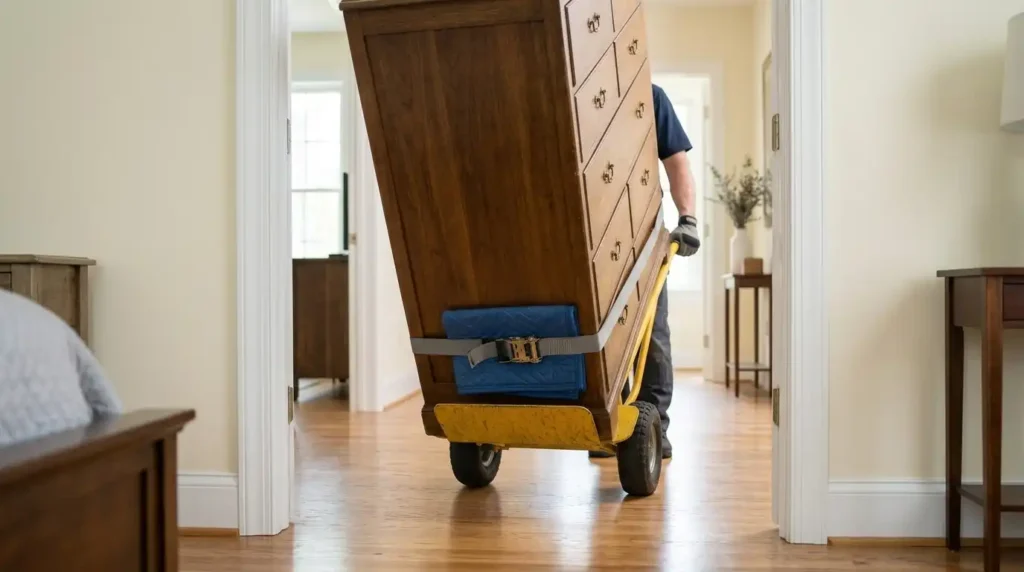
Doorways require precision to prevent damage to door frames and knuckles:
- Measure clearance before approaching.
- Open doors all the way, or remove interior doors from their hinges if space is tight.
- Line up the hand truck square with the opening.
- Pass through slowly, keeping your fingers clear of pinch points between the handles and the door jamb.
Moving Heavy Furniture on Stairs
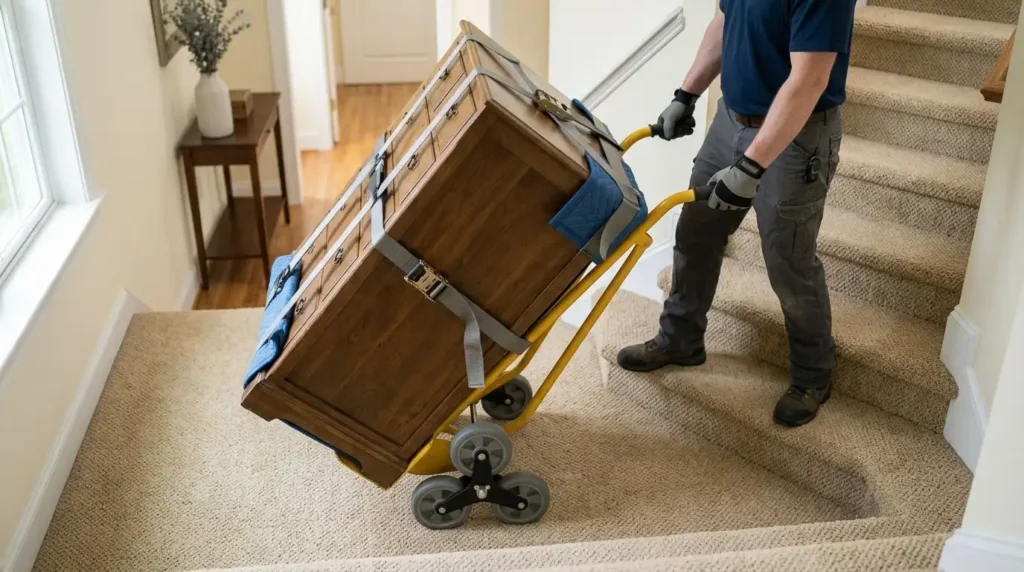
Stairs add extreme physical strain and risk during material handling. Standard two-wheel units should not be bounced down or pulled up stairs with heavy loads.
For stairways, use a specialized stair-climbing hand truck equipped with rotating three-wheel assemblies or tracks designed for steps. Always work with a spotter positioned below the load to help guide and stabilize the equipment. Check how to use a hand truck on stairs for detailed step-by-step guidance on tackling steps safely.
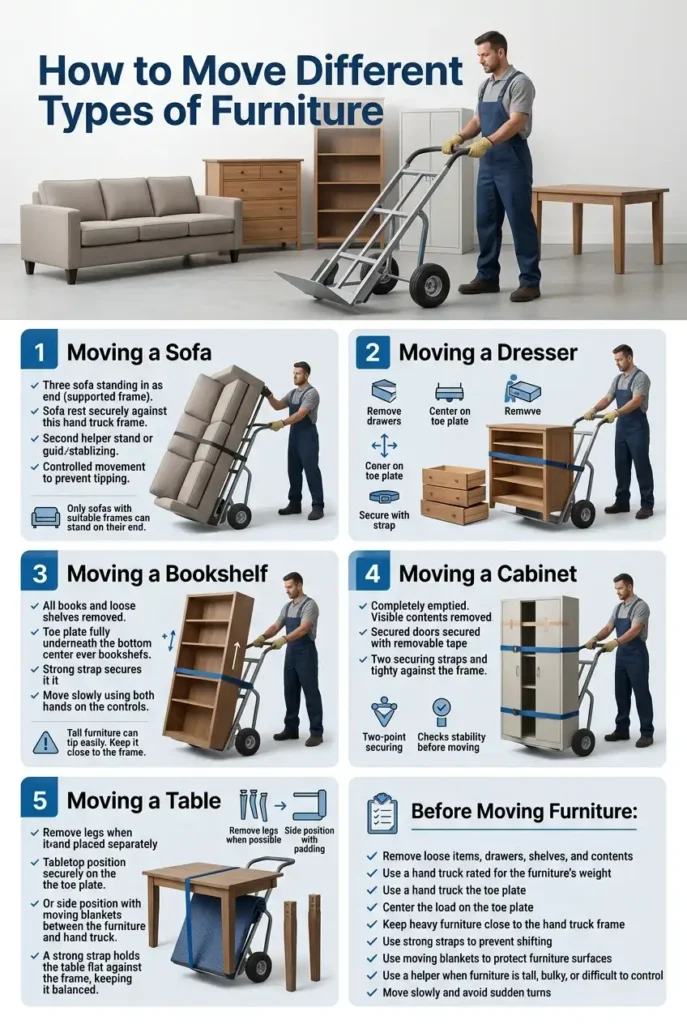
How to Move Different Types of Furniture?
Different items present unique handling requirements:
Moving a Sofa
Stand the sofa on its end only if its frame supports it, and strap it securely against the hand truck uprights. Having a helper guide the top end prevents tipping.
Moving a Dresser
Remove all drawers first to shed weight. Slide the toe plate under the center of the base and strap the frame tight.
Moving a Bookshelf
Remove all books and loose shelves. Because tall bookshelves have a high center of gravity, strap the unit closely to the frame and move slowly to avoid tipping.
Moving a Cabinet
Remove inner contents and lock or tape the doors closed. Center the cabinet on the toe plate and strap it at both top and bottom if the unit is tall.
Moving a Table
Remove table legs whenever possible. If legs cannot be removed, stand the table on its side on the toe plate, padded with moving blankets, and strap it flat to the frame.
Common Mistakes to Avoid
- Exceeding the manufacturer’s rated capacity.
- Transporting furniture without securing straps.
- Leaving drawers or shelves inside during transit.
- Tilting loads too quickly or aggressively.
- Pulling heavy loads backward instead of pushing.
- Blocking your forward vision with oversized loads.
- Attempting to navigate stairs with standard equipment.
Safety Tips
- Inspect wheels, tires, and frame welds before loading.
- Wear work gloves and sturdy closed-toe shoes with non-slip soles.
- Keep hands and body clear of frame pinch points.
- Never push past your physical strength limits; ask for help when a load feels awkward.
- Stop immediately and lower the toe plate to the ground if a load starts to shift or feel unstable.
Frequently Asked Questions
Yes, a hand truck is designed to move heavy furniture safely. Success depends on selecting a model rated for the item’s weight, clearing your pathway, padding and securing the furniture, and maintaining full control while rolling over flat, stable surfaces.
Heavy-duty steel hand trucks or appliance hand trucks with wide toe plates and built-in tension straps work best for large furniture. Convertible hand trucks and models with pneumatic tires are also ideal for moving heavy, bulky pieces across mixed terrain.
Wrap a heavy-duty moving strap or winch strap around the main body of the furniture and through the vertical rails of the hand truck frame. Tighten the strap snugly, making sure it sits over stable structural parts rather than delicate trim.
One person can move moderately heavy furniture if the item is well-balanced and within their physical ability to control. However, exceptionally tall, bulky, or heavy items require two people to balance, steer, and navigate doorways safely.
Remove all drawers and contents to reduce weight. Slide the toe plate fully under the center of the dresser, pad the wood surfaces, strap the dresser tightly against the frame, tilt it back smoothly, and push slowly along your cleared path.
You should only move furniture on stairs using a hand truck built specifically for steps, such as a stair-climbing model. Standard two-wheel hand trucks are difficult to control on steps and can cause serious injuries or property damage.
Yes, a hand truck can scratch furniture if metal rails contact bare surfaces, or damage floors if wheels carry rough debris. Prevent damage by wrapping furniture in moving blankets, cleaning wheels before rolling, and avoiding overloading.
Final Words
Moving heavy furniture with a hand truck comes down to choosing appropriate equipment, preparing the piece, securing the load, and staying within rated weight capacities. Clear your route in advance, use proper tilting technique, and move at a controlled pace. When faced with stairs or exceptionally heavy items, always enlist extra help or specialized equipment to finish the job safely.