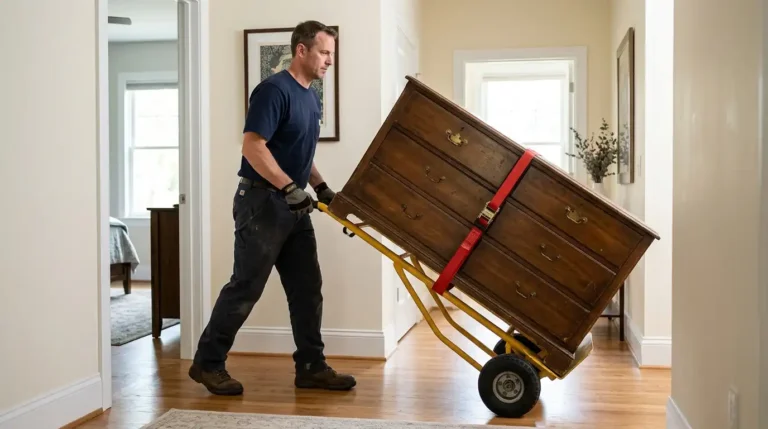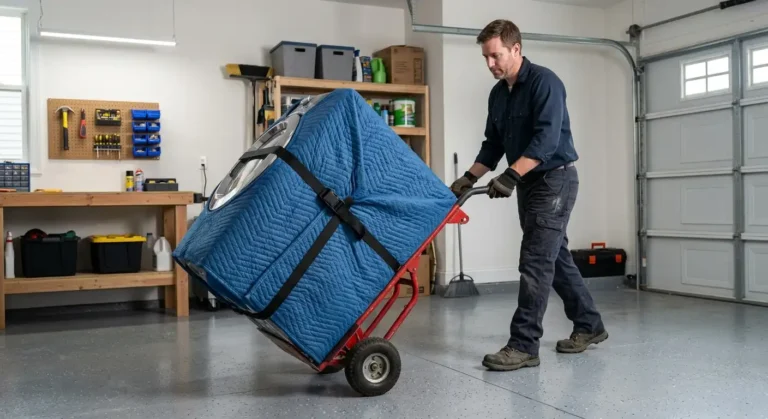

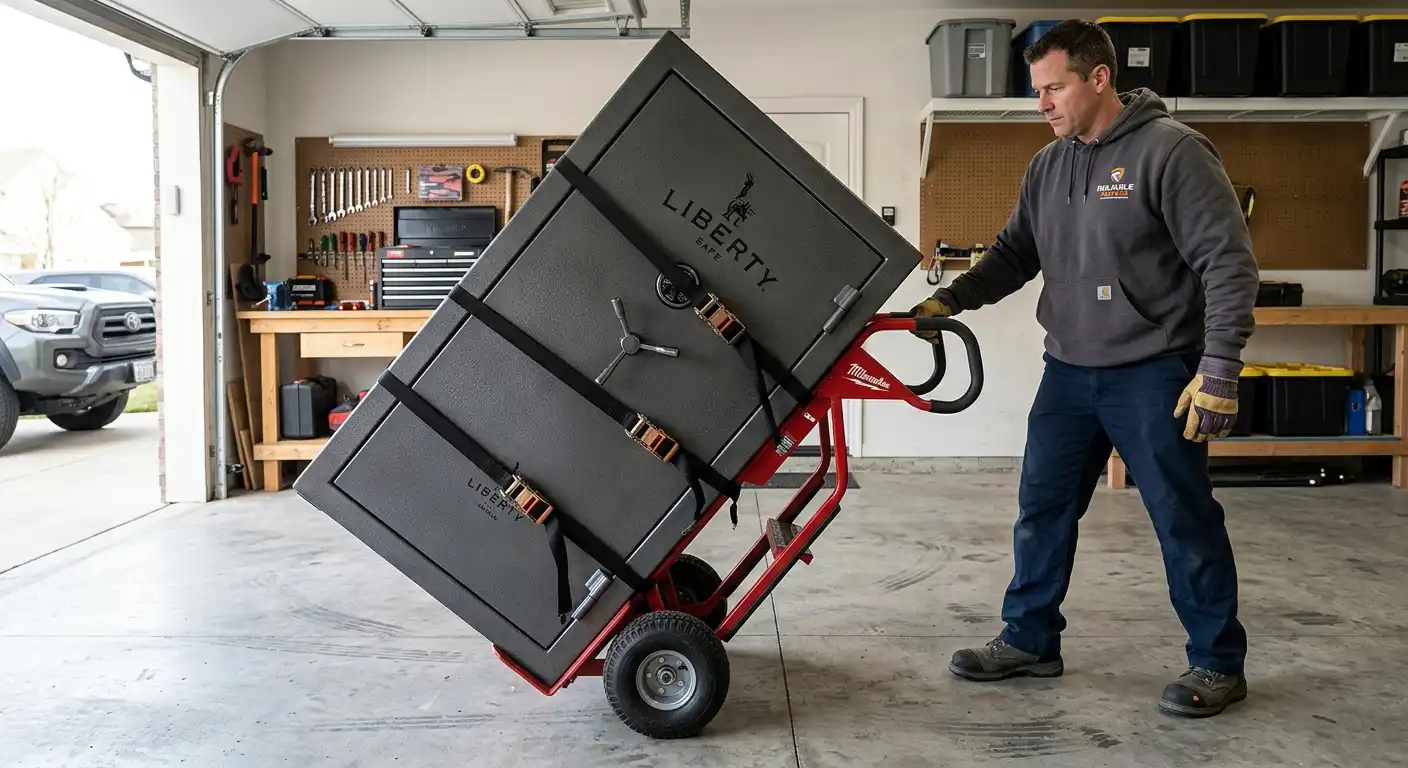
To move a heavy safe with a hand truck, select a heavy duty hand truck that exceeds the safe’s weight, clear a flat route, center the safe on the toe plate, secure it firmly with load straps, and tilt it back carefully. Move slowly with helpers, avoiding stairs or steep inclines unless you have specialized stair-climbing equipment.
Can You Move a Heavy Safe With a Hand Truck?
Yes, you can move some heavy safes with a hand truck, provided the equipment matches the task. The hand truck must have an adequate manufacturer rated capacity, a wide enough toe plate to support the base, and a frame designed for heavy loads.
However, a hand truck is not a universal solution. Extremely heavy gun safes, commercial deposit safes, or bulky units with awkward centers of gravity often require specialized equipment or professional safe movers. Never assume a standard hand truck can handle a safe just because it fits on the nose plate.
What You Need to Move a Heavy Safe?
Having the right tools ready prevents injuries and protects your property. Depending on your safe and moving route, gather:
- Heavy duty hand truck: Must have a rated weight capacity higher than the safe’s actual weight.
- Heavy duty tie-down straps: Ratchet straps or strong load straps to secure the safe to the frame.
- Moving blankets or padding: Protects the safe finish and door handles from scratches.
- Floor protection: Masonite boards, heavy cardboard, or plywood sheets to protect hardwood and tile floors.
- Work gloves: High-grip gloves to maintain control of the handles.
- Sturdy footwear: Closed-toe boots with good traction.
- Spotters or helpers: At least one or two additional people to help guide and stabilize the load.
To learn more about selecting the right tool for different tasks, check out our guide on types of hand trucks.
Check the Safe Weight and Hand Truck Capacity
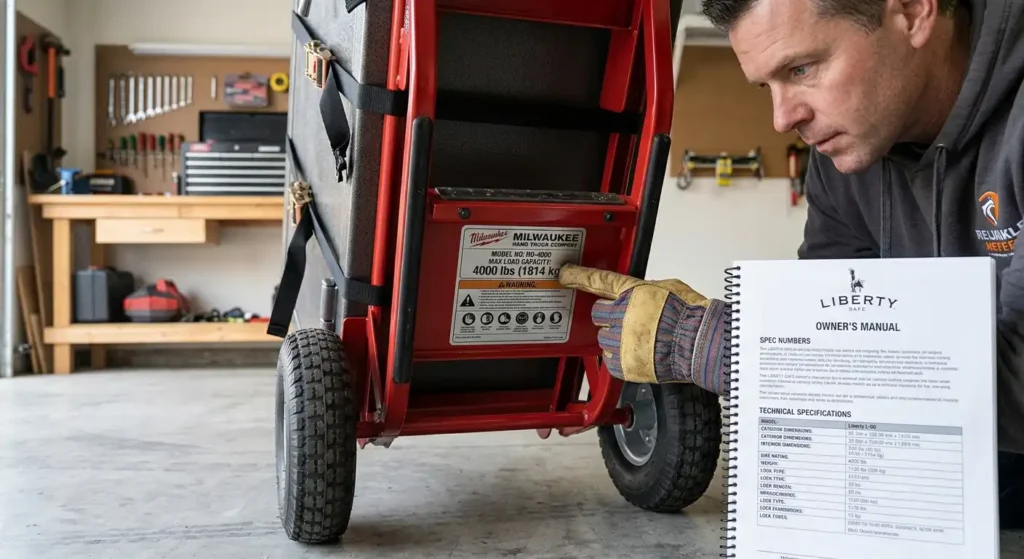
Before attempting to lift anything, find the exact weight of your safe. Consult the owner manual, check the manufacturer label on the back, or search the model number online.
Next, check the manufacturer rated capacity of your hand truck. This rating is stamped on the frame or listed in the user manual. Never exceed the hand truck manufacturer rated capacity under any circumstances.
Keep in mind that rated capacity alone does not guarantee a safe move. A hand truck rated for 800 pounds might hold an 800-pound safe on paper, but an uneven center of gravity, narrow doorways, or rough surfaces can make the load impossible to control.
Consider the height, depth, and weight distribution of the safe alongside your own physical ability to handle the leverage required. If you want to know more about load limits, read our detailed article on how much weight a hand truck can hold and carry.
Prepare the Safe Before Moving It
Proper prep work makes the safe lighter and less dangerous to transport.
- Empty the safe when practical: Remove handguns, ammo, cash, paper documents, and loose items. This reduces overall weight and stops heavy objects from shifting inside during transport.
- Remove internal components: Take out adjustable steel shelves, drawers, or removable organizers.
- Lock the door: Close the safe door completely and engage the lock or handle mechanism so it cannot swing open mid-move.
- Pad the exterior: Wrap moving blankets around the safe and tape them tightly to shield the combination dial, electronic keypad, and finish.
Inspect the Hand Truck
A mechanical failure while moving a heavy load can cause severe injury. Inspect your equipment thoroughly before loading:
- Frame: Look for cracked welds, bent uprights, or structural fatigue.
- Wheels and tires: Ensure pneumatic tires are fully inflated and hard rubber wheels are free from cracks or flat spots.
- Axle: Check that the axle is straight and the wheels spin smoothly without severe wobble.
- Toe plate: Verify the nose plate is straight and solidly attached to the frame.
- Straps: Inspect your ratchet straps for frayed webbing or broken buckles.
Never use a damaged or defective hand truck. If your current equipment seems too weak, review our guide on how to choose the right hand truck.
Prepare the Moving Route
Moving a heavy safe requires a clear, obstacle-free path from start to finish.
Measure the safe width and depth, then measure every doorway, hallway, and turn along your planned route. Remove throw rugs, shoes, toys, and furniture from the path. Clean up any grit or moisture on tile and hardwood floors that could cause slipping.
Place floor protection sheets over soft wood floors, linoleum, or delicate tile to prevent gouging or crushing from the hand truck wheels. Finally, inspect thresholds, ramps, and outdoor pavement for cracks, bumps, or steep grades that could stop the wheels abruptly.
How to Move a Heavy Safe With a Hand Truck?
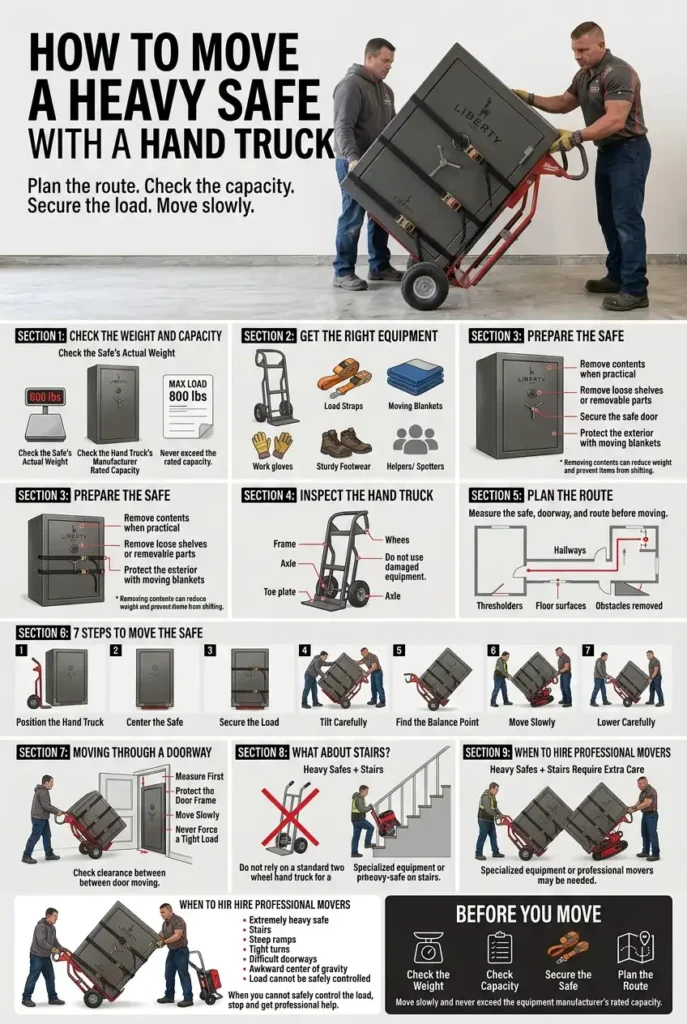
Follow these step-by-step instructions to transport your safe safely across flat surfaces.
Step 1: Position the Hand Truck
Place the hand truck directly behind or beside the safe. Slide the toe plate firmly underneath the base of the safe as far as it will go. Do not force or kick the toe plate under the safe if it binds, as this can destabilize the safe or bend the metal frame.
Step 2: Position the Safe Properly
Center the safe side-to-side on the toe plate. An off-center safe creates uneven weight distribution, making the hand truck twist in your hands and tilt sideways once tipped back.
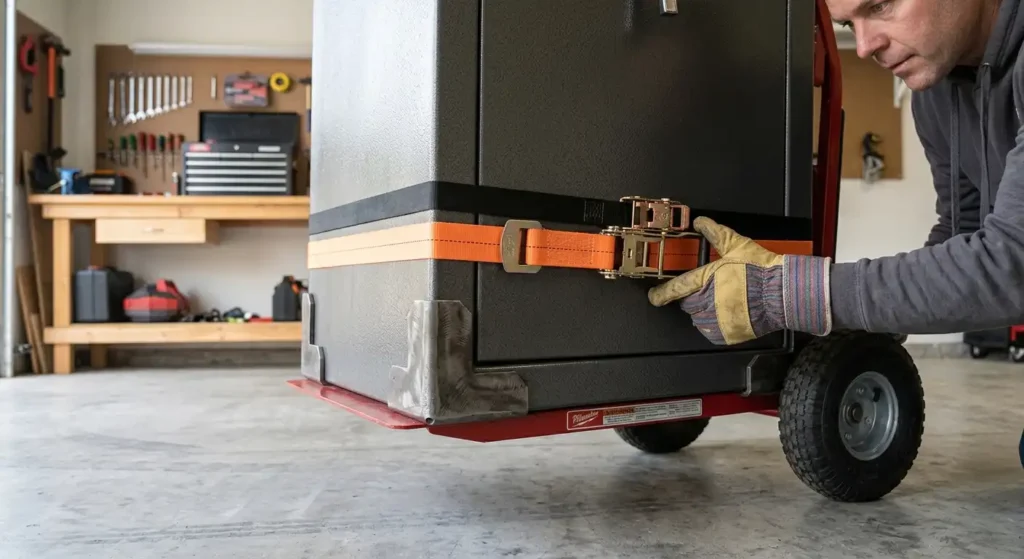
Step 3: Secure the Safe
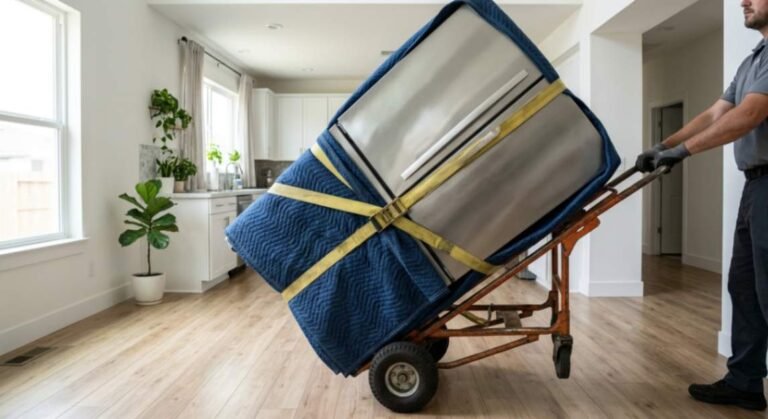
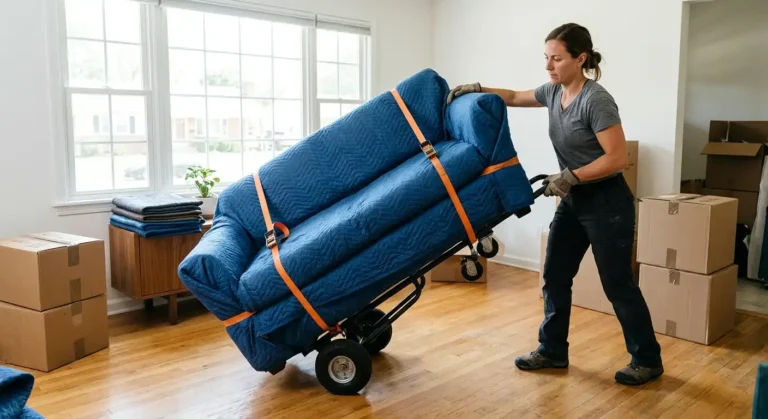
Wrap strong ratchet straps around the body of the safe and the hand truck frame. Tighten the straps until the safe and hand truck function as a single unit. Straps keep the load from shifting or sliding off the toe plate, but remember that straps do not increase the weight capacity of an under-rated hand truck.
Step 4: Tilt the Hand Truck Carefully
With a helper standing in front of the safe to push gently against the upper chest area, place your foot on the axle or wheel guard. Pull the handles back toward your body slowly using controlled, steady force. Keep your back straight and knees slightly bent.
Step 5: Maintain Control
Find the balance point where the weight sits directly over the wheels. Keep both hands firmly on the handle grips at all times. Look forward in your direction of travel rather than staring down at your feet.
Step 6: Move Across the Floor
Walk slowly and deliberately. Have a helper act as a spotter, watching for low clearances and ground hazards. Approach door thresholds, carpet transitions, and tight corners slowly to keep the wheels from jamming. If you need a refresher on basic posture and pushing techniques, read our guide on how to use a hand truck safely.
Step 7: Set the Safe Down Carefully
Once you reach the final destination, bring the hand truck to a complete stop. Place your foot against the back axle, signal your helper, and slowly ease the hand truck back to a vertical position. Keep your hands, feet, and toes clear from underneath the toe plate as the full weight settles back onto the floor. Unstrap the load carefully.
How to Move a Heavy Safe Through a Doorway?
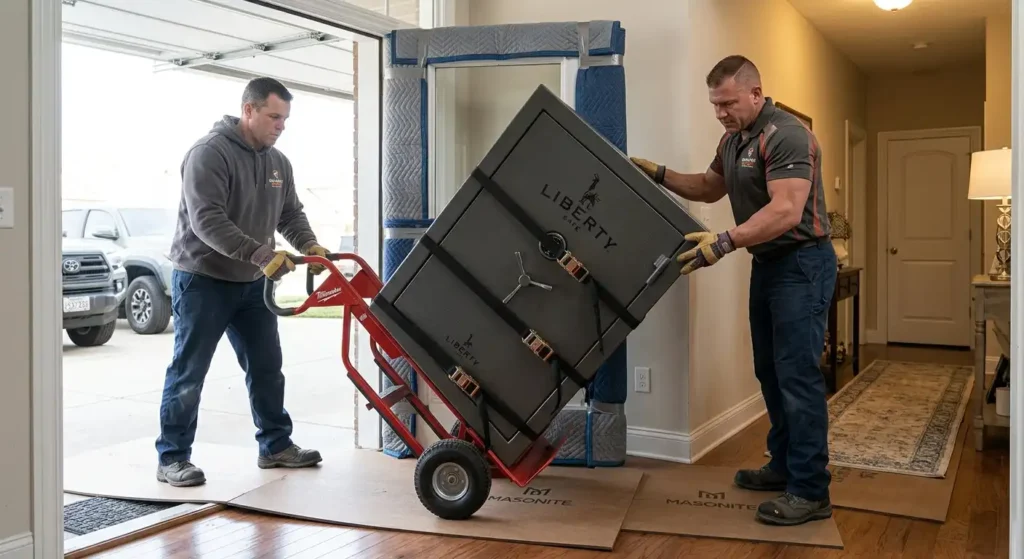
Doorways present narrow tolerances and hard edges that can catch safe handles or trap fingers.
Measure the width of the door frame and compare it to the combined width of the safe and hand truck. Account for the tilted angle of the safe, as the upper rear corners may tilt farther back than the bottom base.
Protect the door frame casing by taping cardboard or foam guards along the trim. If space is tight, carefully pop the hinge pins and remove the door panel completely to gain two extra inches of clearance. Never force a tight load through a door frame; if the safe wedges, pushing harder can tip the entire assembly over.
How to Move a Heavy Safe Up or Down Stairs?
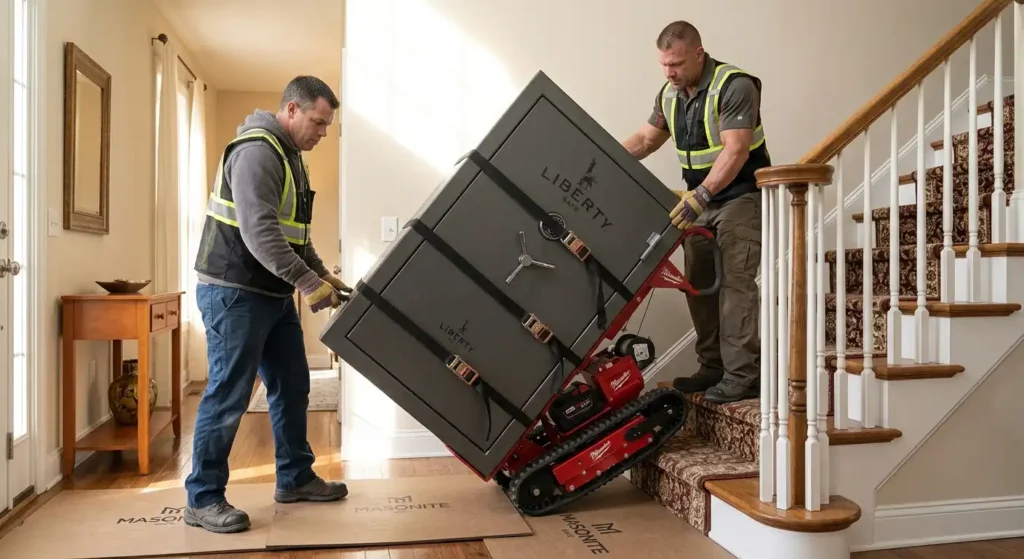
Moving a heavy safe on stairs is extremely high-risk. Gravity pulls the load downward, making control difficult and risking runaway falls, broken stairs, or crushed limbs.
A standard two-wheel hand truck should not be used to pull heavy safes up or down stairs. Standard tires can slip off stair treads, and the weight can easily overpower the person holding the handles above or below.
If your route involves stairs, you generally need specialized equipment like a motorized stair-climbing appliance truck, heavy duty stair-climber straps, and multiple trained assistants. For lighter items, read our general overview on how to use a hand truck on stairs, but for heavy safes, hiring professional movers is strongly recommended.
When Should You Hire Professional Safe Movers?
While DIY moving is possible for smaller or mid-sized safes on flat floors, certain situations demand professional equipment and expertise. Consider hiring professional safe movers if:
- The safe weight approaches or exceeds what you and your helpers can comfortably pull back.
- The route involves flight of stairs, steep outdoor ramps, or uneven gravel paths.
- You must navigate narrow hallways with tight 90-degree turns.
- The safe shape or tall height creates an awkward center of gravity.
- You lack a heavy duty appliance hand truck with proper load straps.
- You feel unsure of your ability to control the load safely.
Professional safe crews use specialized hydraulic lifts, aluminum track systems, motorized stair climbers, and floor protection plates that keep both the crew and your property completely safe.
FAQs
Yes, you can move a heavy safe with a hand truck if the hand truck has an adequate weight rating, the safe is properly strapped to the frame, and the route consists of flat, clear surfaces.
A heavy duty appliance hand truck with a high load capacity, a wide toe plate, stair climbers, and built-in ratchet straps is the best choice for moving safes.
Yes. Emptying a safe removes unnecessary weight and prevents internal contents from shifting, which can change the center of gravity while moving.
You should not attempt to move a heavy safe upstairs using a standard two-wheel hand truck. Stairs require specialized stair-climbing equipment, proper rigging, and multiple experienced movers.
Measure the opening beforehand, wrap the door frame trim with protective padding, align the hand truck straight with the doorway center, and roll through slowly with a helper watching side clearances.
Wrap heavy duty ratchet straps around both the body of the safe and the vertical uprights of the hand truck frame, then crank the ratchet tightly until the load cannot shift.
Moving a heavy safe with a hand truck requires preparation, proper equipment, and careful execution. Always confirm your hand truck can handle the weight, clear your route beforehand, strap the safe securely, and work slowly with helpers. If your move involves stairs, tight corners, or an exceptionally heavy load, play it safe and hire professional safe movers.
Also Read: