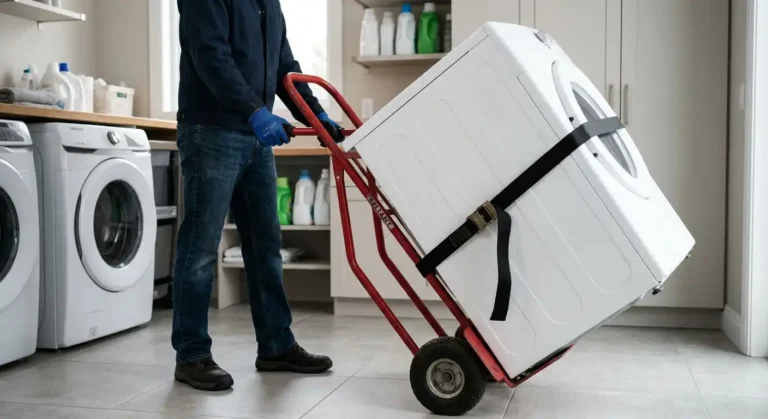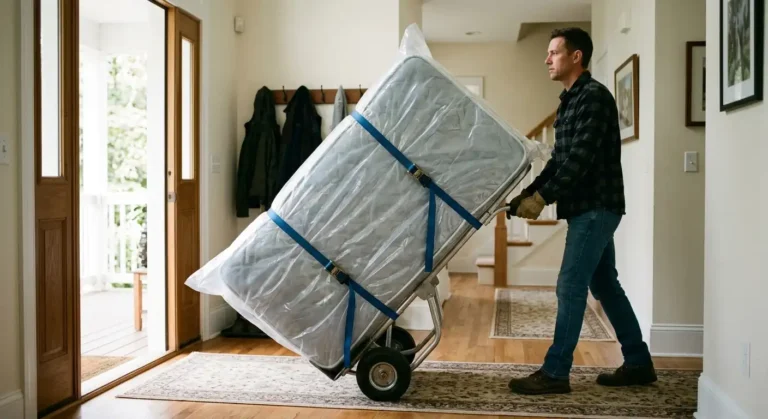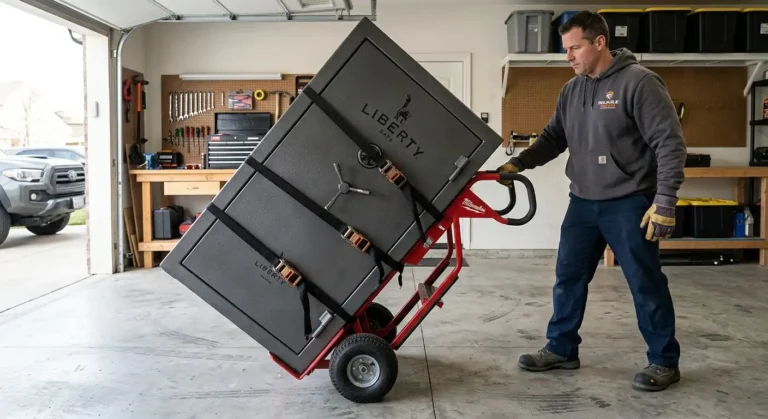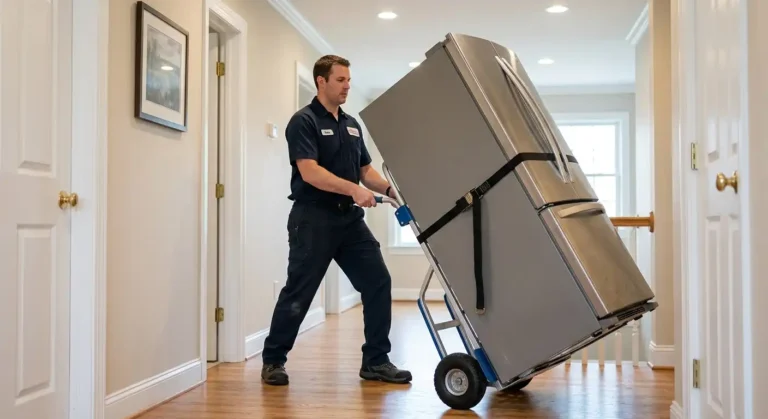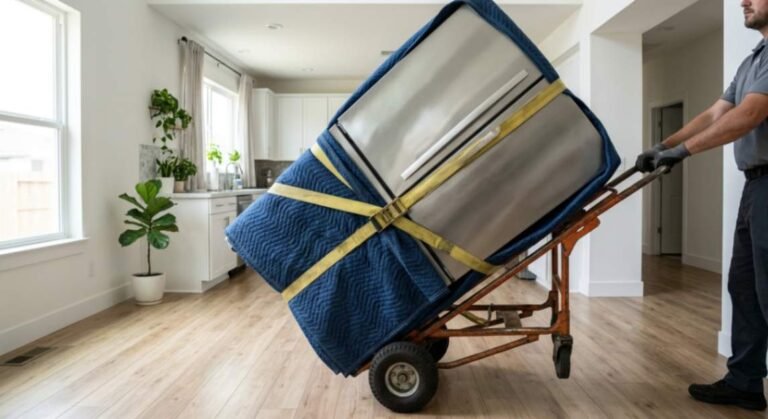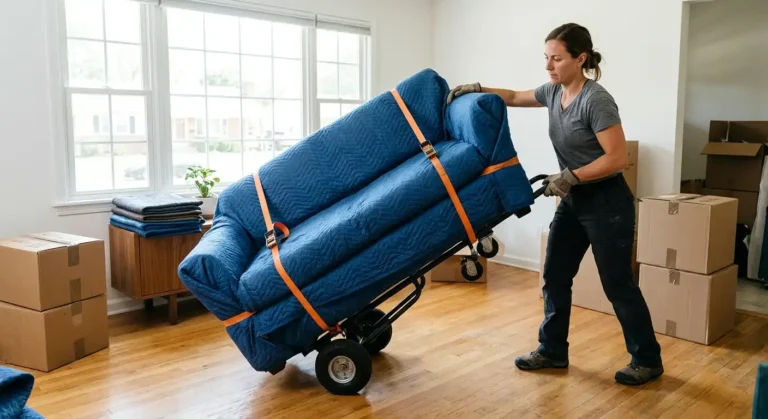

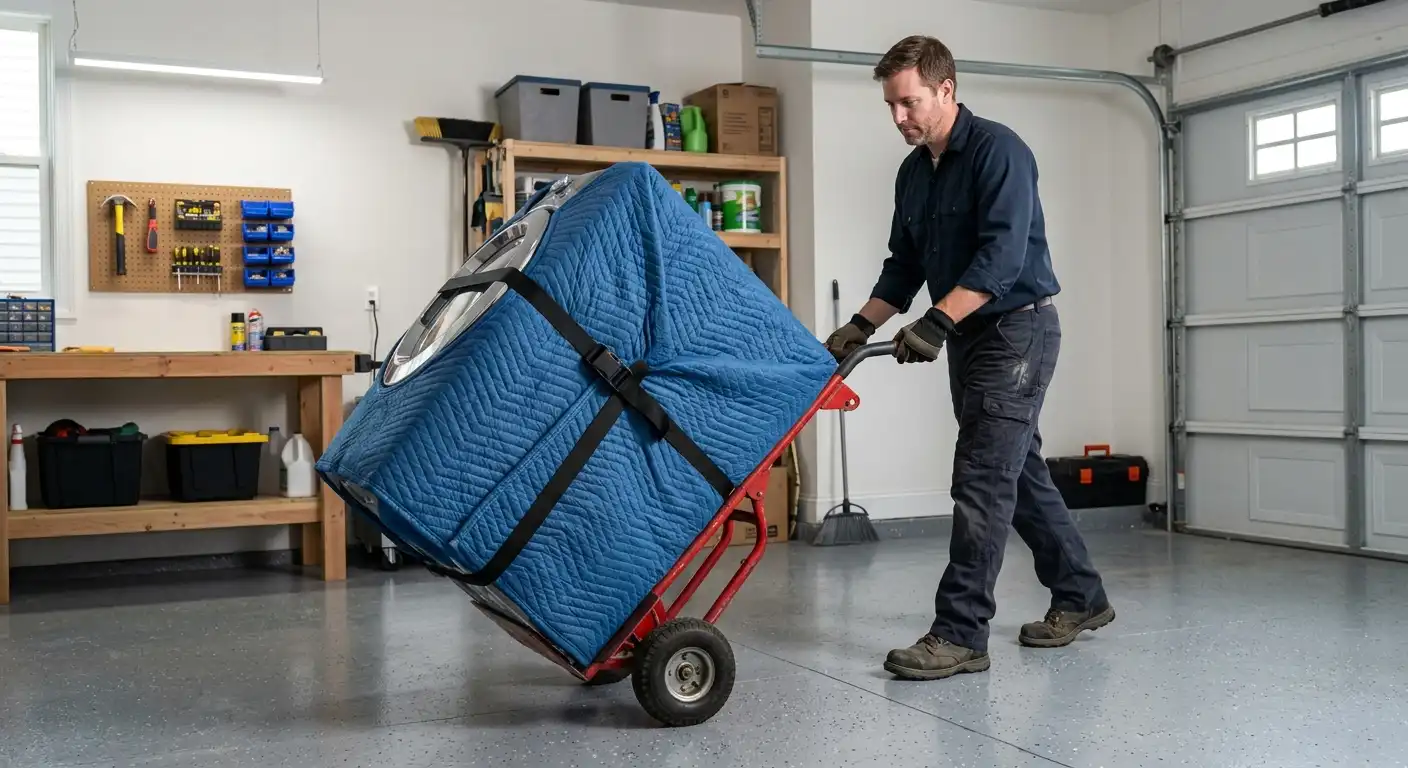
Moving a washing machine with a hand truck is simple if you plan ahead. You can safely transport your washer by draining all remaining water, securing the drum according to the manufacturer’s directions, strapping the appliance to a heavy duty hand truck, and moving slowly with a second person assisting you.
Quick Answer: How do you move a washing machine with a hand truck?
To move a washing machine with a hand truck, unplug the power, shut off the water valves, and drain remaining water from the hoses. Install transport bolts if required by your model. Wrap the washer with a moving blanket, roll the toe plate under the base, and secure it firmly with a strap. Tilt the load back carefully and push slowly with a helper nearby.
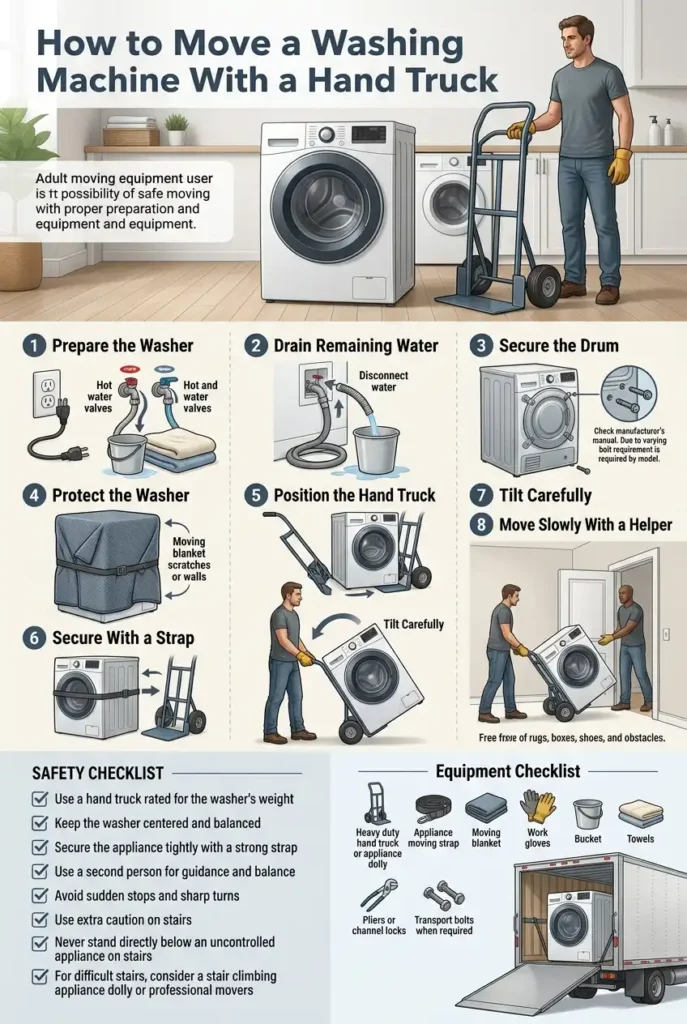
What You Need Before Moving a Washing Machine?
Having the right tools ready prevents injury and protects your home. Before starting, collect these items:
- Heavy duty hand truck or appliance dolly rated for your machine’s weight
- Appliance moving strap
- Moving blankets
- Work gloves
- Bucket and towels for excess water
- Pliers or channel locks for disconnecting water hoses
- Transport or shipping bolts if required by your model
- A second person to help balance and guide the load
Washing machines vary in size and weight, ranging anywhere from 120 pounds to well over 200 pounds. Check your appliance’s manual for its exact weight and verify that your equipment can handle the load. If you are unsure which gear fits your project, learn how to choose the right hand truck before starting.
Prepare the Washing Machine for Moving
Taking time to prepare the washer prevents leaks, water damage, and internal mechanical failure during transit.
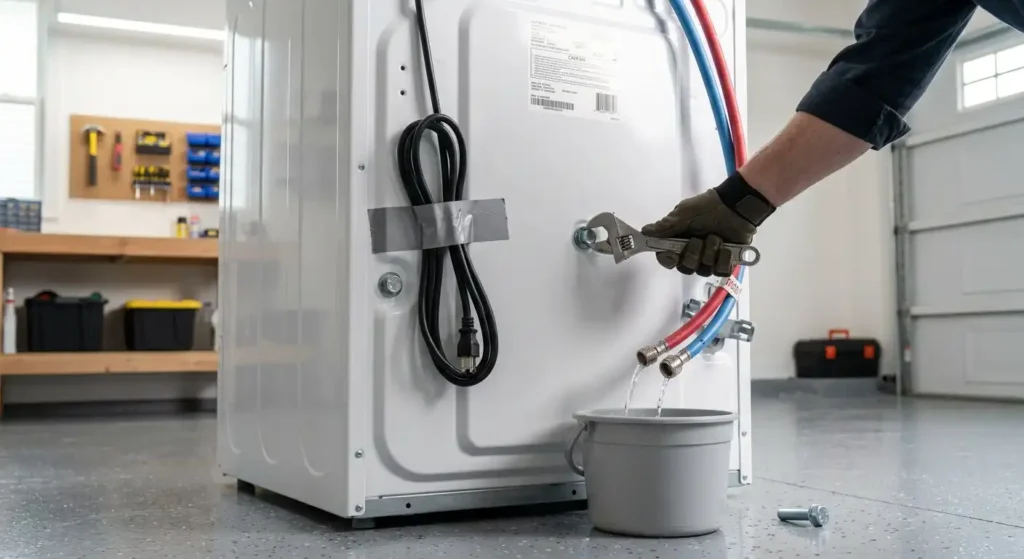
Step 1: Unplug the washer
Disconnect the power cord from the electrical wall outlet.
Step 2: Turn off the water supply
Rotate the hot and cold water valves clockwise until they are completely closed.
Step 3: Disconnect the water hoses
Unscrew the water inlet hoses from the wall supply valves. Direct the open ends into a bucket to catch any excess water.
Step 4: Disconnect and secure the drain hose
Remove the drain hose from the standpipe or utility sink. Allow remaining water to flow into your bucket, then tape or tie the hose to the back of the washer so it stays off the floor.
Step 5: Drain remaining water
Tilt the washer slightly to clear water sitting in the internal drain pump and hoses. Keep towels nearby to wipe up spills.
Step 6: Secure the drum when required
Front load washing machines use delicate suspension systems. Manufacturers often instruct users to install shipping or transport bolts through the rear panel to keep the drum fixed during movement. Check your owner’s manual for your exact model’s requirements. Remember that these bolts must be removed before operating the washing machine again.
Step 7: Secure loose parts
Bundle the power cord and water hoses, securing them directly to the cabinet with tape or straps so they do not catch under the wheels.
How to Move a Washing Machine With a Hand Truck?
Follow these step by step instructions to transport your washer safely across flat surfaces.
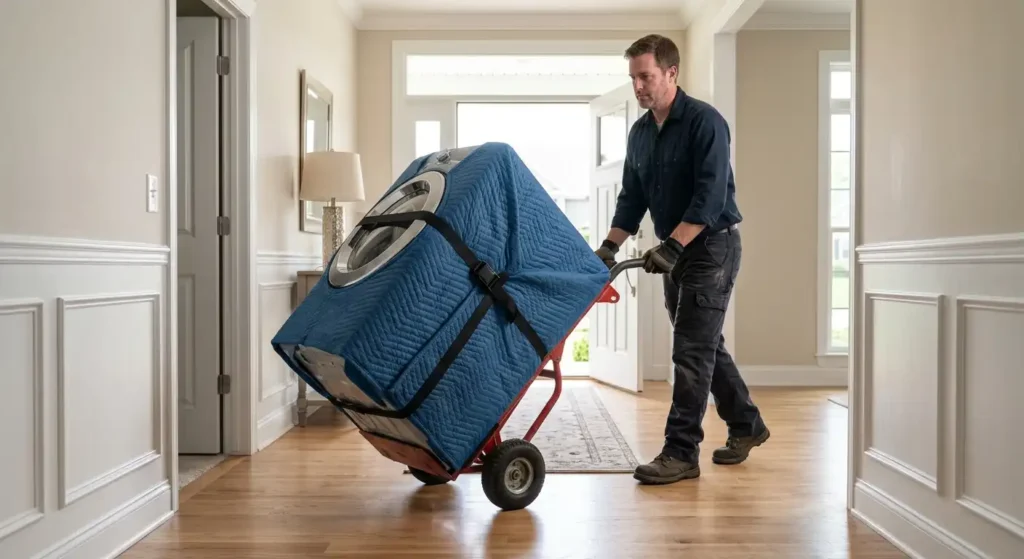
Step 1: Clear the path
Clear a wide path from the laundry room to your vehicle. Remove throw rugs, shoes, boxes, and door stoppers. Measure narrow doorways and sharp turns to confirm the washer will fit through without scratching walls.
Step 2: Protect the washing machine
Wrap the body of the washer with a clean moving blanket. Secure the blanket with tape or stretch wrap so it stays in place without slipping beneath the wheels.
Step 3: Position the hand truck
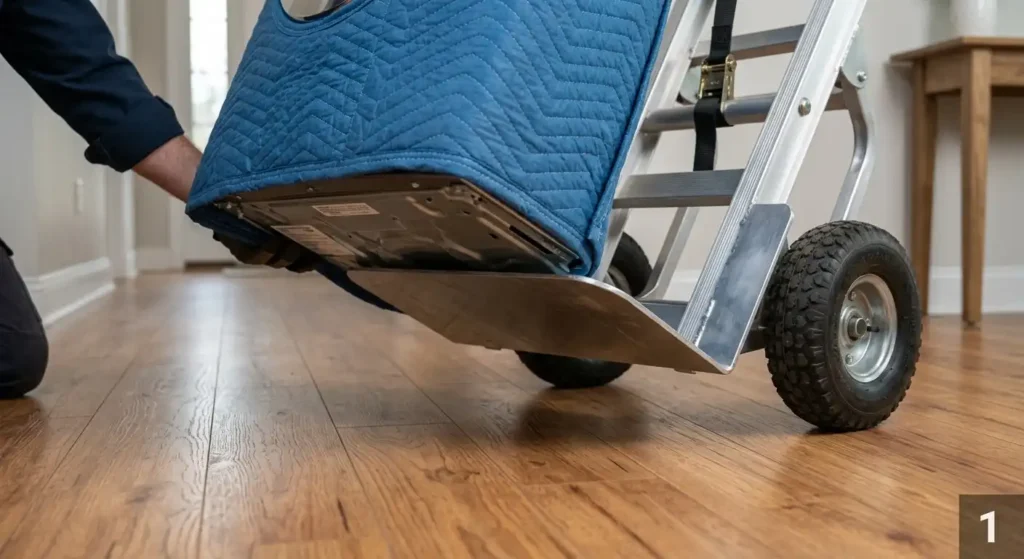
Slide the toe plate of the hand truck underneath the bottom edge of the washing machine. Place it centered under the frame, making sure the plate does not press against fragile leveling feet or drain connections.
Step 4: Keep the washer balanced
Ensure the washer rests flush against the frame of the hand truck. Keep the center of gravity centered so the machine does not tip to one side.
Step 5: Secure the washer
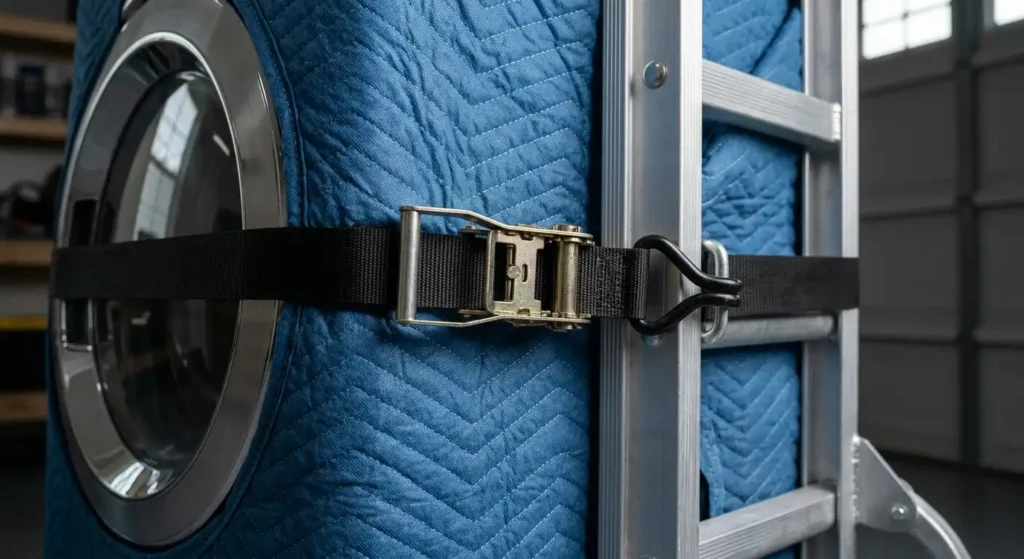
Thread an appliance strap around the back of the hand truck frame and tighten it firmly across the center of the washer. A tight strap keeps the appliance fixed to the frame, which is safer than relying on your physical grip alone. Understanding how to use a hand truck properly helps maintain control throughout this step.
Step 6: Tilt the hand truck carefully
Place one foot against the wheel axle for leverage. Grasp the handles firmly and pull back gradually until the weight balances over the wheels. Avoid tipping the appliance back at a sharp angle.
Step 7: Move slowly
Push the hand truck smoothly using small, deliberate steps. Avoid sudden stops or sharp turns. Keep your eyes on the path ahead and monitor the wheels.
Step 8: Get help when needed
Ask a second person to walk beside or ahead of you. They can open doors, spot obstacles, and steady the washer if the hand truck shifts.
Can You Move a Washing Machine With a Regular Hand Truck?
A standard two wheel hand truck can work if its weight capacity and frame dimensions fit the washer. However, regular models often have narrow toe plates and shorter frames that make balancing heavy appliances tricky. Understanding how much weight a hand truck can hold and carry is essential before loading your machine.
An appliance dolly is often a better choice because it features a wider base plate, built in tension straps, and side padding designed specifically for bulky household equipment. If you are comparing equipment types, review our guide on hand truck vs dolly to choose the right gear for your job.
Can One Person Move a Washing Machine With a Hand Truck?
While a hand truck simplifies pushing a heavy appliance, attempting to move a washing machine alone is not recommended. Balancing a top heavy load on small wheels while navigating doorways or uneven floors requires effort and precision. Having a helper keeps the machine balanced and lowers the risk of tipping or injury.
How to Move a Washing Machine Up or Down Stairs?
Moving a heavy appliance on stairs carries risk and requires extra precautions.
- Verify your equipment: Make sure your strap is locked tight and the appliance dolly is rated for stair transport.
- Use two people: One person handles the dolly handles from above, while the helper guides the base from below to keep the load steady.
- Move one step at a time: Lower or lift the dolly wheels steadily from step to step without bouncing.
- Maintain safe positioning: Never stand directly beneath an uncontrolled washing machine on a staircase. If the load shifts out of control, step clear immediately.
- Consider specialized tools or pros: For steep or curved staircases, rent a stair climbing appliance dolly or hire professional movers. You can find detailed steps in our guide on how to use a hand truck on stairs.
How to Transport a Washing Machine in a Vehicle?
Once loaded into a truck or trailer, set the washing machine upright against a solid cargo wall. Wrap ratchet straps around the body and anchor them to the vehicle’s tie down points so the washer cannot shift or tip while driving.
Follow your manufacturer’s directions regarding upright transport. Front load models in particular should remain upright to avoid internal drum damage. Once you reach your destination, remove any shipping bolts before connecting the hoses and plugging in the power cord.
Frequently Asked Questions
Yes, you can move a washing machine using a suitable hand truck or appliance dolly rated for the machine’s total weight.
Washing machine weights range between 120 and 230 pounds depending on the size, capacity, and internal components of the specific model.
A single person can roll a light machine on flat ground, but having a second person helps control balance, clear doorways, and navigate steps safely.
Yes, but doing so requires a sturdy dolly, strong straps, and at least two people moving one step at a time to maintain full control.
You do not strictly need one if you have a heavy duty hand truck, but an appliance dolly provides wider support, protective rubbing strips, and integrated straps.
Many front load manufacturers require installing transport bolts to lock the drum during transit. Check your specific owner’s manual for guidance.
Moving a washing machine requires careful preparation and the right equipment. Disconnect and drain the machine completely, install drum stabilization hardware if required, wrap the unit for protection, and anchor it securely to your hand truck. Take slow, deliberate steps and always work with a helper to ensure a safe, efficient move.
Also Read: