
How do you choose the right hand truck? You choose the right hand truck by matching the equipment to the load’s weight and size, the surface and terrain, wheel type and size, frame design, intended use, and storage needs.
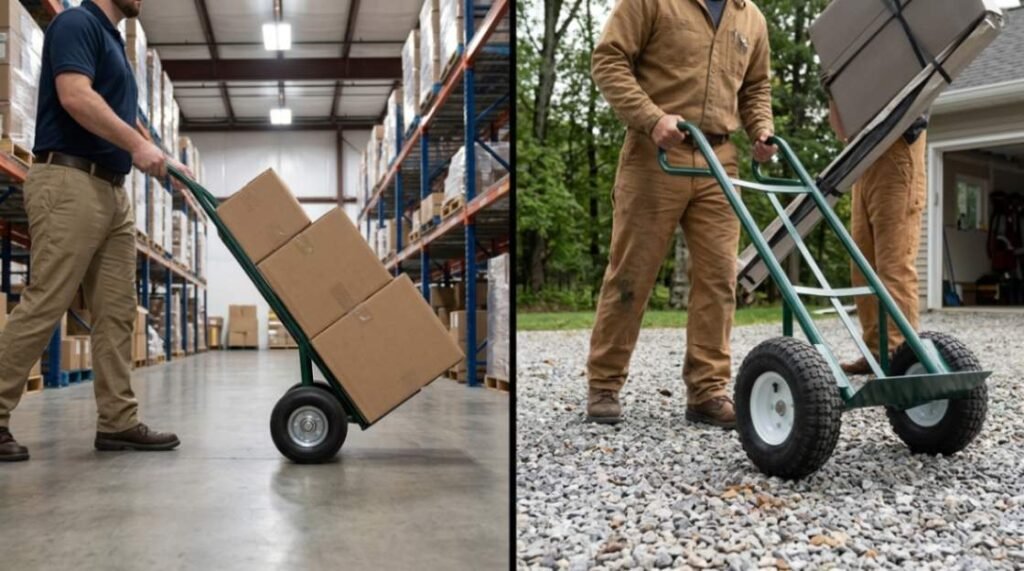
Many people assume they should simply buy the strongest or most expensive model available. That is a mistake. The right hand truck for moving light cardboard boxes in a narrow hallway is very different from the right hand truck for moving a heavy appliance across a gravel driveway.
Choosing the right hand truck depends mainly on:
- Load weight
- Load size and shape
- Wheel type
- Surface
- Frame material
- Truck size
- Nose plate size
- Number of wheels
- Storage needs
- Frequency of use
This hand truck buying guide will walk you through each factor so you can make a smart, practical decision.
What Should You Consider When Choosing a Hand Truck?
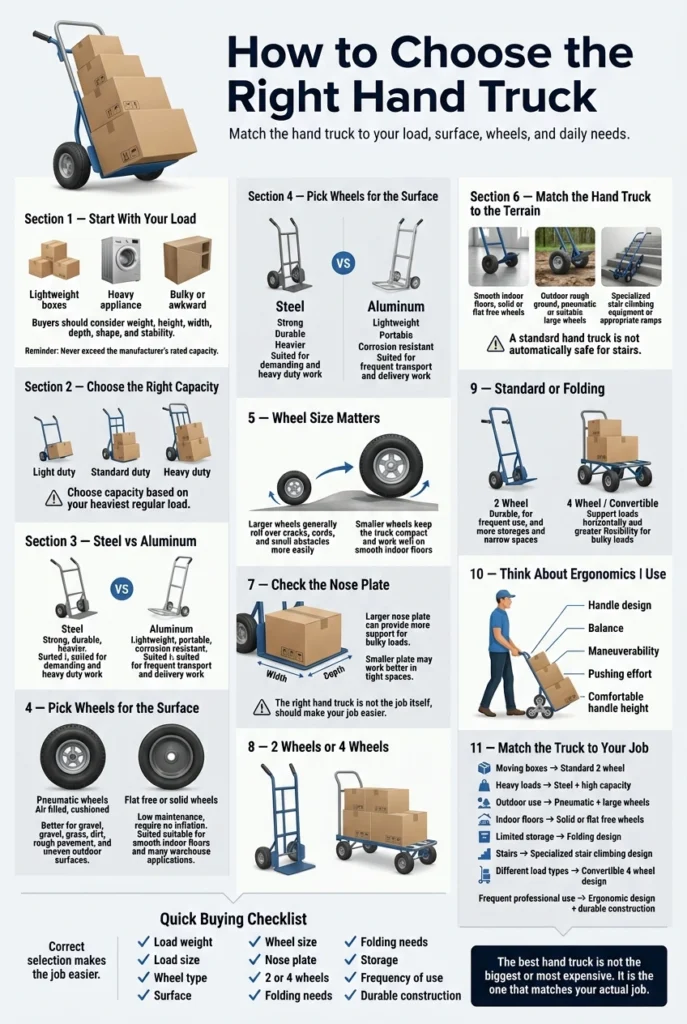
Before you look at specific models, you need a basic understanding of the major buying factors. You should consider the weight capacity to ensure the hand truck can safely hold your items. You also need to look at the load size and shape, as awkward items require different support.
Material choices, like steel or aluminum, affect the truck’s overall weight and durability. Wheel type and wheel size determine where the hand truck can easily roll. You must match the equipment to the surface and terrain you work on.
Other important factors include the nose plate size, whether you need a two wheel or four wheel design, and if a folding or standard design fits your storage space. Finally, think about overall size, ergonomics, frequency of use, and your budget.
Check the Weight Capacity
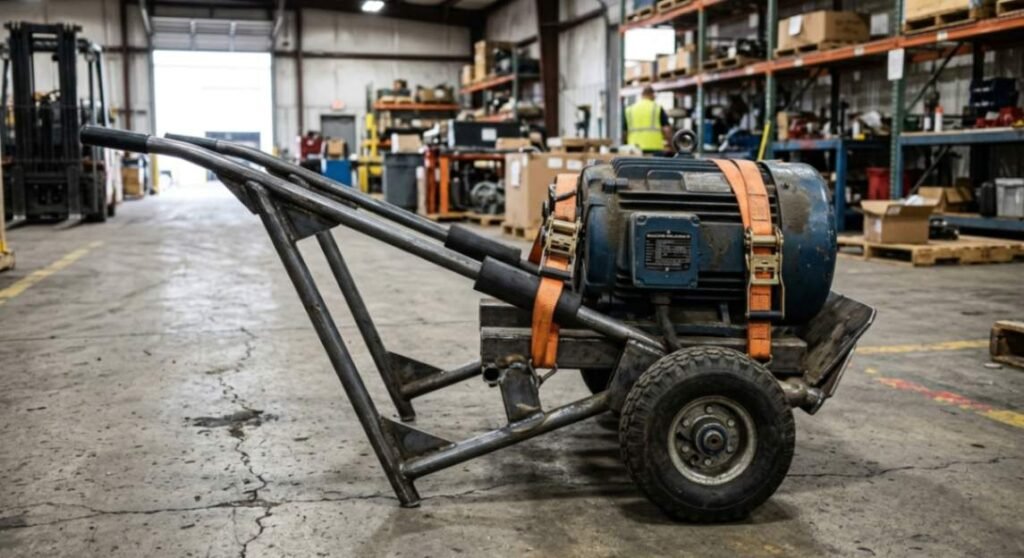
A hand truck’s weight capacity tells you the maximum amount of weight the manufacturer designed the frame, wheels, and axles to carry safely. You should know the weight of the heaviest load you expect to move before you buy anything.
Always keep your load within the manufacturer’s rated capacity. Exceeding this limit can bend the frame, break the wheels, or cause a dangerous accident.
However, capacity is only one part of the puzzle. A truck might have a high weight limit, but if the wheels sink into soft dirt or the nose plate is too small to balance your load, the high capacity does not help you. If you need more details, read our hand truck weight capacity guide.
Do Not Choose Only by Maximum Weight
You might think you should just buy a 1,000-pound capacity hand truck to be safe. If you only move light boxes or small plastic bins, a heavy duty model is unnecessary. It will be heavier to push, harder to steer, and more difficult to store.
On the other hand, choosing a model that is too small for the job creates real problems. A light capacity hand truck carrying a very heavy load becomes unstable and difficult to control. Match the capacity to the reality of your daily tasks.
Consider What You Will Move
The type of load affects your hand truck choice just as much as the weight. A tall stack of cardboard boxes requires a high frame. Appliances need strong straps and a wide base. Furniture often requires padding to prevent scratches.
If you move heavy equipment, you need strong axles and a large nose plate. Water jugs, gas cylinders, and other cylindrical objects often require specialized curved frames to keep the load from rolling off.
Weight is only one part of the decision. The load’s height, width, depth, shape, and stability also matter. A standard frame works well for standard boxes, but awkward loads often require specialized hand trucks.
Choose the Right Hand Truck Material
Hand trucks are usually made from either steel or aluminum. Both materials work well, but they have different strengths.
Steel Hand Trucks
Steel hand trucks are built for strength and durability. Manufacturers often use steel for heavy duty applications because it resists bending and takes abuse well.
The main drawback is weight. Steel hand trucks are significantly heavier than aluminum models. If you need a piece of equipment for demanding work, rough environments, and heavy loads, steel is often a practical choice.
Aluminum Hand Trucks
Aluminum hand trucks offer lower weight and easier portability. An aluminum frame is much lighter to lift into a delivery van or carry up a flight of stairs. Aluminum also provides natural corrosion resistance, making it useful in wet environments.
Aluminum models are excellent for delivery drivers, retail workers, and anyone who needs to transport the hand truck frequently.
Steel can make sense when durability and demanding use are priorities, while aluminum can make sense when lower equipment weight and portability are important. To understand the differences in detail, read our guide on Aluminum vs Steel Hand Trucks.
Choose the Right Wheel Type
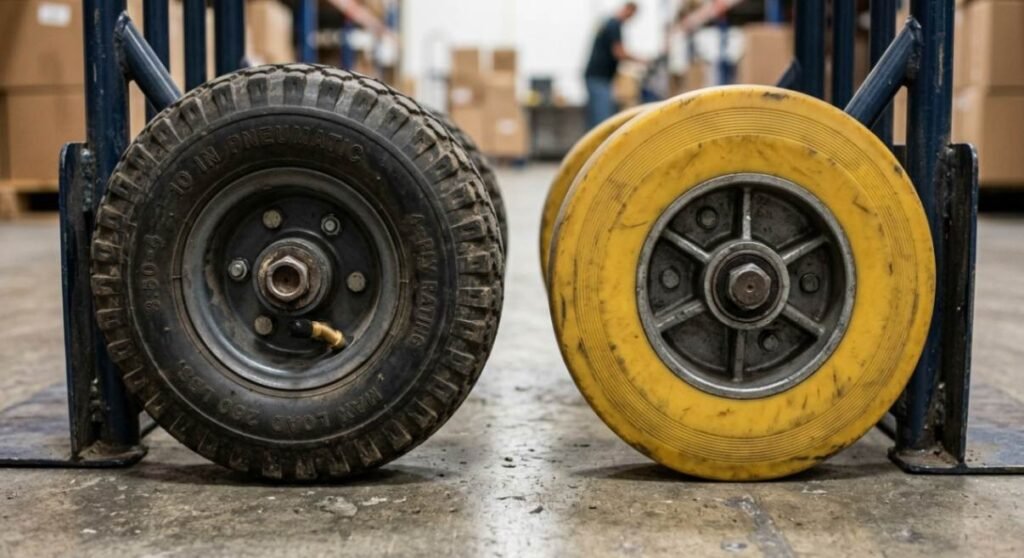
Wheels have a major effect on how a hand truck feels and performs. The frame holds the weight, but the wheels do the actual work of moving it.
Pneumatic Wheels
Pneumatic wheels are air filled tires. They provide excellent cushioning and shock absorption. This makes them highly effective on rough and uneven surfaces, such as gravel, grass, or cracked pavement.
Because they hold air, they require proper inflation and regular maintenance. They also carry the possibility of punctures if you roll over nails or sharp rocks.
Flat Free or Solid Wheels
Flat free or solid wheels are made of hard rubber, polyurethane, or microcellular foam. They require no regular inflation and are practically low maintenance.
These wheels are good for many indoor applications, smooth concrete, and clean warehouse floors. However, they provide less cushioning than pneumatic tires in many situations and can vibrate on rough ground. Your wheel choice should match the surface you work on. Read more about Pneumatic vs Flat Free Hand Truck Tires.
Consider Wheel Size
Wheel size matters because it dictates how easily the hand truck rolls. Larger wheels generally make it easier to roll over small obstacles, cords, and uneven surfaces. They provide better clearance for the axle.
Smaller wheels can work well in suitable indoor environments. They help keep the design compact and keep the nose plate close to the ground. Match the size to your environment. Learn more in our Hand Truck Wheel Size Guide.
Think About Where You Will Use the Hand Truck
The environment is a critical factor in choosing material handling equipment.
Smooth Indoor Floors
If you work in warehouses, stores, offices, or garages, you mostly deal with smooth surfaces. Solid wheels or non-marking rubber wheels are usually the best choice here. They roll easily on hard floors and require very little maintenance.
Outdoor and Uneven Surfaces
If you move items over pavement, rough concrete, gravel, grass, or dirt, you face uneven surfaces. Suitable wheel selection matters greatly outdoors. Pneumatic tires or large, aggressive flat free tires provide the necessary cushion and ground clearance to navigate rough terrain safely.
Stairs
Stairs create a completely different handling problem. You should not treat a normal two wheel hand truck as a stair climbing truck.
If users regularly need to move loads on stairs, they should consider equipment specifically designed for stair use, such as motorized stair climbers or tri-wheel designs. Always use ramps or other suitable alternatives when possible. If you must use standard equipment, read How to Use a Hand Truck on Stairs safely.
Pay Attention to the Nose Plate Size
The nose plate, also called the toe plate, is the flat piece of metal at the bottom of the hand truck. It supports the load and slides underneath it.
You need to look at the width and depth of the plate. A larger plate can support larger, bulky loads and offers better stability. However, a smaller plate may be easier to position in tight spaces or slide under narrow boxes. Check the clearance underneath the load you usually move and pick a plate that provides adequate support without getting in the way.
Decide Between a Two Wheel and Four Wheel Hand Truck
Hand trucks generally come in standard upright designs or convertible designs.
Two Wheel Hand Truck
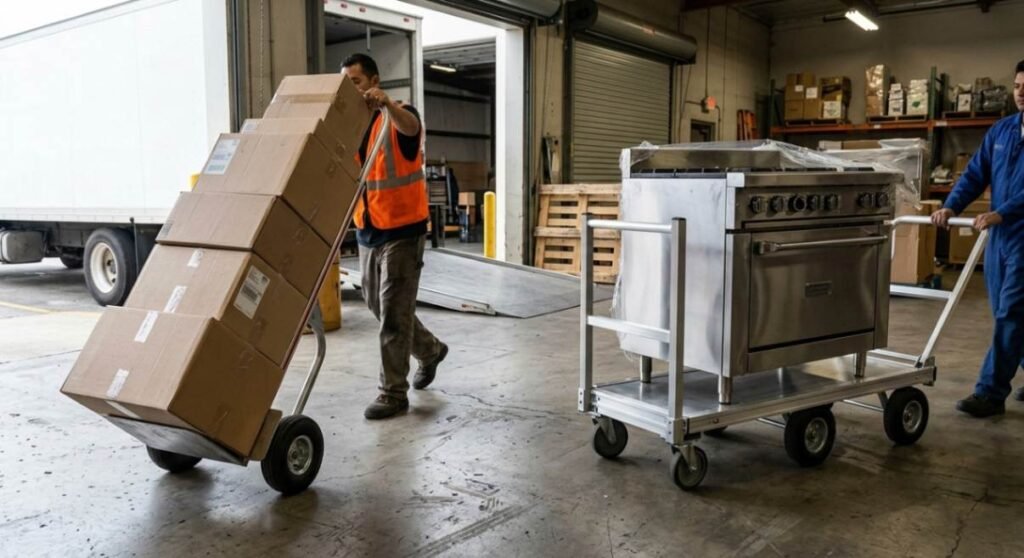
The traditional two wheel hand truck is tilted back toward the user during movement. It is excellent for stacking boxes, moving general loads, and navigating narrow spaces. This is the standard tool for basic delivery work and home use.
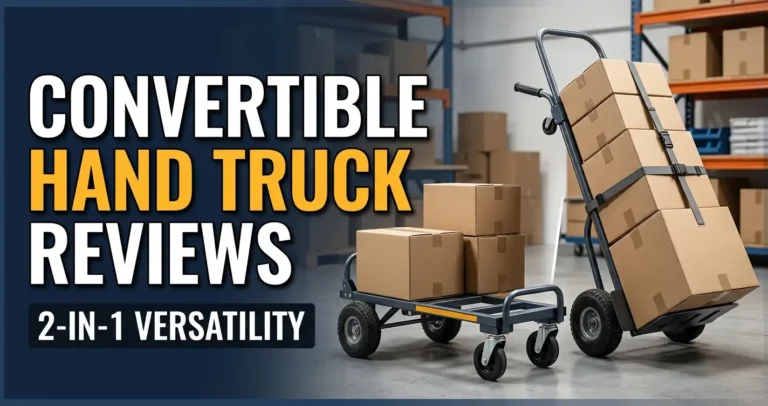
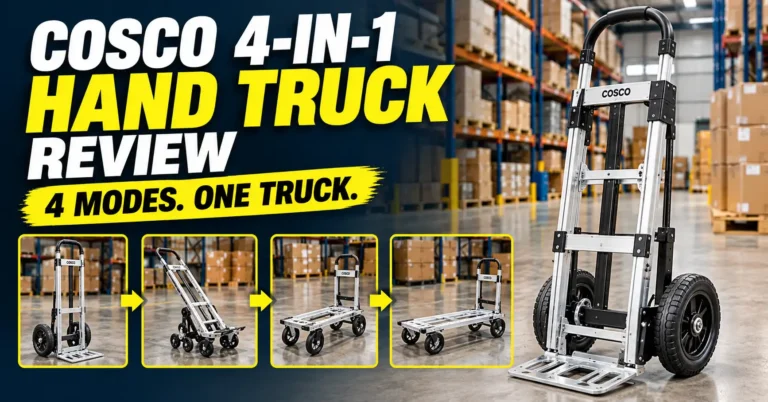
Four Wheel or Convertible Hand Truck
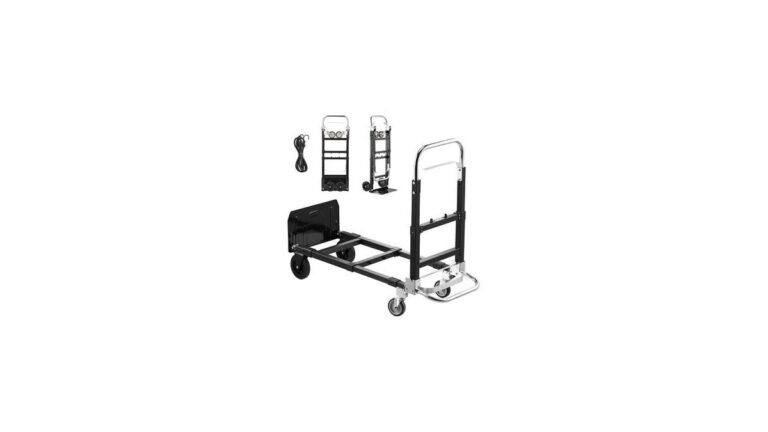
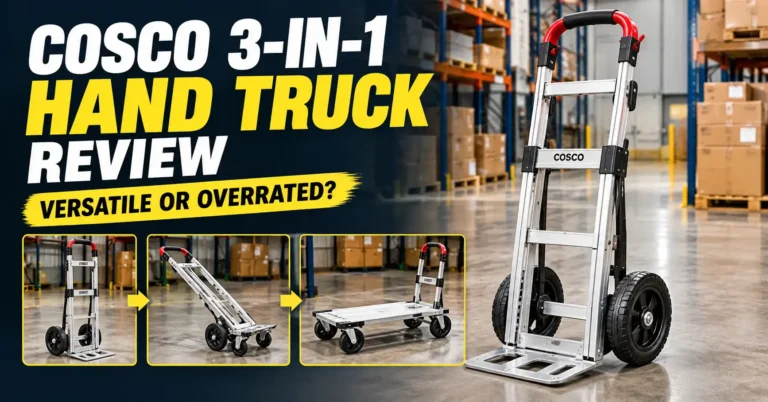
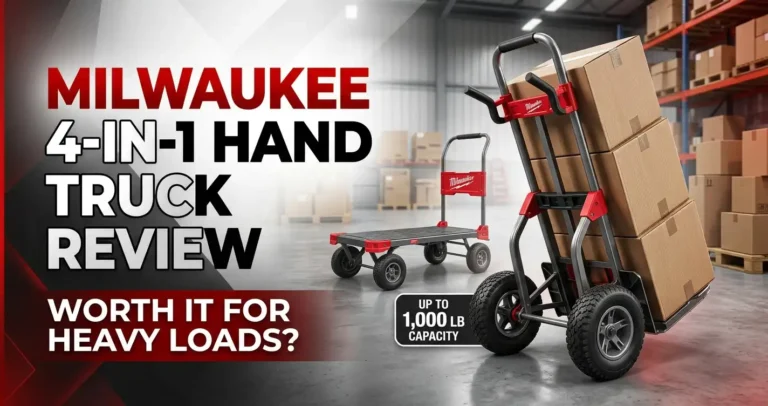
Some models can convert into a four wheel platform configuration. You can use them upright, or lay them flat to carry larger loads that must be transported horizontally.
This provides added flexibility for moving bulky items or large quantities of smaller boxes at once. OSHA material handling guidance recognizes convertible designs as useful in some situations to reduce lifting strains. Find out more in our comparison of 2 Wheel vs 4 Wheel Hand Trucks.
Standard or Folding Hand Truck?
Storage space often dictates the type of frame you can buy.
Standard Hand Truck
A standard hand truck has a fixed, rigid frame. These are built for frequent use and durability. Larger frame designs can carry taller loads. Because they do not fold, you must have adequate storage space in your garage, warehouse, or vehicle.
Folding Hand Truck
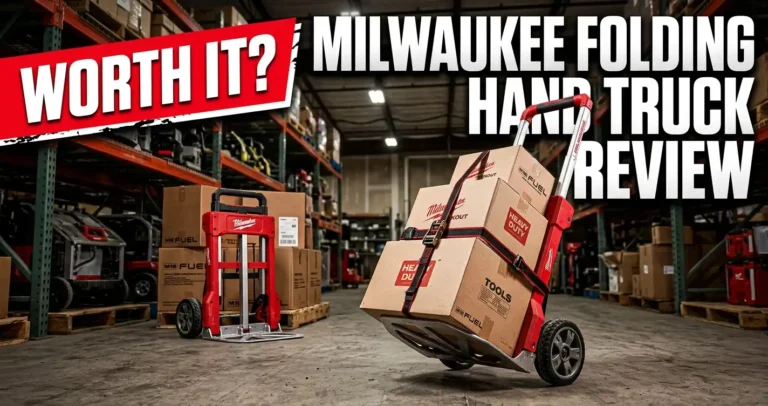
A folding hand truck collapses into a flat, manageable size. This design is perfect for compact storage in car trunks, closets, or smaller spaces.
Folding does not automatically mean weak, just as standard does not automatically mean heavy duty. Capacity differences exist between models, so check the individual model specifications carefully.
Consider the Hand Truck’s Size
Overall dimensions matter for both use and storage. Look at the frame height and frame width. Ensure the handle height allows you to push comfortably without bending over.
Think about where you will take the equipment. It needs to fit through doorways, down hallways, and inside your vehicles. A hand truck should be large enough for the job but not unnecessarily difficult to maneuver or store.
Look at Ergonomics and Ease of Use
Comfort and handling matter, especially for frequent users. Good equipment should make the task easier, not simply carry a high weight.
Look at the handle design. A continuous loop handle allows you to grip the truck with one or two hands from multiple angles. Dual handles provide a strong grip for heavy loads.
Balance, maneuverability, and pushing effort directly impact how tired you get. OSHA guidance notes that properly selected and maintained hand trucks can reduce unnecessary physical effort, and that suitable handles and wheels matter for handling tasks. If you are unsure about proper technique, read How to Use a Hand Truck.
Think About How Often You Will Use It
Your buying decision should reflect your actual daily needs.
If you need a hand truck for occasional use, such as a home moving project, weekend garage work, or moving occasional boxes, a basic consumer model is fine. You do not need to spend hundreds of dollars on commercial grade equipment.
If you need a hand truck for regular use in retail, maintenance, delivery, warehouse work, or frequent professional use, you need high quality equipment. Frequent users should pay more attention to durability, wheel quality, heavy duty construction, ergonomics, and long term usability. Replaceable parts are also important so you can fix or replace hand truck wheels or handles instead of buying a whole new unit.
Choose Based on Your Budget
Price should be considered alongside suitability. Lower cost models are fine for light, occasional tasks around the house. Mid range models offer better wheels, higher capacities, and reliable frames for small businesses and frequent home use.
Professional models cost more but offer specialized features, heavy duty materials, and replaceable parts. Expensive models are not always better for every situation. The best value is a hand truck that matches the actual job.
What Type of Hand Truck Do You Need?
| Need | Features to Look For |
| Moving boxes | Standard two wheel frame, solid wheels, medium nose plate |
| Heavy loads | Steel frame, high weight capacity, heavy duty axles |
| Outdoor use | Pneumatic tires, large wheels, wide base |
| Smooth indoor floors | Solid or flat free tires, non-marking rubber |
| Limited storage | Folding frame, compact dimensions |
| Stairs | Specialized stair climbing design, tri-wheel setup |
| Different types of loads | Convertible four wheel design, large nose plate |
| Frequent professional use | Ergonomic handles, aluminum frame, replaceable parts |
Common Mistakes When Choosing a Hand Truck
- Choosing only by price instead of load requirements.
- Ignoring rated capacity and overloading the equipment.
- Choosing the wrong wheels for the intended surface.
- Ignoring the surface and trying to push hard wheels through gravel.
- Ignoring load dimensions and buying a nose plate that is too small.
- Buying a truck that is too large to fit through normal doorways.
- Assuming every hand truck works safely on stairs.
- Ignoring storage requirements until the truck arrives.
- Ignoring frequency of use and buying a cheap model for daily warehouse work.
- Failing to check manufacturer specifications before purchasing.
How to Choose the Right Hand Truck: Quick Checklist
Before you buy, ask yourself these practical questions:
- What is the heaviest load I will move?
- What are its dimensions?
- What type of items will I move?
- Will I use it indoors or outdoors?
- Is the surface smooth or uneven?
- Do I need to use stairs?
- What wheel type fits the surface?
- What wheel size makes sense?
- Do I need two wheels or a convertible model?
- Do I need a folding design?
- How large should the nose plate be?
- How often will I use it?
- Where will I store it?
- What is my budget?
Frequently Asked Questions
Size depends on load dimensions, weight, maneuverability, and storage. Tall loads require a taller frame. Wide loads need a wider nose plate. Make sure the overall dimensions fit through your doors and into your vehicle or storage space.
Steel is heavier and generally provides maximum strength and durability for demanding industrial jobs. Aluminum is lighter, resists rust, and is much easier to lift and transport. Choose steel for heavy abuse and aluminum for portability and daily delivery work.
For outdoor use, wheel and surface compatibility are important. Choose a hand truck with large pneumatic (air filled) tires. These tires absorb shocks and roll easily over gravel, dirt, grass, and uneven pavement.
Bigger wheels roll over obstacles, cracks, and rough terrain much easier than small wheels. However, they add bulk and raise the load slightly higher off the ground. Small wheels keep the truck compact and work perfectly fine on smooth, flat indoor floors.
A standard hand truck should not be treated as a stair climbing tool. Bumping heavy loads up and down stairs on standard wheels is dangerous. If you regularly use stairs, buy specialized stair climbing hand trucks or use secure ramps.
Weight capacity varies by model. A small folding cart might hold 150 pounds, while an industrial steel model can hold 1,000 pounds or more. Always check the manufacturer’s rating and keep your loads safely below that limit.
Strength varies by model. Some folding hand trucks are designed for light office use, while others are built with strong aluminum frames that can hold hundreds of pounds. You must check the specific manufacturer specifications to know the exact capacity.
Final Verdict
The right hand truck is not necessarily the biggest, strongest, or most expensive. It is the model that matches your load, weight, and load dimensions. You must choose the right wheel requirements to match your surface and terrain. You also need to consider your storage needs and frequency of use.
A warehouse worker needs a heavy duty model, while a homeowner may only need a simple folding cart. Always compare the manufacturer’s specifications to your daily tasks before buying. Taking a few minutes to evaluate your actual needs will help you work safer and easier.