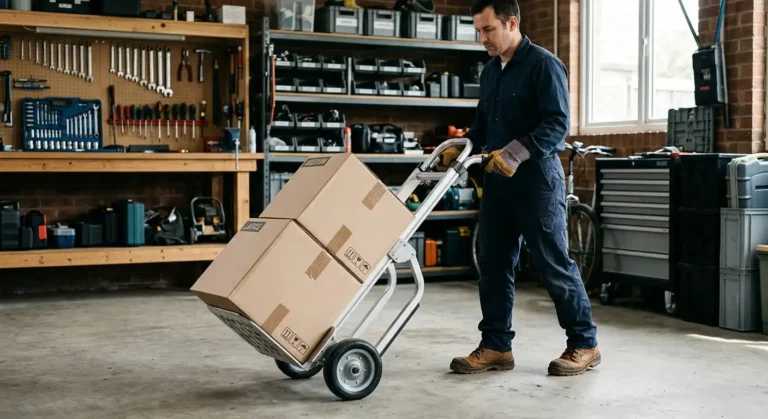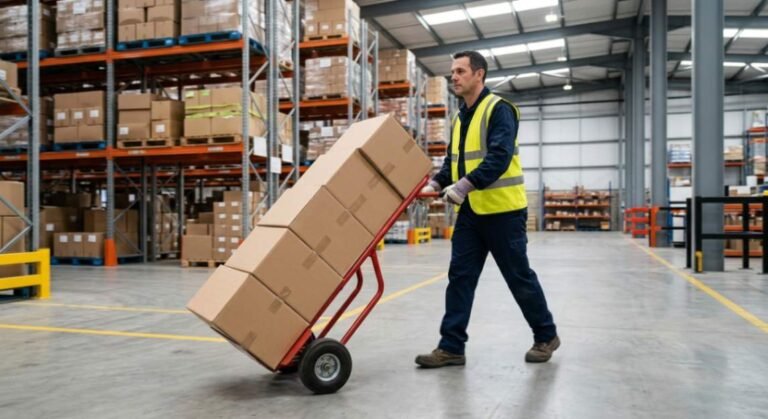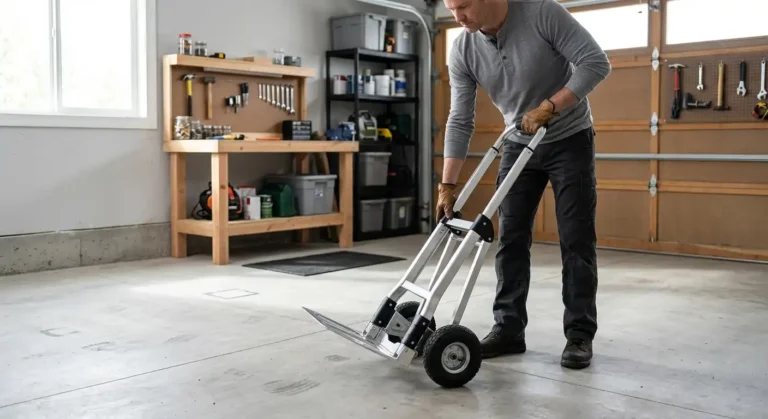

Moving heavy boxes or appliances across a flat floor is simple with the right cart. Moving that same load onto a flight of stairs is an entirely different task. Gravity works against you, the balance point changes on every step, and a single slip can cause damage or injury. Knowing how to use a hand truck on stairs safely comes down to choosing the right tool, prepping your route, and maintaining steady physical control on every single step.
Can You Use a Hand Truck on Stairs?
Yes, you can use a hand truck on stairs, but only if the equipment, the load, and the stairway conditions are suitable for the job.
Not every hand truck is built for stair work. Standard two-wheel utility carts work well on flat surfaces, but they can be difficult to pull up or lower down steps. Purpose-built stair climbing hand trucks feature specialized wheel assemblies or tracks designed specifically to roll smoothly over step edges.
Before you attempt to move anything, you must evaluate the weight and stability of the load, the physical condition of the stairs, the design of your equipment, and your ability to control the truck. If any of these factors are off, using a hand truck on stairs can be dangerous.
What Type of Hand Truck Is Best for Stairs?
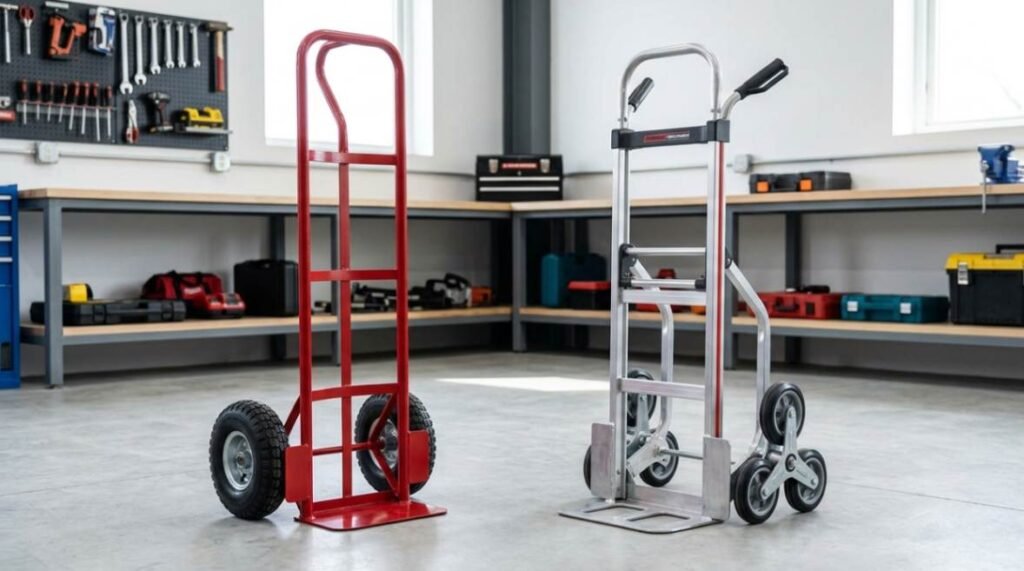
The best hand truck for stairs depends on how often you move loads on steps, how heavy the items are, and what type of stairs you have. Different frame designs and wheel setups offer varying levels of control and stability.
- Standard Two-Wheel Hand Truck: Built with a rigid frame and two single wheels. It can handle light, occasional stair movement if equipped with stair glides on the back of the frame, but it requires substantial physical effort to pull over step edges.
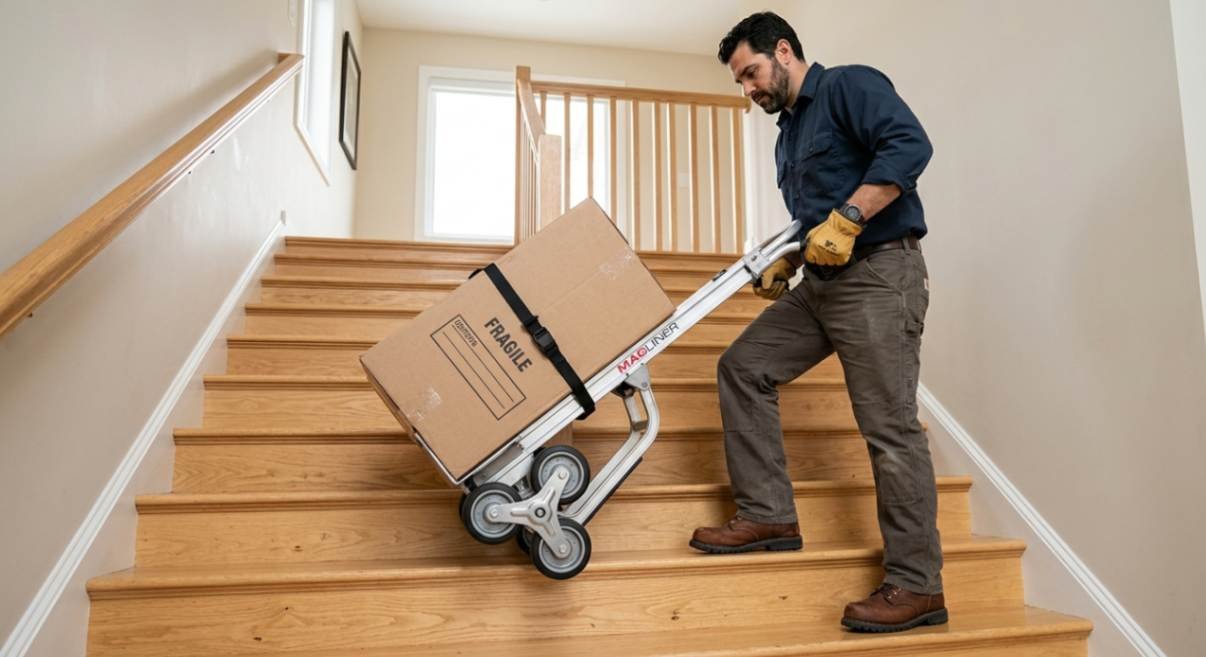
- Stair Climbing Hand Truck: Features a three-wheel rotating “tri-wheel” cluster on each side or built-in continuous tracks. As you pull or push the truck, the wheels rotate over the edge of each riser, reducing bumping and keeping the load more stable.
- Powered Stair Climbing Hand Truck: Uses an electric motor and motorized tracks or lifting feet to climb steps. It drastically reduces physical strain on the operator, making it the practical choice for heavy appliances or frequent commercial deliveries.
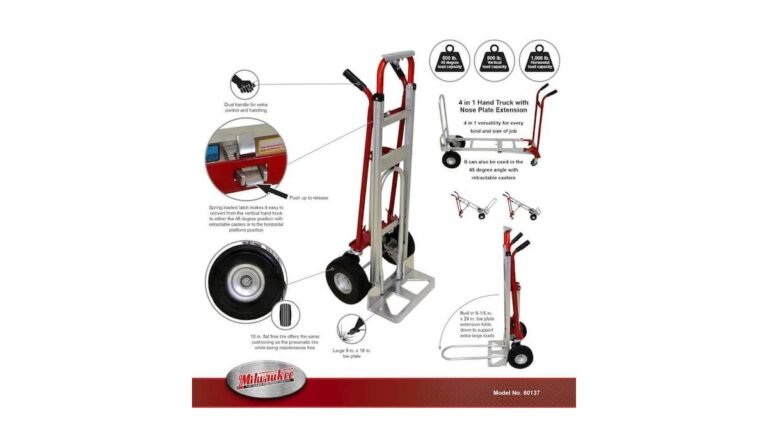
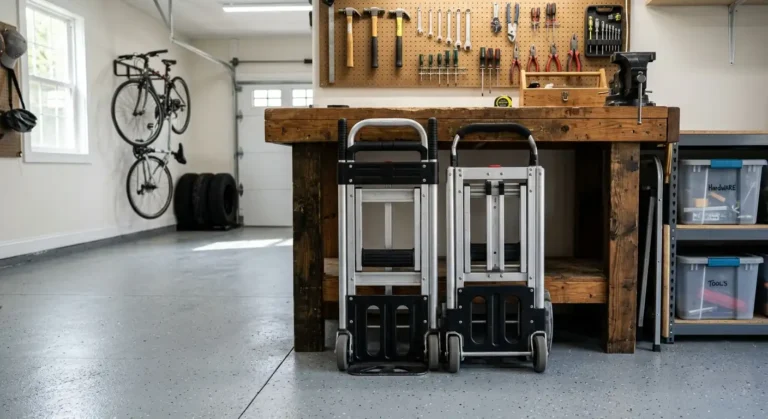
- Convertible Hand Truck: Shifts between a two-wheel upright cart and a four-wheel platform truck. While versatile on flat ground, it should only be used in its upright, two-wheel mode on stairs if rated for that purpose. For more on frame capabilities, read our guide on 2 Wheel vs 4 Wheel Hand Trucks.
| Type | Stair Use | Best For |
| Standard Two-Wheel | Occasional / Light duty | Small, lightweight boxes on short stair runs |
| Stair Climbing (Tri-Wheel) | Regular stair work | Medium loads, frequent residential or office moves |
| Powered Stair Climber | Heavy duty / Commercial | Heavy appliances, commercial deliveries, tall staircases |
| Convertible Hand Truck | Limited (2-wheel mode only) | Mixed flat-ground and occasional stair tasks |
What to Check Before Using a Hand Truck on Stairs?
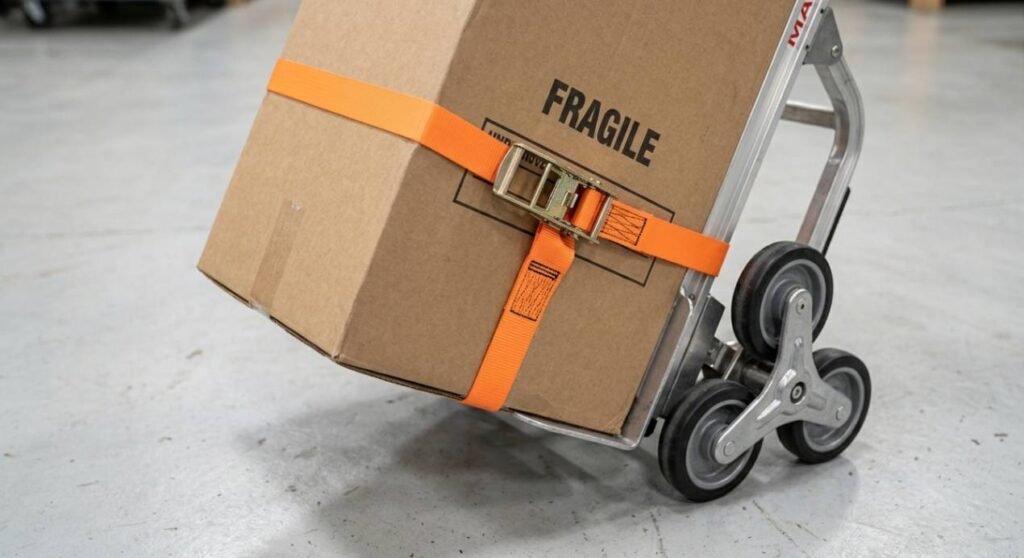
Safe handling starts before you ever tilt the cart back. Take a few minutes to check your equipment, path, and cargo.
- Inspect the hand truck: Check the frame for bends, cracks, or loose hardware. Make sure the axle is straight.
- Inspect the wheels: Ensure the tires are properly inflated and free of damage. Learn how wheel construction affects handling in our Pneumatic vs Flat Free Tires comparison.
- Verify rated capacity: Check that the combined weight of your load does not exceed the manufacturer’s weight limit. Refer to our Hand Truck Weight Capacity Guide if you are unsure how ratings work.
- Check the staircase: Look for loose floorboards, torn carpeting, cracked concrete, wet spots, ice, or obstacles.
- Clear the pathway: Remove throw rugs, shoes, handrail obstructions, and low-hanging items. Ensure overhead lighting is working.
- Plan your landing: Know exactly where the load will sit at the top or bottom so you do not get stuck holding a heavy frame while deciding what to do.
- Secure the load: Use ratchet straps or cam-buckle straps to cinch boxes or appliances tight against the upright frame.
- Assess physical limits: Decide honestly whether the load requires a second person as a spotter or if you need motorized equipment.
How to Use a Hand Truck Going Up Stairs?
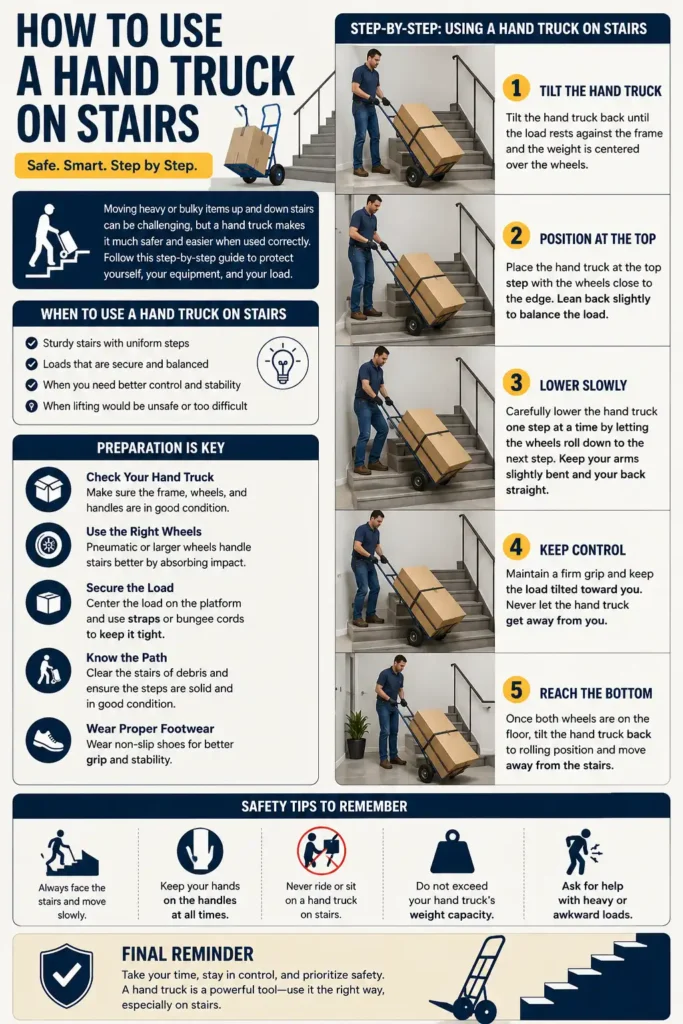
Moving a loaded cart up a flight of stairs requires steady backward steps, proper leverage, and full control over the cart’s balance point.
- Inspect the equipment and stairway: Confirm the stairs are dry, clear, and well-lit. Make sure your footwear has non-slip rubber soles.
- Load the hand truck correctly: Slide the nose plate completely under the cargo. Keep the heaviest items at the bottom and centered on the plate to maintain a low center of gravity.
- Secure the cargo: Fasten straps around the load and through the hand truck frame. An unsecured box can slide off when tilted backward on a step.
- Position yourself on the stairs: Stand on the step above the hand truck, facing down toward the equipment. Keep your feet shoulder-width apart for stable balance.
- Tilt the truck to its balance point: Pull the handles back toward your body until the weight rests balanced over the axle.
- Back up one step: Step up backward with your lead foot, keeping your back straight and knees bent.
- Roll the wheels against the riser: Bring the hand truck wheels up against the first step riser.
- Pull up smoothly using your legs: Pull the handles backward and upward in one smooth motion, using leg power rather than your lower back, rolling the wheels over the step edge onto the tread.
- Reset your footing on every step: Pause on each step tread to ensure the load is balanced before stepping up to the next riser. Move one single step at a time.
- Stop if the load shifts: If the cargo slips or you feel yourself losing control, set the frame down firmly against the stair tread and call for help immediately.
How to Move a Hand Truck Down Stairs?
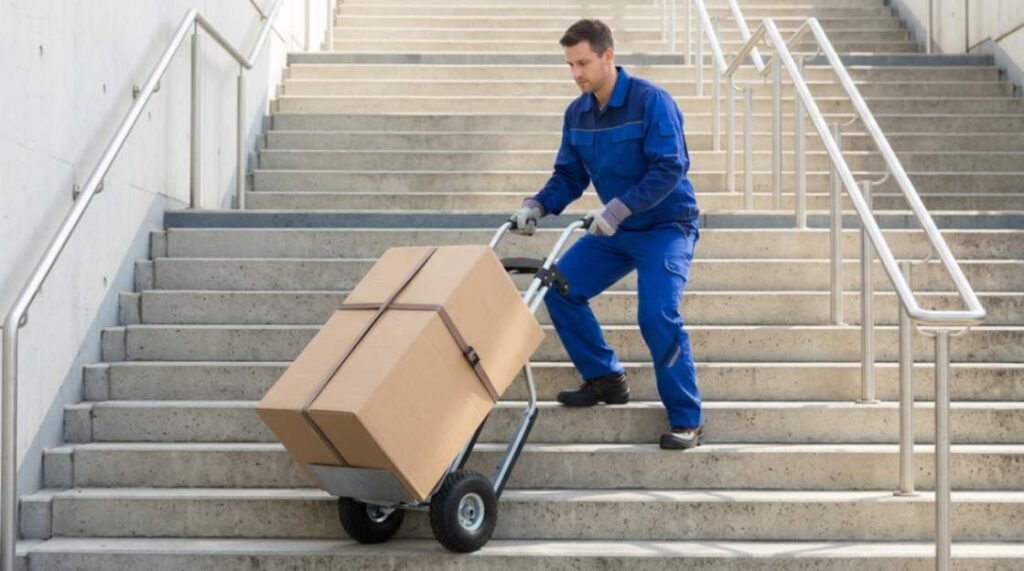
Moving a loaded hand truck downstairs presents a different risk: gravity pulls the weight away from you. You must stand below or behind the cart depending on the design, keeping the truck rolling in a slow, controlled descent.
For standard hand trucks, you will stand on the lower steps facing up at the hand truck, or stand above it easing it down backward. If you stand above the truck, keep your body close to the frame and lower the wheels over the edge slowly.
- Fasten the load firmly: Cargo tends to pitch forward when tilting down a staircase. Secure straps tightly across the middle and upper sections of the frame.
- Ease over the step edge slowly: Do not let the wheels drop or bounce over the edge of the stair tread. Lower the wheels gently until they contact the next step.
- Maintain firm backward tilt: Keep the cart tilted back toward the top of the stairs so the center of gravity stays behind the wheel axle.
- Keep stable footing: Lower yourself one step at a time. Ensure your entire foot is planted on the step before supporting the weight of the hand truck.
- Never let the truck free-roll: Keep your hands firmly on the grips and maintain continuous backward resistance.
- Keep the run clear: Make sure no one stands directly below the cart in the fall line unless a trained helper is acting as an assisted guide on a designated dual-operator hand truck.
- Stop if visibility is blocked: If you cannot clearly see the next step below you, stop immediately and reposition yourself or have a spotter guide your footing from a safe distance.
How to Move Heavy Items on Stairs With a Hand Truck?
Heavy items like washers, dryers, and solid wood furniture multiply the forces acting on your body. Proper load management makes the difference between a safe move and an accident.
Break large loads into smaller batches whenever possible. If you are moving stacked boxes, take two smaller trips instead of one heavy stack.
When moving solid appliances that cannot be broken down:
- Keep the center of gravity low by placing the heaviest side of the item down on the base plate.
- Position the cargo flush against the vertical frame rails so the weight does not pull forward.
- Use heavy-duty tie-down straps to stop the item from shifting side to side.
- Never exceed the rated capacity of the hand truck or the load limit of the staircase itself.
- Use a stair climbing hand truck with built-in stair glides or a continuous belt track to bridge the gap between steps.
- Get a helper. A second person can act as a spotter or assist with guiding the bottom of the frame using approved handholds. If the item is too heavy to control smoothly with two people, use a powered stair climber or hire professional movers.
Common Mistakes to Avoid
Avoid these frequent mistakes when using a hand truck on stairs:
- Overloading the cart: Exceeding the manufacturer’s weight limit makes the hand truck top-heavy and hard to balance.
- Skipping tie-down straps: Assuming balanced boxes will stay put while bumping over step edges.
- Rushing the job: Moving quickly causes the wheels to bounce, jarring the load loose.
- Losing stable footing: Stepping on the edge of a stair tread with only your toes instead of planting your whole foot.
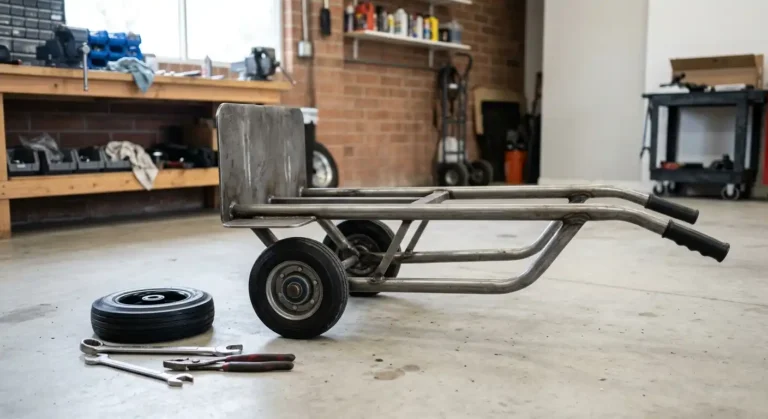
- Ignoring worn equipment: Using a hand truck with cracked welds, loose handgrips, or flat tires.
- Blocking your line of sight: Stacking boxes so high that you cannot see the steps ahead of you.
- Standing in the danger zone: Allowing helpers to stand directly beneath an unsupported load on a steep staircase.
- Bending at the waist: Pulling heavy loads with your lower back instead of driving upward with your legs.
Hand Truck Safety Tips for Stairs
Keep these safety practices in mind on every flight of stairs:
- Wear non-slip footwear: Choose sturdy, closed-toe boots or shoes with rubber outsoles that grip stair treads firmly.
- Clear the entire pathway: Remove all rugs, cords, tools, and door mats before starting.
- Check your wheel diameter: Larger wheels roll over step edges with far less resistance than small wheels. Review our Hand Truck Wheel Size Guide for details.
- Keep the load centered: Center the cargo side to side on the nose plate so the cart does not pull to one side.
- Move one step at a time: Establish balance on the tread before pulling or lowering onto the next step.
- Take rests on landings: If you are navigating a long flight of stairs, use intermediate landings to rest your grip and check the straps.
- Choose steel for heavy, rigid loads: Learn how material choice affects frame stiffness under load in our Aluminum vs Steel Hand Trucks breakdown.
- Get a spotter for wide loads: Have an assistant watch clearance around door frames, railings, and tight stair corners from a safe distance.
When You Should Not Use a Hand Truck on Stairs?
There are situations where using a manual hand truck is unsafe. Stop and find an alternative solution if you encounter:
- Excessive weight: Loads that feel unmanageable on flat ground should never be taken onto a staircase with a manual hand truck.
- Damaged or non-standard stairs: Spiral staircases, open-riser stairs, rotted wooden steps, or narrow attic pull-downs are unsafe for hand trucks.
- Wet, icy, or slick surfaces: Slippery steps make it impossible to guarantee secure footing under load.
- Poor lighting: If you cannot clearly see the edge of every step tread, do not proceed.
- Damaged hand truck: Worn wheel bearings, cracked frame rails, or missing stair glides increase the risk of failure.
- Obstructed vision: If the cargo is taller than your chest and blocks your view of the staircase, find a different way to move it.
If you cannot maintain complete control of the hand truck and its load at all times, do not continue.
Standard Hand Truck vs Stair Climbing Hand Truck
A standard hand truck is engineered primarily for flat surfaces, rolling ramps, and occasional curbs. When used on stairs, its single pair of wheels drops hard onto each lower tread or catches on the edge of each riser, requiring the operator to lift the full weight over every corner.
A stair climbing hand truck uses specialized mechanics, most commonly a three-wheel rotating star assembly on each side. As the truck reaches a step, the bottom wheel stops against the riser while the top wheel rotates forward to rest on the next tread. This rolling action smooths out the transition, reduces physical impact, and keeps the frame steadier.
Powered stair climbing hand trucks take this a step further by using an electric motor to turn lifting cams or rubber tracks. They lift the load from step to step, allowing a single operator to move heavy appliances up multiple floors with minimal physical strain.
Frequently Asked Questions
You can use a regular hand truck on stairs for light, stable loads if the frame has built-in stair glides and you move slowly. However, standard single-wheel carts drop hard over step edges and require significant physical effort to control.
A purpose-built stair climbing hand truck featuring a tri-wheel rotating system or continuous tracks is best for manual stair moving. For heavy appliances or frequent commercial deliveries, an electric-powered stair climber is the most practical choice.
Yes, stair climbing hand trucks are worth the investment if you frequently move items between floors, work in multi-story residential delivery, or need to move loads safely without jarring impacts on step edges.
The weight a hand truck can carry on stairs is limited by the manufacturer’s rated capacity and the physical strength of the operator. Moving loads on stairs places dynamic shock loads on the frame, so keep stair weights well below the maximum flat-ground rating.
A two-wheel hand truck is far better for stairs than a four-wheel platform truck. Four-wheel platform carts cannot navigate step risers safely and should only be used on flat surfaces or continuous ramps.
Final Takeaway
Using a hand truck on stairs requires the right equipment, preparation, and steady technique. Check your equipment and clear the stairs before you load your cart. Keep your load centered, strapped tight, and well within manufacturer limits. Move one step at a time, drive with your legs, and keep full control over the cart’s balance. When a load is too heavy or awkward to handle safely, stop, get a helper, or choose a powered stair climber.