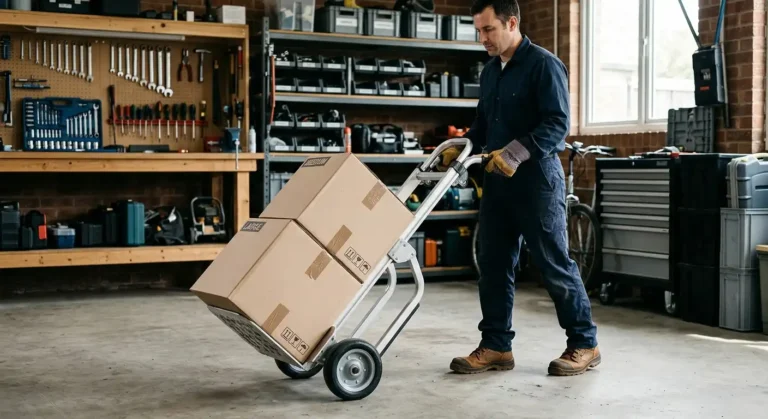

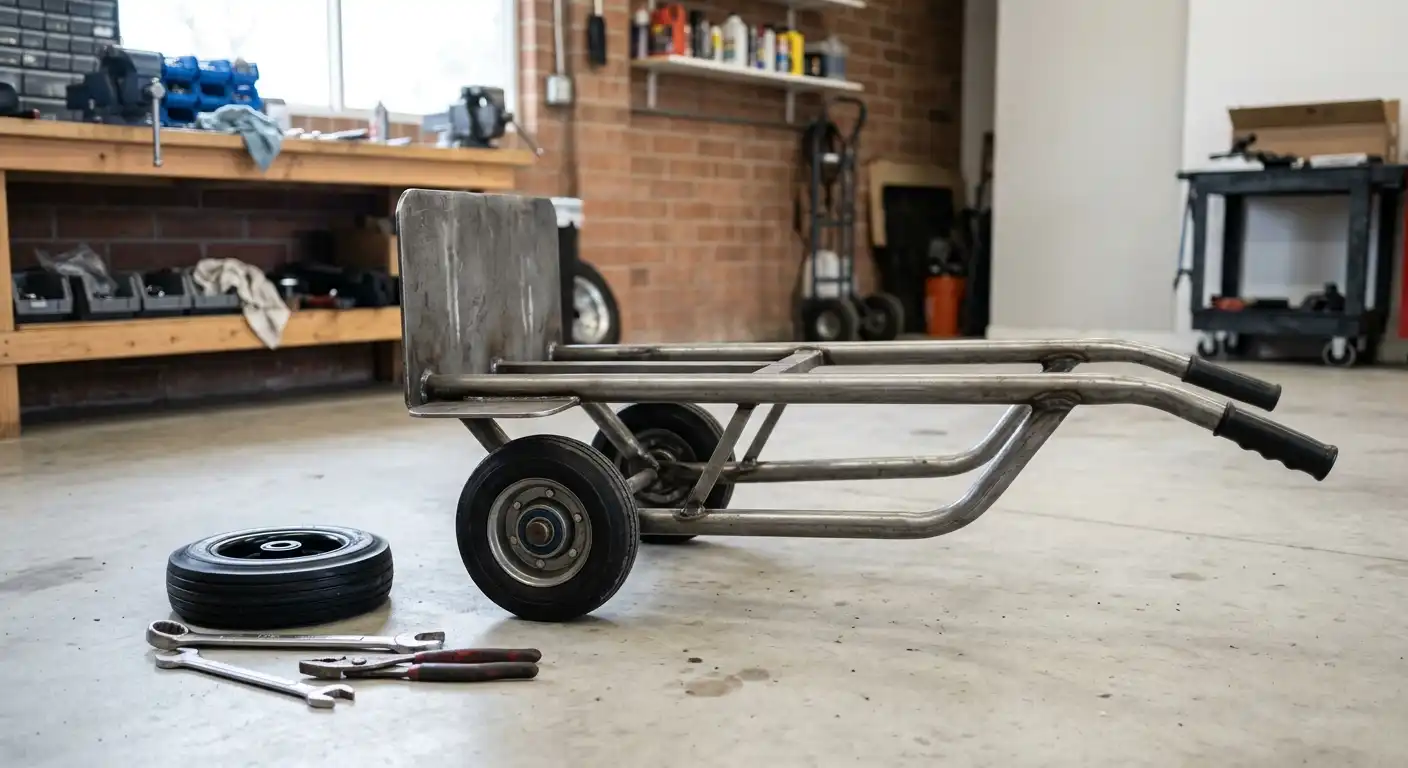
To repair a hand truck, identify the damaged component and replace worn parts such as pneumatic tires, inner tubes, wheels, bearings, and retaining hardware. Tighten loose structural fasteners and inspect the frame for alignment. If the main frame, toe plate, or axle has severe bends, cracks, or broken welds, replace the damaged part or the entire hand truck rather than attempting unsafe structural repairs.
Common Hand Truck Problems
- Flat or damaged pneumatic tire: Punctures, worn tread, dry rot, or failing valve stems.
- Worn or damaged wheel: Cracked plastic or metal hubs, deteriorated solid rubber, or damaged rims.
- Loose or wobbling wheel: Worn bearings, missing spacers, loose hardware, or a worn axle.
- Damaged or bent axle: Bowed rods, deep grooves, or damaged end pins.
- Missing or damaged retaining hardware: Lost cotter pins, cracked retaining rings, or worn axle caps.
- Loose bolts or nuts: Fasteners loosened by regular vibration and load pressure.
- Bent or damaged toe plate: Warped, bent, or cracked bottom nose plates.
- Loose or damaged handle: Loose grip hardware, cracked grips, or bent handle loops.
- Damaged stair climbing wheel assembly: Seized tri-wheel assemblies, bent brackets, or missing rotating pins.
- Rust or corrosion: Surface oxidation binding moving parts or thinning metal tubing.
- Damaged frame or weld: Cracks, broken factory welds, or permanent bends in the tubing.
How to Repair a Hand Truck?
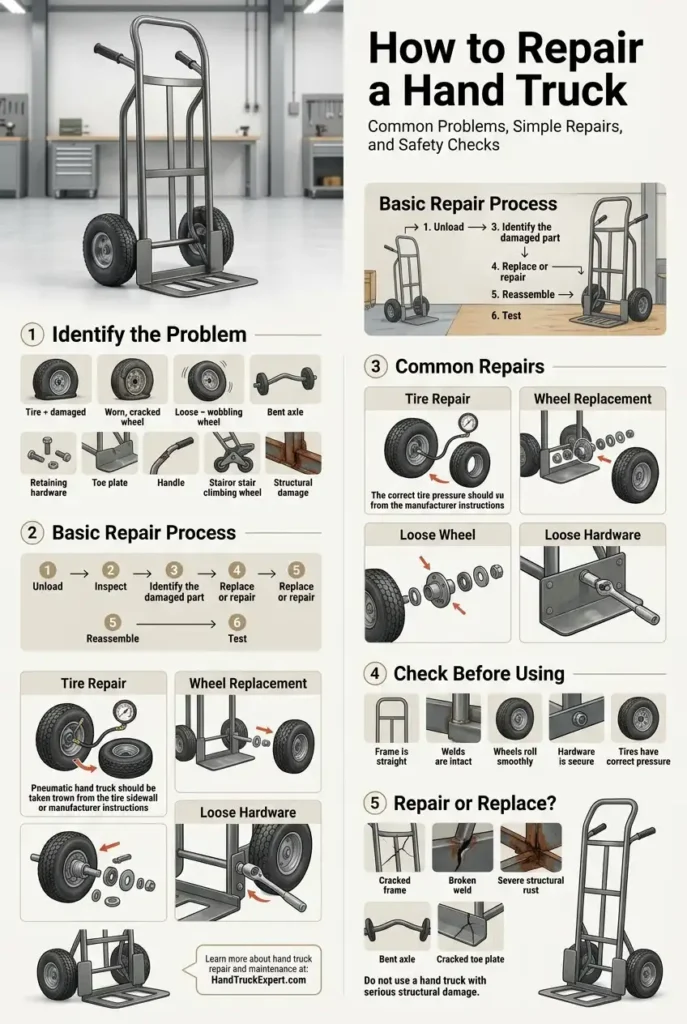
Before starting any hand truck repair:
- Remove all cargo from the equipment.
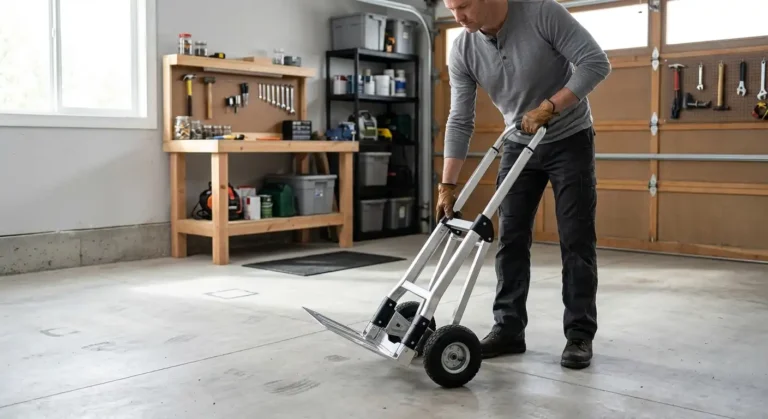
- Place the hand truck flat on a stable, level surface.
- Wear work gloves and safety glasses to protect against sharp edges and spring tension parts.
- Check the manufacturer’s manual or specifications when available.
- Diagnose the exact cause of the failure before buying replacement parts.
Replace a Flat or Damaged Tire
Inspect the entire tire assembly. Determine whether the leak comes from a punctured tube, a damaged tubeless tire casing, a failed valve core, or a cracked rim.
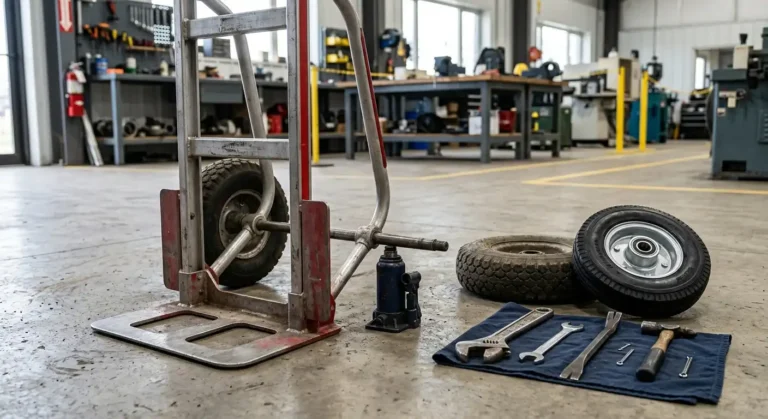
Remove the retaining hardware holding the wheel on the axle. Slide the wheel off. If the tire uses an inner tube, split the two piece wheel rim or pry the tire bead over the rim edge using smooth tire levers. Replace the punctured tube or the entire outer tire. If the rim is bent or rusted through, replace the complete wheel assembly. Reinstall the wheel, secure the hardware, and check our guide on how to change a hand truck tire for detailed step by step steps.
When inflating pneumatic tires, always check the exact PSI stamped directly on your tire sidewall and review proper hand truck tire pressure limits. Never exceed the maximum pressure listed on the tire.
Replace a Damaged Hand Truck Wheel
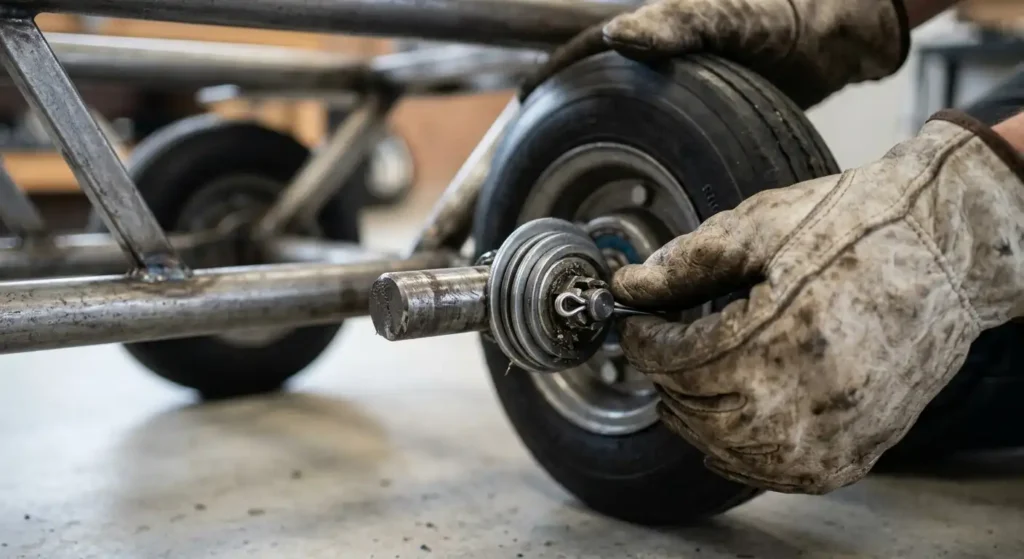
To swap out a broken wheel:
- Remove the outer retaining clip, pin, or cap.
- Slide the wheel off, keeping all washers and spacers in their original order.
- Wipe down and inspect the exposed axle shaft for scoring or bends.
- Slide on the replacement wheel. The new wheel hub diameter and bearing size must match your axle diameter.
- Reinstall the original washers, spacers, and retaining hardware.
- Spin the wheel freely by hand to ensure smooth rotation without binding.
For a complete walkthrough on hub sizing, read our guide on how to replace hand truck wheels.
Fix a Loose or Wobbly Wheel
Wheel wobble usually points to one of five issues:
- Loose axle nuts or missing retaining pins
- Worn inner ball bearings or bronze bushings
- Cracked wheel hubs
- A worn or bent axle rod
- Missing spacer washers between the wheel hub and the frame
Do not merely tighten outer fasteners to correct side to side play. If the wheel bearings have collapsed or the hub bore has widened, tightening the axle hardware will bind the wheel and prevent it from rolling. Replace worn bearings, insert matching machinery washers to remove excess side play, or install a new wheel assembly.
Repair or Replace a Damaged Axle
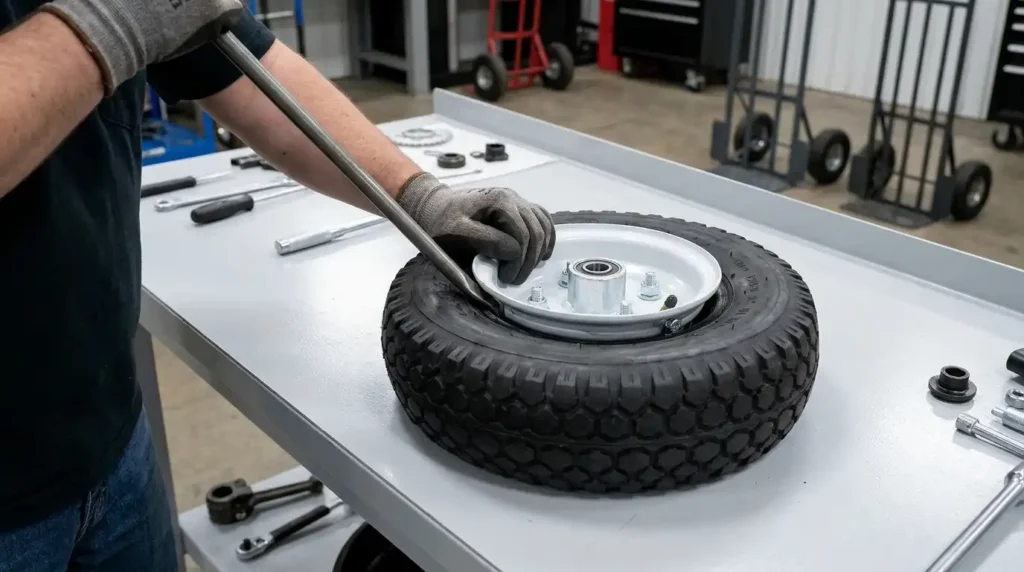
Wipe the axle clean and inspect it along its entire length. Look for visible bends, deep grooves worn by unlubricated bearings, hairline cracks, and stripped end threads or deformed cotter pin holes.
Never attempt to straighten a heavily bent, load bearing axle with heat or a hammer. Bending metal fatigue compromises the steel and risks sudden failure under heavy weight. If the axle is bent, deeply grooved, or cracked, unbolt the axle brackets and install a new manufacturer specified axle rod.
Replace a Missing or Damaged Axle Cap or Retaining Part
Hand trucks secure their wheels using various systems depending on the manufacturer:
- Cotter pins through drilled axle holes
- External retaining rings snap rings set into axle grooves
- Push nuts and hat caps pressed over smooth axle ends
- Threaded lock nuts
Always install the correct hardware designed for your specific axle type. Most retaining rings and push caps stretch or warp during removal and should not be reused. If your hand truck uses pressed caps, refer to our walkthrough on how to remove an axle cap on a hand truck safely without scoring the axle rod.
Tighten Loose Bolts and Hardware
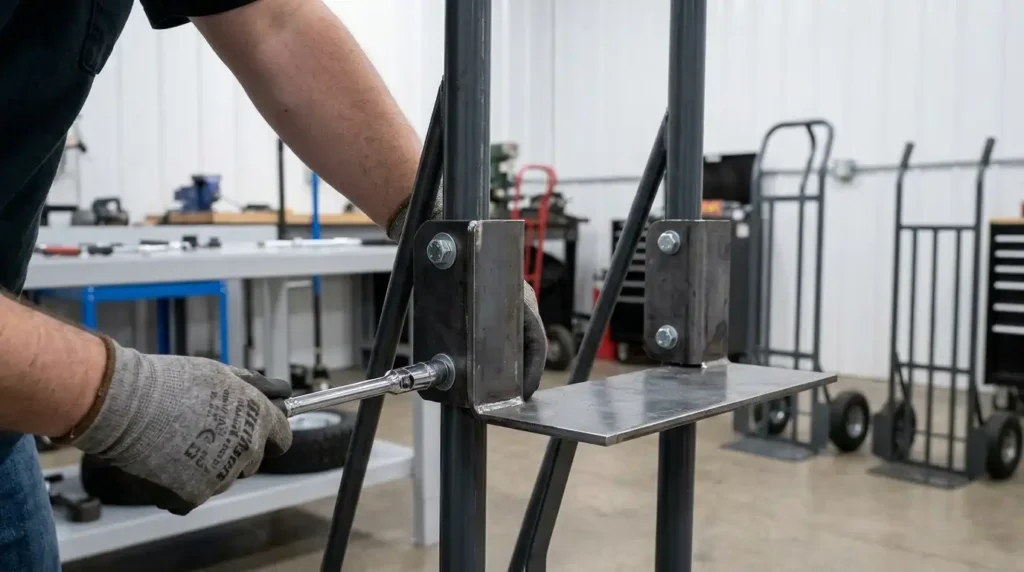
Regular vibration over rough ground loosens threaded fasteners. Regularly inspect and tighten:
- Frame rail fasteners
- Handle brackets and cross braces
- Toe plate mounting bolts
- Axle bracket mounting bolts
Use matching open end wrenches or sockets to tighten fasteners firmly against the frame. Refer to the equipment manual for torque values when available. Do not overtighten hardware on folding components or stair climbers that require free movement to operate. Replace rusted, stripped, or rounded nuts with new grade matching lock nuts.
Repair or Replace a Bent Toe Plate
The nose plate carries the base weight of every load. If an aluminum or steel toe plate is slightly bent out of square, check the manufacturer recommendations. Some mild steel plates can be unbolted, supported across wood blocks, and clamped flat.
Never attempt to bend cast aluminum or cracked steel plates. Any visible tear, cracked weld, or metal fatigue near the mounting brackets makes the plate unsafe. Unbolt the damaged plate and replace it with a factory replacement part before lifting heavy items.
Fix a Loose or Damaged Handle
Inspect handles for cracked plastic grips, bent loop bars, and loose frame bolts. Replace split hand grips by sliding them off with warm soapy water and pressing new heavy duty vinyl grips into place.
If your hand truck features a continuous loop handle or dual safety grips bolted to the top rails, tighten all mounting bolts. If the metal tube itself is kinked, flattened, or cracked from a drop, replace the handle assembly. Do not rely on temporary patches, taped splints, or partial welds on broken handle tubes.
Repair Stair Climbing Wheels
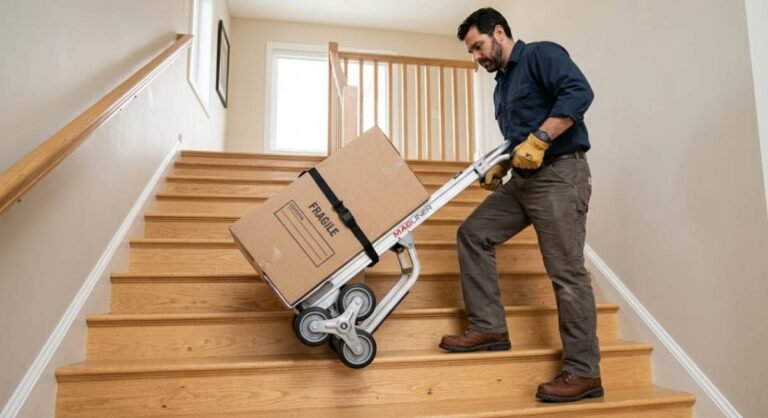
Stair climbing assemblies use rotating triangular brackets fitted with three small wheels on each side. Inspect the central hub bolt, the rotating brackets, the individual wheel bearings, and all retaining pins.
Clean out trapped dirt, gravel, and debris that prevent the assembly from rotating. Replace individual damaged wheels or frozen bearings. If the triangular mounting bracket is twisted or cracked, replace the complete assembly before using the equipment on stairs.
Tools You May Need
- Adjustable wrench and socket set
- Standard slip joint and needle nose pliers
- Retaining ring snap ring pliers
- Flat and Phillips head screwdrivers
- Tire pressure gauge
- Manual air pump or regulated compressor
- Soft blow rubber mallet
- Clean shop rags and light machine oil
When Should You Replace a Hand Truck Instead of Repairing It?
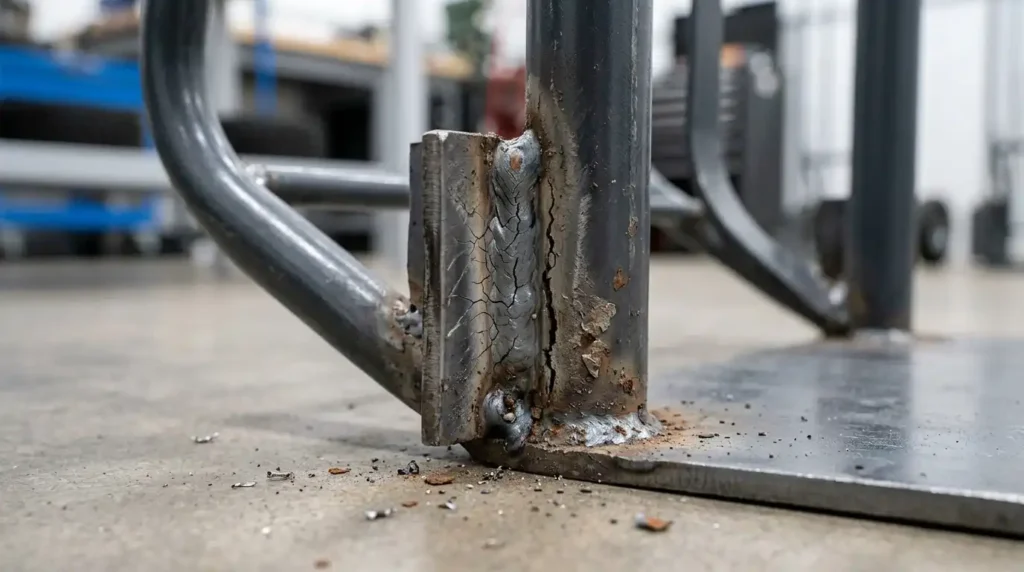
Replace the entire hand truck if you find:
- Cracked, torn, or separated welds on the frame or toe plate
- Tubular frame rails with severe kinks or bends
- Severe rust that has weakened the structural frame tubing
- A bent axle mount permanently welded to a distorted frame
- Multiple damaged structural parts where repair costs exceed the value of a new unit
If the main load bearing structure is compromised, do not use the hand truck. Structural failures under heavy loads can drop freight and cause severe personal injury.
How to Prevent Hand Truck Problems?
- Perform a quick visual check of wheels, pins, and frame bolts before every shift.
- Maintain proper tire inflation to protect rims and make rolling easier.
- Clean away dirt, grease, and moisture before storing equipment.
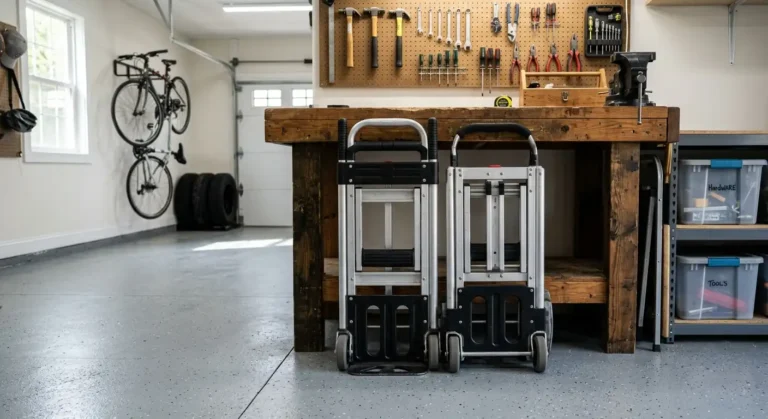
- Store the hand truck in a dry indoor space to prevent rust and tire dry rot.
- Replace worn bearings and missing pins as soon as you spot them.
- Never overload the equipment past the factory limit explained in our guide on hand truck weight capacity.
- Use correct lifting technique and secure bulky loads as outlined in our guide on how to use a hand truck.
Frequently Asked Questions
Yes. Most common issues involve wheels, tires, bearings, axle pins, and loose bolts. These modular parts can be replaced using standard hand tools.
The most frequent repairs are fixing flat pneumatic tires, installing new inner tubes, replacing worn wheel bearings, and securing loose frame bolts.
Yes. Wheels are wear items designed for removal. Match your axle diameter, hub width, and load rating when ordering a replacement.
Minor bends on non structural accessories can sometimes be straightened. If the main vertical frame rails, structural welds, or load bearing axles are bent or cracked, replace the damaged part or the entire truck.
The hand truck is safe when the frame is straight, welds are solid, wheels roll smoothly without excessive wobble, fasteners are tight, and tires are inflated to sidewall specifications.