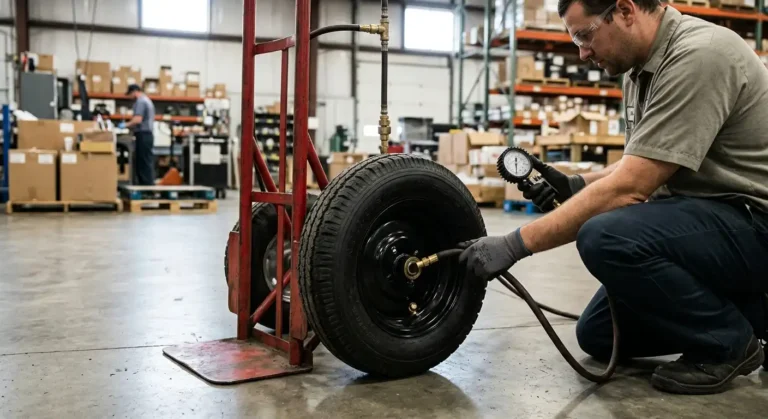

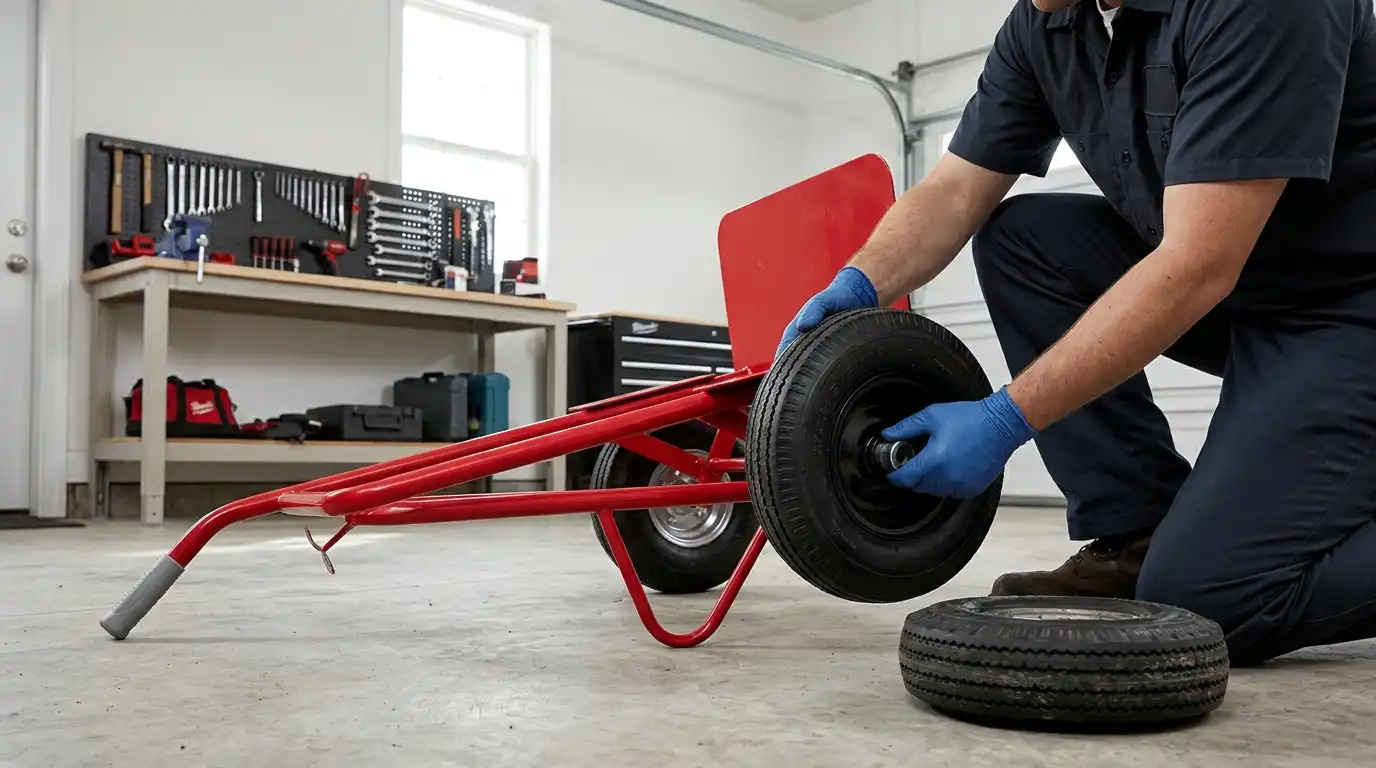
Replacing a damaged or worn tire can quickly restore your equipment to working order. However, knowing exactly how to change a tire on a Milwaukee hand truck depends on the specific model you own. Milwaukee Hand Trucks manufactures various models using different wheel designs and retaining hardware.
If you need a quick fix, the basic process is to stabilize the unloaded hand truck on the ground and identify the wheel retaining hardware. Carefully remove this hardware, slide the old wheel off the axle, and inspect the area for damage.
Install the correct replacement wheel, secure it using the appropriate method for your model, and test the hand truck before moving a heavy load.
What You Need Before Changing the Tire?
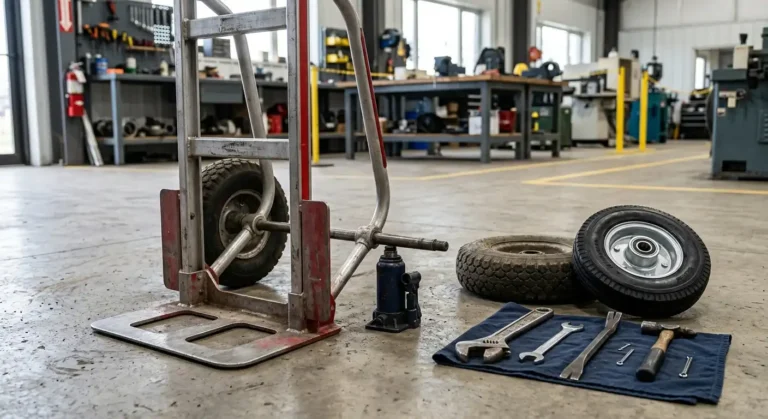
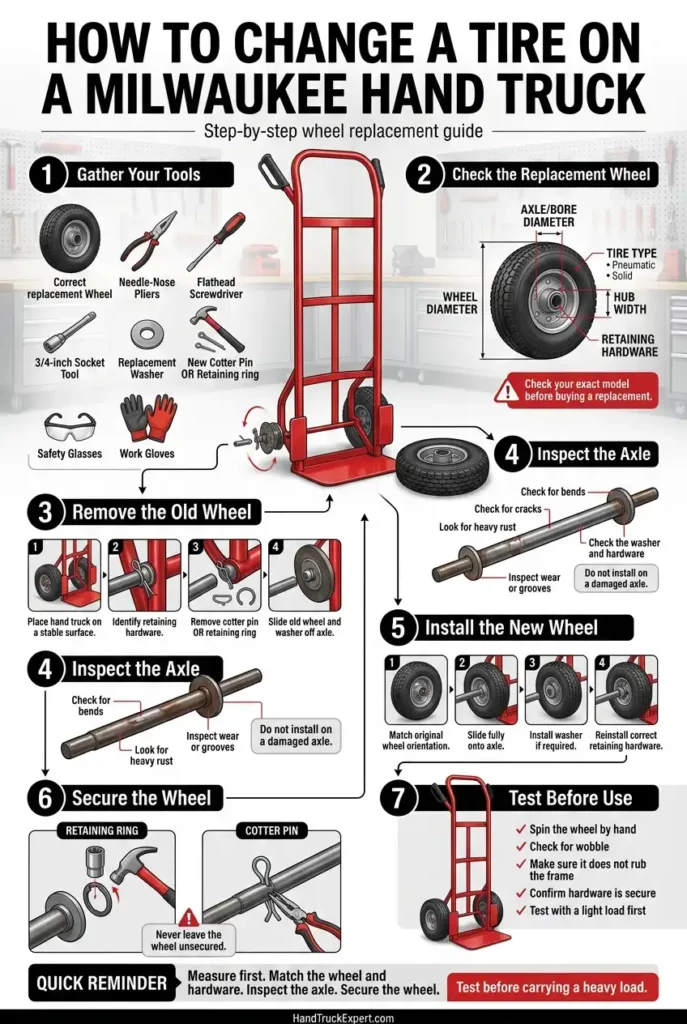
The exact tools you need will depend on your hand truck’s wheel retaining system. Gather these basic supplies before you begin:
- Correct replacement tire or wheel
- Pliers (if your model uses a cotter pin)
- Appropriate screwdriver or retaining ring tool (if applicable)
- Appropriate wrench or socket (if applicable to your specific model)
- Work gloves
- Eye protection
- Clean rag
Check Your Milwaukee Hand Truck Model
Before taking anything apart, you must identify your exact model. Milwaukee Hand Trucks offers many different wheel types, including pneumatic and flat free, or solid puncture proof configurations. These parts are not always interchangeable.
Check your owner’s manual or the manufacturer documentation to confirm the exact wheel design. Inspect the existing tire to see how it attaches to the axle. You need to confirm that your replacement part matches the original specifications exactly.
This is also the time to determine whether your hand truck is designed to have just the rubber tire replaced, or if you need to perform a complete Milwaukee hand truck wheel replacement.
How to Change a Tire on a Milwaukee Hand Truck: Step by Step Guide
To change a tire on a Milwaukee hand truck, first secure the hand truck and remove the wheel. Remove the old tire if needed, install the correct replacement tire, and secure the wheel back onto the axle. Inflate a pneumatic tire to the pressure marked on its sidewall, then test the wheel before using the hand truck with a load.
1. Empty and Stabilize the Hand Truck
Never attempt a hand truck tire replacement while the cart is loaded. Remove all cargo. Place the hand truck flat on a firm, stable, level surface. Position it so the wheel you need to replace is facing up and can be accessed safely. Put on your work gloves and eye protection.
2. Identify the Wheel Retaining Hardware
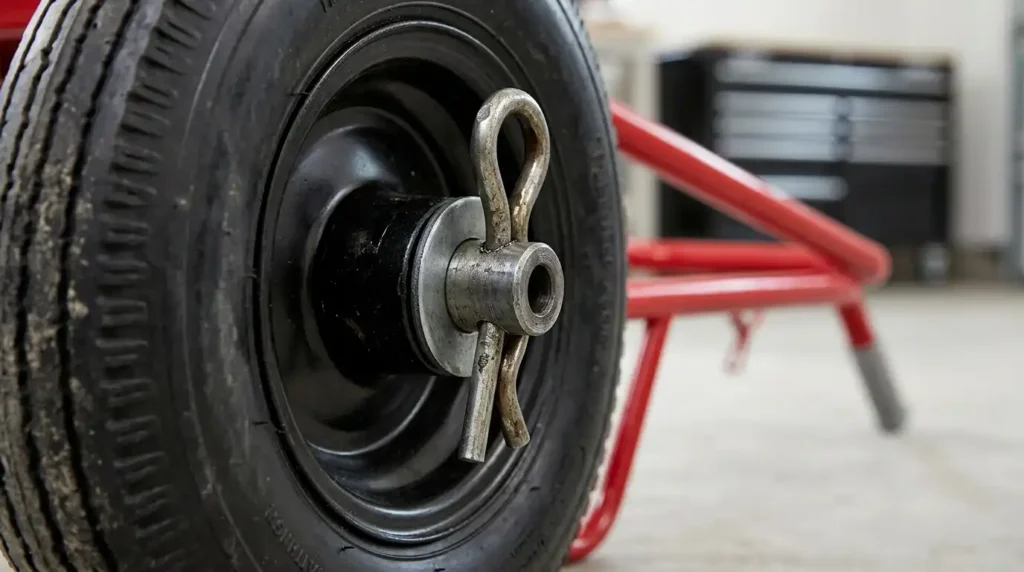
Look closely at the center of the wheel where it meets the axle. Milwaukee Hand Trucks secures wheels using different hardware depending on the model. Your hand truck might use a retaining ring, a cotter pin, or other manufacturer specified hardware.
Do not try to twist off a nut if your model does not actually use one. Identify the specific hardware on your axle before attempting to remove it.
3. Remove the Retaining Hardware
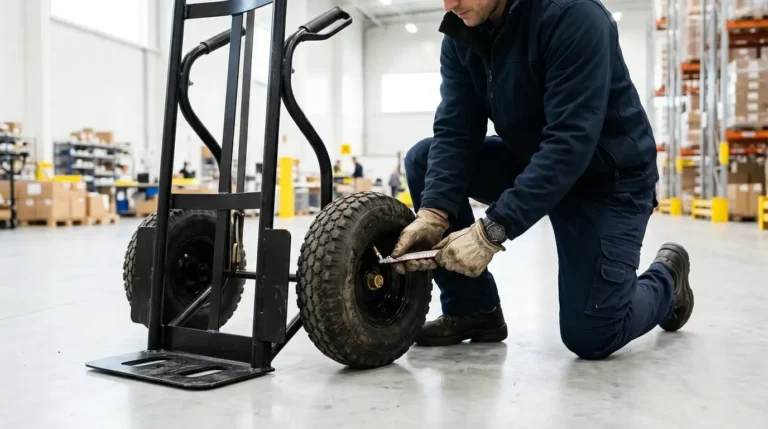
Once identified, remove the hardware carefully. If your wheel is held on by a cotter pin, use pliers to straighten the bent legs of the pin, then pull the pin straight out of the axle hole.
If your configuration uses a retaining ring to secure the wheel on the axle, you must remove it carefully using a retaining ring tool or the manufacturer’s recommended method. Place the removed hardware in a safe spot.
4. Remove the Old Wheel
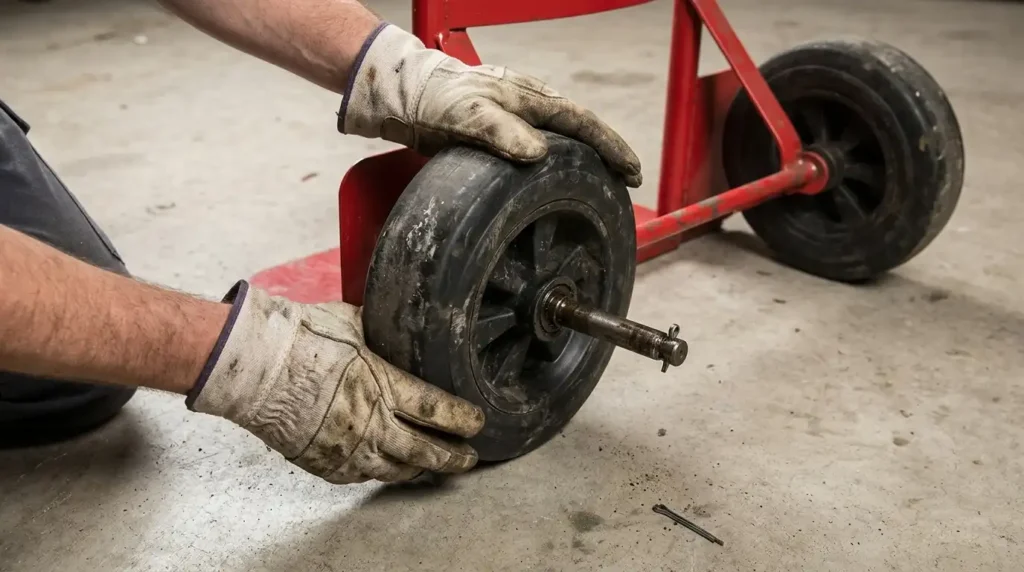
After the retaining hardware is out of the way, the wheel can generally be slid off the axle. Pull the wheel straight toward you. As you do this, watch for washers, spacers, or bearings. Pay close attention to their original order and position so you can reinstall them correctly.
If the wheel does not come off easily, stop and check the axle. Make sure you did not miss a secondary piece of retaining hardware. Do not aggressively hammer the wheel, as this can easily bend or damage the axle.
5. Inspect the Axle and Hardware
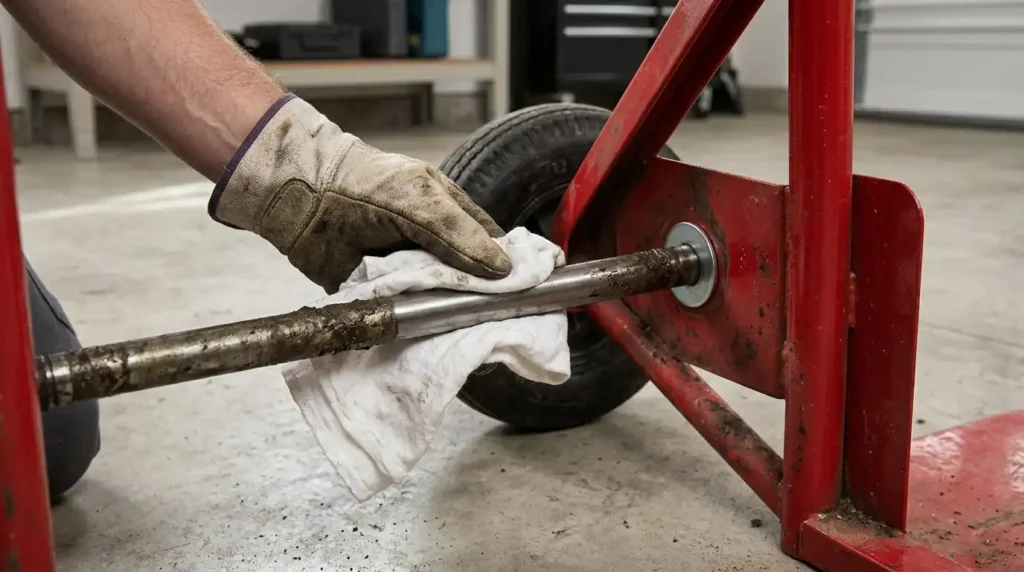
Use a clean rag to wipe down the exposed axle. Inspect the axle, wheel hub, bearings, washers, and retaining hardware. Look for bending, deep grooves, cracks, severe corrosion, or excessive wear.
Replacing the wheel will not correct a bent or damaged axle. If the axle is compromised, the hand truck is not safe to use. Check our guide on how to replace a wheel on a Milwaukee hand truck.
6. Install the New Tire or Wheel
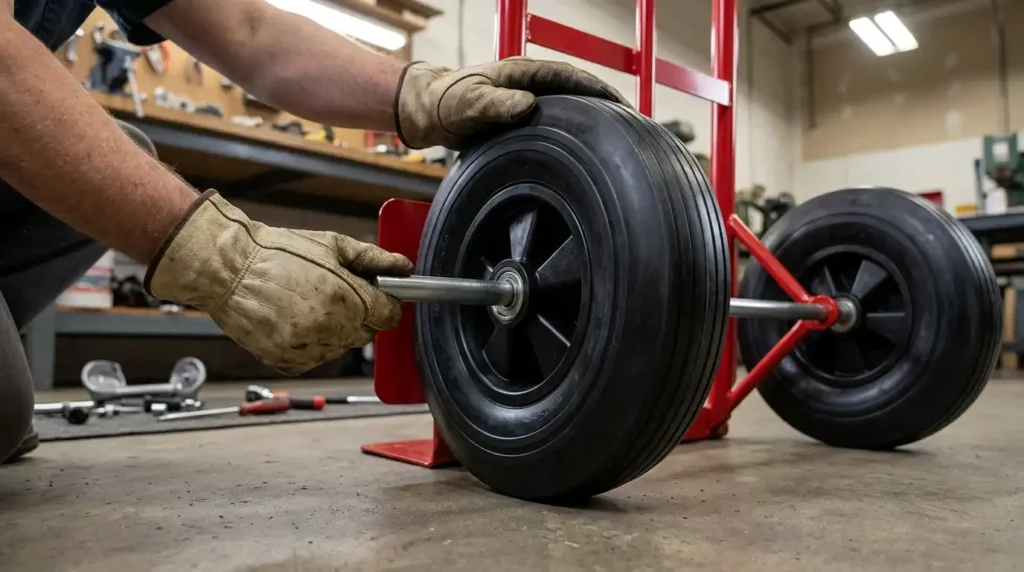
Your Milwaukee replacement wheel must match the original model specifications. Slide the new tire or wheel onto the axle in the correct orientation. If your hand truck uses a specific washer or spacer, reinstall it in the exact order and position you found it during removal. Check our guide on how to inflate hand truck tires.
7. Secure the New Wheel
The new wheel must be secured using the correct retaining system designed for your specific Milwaukee model. If your model uses a retaining ring, follow the manufacturer’s documented installation method to snap it securely back into place.
If your model uses a cotter pin, push the pin completely through the hole in the axle. Use your pliers to bend the legs of the pin securely around the axle so it cannot back out. Do not reuse damaged, rusted, or broken retaining hardware.
8. Check the Wheel
Spin the newly installed wheel by hand. Check that it rotates smoothly. Look for excessive wobble, binding, unusual noises, or loose movement along the axle. If the wheel does not spin freely or feels overly loose, stop and inspect your installation. You may have missed a spacer or installed the hardware incorrectly.
9. Test the Hand Truck
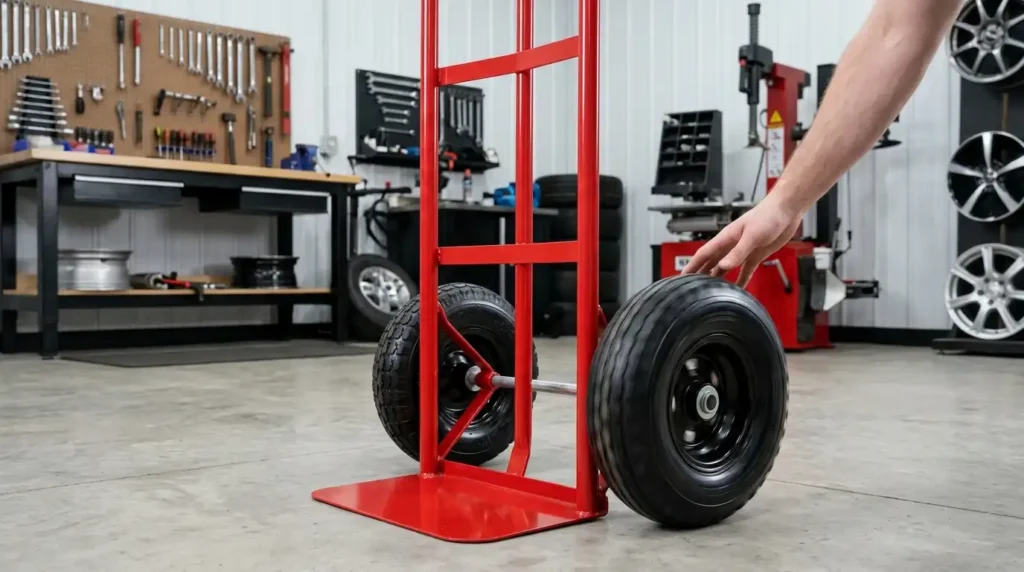
Stand the hand truck up. Test it by pushing it without a load first to ensure it rolls in a straight line. Next, test it with a light load. Ensure the wheel remains secure on the axle and rolls correctly before returning the hand truck to heavy daily use. Check our guide on how to use a hand truck safely.
How to Know When a Milwaukee Hand Truck Tire Needs Replacing?
Look for these common signs that indicate it is time to replace your tire or wheel:
- Flat pneumatic tire
- Repeated air loss or constant leaks
- Cracked, dry-rotted, or damaged rubber
- Severe tread wear
- Visible wheel or rim damage
- Excessive wobbling while rolling
- Poor rolling resistance
- Damaged hub or bearing
Keep in mind that excessive wobbling might be caused by a bent axle or worn hardware rather than the tire itself.
Should You Replace the Tire or the Complete Wheel?
Depending on your model, you might wonder whether to replace just the rubber tire or the complete wheel assembly. A complete wheel replacement is usually necessary when the internal hub is damaged, the rim is bent, or the tire is permanently sealed to the wheel assembly.
You should only replace the tire alone when the specific wheel design allows for it and you have the compatible replacement tire ready. For most standard hand trucks, swapping the complete wheel is much faster and more practical.
Common Mistakes to Avoid
- Buying the wrong replacement wheel
- Ignoring the exact model specifications
- Removing the wrong retaining hardware
- Losing washers or spacers during disassembly
- Installing a new wheel on a damaged or bent axle
- Reusing damaged retaining hardware
- Leaving the wheel loose on the axle
- Over-tightening hardware where applicable
- Testing the hand truck immediately with a very heavy load
- Skipping the final manual wheel inspection
Safety Tips
- Unload the hand truck completely before attempting a repair
- Work on a flat, stable surface
- Wear appropriate eye and hand protection
- Keep your hands away from pinch points between the wheel and frame
- Use only the correct replacement parts for your model
- Do not use the hand truck if the wheel or axle remains damaged
- Follow the instructions for the exact model when available
Frequently Asked Questions
Yes, but the exact replacement method depends on your specific model and wheel construction. You must determine if your model uses a pneumatic, solid, or flat-free tire before starting.
Milwaukee Hand Trucks uses different wheel sizes and types across their product line. You must check your specific model to find the correct size before buying a replacement part.
To remove the wheel, stabilize the unloaded hand truck, identify the specific retaining hardware on the axle (such as a cotter pin or retaining ring), remove that hardware, and slide the wheel straight off the axle.
This depends entirely on your specific tire and wheel design. Some wheels allow you to change a hand truck tire independently, while others require you to replace the entire wheel assembly.
A wobbling wheel can be caused by incorrect installation, missing spacers, loose or damaged retaining hardware, bearing problems, or a bent axle.
Identify the exact hand truck model number, usually found on a sticker on the frame. Compare your current wheel and that model number with the manufacturer’s specifications to ensure a perfect match.
Conclusion
Knowing how to change a tire on a Milwaukee hand truck comes down to identifying your exact model, acquiring the correct replacement part, and properly handling the specific retaining hardware on your axle.
By taking the time to inspect the axle, reinstall the hardware correctly, and test the equipment without a load, you can safely extend the life of your hand truck.