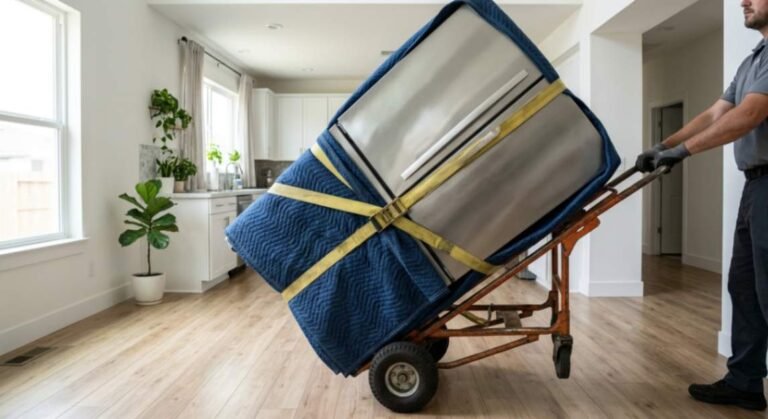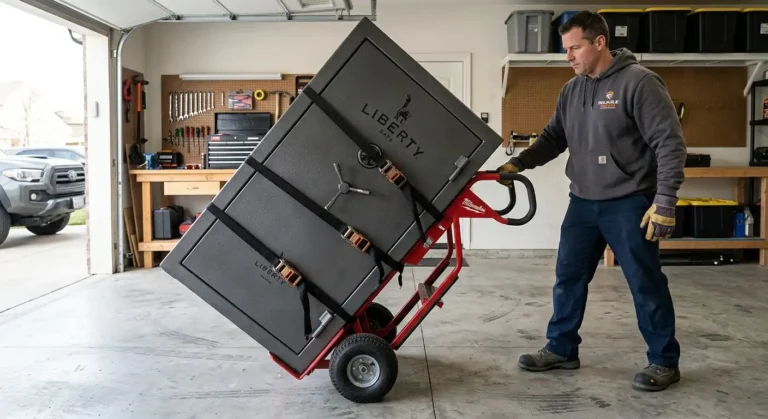

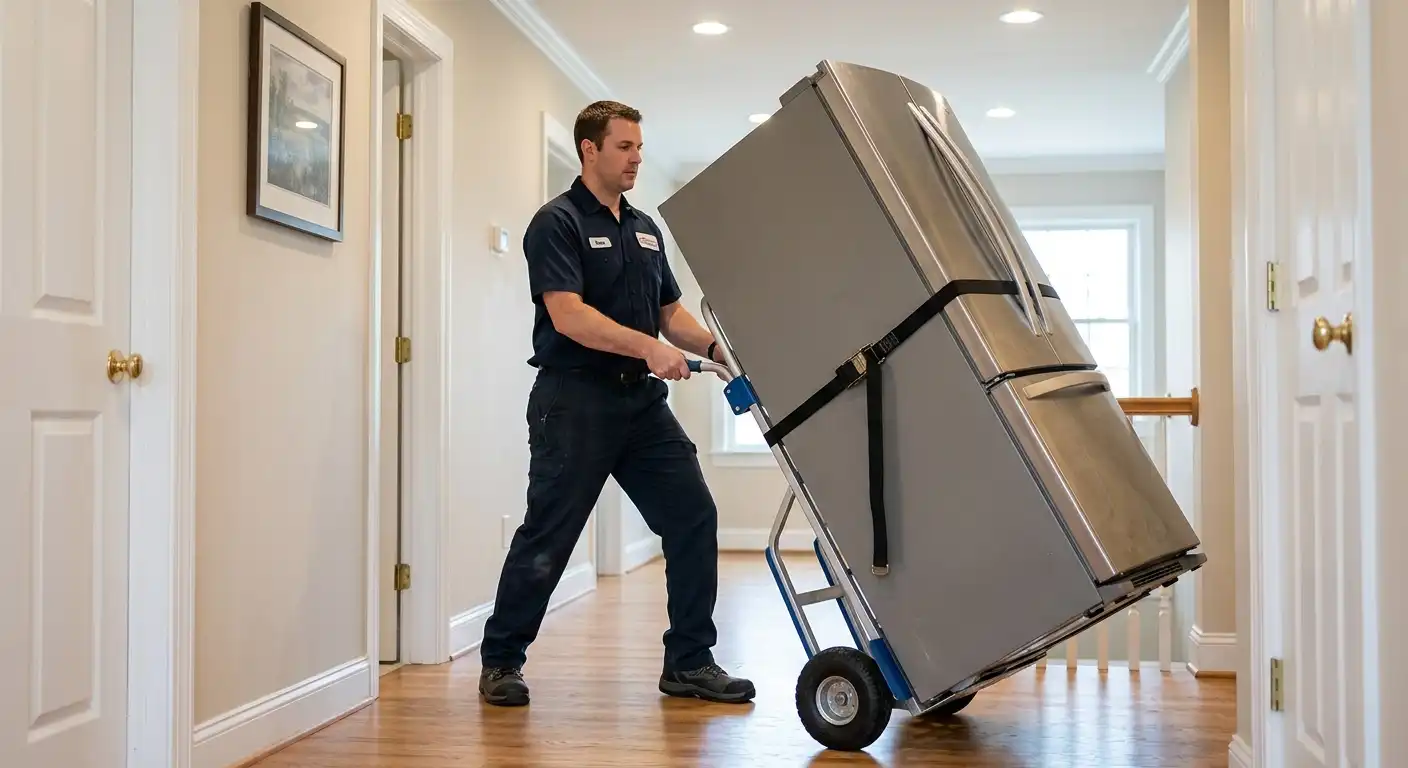
To move a heavy appliance with a hand truck, select a model rated for the appliance’s weight, clear your path, and strap the appliance securely to the frame. Tilt the load back onto its wheels using your leg strength, maintain a steady balance, and push slowly along your planned route.
Moving a heavy appliance like a refrigerator, washing machine, dryer, or dishwasher can be dangerous without the right equipment. Using a hand truck simplifies the job, protects your floors, and helps prevent back strain. However, you must size the hand truck correctly, secure the load properly, and follow safe handling techniques.
Can You Move a Heavy Appliance With a Hand Truck?
Yes, you can move most heavy appliances with a hand truck, provided the equipment matches the job. Heavy appliances require a sturdy hand truck with a rated capacity that comfortably exceeds the load’s weight.
You can safely move an appliance with a hand truck when:
- The appliance’s weight is within the equipment’s weight rating.
- The toe plate fully supports the base of the appliance.
- You can secure the appliance tightly against the frame.
- The moving path is clear, wide enough, and free of major obstacles.
- You can safely maintain control of the balance point.
If an appliance is unusually tall, top-heavy, or exceeds standard weight capacities, you may need a specialized appliance dolly, additional helpers, or professional movers.
What You Need Before Moving the Appliance
Gather the proper equipment and tools before shifting or lifting the appliance:
- Heavy-duty or appliance hand truck: Rated for the specific weight of your load.
- Load straps or ratchet straps: To lock the appliance against the frame.
- Moving blankets: To shield the appliance finish and door handles from scratches.
- Work gloves: For grip and hand protection.
- Sturdy closed-toe shoes: To prevent foot injuries.
- Ramps or threshold covers: For smooth transit over steps or doorways.
- A helper: Essential for spot-checking clearance and managing heavy tilt angles.
How to Move a Heavy Appliance With a Hand Truck?
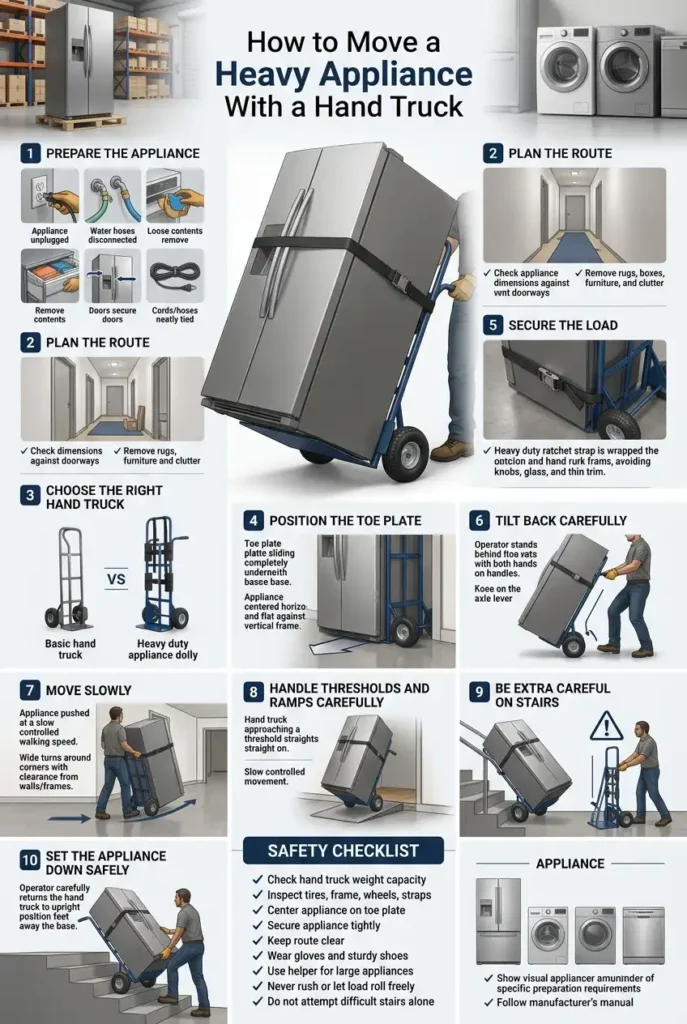
1. Prepare the Appliance
Disconnect all power cords, water lines, and drainage hoses. Drain any residual water from washers or dishwashers to prevent leaks and slipping hazards. If you are dealing with a gas appliance, follow safe shutoff protocols; hire a certified technician if you are unsure how to safely disconnect gas lines.
Remove all internal contents, including glass shelves, drawers, and food. Tape or strap the doors shut so they cannot swing open during transit. Wrap loose cords and hoses, securing them directly to the back of the appliance. Always consult your appliance manual for specific manufacturer preparation guidelines.
2. Clear and Plan the Moving Route
Measure the height, width, and depth of the appliance. Compare these dimensions against all doorways, hallways, and stairwells along your exit path. Measure door openings with the door open, taking door handles and hinges into account.
Clear away throw rugs, furniture, boxes, and debris. Prop exterior and interior doors fully open. If you are moving across hardwood or tile, consider laying down floor protection to prevent scuffs.
3. Choose the Right Hand Truck
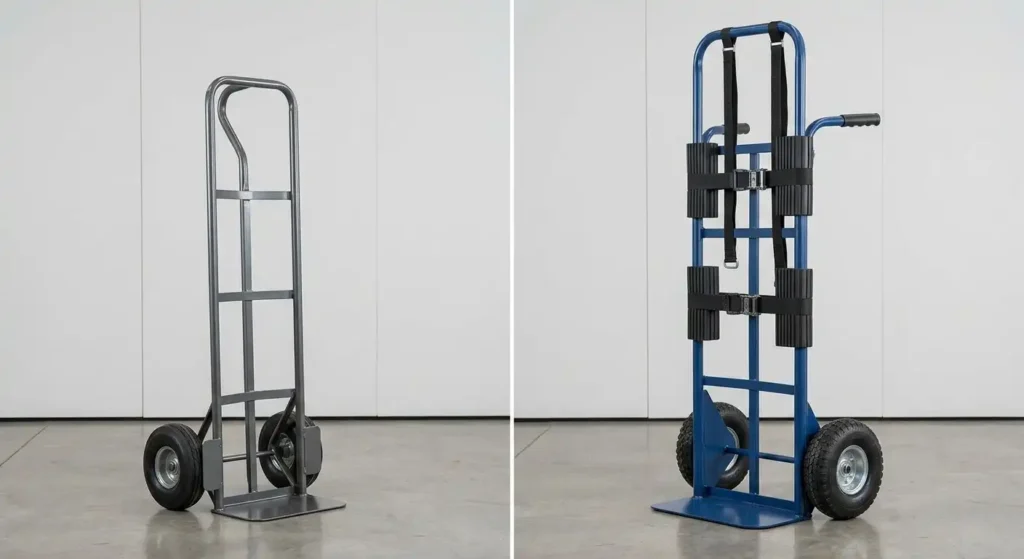
Not all hand trucks are built for large home appliances. A standard light-duty model may bend or tip under heavy loads. Look for a heavy-duty option with a wide toe plate, durable pneumatic or solid rubber wheels, and a sturdy frame.
For large appliances, purpose-built appliance dollies feature built-in tension straps, stair-climbing belts, and tall padded frames to protect appliance finishes. Before loading, review the different types of hand trucks to confirm you have the right tool. Make sure to check how much weight a hand truck can hold so you never exceed the rated weight capacity.
4. Position the Hand Truck
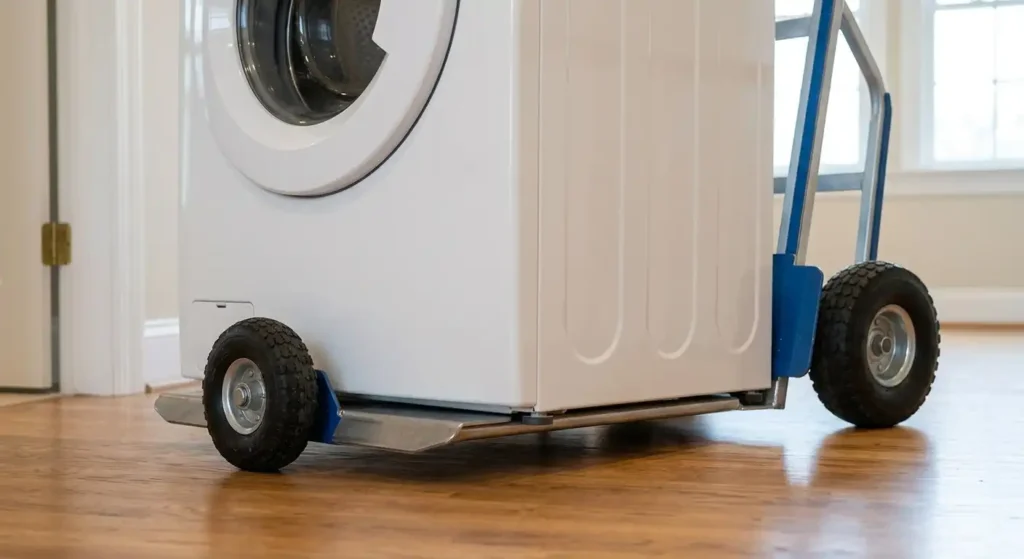
Slide the hand truck’s toe plate completely underneath the base of the appliance. Center the toe plate horizontally so the weight sits evenly across the frame.
Keep the appliance flat against the vertical rails. If the appliance hangs significantly off the edges of the toe plate or sits at an angle, adjust it before attempting to tilt or roll the unit.
5. Secure the Appliance
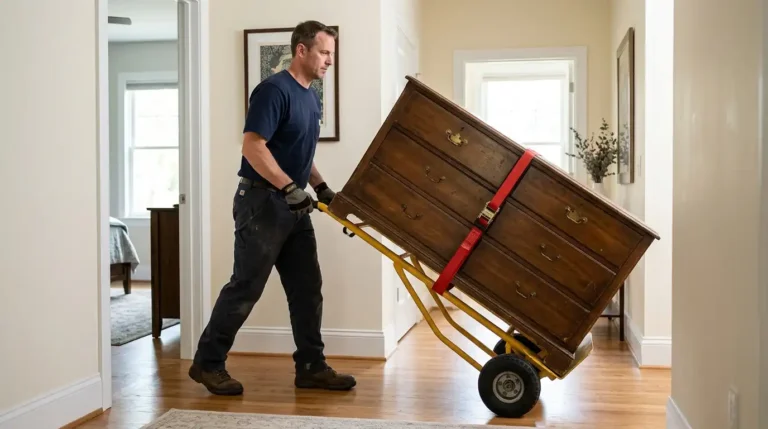
Wrap a heavy-duty load strap around the body of the appliance and the hand truck frame. If your hand truck features a built-in belt tightener, crank it until the strap holds the appliance firmly against the rubber padding.
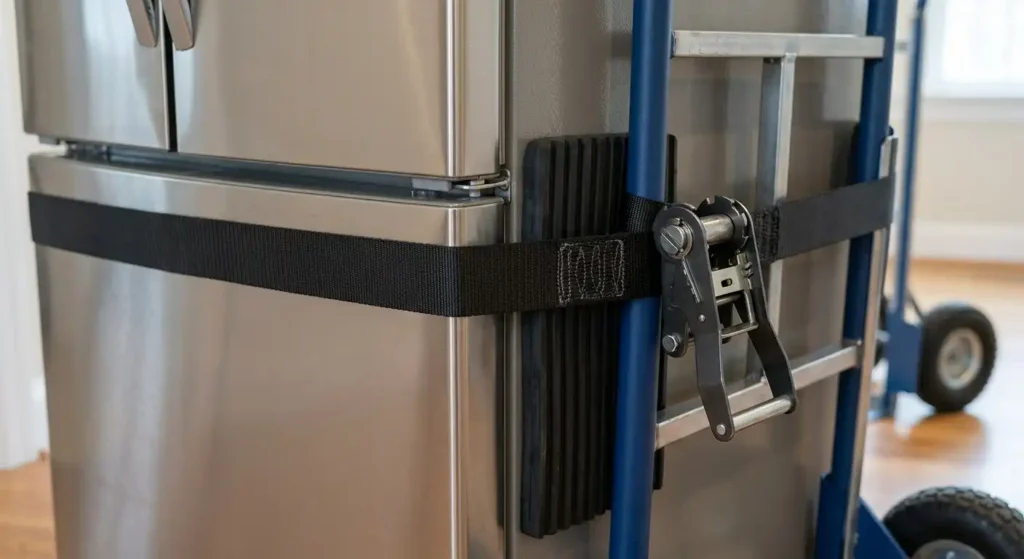
Avoid placing straps over fragile plastic knobs, glass panels, or thin trim. Never substitute proper webbing straps with light rope or twine. Test the stability by gently shaking the frame; the appliance and hand truck should move as a single unit.
6. Tilt the Appliance Back Carefully
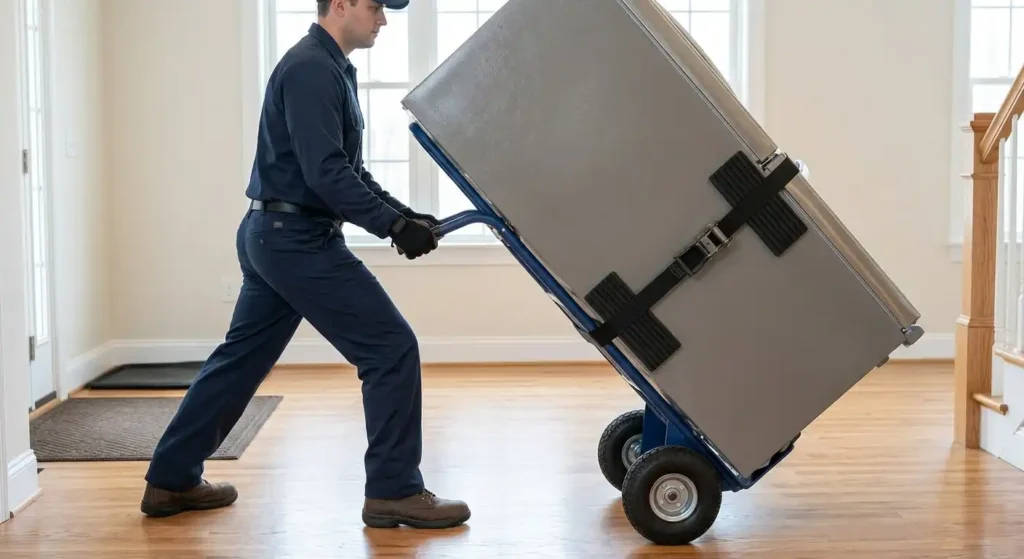
Stand behind the hand truck with one foot placed firmly on the axle or foot lever for leverage. Grip the handle grips securely with both hands.
Bend your knees, keep your back straight, and slowly pull the frame back toward your body. Use your body weight and leg strength to lever the load onto the wheels. Find the natural balance point where the load feels stable and manageable without pushing down excessively on your arms.
7. Move the Appliance Slowly
Push the hand truck at a slow, controlled walking speed. Keep your hands on the handles and focus on maintaining the balance angle.
Never rush or allow the load to roll freely down inclines. Take wide turns around corners to keep the side of the appliance from scraping walls or door frames.
8. Handle Ramps, Thresholds, and Uneven Surfaces
Rough surfaces and raised thresholds can catch the wheels and cause the load to tip forward. Approach door thresholds and transitions head-on at a slow pace.
When navigating ramps, keep the hand truck uphill from the load whenever possible, or have a helper support the front to keep it stable. If a ramp is overly steep, do not attempt to roll the appliance down it alone.
9. Handle Stairs Carefully
Moving a heavy appliance on stairs presents a significant safety risk. Standard two-wheel hand trucks are generally difficult and dangerous to maneuver on staircases with heavy loads.
Always work with at least one assistant when navigating steps. Position the stronger person on the lower side to guide and support the weight while the person at the top handles the balance. For frequent stair moves, use specialized stair-climbing equipment equipped with rotating wheel tracks. For detailed steps on handling steps safely, learn how to use a hand truck on stairs safely.
10. Set the Appliance Down Carefully
Once you reach the destination, align the hand truck where you want the appliance positioned. Keep your feet clear of the base.
Slowly ease the frame back into an upright vertical position using your legs, not your lower back. Once the appliance rests completely flat on the floor, unbuckle the load straps and slide the toe plate out from underneath the unit.
How to Move Different Appliances With Hand Trucks?
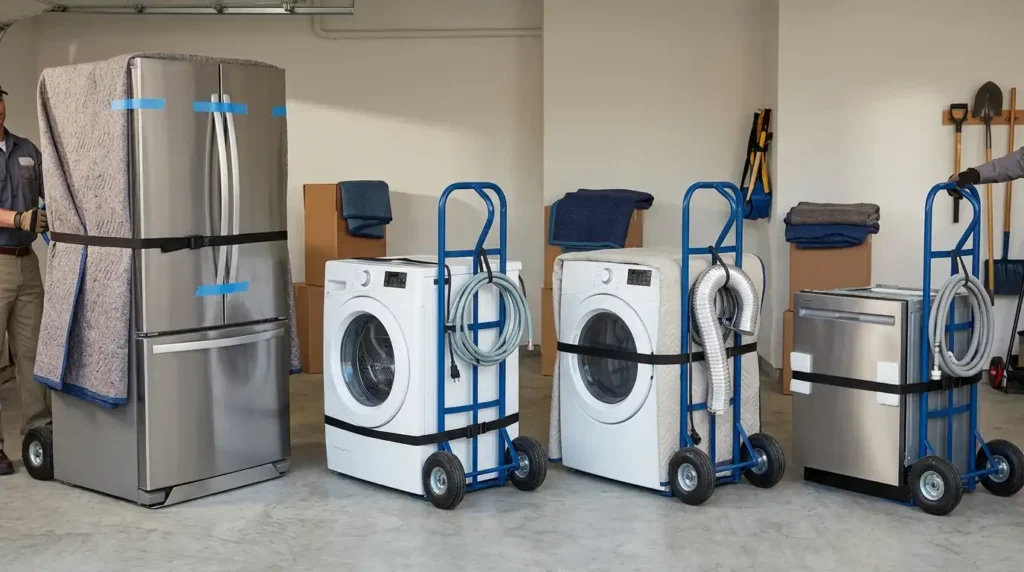
Moving a Refrigerator
Empty all food, defrost the freezer, and secure doors with straps. Before moving, check the manufacturer’s manual for transport instructions. Secure the unit to the frame with moving blankets underneath the straps. For step-by-step guidance on handling fridges, review our guide on how to move a refrigerator with a hand truck.
Moving a Washing Machine
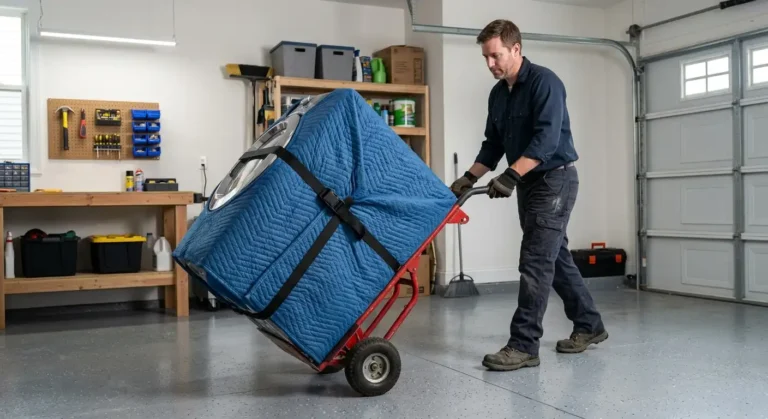
Unplug the power cord, disconnect the water supply lines, and drain any trapped water from the drain hose and filter. Secure the drum according to the manufacturer’s directions, using transit bolts if required, to keep internal components balanced. Strap the washer tightly to the hand truck frame before rolling.
Moving a Dryer
Disconnect the electrical plug or gas connection using standard safety protocols. Disconnect the vent hose from the wall. Tape the dryer door shut, pad the exterior cabinet with a moving blanket, and strap the appliance securely to the hand truck, review our guide on how to move a dryer with a hand truck.
Moving a Dishwasher
Disconnect the electrical power and shut off the water supply line. Disconnect the inlet and drain hoses, draining excess water into a bucket. Secure the front door, protect the front panel with padding, and ensure the unit stays upright on the hand truck.
Can One Person Move a Heavy Appliance With a Hand Truck?
While one person can occasionally roll a mid-sized appliance on smooth, flat ground, you should not attempt to move large, heavy appliances alone.
Your ability to move an appliance single-handedly depends on your physical strength, the appliance’s center of gravity, floor conditions, and the presence of stairs or ramps. If an appliance feels unmanageable when tilting back, stop immediately and call a helper. Attempting to force an unstable load risks severe injury, property damage, and broken equipment.
Heavy Appliance Moving Safety Tips
- Always inspect your hand truck tires, frame welds, and straps before loading.
- Wear work boots with non-slip soles and heavy-duty work gloves for better grip.
- Learn how to use a hand truck safely before handling heavy loads.
- Keep your path well-lit and completely free of pets, children, and clutter.
- Maintain a stable posture with feet shoulder-width apart when taking the initial weight of the load.
- Keep hands, fingers, and feet clear of pinch points between the appliance and door frames.
- Never leave a loaded hand truck unattended in a tilted position.
Frequently Asked Questions
Yes, you can move a refrigerator with a heavy-duty hand truck or appliance dolly. Ensure the equipment has an adequate weight rating, protect the finish with blankets, and strap the refrigerator tightly to the frame before tilting it back.
An appliance dolly or heavy-duty hand truck with a tall frame, high weight capacity, wide toe plate, and built-in tension straps is best. Models with stair-climbing belts or solid rubber wheels provide added control.
Wrap a heavy-duty ratchet or webbing strap around the middle section of the appliance and the vertical rails of the hand truck. Tighten the strap until the appliance rests flush against the frame without slipping or shifting.
One person may move a lighter washing machine across flat, level ground using a hand truck. However, having a helper spot the load, clear doors, and manage balance is much safer.
Moving a refrigerator up stairs with a standard hand truck is difficult and unsafe for one person. It requires at least two people and ideally a specialized stair-climbing hand truck or appliance dolly designed for stairs.
Most manufacturers recommend moving refrigerators in an upright or slightly tilted position to prevent compressor oil from draining into the cooling lines. Always consult your appliance manual for specific transport orientations and resting wait times before plugging it back in.
For large or heavy items like refrigerators, washing machines, and ranges, an appliance dolly is recommended. Appliance dollies offer taller frames, protective padding, and integrated straps that standard hand trucks lack.