
Moving heavy, bulky, or awkward loads by hand increases fatigue and the risk of injury. A hand truck is a simple piece of material handling equipment designed to make moving physical items safer and more efficient.
However, no single design works for every situation. Different types of hand trucks exist because moving a stack of corrugated cartons across a warehouse requires different support than delivering a commercial refrigerator up an entryway curb.
Choosing the correct equipment protects the operator, preserves the cargo, and prevents floor damage. This guide covers the main hand truck types available, how their frames and wheel setups differ, and how to select the right model for your work.
What Are the Different Types of Hand Trucks?
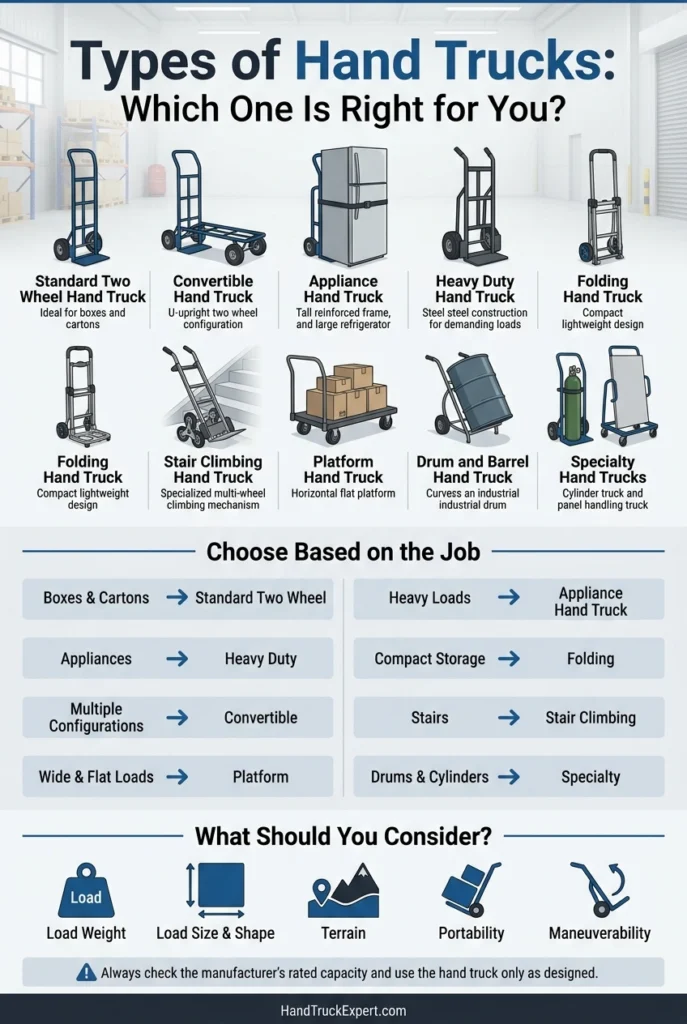
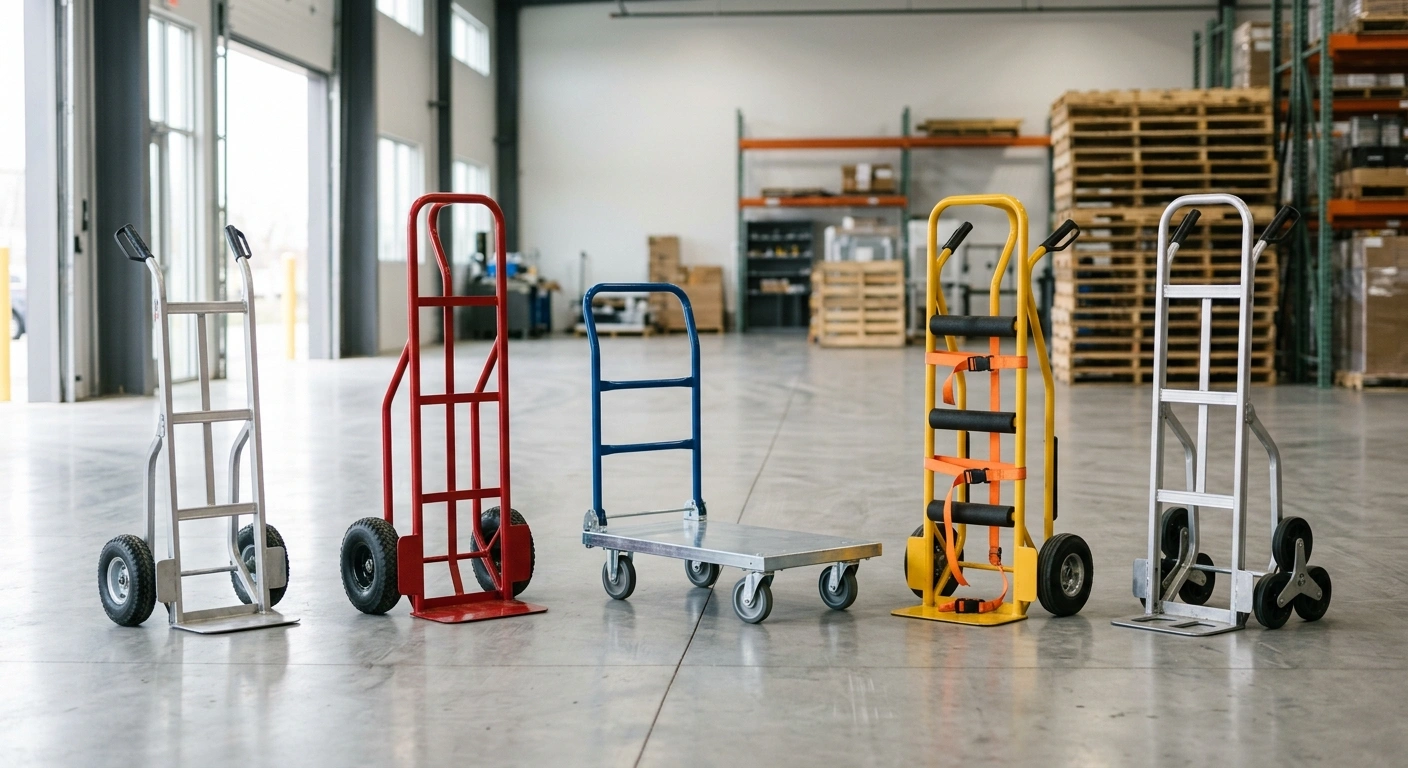
Material handling manufacturers build equipment around specific physical tasks. While all hand carts serve the general goal of moving freight without direct lifting, their engineering varies significantly:
- Standard Two Wheel Hand Trucks: The classic vertical frame with two base wheels and a front nose plate for everyday cartons.
- Convertible Hand Trucks: Dual-purpose frames that shift between an upright two wheel orientation and a horizontal four wheel cart.
- Appliance Hand Trucks: Heavy, tall frames fitted with cargo straps and protective rub rails for domestic and commercial appliances.
- Heavy Duty Hand Trucks: Reinforced steel or heavy-gauge aluminum frames built for demanding industrial weights.
- Folding Hand Trucks: Lightweight collapsible designs meant for vehicle storage, small deliveries, and occasional light tasks.
- Stair Climbing Hand Trucks: Models equipped with rotating multi-wheel clusters or tracks engineered to negotiate steps.
- Platform Hand Trucks: Low, flat decks riding on four dedicated wheels to support wider, unstacked items.
- Drum and Barrel Hand Trucks: Curved cradles with rim chimes designed specifically to clamp cylindrical containers.
- Specialty Hand Trucks: Purpose-built equipment for compressed gas cylinders, tires, panel goods, and vending equipment.
Let’s deep dive into each types of hand trucks:
Standard Two Wheel Hand Trucks
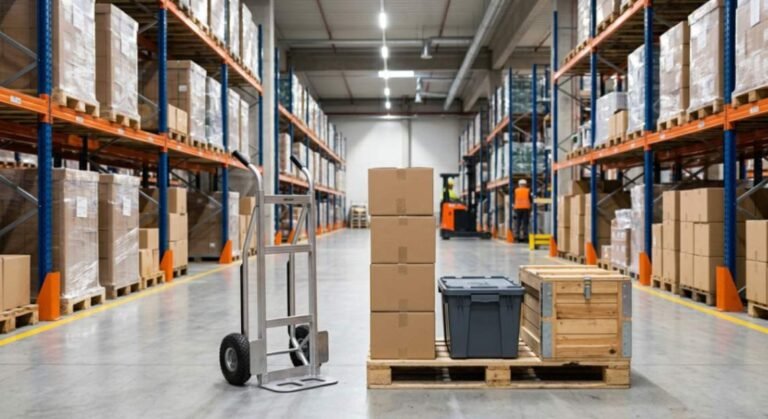
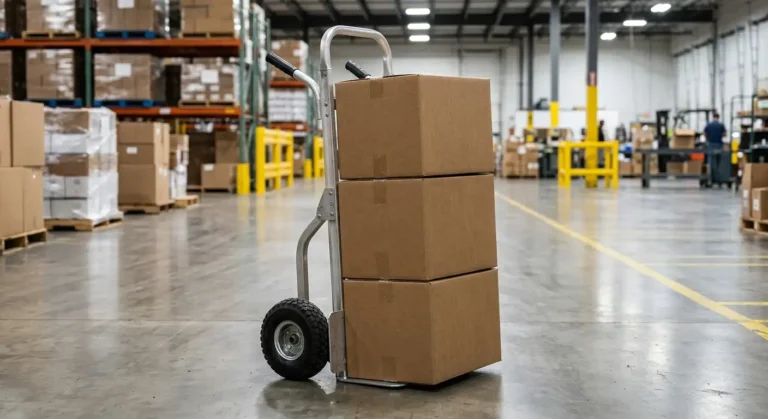
The standard two wheel model is the most familiar material handling tool in retail stockrooms, parcel delivery vans, and home garages. It features an upright tubular frame, a pair of handles at the top, two main wheels at the base, and a flat horizontal lip called a toe plate or nose plate.
To operate it, the user slides the nose plate under a stack of cartons, places a foot against the axle, and pulls the frame backward. This tilting motion balances the load weight over the axle, shifting the bulk of the burden away from the operator’s arms and onto the wheels.
Learning what a hand truck is and understanding leverage mechanics explains why this simple upright design has remained popular for over a century.
Standard models excel at moving uniform boxes, small storage bins, and relatively compact items through narrow doorways and tight retail aisles. Their simple frame has few moving parts, which minimizes mechanical failure.
However, they require continuous user balance while in transit. If an operator stops moving, they must hold the tilted frame upright or return the load to the ground. They are not intended for wide, sprawling items that can tip past the frame sides.
Convertible Hand Trucks
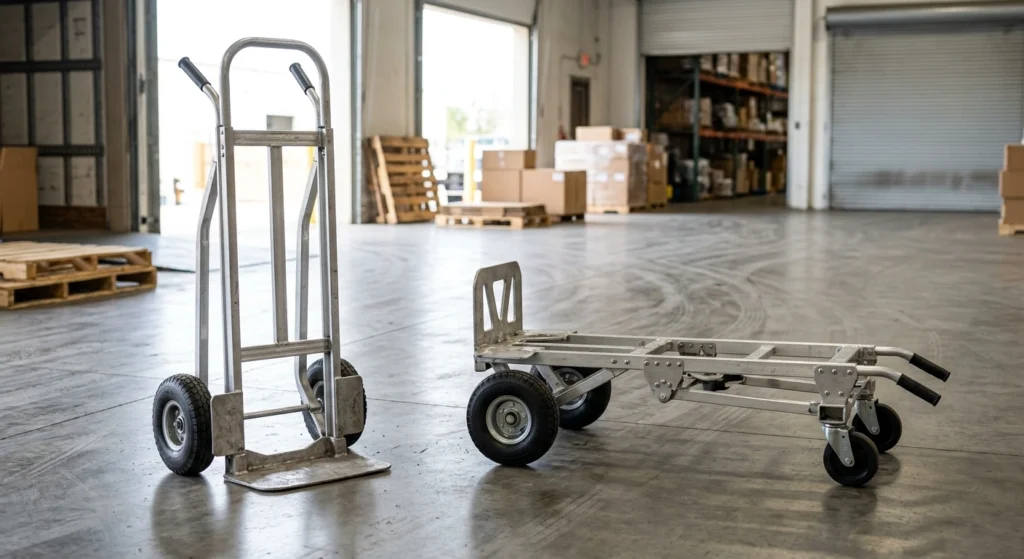
Convertible hand trucks combine two practical material handling tools in one frame. By releasing a locking pin or sliding a frame catch, an operator can convert the tool from a standard upright two wheel truck into a flat four wheel platform truck.
This design solves a common logistics problem for delivery drivers and route distributors. When moving stacked beverage cases through a standard doorway, the upright two wheel mode offers clean clearance. When moving a dozen cartons from a parking bay across a wide loading dock, dropping the frame into horizontal four wheel mode provides greater stability.
Comparing two wheel vs four wheel hand trucks shows that spreading weight across four contact points eliminates the physical fatigue of balancing a tilted load.
The primary advantage is daily versatility without carrying two separate pieces of equipment in a truck bed. The trade-off lies in weight and mechanical complexity. Convertible frames include extra hinge brackets, secondary casters, and locking mechanisms, which make them slightly heavier than fixed uprights.
Load capacities also vary depending on the mode; many convertible models are rated for higher weights when configured flat than when operated upright.
Appliance Hand Trucks
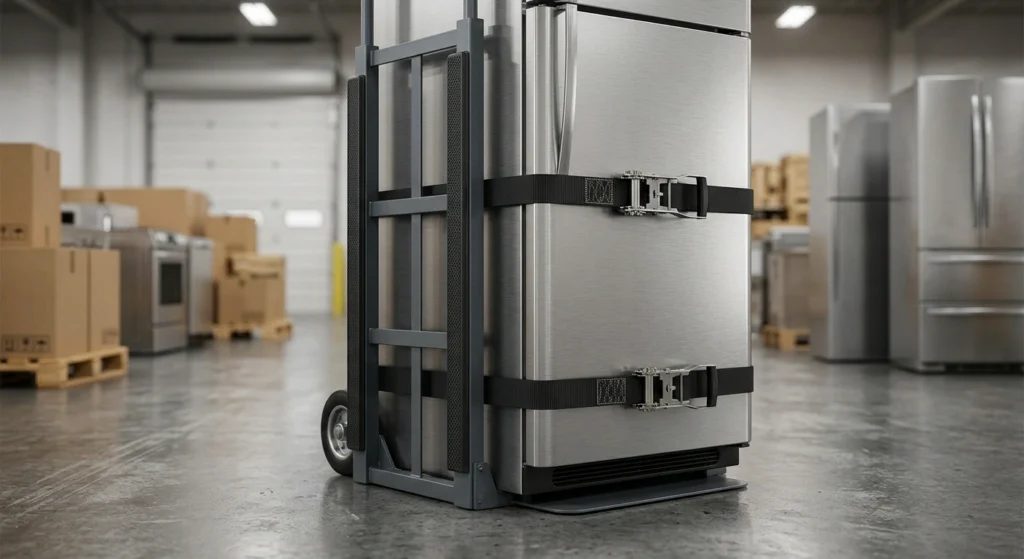
Domestic and commercial appliances present unique handling hazards. Refrigerators, washing machines, dryers, and water heaters are tall, heavy, and easily scratched. Appliance hand trucks feature taller, heavier frames with integrated features engineered specifically to address these challenges.
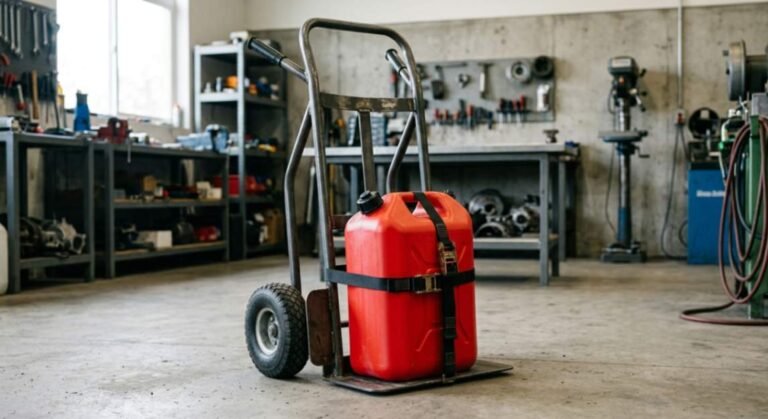
A reliable appliance model usually includes heavy side pads or non-marking rubber rub rails along the frame to prevent metal contact with finished enamel surfaces. Most models also incorporate an integrated nylon web strap with a mechanical ratchet or friction cinch. This strap pulls the bulky unit tight against the tubular frame, preventing it from tipping forward when rolling over thresholds.
Because dimensions and center-of-gravity points vary drastically between a top-load washer and a double-door commercial cooler, securing the item properly is critical. Reviewing practical steps for how to move a refrigerator with a hand truck
shows that balancing a 300-pound appliance requires careful strap placement and constant control. Appliance trucks often have smaller nose plates to slide cleanly under recessed appliance bases, making them less suitable for hauling loose stacks of standard shipping cartons.
Heavy Duty Hand Trucks
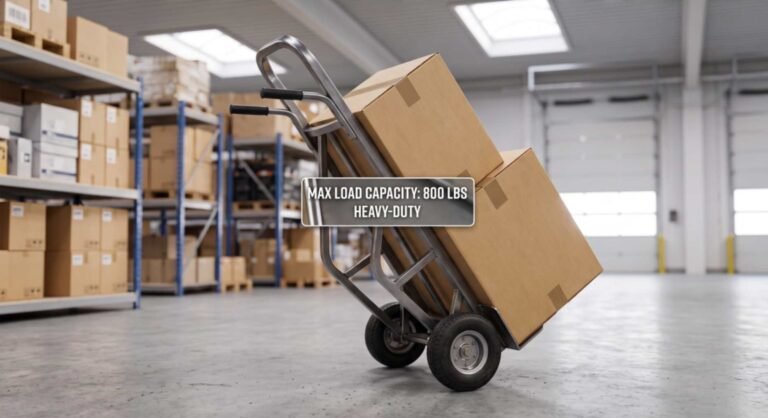
When handling industrial hardware, motors, raw metal stock, or loaded tooling bins, standard commercial equipment reaches its mechanical limit. Heavy duty hand trucks are constructed with reinforced gussets, thicker frame walls, and heavy-duty steel or structural aluminum alloys.
These tools feature larger axles, high-rated industrial wheel bearings, and thick, forged or welded nose plates that resist bending under severe loads. While typical commercial utility trucks support moderate cargo ranges, heavy duty models are designed for demanding operational environments where shock loading from rough ramps or dropped cargo is common.
Users must consult the manufacturer weight rating plate rather than assuming any thick metal frame can haul unlimited tonnage. Reviewing a detailed hand truck weight capacity guide is essential because exceeding rated limits risks axle failure or wheel collapse.
Heavy duty frames weigh considerably more than utility models, making them tiring to lift in and out of delivery vehicles repeatedly if the extra capacity is not required.
Folding Hand Trucks
Folding hand trucks prioritize portability, compact storage, and low tool weight. Built primarily from telescoping aluminum tubes, lightweight steel hinges, and impact-resistant polymer brackets, these units fold down flat in seconds.
The main handles collapse downward, and the nose plate folds upward against the frame, often tucking the wheels flat simultaneously. This compact footprint allows the cart to slide behind a pickup seat, sit inside a car trunk, or hang on a utility room wall hook. They are well suited for mobile service technicians carrying tool cases, sales representatives delivering product samples, and homeowners moving occasional seasonal storage bins.
Folding hand trucks are generally intended for light to moderate duty. Their hinges and telescoping handle joints introduce flex under pressure. They should never be used for heavy machinery, commercial appliances, or severe impacts. Always confirm the manufacturer stated load rating before attempting to move dense materials.
Stair Climbing Hand Trucks
Moving heavy cargo up or down stairways is inherently hazardous. Standard two wheel hand trucks should not automatically be used on stairs, as pulling a standard wheel over a stair tread corner creates harsh shock loads that can jar cargo loose or cause the user to lose grip.
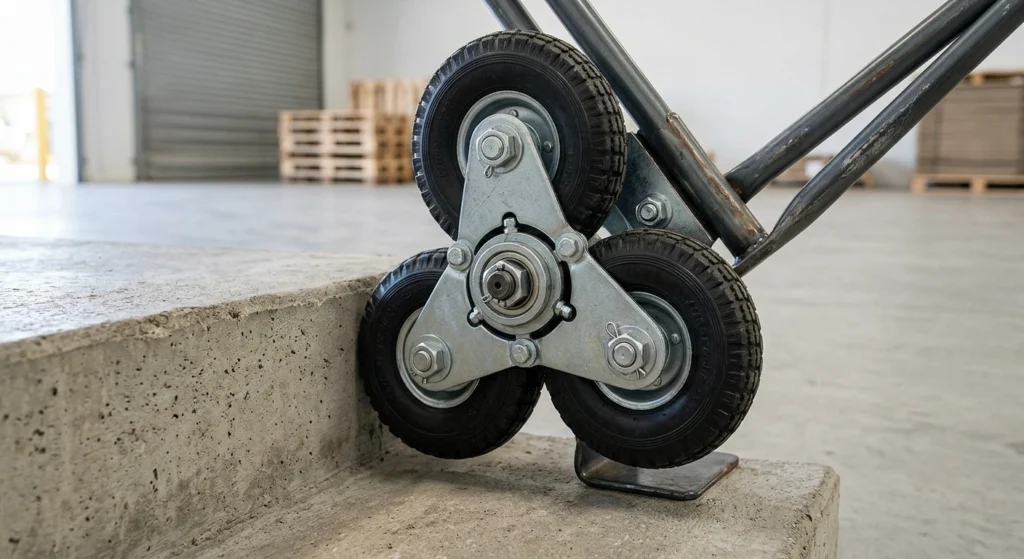
Stair climbing hand trucks employ specialized mechanical designs to smooth this elevation transition. The most common configuration features a rotating tri-star wheel assembly on each side. Three wheels sit in a triangular bracket that rotates around a central hub.
When the lower wheel meets a stair riser, the assembly pivots, placing the upper wheel smoothly on the next step tread without requiring the operator to bounce the entire load. Other models use heavy rubber track belts mounted behind the main frame to glide along the step edges.
While these systems reduce jarring movement, they do not make stair transit effortless. The operator must still control the cargo’s downward descent or supply upward physical force to pull the load. Safe operation requires following how to use a hand truck safely and never exceeding the specific stair weight limit established by the manufacturer, which is often lower than the tool’s level-ground capacity.
Platform Hand Trucks
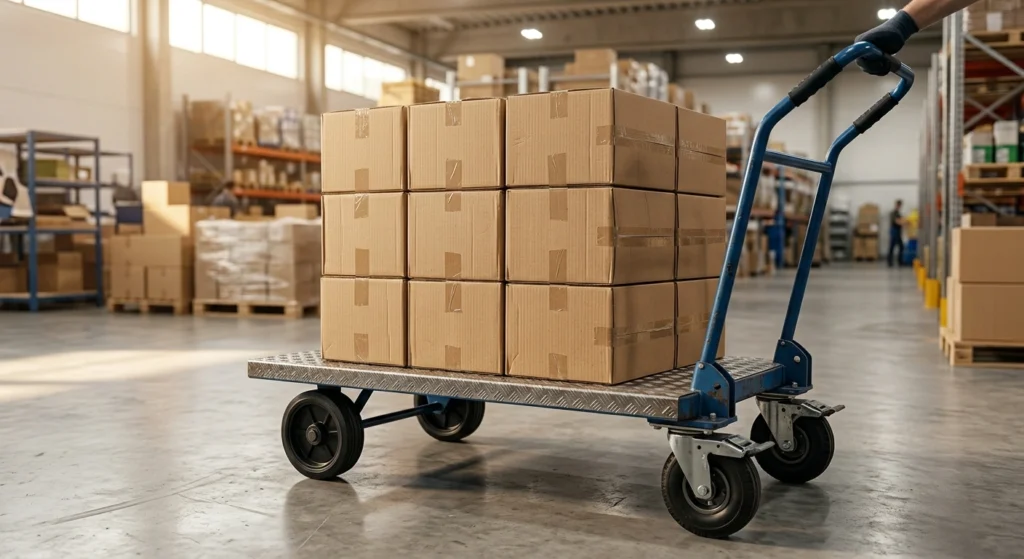
Unlike upright two wheel carts, platform hand trucks feature a horizontal structural deck mounted over four independent wheels. Two wheels are typically fixed rigid casters, while the other two swivel to allow steering through turns. A tall push handle rises from one end of the deck.
Platform trucks support the cargo entirely on a flat surface, eliminating the need to tilt, counterweight, or balance the load during transport. This makes them the preferred choice for wide, low, or sprawling items that would otherwise tip off an upright nose plate. They excel at moving multiple flat boxes, sheets of plywood, bulk office supplies, and furniture pieces across warehouses, schools, and hospitals.
The limitation of a platform cart is maneuverability in restricted vertical spaces. They cannot navigate steps, they require wider turning radiuses than upright two wheel carts, and pushing a loaded deck up steep ramps requires steady physical control.
Drum, Barrel, and Other Specialty Hand Trucks
Standard flat nose plates cannot securely hold round, rolling, or irregularly shaped industrial cargo. Specialty hand trucks feature frames engineered around the exact physical profile of specific items:
- Drum and Barrel Trucks: These feature curved horizontal ribs that cradle the round radius of 30-gallon or 55-gallon drums. Many include an adjustable chime hook that latches over the top lip of the steel drum, keeping it locked to the frame while tilting.
- Cylinder Hand Trucks: Built to transport pressurized gas tanks such as oxygen, acetylene, or propane. They include rounded cradles and heavy safety chains to prevent tanks from shifting or falling.
- Panel and Drywall Carts: Equipped with vertical side uprights and narrow, angled beds designed to keep wide sheets of drywall, glass, or plywood standing securely on edge.
- Vending Hand Trucks: Extra-tall, heavy-duty frames with dual side ratchet straps and retractable rear support wheels designed to roll tall, dense commercial vending machines safely.
Aluminum vs Steel Hand Trucks
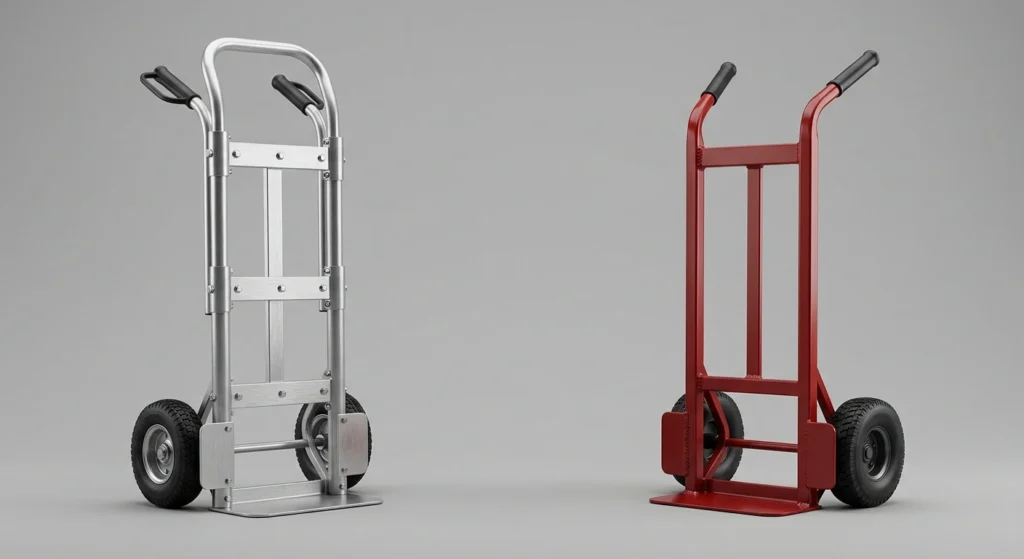
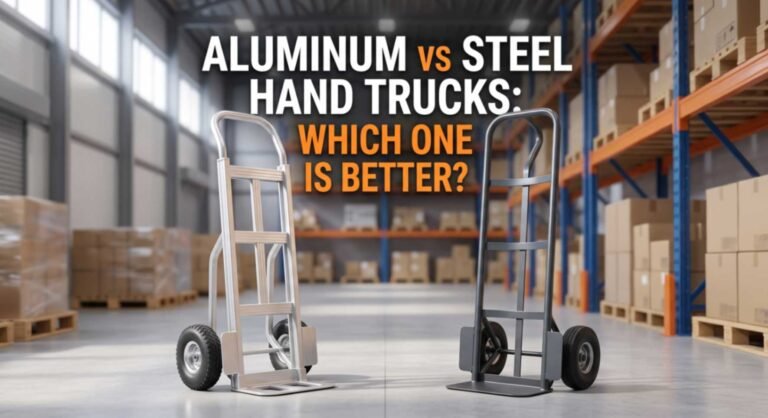
Frame material directly affects durability, tool weight, and overall handling ease. Most hand trucks are manufactured from either structural aluminum or welded steel tubing.
Aluminum hand trucks are substantially lighter than steel alternatives. This reduced tare weight makes them the preferred choice for delivery drivers who must lift the equipment on and off delivery truck steps hundreds of times per day.
Aluminum is also naturally corrosion-resistant, making it ideal for wet loading docks, refrigerated food distribution, and outdoor route deliveries. However, aluminum frames can flex slightly under near-capacity loads and are generally more expensive than basic steel models.
Steel hand trucks provide maximum rigidity and structural strength. They withstand rough handling, structural impact, and heavy industrial environments without significant frame distortion. If a steel weld cracks under severe stress, it can often be repaired using standard shop equipment. Review our detailed guide on aluminum vs steel hand trucks.
Two Wheel vs Four Wheel Hand Trucks
Choosing between a two wheel configuration and a four wheel setup depends on load dimensions, available operating clearance, and how the cargo must be supported across the floor.
| Feature | Two Wheel | Four Wheel |
| Typical orientation | Upright and vertical | Flat, horizontal platform |
| Maneuverability | Excellent in narrow doorways, tight aisles, and tight corners | Best on wide, open floors; requires wider turning space |
| Load support | Requires user balance over the axle while tilted | Direct floor support; self-supporting on four wheels |
| Common use | Tall cartons, small appliances, and general stacked boxes | Broad, flat items, bulk loads, and unstacked freight |
| Stair travel | Only when specifically designed or approved with skids/tracks | Generally not suitable for standard stairways |
Read our detailed guide on two wheel hand truck vs four wheel dolly.
How to Choose the Right Type of Hand Truck?
Choosing the right hand truck requires evaluating the physical work environment, the freight characteristics, and how often the equipment will be used.
Load Weight
Always verify the heaviest items you intend to move and choose equipment with a manufacturer rated capacity that safely exceeds that weight. Never operate equipment at its absolute breaking threshold, as dynamic forces from rolling over bumps and thresholds increase structural stress on frames and axles.
Load Size and Shape
Evaluate whether your items are compact, tall, or round. Tall, uniform boxes stack cleanly against a two wheel upright frame. Bulky appliances require integrated straps and tall frames. Cylinders and drums require curved cradles and rim clamps, while wide panels demand dedicated platform or panel carriers.
Terrain
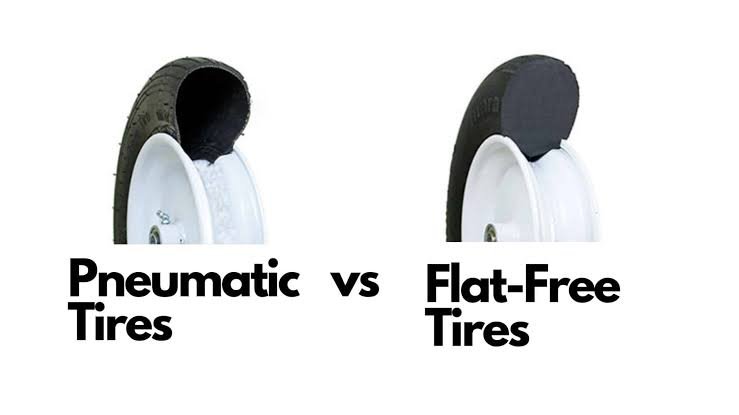
Examine the floor conditions along your common travel paths. Smooth warehouse concrete works well with hard rubber or polyurethane wheels. Gravel, cracked asphalt, turf, and outdoor job sites require pneumatic or airless foam-filled tires that absorb bumps. If travel paths involve curbs, steps, or elevation changes, select models with built-in stair skids or dedicated climbing assemblies.
Frequency of Use
Occasional home maintenance or periodic office reconfigurations can be handled reliably by budget-friendly steel uprights or compact folding models. Daily industrial operations, delivery routes, and commercial warehousing warrant investment in modular aluminum trucks with replaceable components, precision bearings, and ergonomic handles.
Portability and Storage
Consider where the equipment will stay when not in use. If the cart must ride inside a passenger car, van shelving, or service truck bed, look at lightweight aluminum or collapsible folding trucks. If the tool remains on a commercial loading dock, frame rigidity and load capacity take priority over compact dimensions.
Maneuverability
Check the narrowest restrictions along your route, including doorway widths, hallway corners, elevator entries, and storage aisles. Two wheel trucks rotate on their own wheel footprint, allowing tight pivoting. Four wheel platforms need broader turning lanes but provide effortless pushing over long straight warehouse aisles.
Hand Truck Types by Use
| What You Need to Move | Hand Truck Type to Consider |
| Boxes and general cartons | Standard two wheel hand truck |
| Heavy industrial machinery and parts | Heavy duty hand truck |
| Refrigerators, washers, and water heaters | Appliance hand truck |
| Compact items and light service tools | Folding hand truck |
| Loads requiring both vertical and flat transit | Convertible hand truck |
| Cargo moving across steps and staircases | Stair climbing hand truck |
| Wide, bulky, or flat items | Platform hand truck |
| 55-gallon drums and cylindrical containers | Specialty drum or barrel hand truck |
The final purchasing decision should always involve reviewing the specific model’s mechanical manual, verifying certified frame capacities, and matching wheel compounds to your flooring surface.
Frequently Asked Questions
Heavy duty hand trucks constructed from thick-walled steel or structural aluminum alloys are best for heavy loads. These models feature reinforced axle mounts, heavy gussets, and high-load bearings designed to handle substantial industrial weights safely without frame bending.
A convertible hand truck is a multi-position cart that functions as an upright two wheel hand truck and converts into a horizontal four wheel platform cart. This allows operators to handle tall, stacked boxes or wide, flat loads with one tool.
You should only use a hand truck on stairs if it is specifically equipped with stair climbing wheels, rubber stair skids, or track systems designed for steps. Using a standard two wheel truck on stairs risks dropping cargo or causing injury.
Folding hand trucks are generally not suitable for heavy loads. Their telescoping handles, folding nose plates, and hinge joints are engineered for portability and light to moderate utility tasks. Overloading folding joints can cause structural failure or binding.
Appliance hand trucks are the best choice for moving appliances. They feature tall upright frames, non-marking rubber rub rails to protect enamel finishes, and built-in tension straps to secure large items like refrigerators and washing machines securely to the frame.