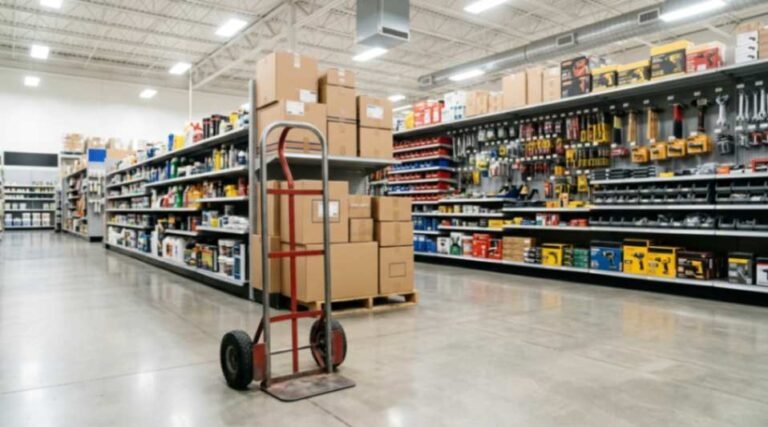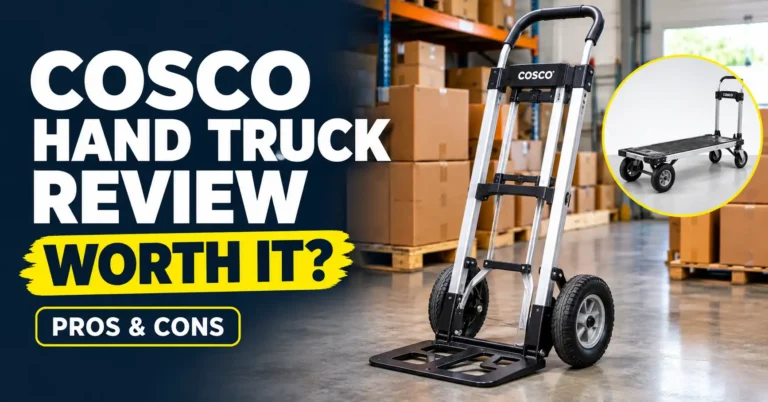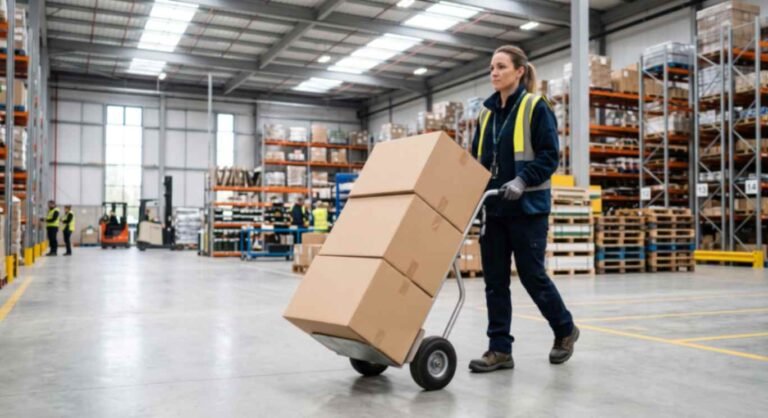

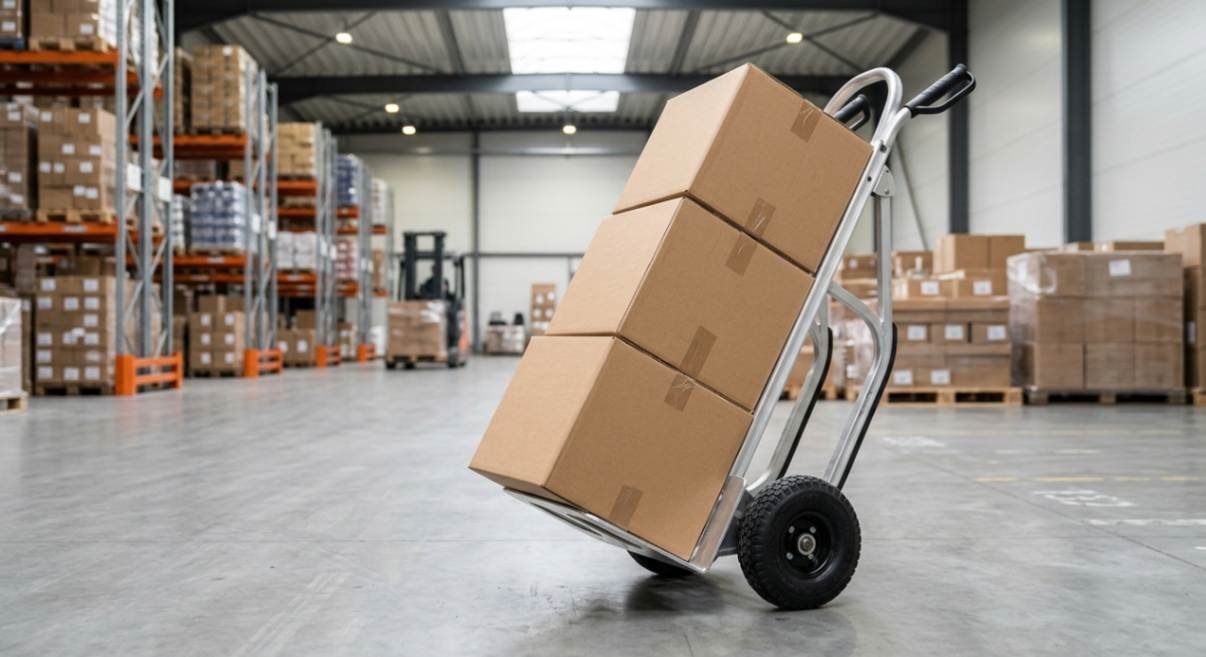
A hand truck is an L-shaped wheeled material handling tool designed to move heavy or bulky items with minimal manual lifting. It features an upright metal frame, handles at the top, two or more wheels at the base, and a small flat platform called a toe plate.
Hand trucks allow you to slide the toe plate under a load, tilt the frame backward onto the wheels, and roll the item forward. They are widely used in homes, warehouses, retail stores, delivery vehicles, and moving operations.
What Is a Hand Truck Used For?
A hand truck is used to transport heavy, bulky, or stacked items over short distances. It leverages a wheeled frame and bottom toe plate so workers can roll heavy boxes, appliances, and materials across flat surfaces with significantly less manual effort.
Common hand truck uses include:
- Moving stacks of cardboard boxes and shipping packages
- Transporting large appliances such as washers, dryers, and refrigerators
- Relocating heavy furniture like dressers, desks, and filing cabinets
- Moving heavy bags of soil, mulch, cement, or pet food
- Transporting industrial drums, storage bins, and toolboxes
- Unloading freight trucks and stocking retail shelves
Check our detailed guides on what is a hand truck used for?
How Does a Hand Truck Work?
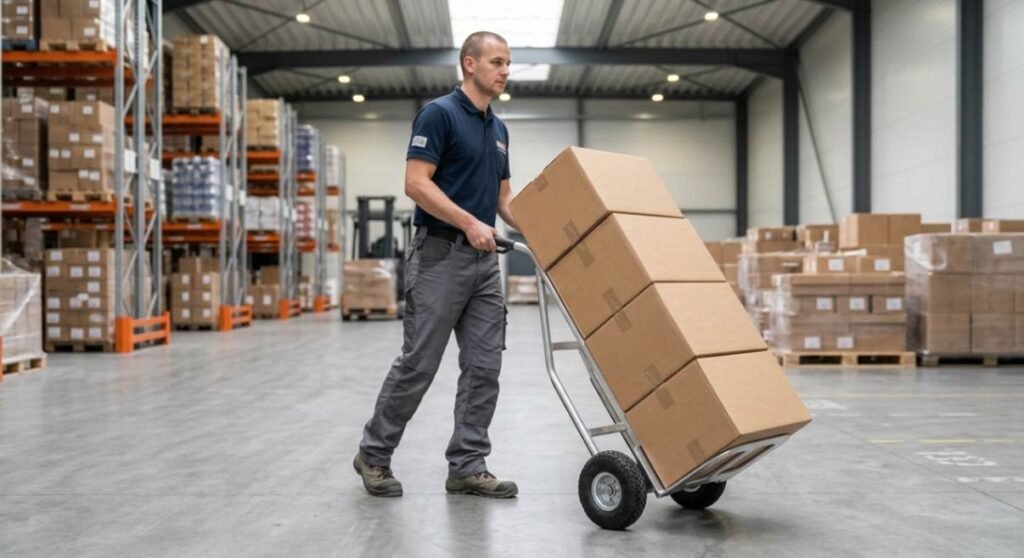
A hand truck works on the principle of a first-class lever. The wheels and axle act as the fulcrum, the frame acts as the lever arm, and the toe plate holds the load.
Operating a hand truck involves a simple process:
- Slide the toe plate: Push the bottom plate flat along the floor until it sits fully underneath the load.
- Balance the weight: Ensure the items rest centered against the vertical frame.
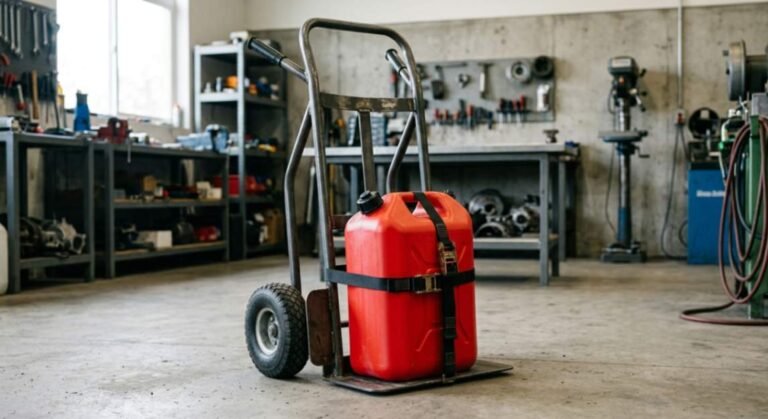
- Secure the load: Fasten a strap around tall or unstable items to prevent tipping.
- Tilt the frame: Place a foot near the axle or wheel support for leverage, grip the handles firmly, and pull the frame backward.
- Roll the load: Once the weight balances over the wheels, push or pull the hand truck forward along a clear path.
Because the wheels support the bulk of the weight, you only need to exert enough force to balance and steer the unit.
Main Parts of a Hand Truck
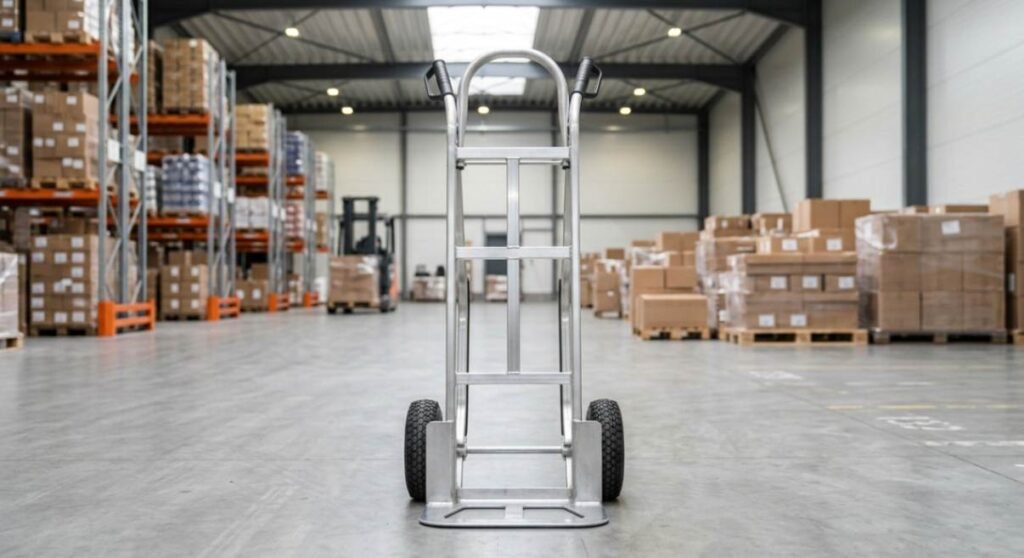
Understanding the basics of a hand truck makes it easier to use, maintain, and select the right model.
Frame
The frame is the vertical backbone of the hand truck. It supports the back of the load and distributes weight downward toward the axle. Frames are typically constructed from tubular steel or lightweight aluminum.
Handles
Located at the top of the frame, handles allow you to grip, tilt, steer, and control the hand truck. Designs include single continuous loop handles, dual pistol grips, and flow-back handles that provide multiple grip heights.
Toe Plate
Also known as the nose plate, this is the flat ledge at the bottom of the frame. It slides directly under boxes or equipment to lift them off the floor. Toe plates vary in depth and width depending on the intended load size.
Wheels
The wheels allow the loaded hand truck to roll smoothly across floors and ground surfaces. Hand trucks use various types of wheels, including solid rubber, semi-pneumatic, and air-filled tires.
Axle
The axle is the central steel rod connecting the wheels to the bottom of the frame. It bears the load weight transferred through the wheels and enables smooth wheel rotation.
Straps or Load Retainers
Many commercial and heavy-duty models include built-in nylon straps, auto-rewind ratchets, or stair climbers mounted behind the frame to secure loose cargo.
Types of Hand Trucks
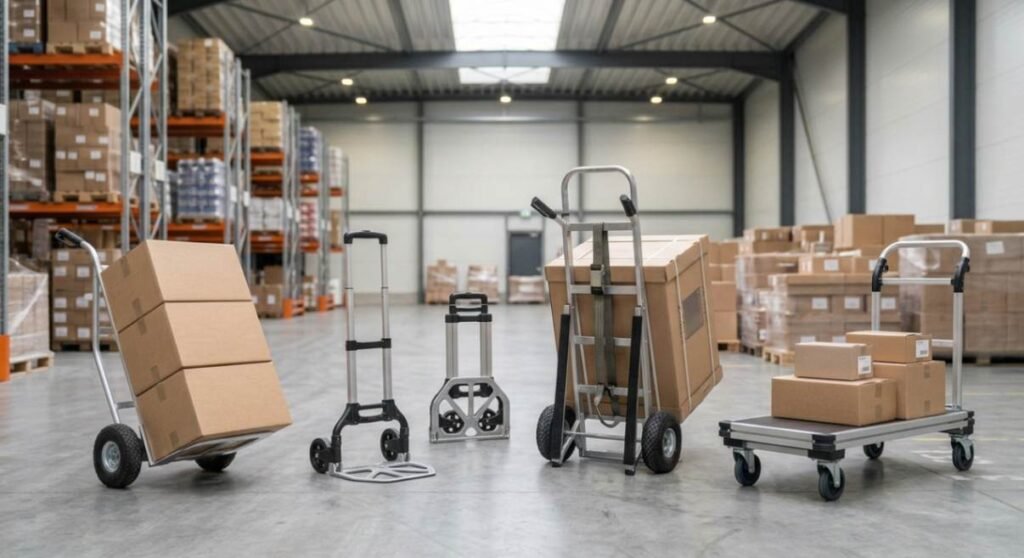
Hand trucks come in several specific configurations designed for different work environments and load types.
2-Wheel Hand Truck
The standard 2-wheel hand truck is the traditional upright design. It is ideal for moving stacked boxes, delivery parcels, and medium-sized containers across flat ground.
4-Wheel Hand Truck
Four-wheel models feature two large primary wheels and two smaller caster wheels. They can operate upright or lay flat horizontally like a platform truck, offering extra stability for long or bulky cargo. For a deeper look at these options, see our guide on 2 Wheel vs 4 Wheel Hand Trucks.
Folding Hand Truck
Folding hand trucks feature telescoping handles and collapsible toe plates. Made primarily from aluminum and impact-resistant plastic, they fold flat for easy storage in vehicle trunks, closets, and small utility rooms.
Appliance Hand Truck
Appliance hand trucks are heavy-duty models built with wider frames, built-in tension straps, and soft-padded rails to protect finishes. They are purpose-built for heavy appliances like refrigerators and water heaters.
Convertible Hand Truck
Convertible hand trucks switch between a 2-wheel upright hand truck and a 4-wheel flat-bed cart. This flexibility allows workers to move tall items vertically or multiple boxes horizontally on a single trip.
Stair Climbing Hand Truck
Stair climbing hand trucks feature specialized rotating three-wheel assemblies or rubber continuous belts on the back of the frame. These features allow the frame to step up or slide down stair edges smoothly.
Hand Truck vs Dolly
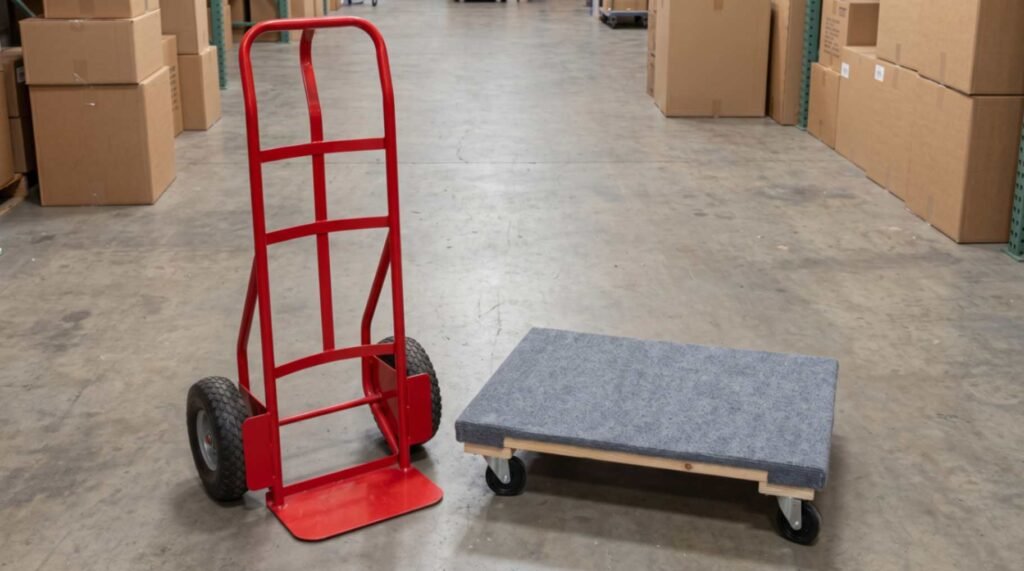
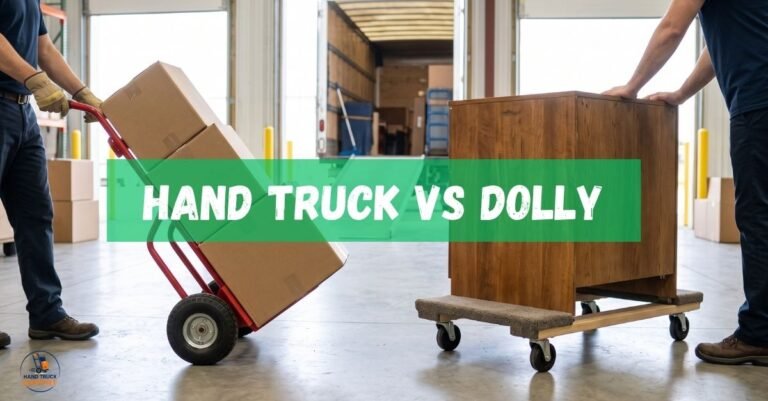
While people often use the terms interchangeably, a hand truck and a dolly are distinct pieces of equipment.
| Feature | Hand Truck | Dolly |
| Orientation | Vertical (L-shaped frame) | Horizontal (Flat platform) |
| Wheels | 2 large wheels (plus optional casters) | 4 caster wheels |
| Lifting Mechanism | Lever action via toe plate | Manual lifting onto platform |
| Handles | Tall upright handles for leverage | Usually handle-free |
| Primary Use | Boxes, appliances, tall loads | Flat crates, furniture, machinery |
A hand truck uses leverage to lift items off the ground, whereas a dolly is a flat platform on four wheels that requires you to manually lift the item onto it. For a comprehensive comparison, read our detailed article on Hand Truck vs Dolly.
What Can You Move With a Hand Truck?
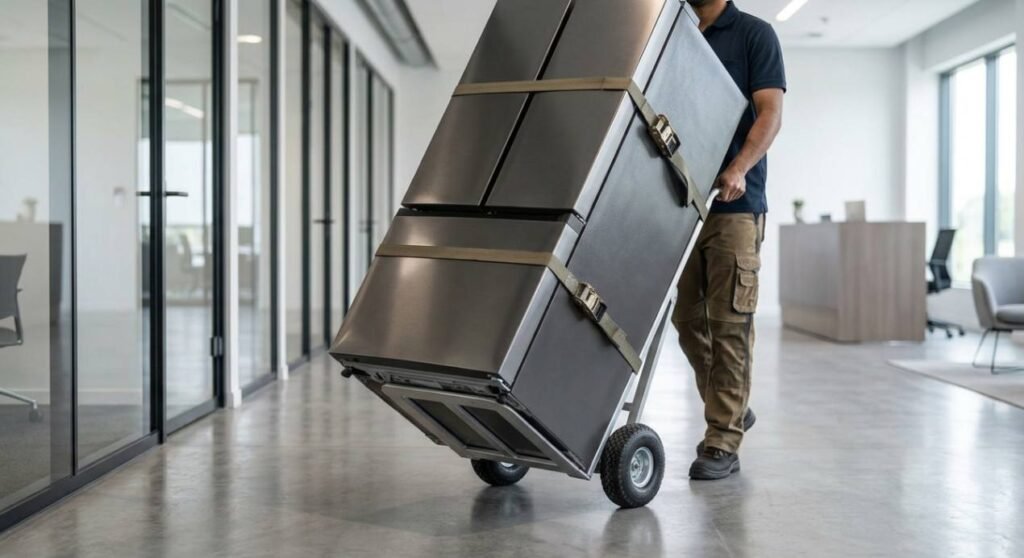
A hand truck can move a wide variety of domestic and commercial items, including:
- Moving cartons and storage totes
- Major home appliances like washing machines and stoves
- Office furniture, filing cabinets, and desks
- Construction supplies, bags of sand, and concrete
- Lawn care tools, trash cans, and gas cylinders
- Heavy kegs, beverage crates, and cases of water
Always check the dimensions, shape, and stability of the item to ensure it sits flush against the frame and within the unit’s weight limits.
How Much Weight Can a Hand Truck Carry?
There is no universal weight limit for hand trucks. Standard folding consumer models generally handle between 150 and 300 pounds, while standard steel utility hand trucks carry 500 to 800 pounds. Heavy-duty industrial and appliance hand trucks can support 1,000 pounds or more.
Capacity depends on frame material, joint welds, axle strength, and wheel ratings. Always check the manufacturer’s stamped capacity plate before loading. To find the right limit for your needs, review our complete Hand Truck Weight Capacity Guide.
Benefits of Using a Hand Truck
Using a hand truck offers several clear advantages:
- Reduces manual carrying effort by transferring weight to the wheels
- Minimizes the number of trips needed during moves or deliveries
- Makes bulky and irregularly shaped objects easier to balance
- Navigates narrow hallways, doorways, and ramps with ease
- Improves efficiency in shipping, receiving, and storage areas
How to Use a Hand Truck Safely?
Safe operation keeps both the operator and the cargo secure during transport.
- Inspect the frame, fasteners, and tire inflation before every use.
- Never exceed the manufacturer’s rated load capacity.
- Place the heaviest items at the bottom of the stack, resting fully on the toe plate.
- Keep the load height below eye level so your forward view remains clear.
- Use ratchet straps to secure tall, round, or top-heavy objects.
- Walk backward cautiously when descending ramps, keeping the load tilted toward you.
- Take special care on steps, or review our guide on how to use a hand truck.
How to Choose the Right Hand Truck?
To select the best hand truck for your tasks, consider these core factors:
- Weight Capacity: Match the equipment rating to the heaviest items you intend to transport.
- Frame Material: Aluminum is lightweight and easy to lift into vehicles, while steel provides long-term durability for rough commercial work. Compare them in our guide to Aluminum vs Steel Hand Trucks.
- Wheel Type: Air-filled pneumatic tires roll easily over gravel and outdoor terrain, while solid rubber or flat-free tires require zero maintenance on smooth indoor concrete. Read our guide on Pneumatic vs Flat Free Tires for details.
- Toe Plate Dimensions: Deep toe plates hold large boxes securely, while open-cast flush plates slide under low-profile crates easily.
- Storage Space: Choose a folding model if you need to transport the hand truck in a standard car trunk.
Are Hand Trucks Easy to Use?
Yes. Basic operation is simple: slide the toe plate under the item, tilt the frame backward onto the wheels, and push. Maintaining balance and keeping loads controlled are the main skills required.
A hand truck is a practical, reliable tool for moving heavy or awkward items across warehouses, job sites, and homes. Choosing the right hand truck comes down to understanding your typical cargo weight, your working surfaces, and whether you need specialized features like stair glides or convertible frames.
Frequently Asked Questions
A hand truck is an upright L-shaped frame on two wheels that uses leverage to lift items. A traditional dolly is a flat four-wheel platform that sits low to the ground and requires you to manually place items on top.
Weight capacity varies by design. Light folding models hold 150 to 300 pounds, standard commercial models hold 500 to 800 pounds, and heavy-duty appliance hand trucks can carry 1,000 pounds or more.
Yes, but moving loads on stairs requires caution. Specialized stair-climbing hand trucks with tri-wheel designs or rubber stair glides make this safer and easier than using a standard two-wheel model.
Yes. Heavy-duty and dedicated appliance hand trucks are designed specifically to move items like washers, dryers, and refrigerators. They feature integrated straps, protective padding, and higher load ratings. For step-by-step instructions, see How to Move a Refrigerator With a Hand Truck.