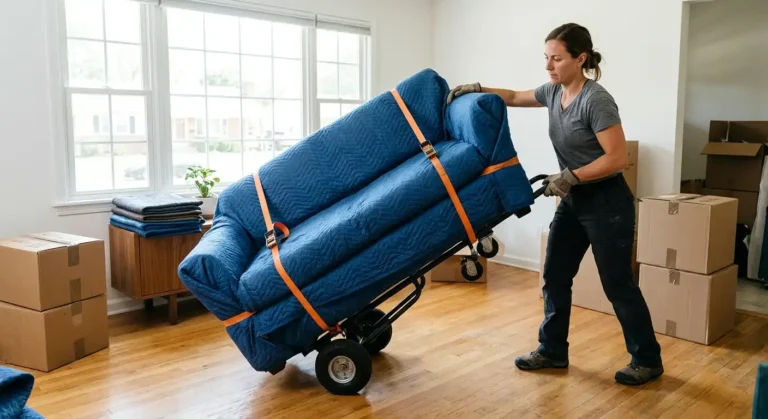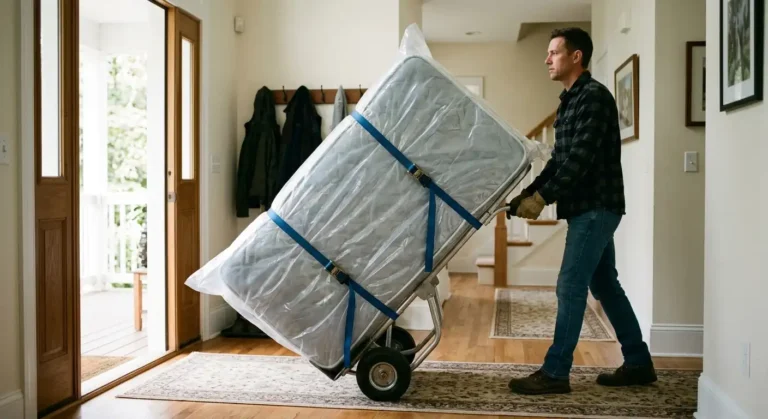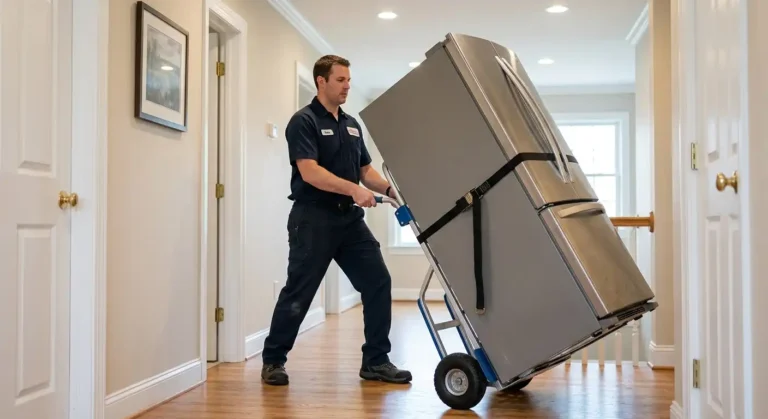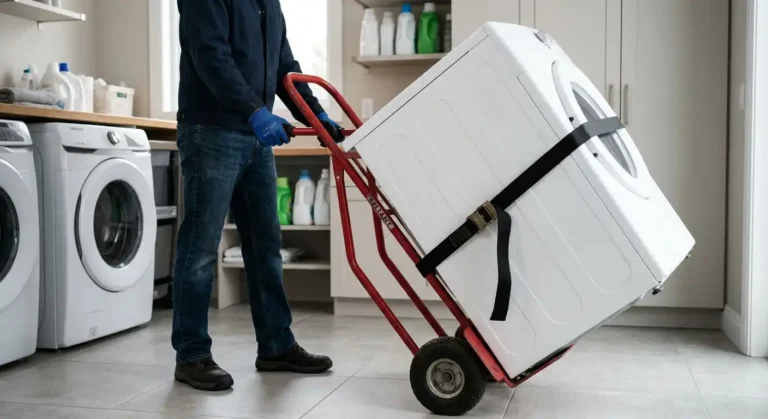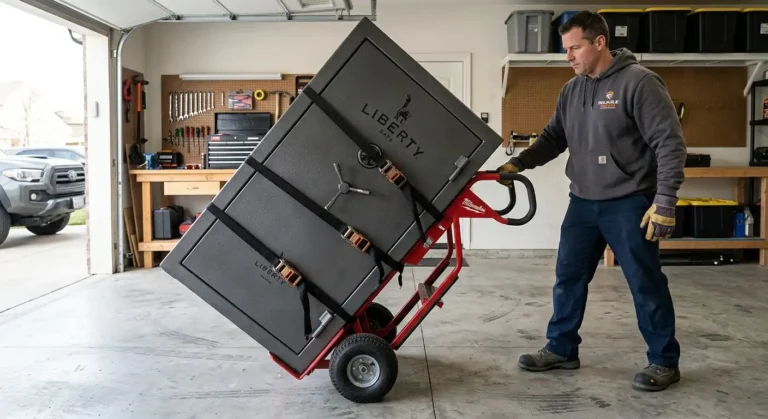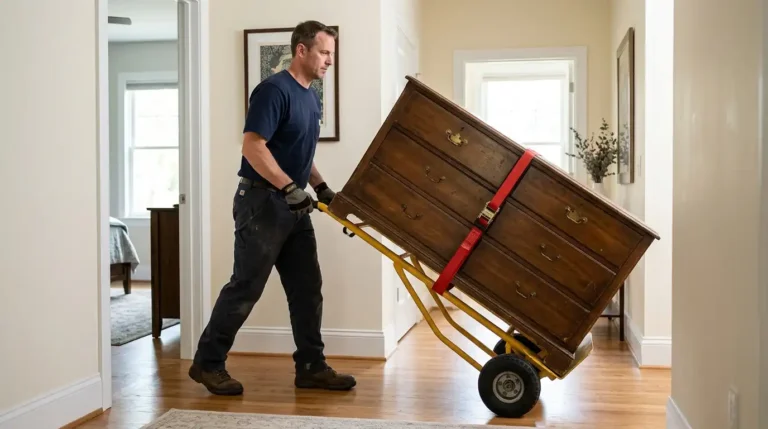

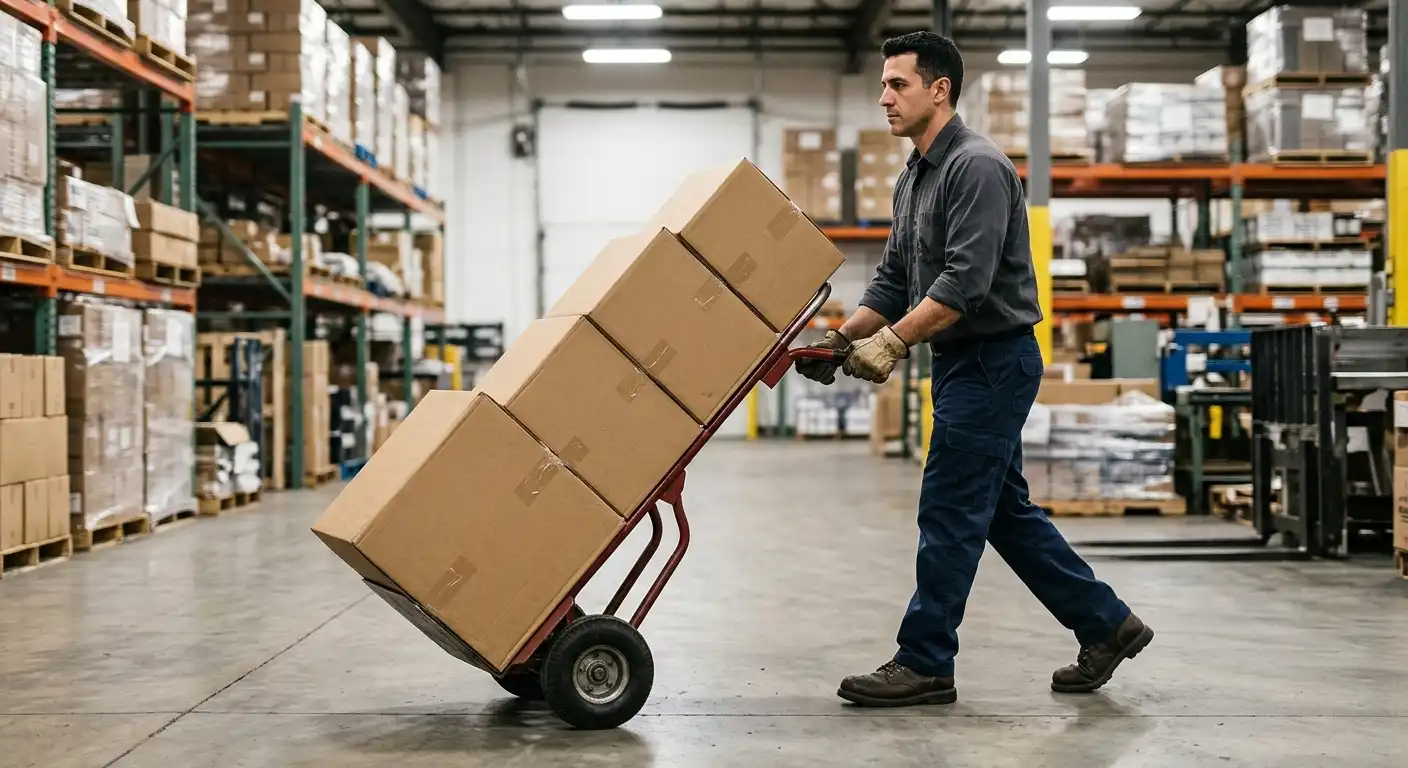
To move heavy boxes safely with a hand truck, select a model rated for your load, check the equipment, clear your path, place the heaviest boxes on the bottom, secure unstable loads with a strap, tilt the frame back slowly over the wheels, and push at a controlled walking pace with a clear view ahead.
What You Need Before Moving Heavy Boxes?
Before moving heavy boxes, gather your gear and prepare your work area:
- A suitable hand truck: Ensure the frame and base plate match your load height and depth. If you are unsure what equipment fits your needs, review our guide on how to choose the right hand truck.
- Heavy boxes: Verify that cardboard containers are fully taped, undamaged, and capable of holding their internal weight.
- A moving strap: A tie-down strap or ratchet strap helps lock tall or stacked boxes onto the frame.
- Work gloves: Heavy-duty gloves improve grip and protect your hands from cardboard cuts or sharp edges.
- Suitable footwear: Wear closed-toe shoes with non-slip soles for traction.
- A clear path: Check for obstacles before loading any equipment.
Every hand truck has a specific weight limit set by its manufacturer. Never assume two models hold the same amount. Check the manufacturer’s stated capacity rating stamped on the frame or listed in the owner manual, and keep your total load within that limit.
How to Move Heavy Boxes With a Hand Truck?
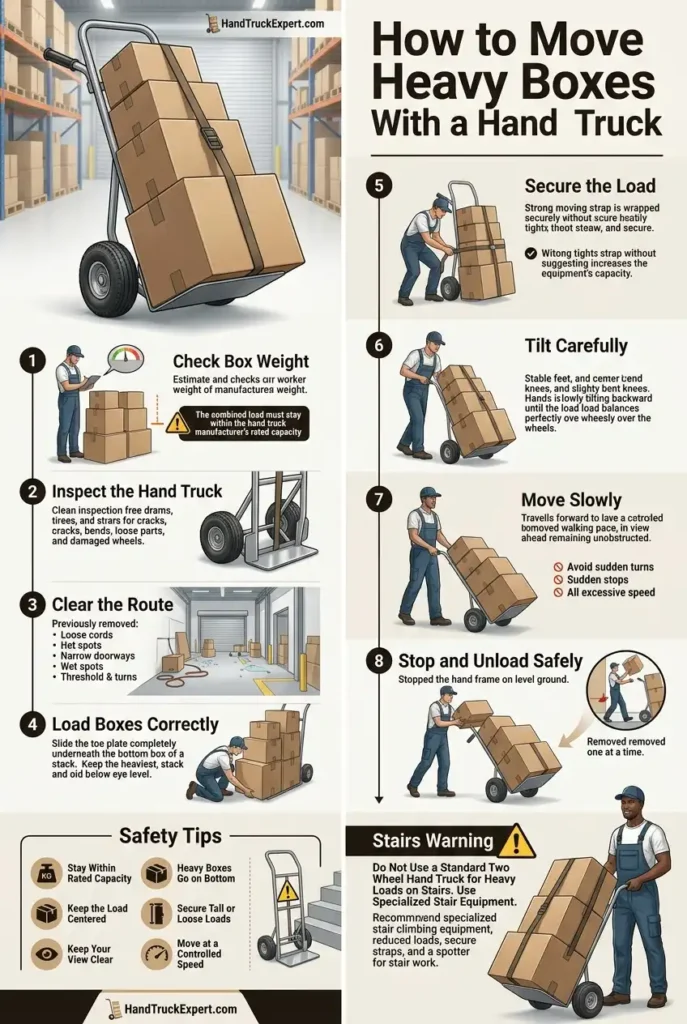
Follow these step-by-step instructions to load, balance, and maneuver heavy boxes safely.
1. Check the Weight of the Boxes
Estimate the weight of each box before lifting it. When stacking multiple items, add their individual weights together to calculate the combined load. The overall weight must never exceed the manufacturer’s rated capacity for your equipment.
For details on weight limits across different models, see our article on how much weight a hand truck can hold and carry.
2. Inspect the Hand Truck
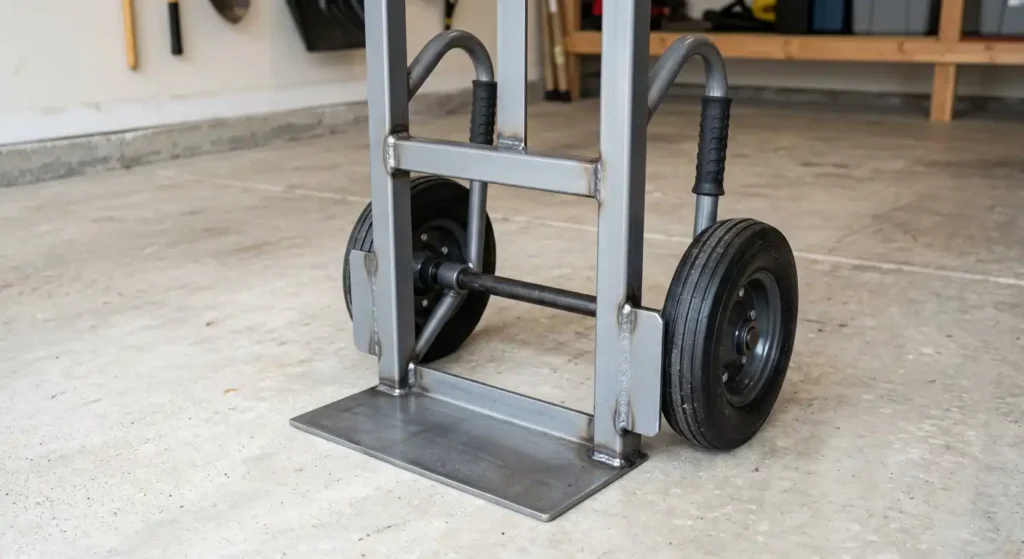
Check the condition of the equipment before placing any weight on it:
- Wheels and tires: Ensure solid wheels spin smoothly or check that pneumatic tires are properly inflated.
- Axle and frame: Look for cracks, bends, or loose welds along the tubing and crossbars.
- Nose plate: Confirm the bottom ledge is flat, straight, and securely attached to the frame.
- Handles and straps: Verify that handgrips are tight and straps or buckles work without slipping.
Damaged or worn parts make heavy loads difficult to balance and control.
3. Clear the Moving Path
Walk your entire route from the pickup spot to the final destination. Remove floor clutter, loose cords, and debris. Clean up wet or slippery spots on the floor. Measure narrow doorways, mark tight turns, and check door thresholds, ramps, or steps along the way. Knowing where you are going beforehand prevents sudden stops while balancing weight.
4. Load the Boxes Properly
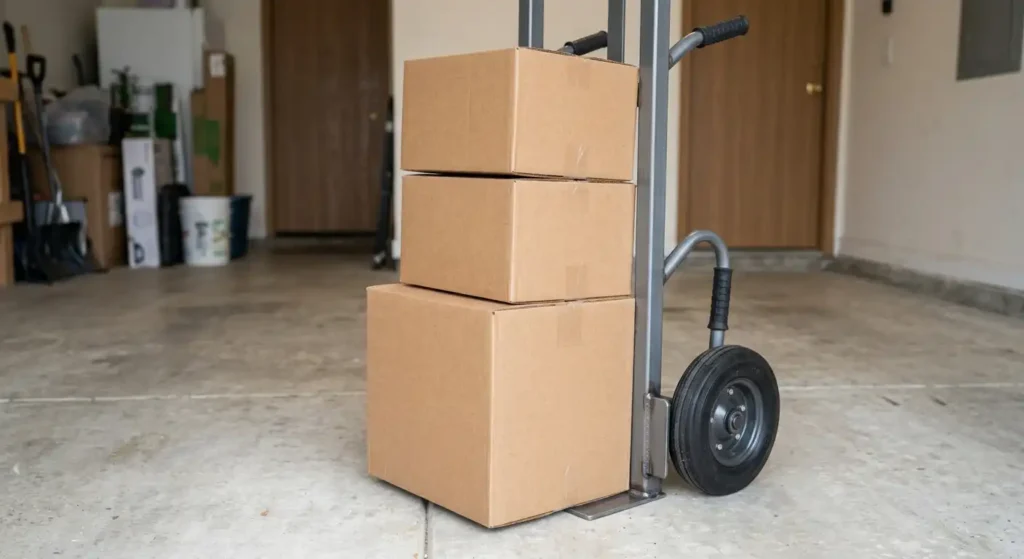
Slide the nose plate completely under the bottom box so the weight rests flat on the metal ledge. Always stack the heaviest boxes at the bottom of the stack to keep the center of gravity low. Center each box horizontally against the frame uprights.
Keep the stack stable, square, and well below eye level so it does not tilt forward or slide sideways. Learning how to use a hand truck starts with maintaining a balanced, centered load.
5. Secure the Boxes When Needed
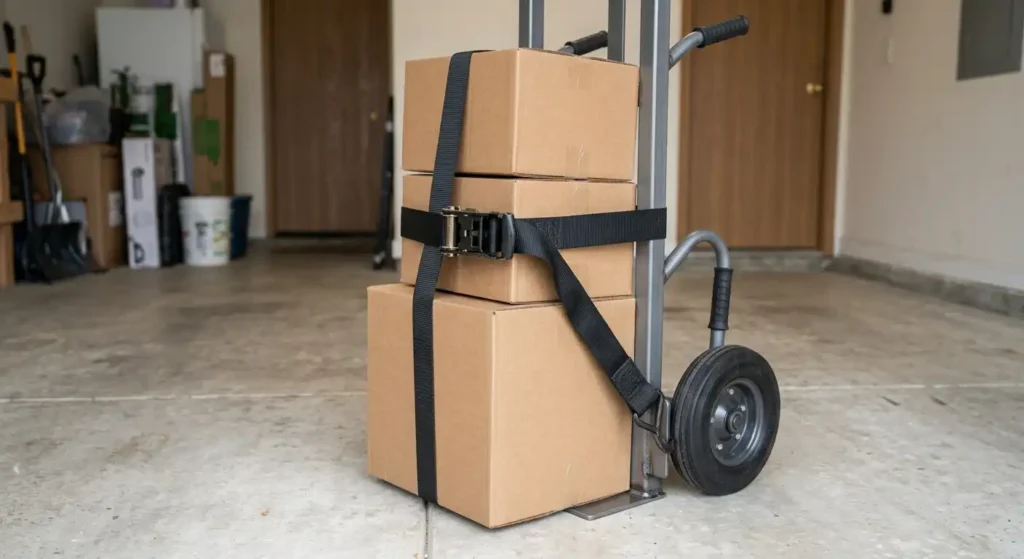
Wrap a moving strap or cargo strap around tall, light, or slightly uneven stacks to prevent boxes from shifting during transit. Thread the strap behind the frame uprights and tighten it snugly across the front of the boxes. Securing a load holds items in place, but it does not increase the weight capacity of your equipment.
6. Tilt the Hand Truck Back Carefully
Stand behind the handles with your feet spaced shoulder-width apart. Place one foot against the axle or rear frame bar to brace the base. Grasp the top handles firmly with both hands, bend your knees slightly, and tilt the hand truck back toward your body. Keep the tilt controlled until the weight balances directly over the wheels.
7. Move Slowly and Maintain Control
Walk forward at a comfortable speed while holding the handles securely. Avoid sudden acceleration, sharp turns, or sudden stops that could cause boxes to tip over. Keep both hands on the handles whenever moving. Watch the ground directly ahead for small bumps, and never stack boxes so high that they block your view.
8. Handle Doorways, Corners, and Uneven Surfaces Carefully
Slow down when approaching door thresholds, narrow passageways, uneven concrete, or small ramps. Cross raised thresholds at a direct, perpendicular angle rather than sideways. Swing wide around corners to give the tires room to clear walls and door frames without catching the edges of your boxes.
9. Stop and Unload Safely
To unload, bring the unit to a complete stop on level ground. Place one foot against the axle to brace the base, lower the frame forward until the nose plate sits flat on the floor, and step back. Unload boxes one by one starting from the top. If a stack begins to fall at any point, step away to avoid injury rather than trying to catch falling boxes.
How to Move Multiple Heavy Boxes With a Hand Truck?
When moving multiple boxes at once, always place the heaviest item on the bottom nose plate to create a firm base. Keep all boxes flush against the vertical frame, centered from left to right, and stacked squarely. Secure any tall or multi-box stack with a strap. If a combined load approaches your equipment’s rated limit or blocks your line of sight, split the stack and make multiple trips.
How to Move Heavy Boxes Up or Down Stairs?
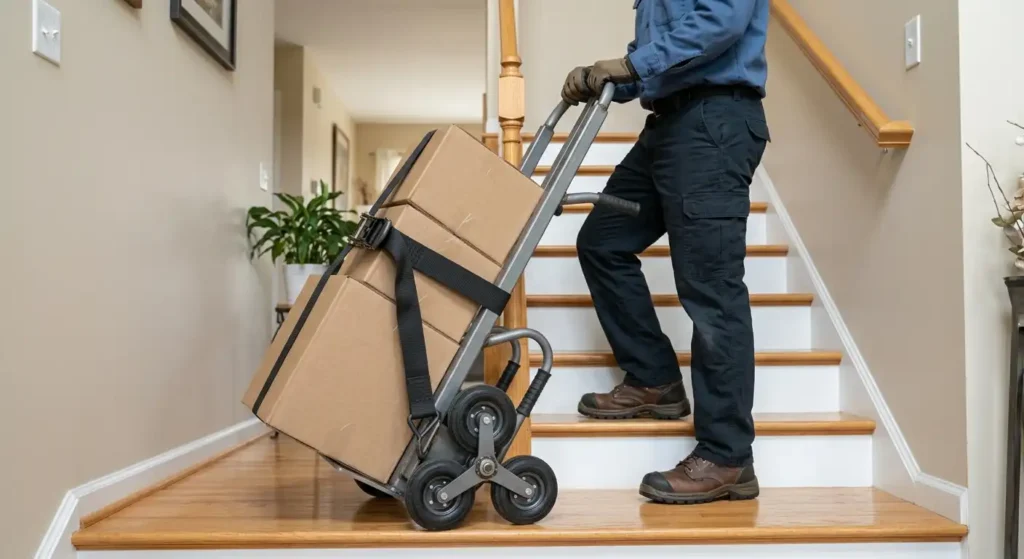
Standard two-wheel hand trucks are not designed for moving heavy loads on stairways. Maneuvering heavy boxes on stairs increases the risk of loss of control and structural equipment failure. When dealing with stairways:
- Use equipment specifically built for stairs, such as a stair-climbing hand truck with rotating three-wheel assemblies or tracks.
- Reduce the total load weight significantly compared to flat ground operations.
- Secure all boxes tightly to the frame with straps.
- Work with a spotter to guide the path.
- Use ramps, freight elevators, or specialized lifting equipment whenever possible.
For detailed stair safety instructions, read our full guide on how to use a hand truck on stairs.
Common Mistakes to Avoid
- Exceeding the manufacturer’s rated weight capacity.
- Placing heavy boxes on top of lighter, fragile boxes.
- Stacking boxes above eye level and blocking your forward vision.
- Failing to strap tall or loose stacks.
- Moving too fast or making sharp, sudden turns.
- Operating equipment with flat, damaged, or loose wheels.
- Attempting to pull standard two-wheel models up stairs with heavy loads.
- Trying to catch falling boxes instead of stepping clear.
Safety Tips for Moving Heavy Boxes
- Follow all manufacturer operating guidelines and capacity limits.
- Inspect your equipment for frame, wheel, or axle damage before every use.
- Keep the center of gravity low by placing heavy items at the bottom.
- Ensure your travel path is clean, dry, well-lit, and clear of hazards.
- Wear sturdy closed-toe shoes and work gloves.
- Keep your view unobstructed while pushing or pulling loads.
- Ask a helper for assistance when handling oversized, bulky, or heavy boxes.
Frequently Asked Questions
To keep boxes stable, place the heaviest items at the bottom, align all boxes flush against the frame, and keep the stack centered over the wheels. For tall or loose loads, wrap a tie-down strap around the boxes and frame to hold everything securely in place.
Yes, as long as the combined weight of all boxes remains within the equipment’s rated capacity. Stack the heaviest boxes on the bottom, keep the stack straight and centered, secure the load with straps if needed, and make sure your view stays clear.
Heavy boxes should always go on the bottom of the stack directly over the nose plate. Placing heavy items at the base lowers the center of gravity, stabilizes the stack, and prevents the unit from becoming top-heavy or tipping over while tilted.
Standard two-wheel units are not recommended for moving heavy boxes on stairs. Use a specialized stair-climbing model equipped with rotating wheel sets or tracks, keep the total weight light, secure the boxes with straps, and work with a helper to maintain complete control.
Pushing is generally preferred on flat, smooth surfaces because it allows you to walk forward naturally, keep your body in an upright stance, and view the path ahead. However, pulling can be useful when clearing minor door thresholds or navigating tight spaces at slow speeds, as directed by the equipment’s manual.
Also Read: