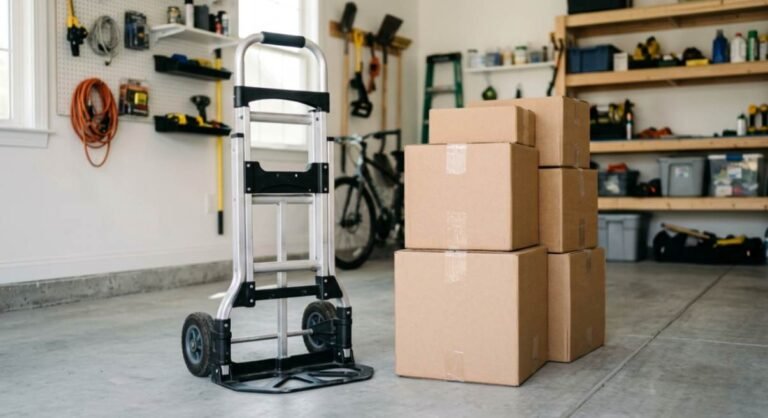

Knowing how to use a COSCO hand truck properly helps you move heavy boxes, appliances, and materials without straining your body. Operating one follows a straightforward sequence: inspect the equipment, open and lock the frame into position, set the toe plate fully under the load, balance your cargo, tilt or roll the cart under control, unload carefully, and fold the frame for compact storage.
Because COSCO manufactures multiple equipment styles such as compact folding carts, multi-position convertible hand trucks, and heavy-duty steel dollies operating controls, locking levers, and functional steps differ across models. Always check your specific unit before moving items.
Check Your COSCO Hand Truck Before Use
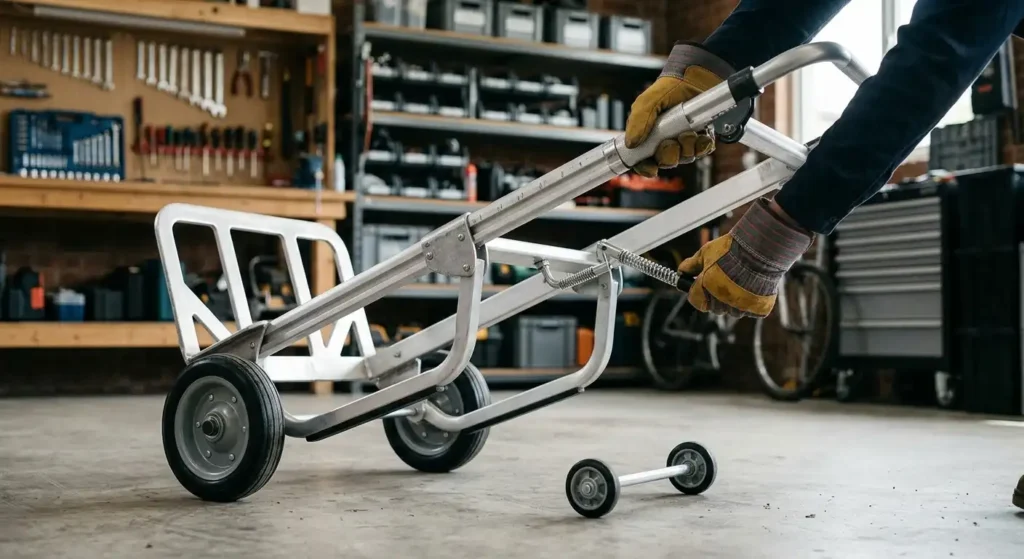
Before placing any cargo onto the frame, inspect the entire hand truck to ensure it operates safely. A quick mechanical evaluation prevents equipment failure and lost loads during transport.
- Frame and Handle: Check the tubular frame and handle grips for cracks, bends, deep dents, or loose fasteners. Ensure extending rails lock firmly in place.
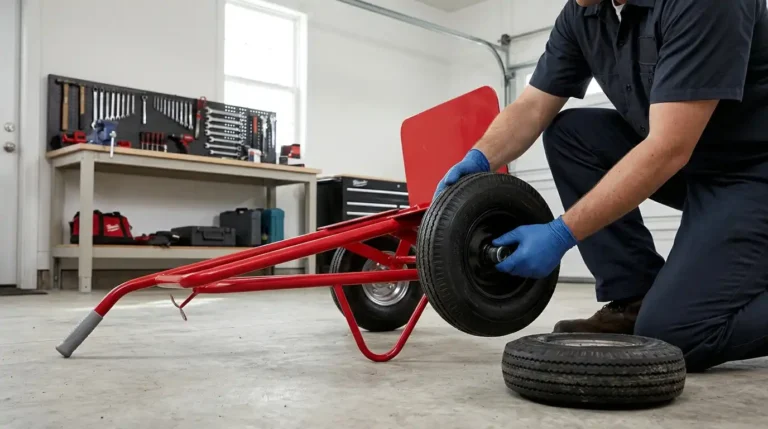
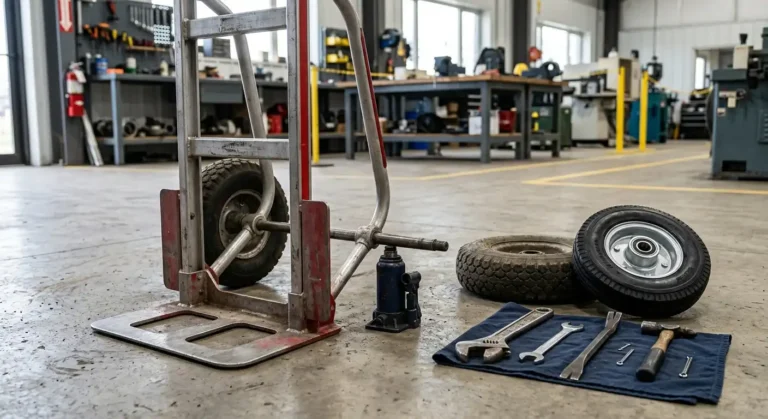
- Wheels and Axles: Inspect the wheels for flat spots, cracks, or tread wear. Ensure axle retaining pins or nuts are secure, and confirm the wheels spin smoothly without severe wobbling.
- Toe Plate: Make sure the nose plate sits flat and square relative to the vertical frame. It should not be cracked, severely bent, or loose at its pivot point.
- Locking Mechanisms: Test all spring-loaded release pins, crossbar latches, or sliding collar locks. The frame must lock securely into its working position without slipping.
- Load Straps: If your specific model or package includes a factory cargo strap, check the webbing for frays and confirm the buckle latches securely.
- Rated Capacity Label: Locate the manufacturer label to confirm the load limit. If you need general guidance on load limits across different frame designs, review our hand truck weight capacity guide.
Do not use a hand truck with bent joints, broken latches, or compromised wheels.
How to Open a COSCO Hand Truck?
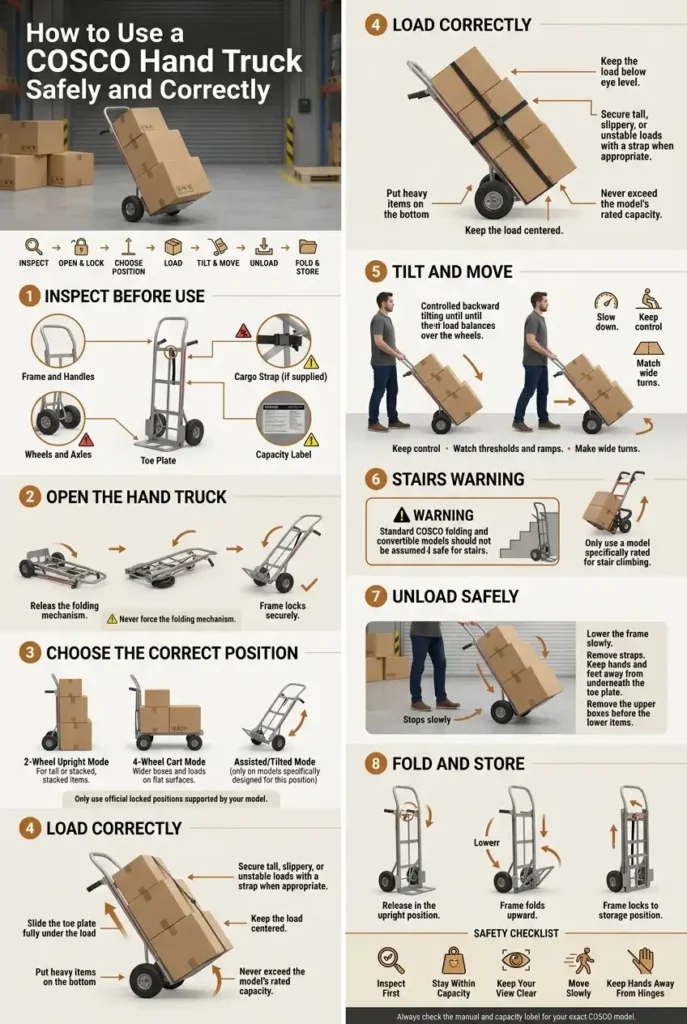
The process for unfolding depends entirely on the design of your specific unit. Never force moving parts or step aggressively on folding joints.
General Opening Instructions for Folding Models
- Place the collapsed hand truck upright on a level, stable surface.
- Locate the release mechanism. Depending on your design, this may be a center push-button, an unlocking crossbar, or a pair of spring-loaded collar pins on the frame rails.
- Disengage the lock while pulling the handle upward until the vertical frame sections extend fully and click into place.
- Allow the toe plate and wheels to swing outward. On several folding models, extending the handle automatically pivots the wheels and folds out the toe plate simultaneously.
- Apply gentle downward pressure to the toe plate to confirm the platform is seated completely flat.
- Check that all locking pins are fully engaged before loading cargo.
Opening the COSCO Shifter Multi-Position Hand Truck
The COSCO Shifter multi-position series uses a specific convertible mechanism that differs from compact folding carts:
- Stand the collapsed unit upright with the wheels on flat ground.
- Locate the central crossbar release handle situated near the upper section of the frame.
- Squeeze or pull the release bar to unlock the sliding crossmember.
- Extend the handle upward until the locking pins engage into the upright two-wheel hand truck position with an audible click.
- Rotate the toe plate downward toward the floor until it rests horizontally against its stops.
- Verify that the frame is locked rigid before attempting to tilt or roll the unit.
Always keep your hands and fingers clear of hinges, telescoping joints, and folding wheel brackets. If you encounter resistance, stop and check the specific COSCO hand truck manual for your model. For additional details on unfolding techniques across brand designs, see our guide on how to unfold a COSCO hand truck and how to open a folding hand truck properly.
How to Set the COSCO Hand Truck for Use?
COSCO manufactures both dedicated two-wheel hand trucks and convertible multi-position hand trucks. Selecting the proper operating configuration ensures safe balance and prevents overloading structural components.
- Upright Two-Wheel Mode: Standard vertical position used for tall single items, stacked boxes, and short travel distances across firm surfaces.
- Four-Wheel Cart Mode: A horizontal platform setup found on convertible models like the COSCO Shifter or commercial convertible lines. This mode supports wide boxes, multiple parcels, and longer transit paths across flat floors.
- Assisted or Tilted 45-Degree Mode: Available on select heavy-duty commercial multi-position trucks. It uses secondary casters to support the load angle, taking strain off your arms and back.
Using the wrong configuration increases tip-over risks. For instance, tall, narrow items should be moved upright, whereas long or stacked flat boxes travel much more stably in horizontal cart mode. Never use a convertible model in an intermediate position that is not an official, locked setting designated by COSCO.
How to Load a COSCO Hand Truck?
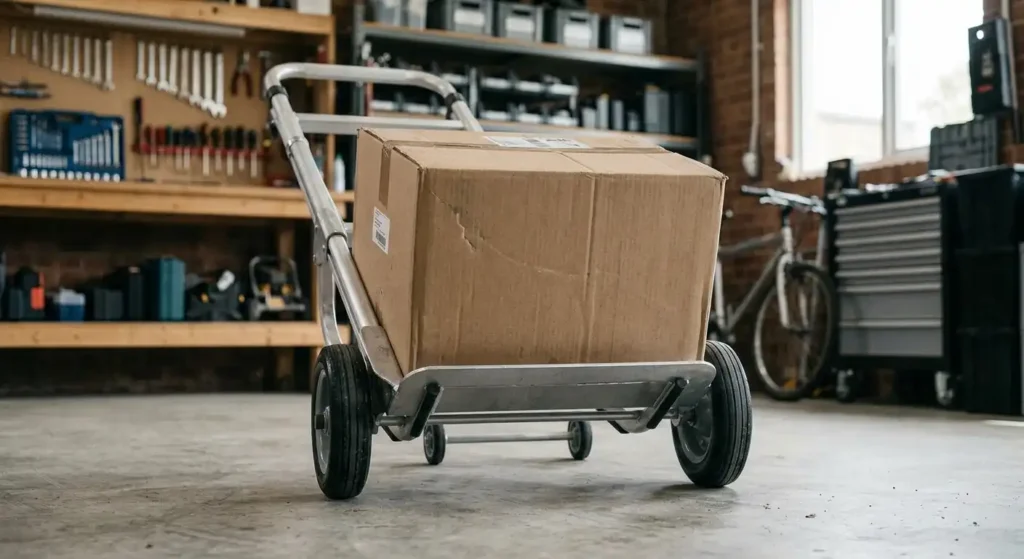
Proper loading prevents the hand truck from tipping sideways and ensures you maintain control during transport. If you are learning the fundamentals of safe material handling, our basic tutorial on how to use a hand truck outlines standard posture and balance principles.
- Slide the Plate Completely Underneath: Position the toe plate squarely in front of the item. Slide the nose plate fully under the base of the load so the cargo sits flush against the vertical frame rails.
- Center the Weight: Center the load left-to-right on the toe plate. An off-center load causes the truck to pull hard to one side, increasing the chance of losing balance.
- Place Heavy Items Low: When transporting multiple boxes, position the heaviest and largest container at the bottom directly against the toe plate. Stack lighter boxes on top.
- Do Not Overstack: Keep the stack height below eye level so your forward view remains unobstructed. If an item cannot stand unsupported, it should not be moved without extra securing.
- Secure the Cargo: Wrap an adjustable tie-down or cargo strap around the middle of the load and the frame if the items are slick, irregular, or prone to sliding.
- Confirm Capacity Limits: Confirm your total cargo weight does not exceed the limit specified for your exact model and position.
Weight limits vary by design and configuration. For example, the COSCO Shifter is rated for up to 300 lbs in both two-wheel upright and four-wheel cart configurations. In contrast, heavy-duty commercial convertible models carry up to 800 lbs in two-wheel upright mode and up to 1,000 lbs when converted into a four-wheel platform cart. Check the product sticker on your frame for the exact ratings.
How to Tilt and Move a COSCO Hand Truck?
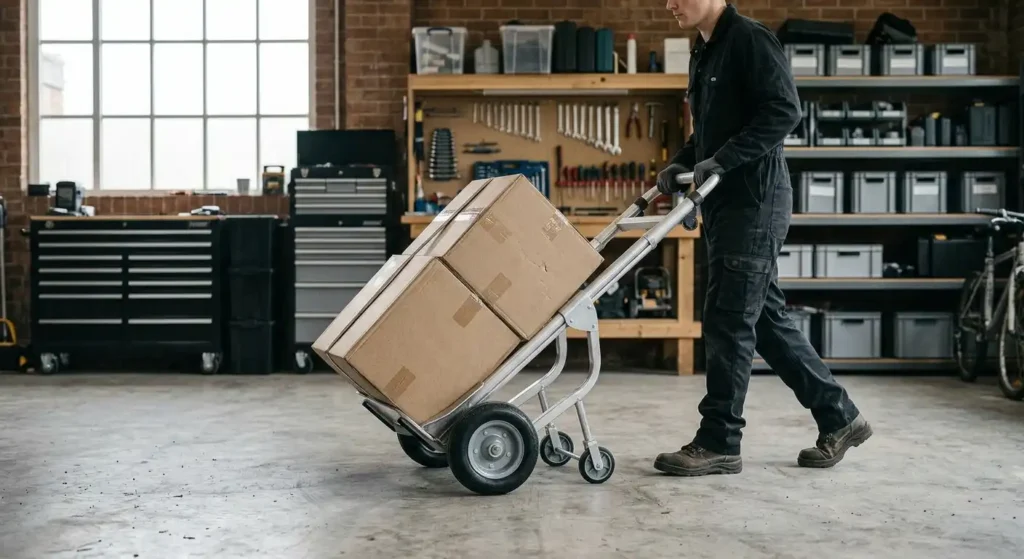
Moving a loaded hand truck requires smooth, controlled motions. Rushing or jerking the handle can cause the toe plate to kick out or tip backward onto your feet.
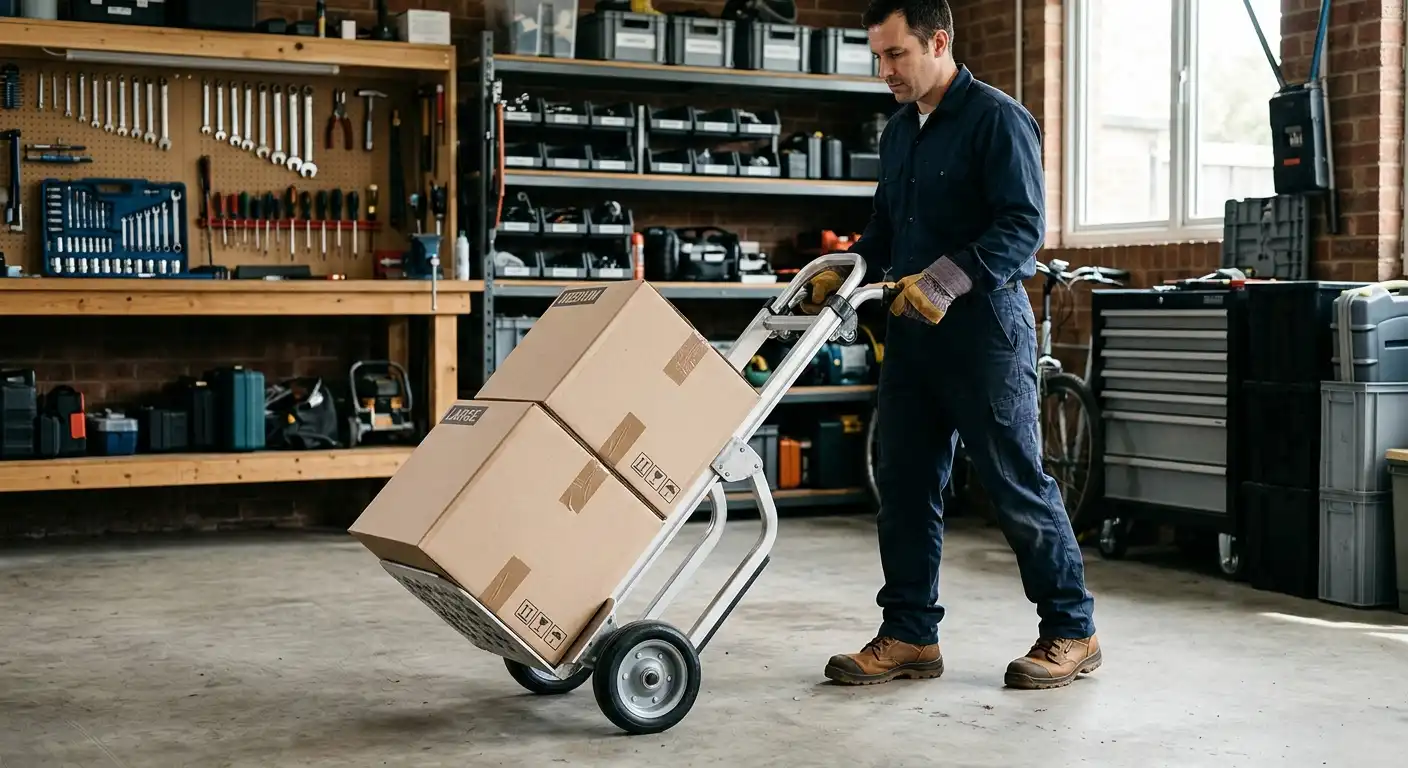
- Position Your Body: Stand directly behind the hand truck with your feet shoulder-width apart. Place both hands firmly on the handle grips.
- Secure the Base: Place the ball of one foot against the axle or foot-rest bracket located near the bottom wheels. This prevents the wheels from rolling forward during the tilt.
- Tilt Back Under Control: Pull the upper handle backward toward your body while pressing against the base with your foot. Tilt the frame until the weight balances naturally over the wheels, then remove your foot from the axle.
- Find the Balance Point: Maintain a tilt angle where the equipment carries the load’s weight over the axle. You should only need your hands to steady, push, and steer the cart, not to bear the heavy downward weight.
- Push, Do Not Pull: Walk forward slowly, pushing the hand truck ahead of you whenever operating on smooth, level floors. This gives you a clear line of sight.
- Manage Turns and Hazards: Make wide, gradual turns. Slow down when approaching floor joints, doorway thresholds, and ramps. Never make sudden stops with a heavy load.
For four-wheel platform modes, keep all four wheels on the floor and push from the handle end at a steady walking pace.
How to Use a COSCO Hand Truck on Stairs?
Navigating steps with material handling equipment presents serious fall and injury hazards. Standard two-wheel folding carts and lightweight convertible hand trucks are generally not designed for stair use.
Before attempting to navigate steps:
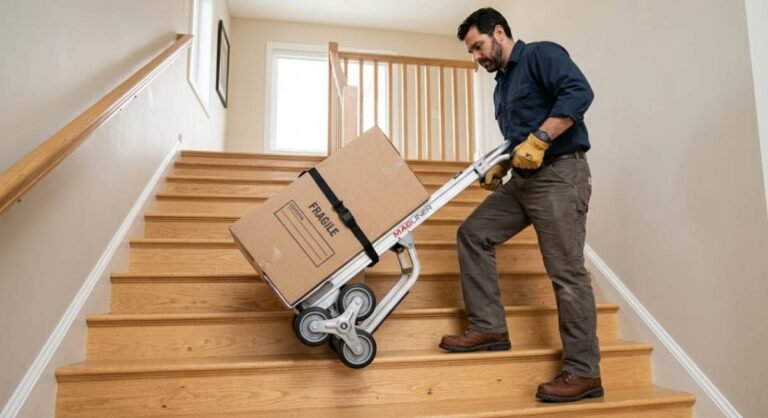
- Check the Product Manual: Review your model documentation. Unless the manual explicitly states that the hand truck is approved for stair navigation or is built with dedicated stair climber stair-glides, do not take loaded trucks up or down stairs.
- Recognize the Hazards: Lightweight aluminum folding trucks, compact folding wheels, and conversion hinges can bend or collapse under the dynamic impact shock of dropping onto a stair tread.
- Dedicated Equipment: Moving heavy items on stairs requires specialized equipment equipped with triple-wheel assemblies or friction-belt stair glides. To understand how dedicated climbing equipment works, read our article on how to use a hand truck on stairs.
If you must move heavy cargo over full staircases without a certified stair-climbing hand truck, unpack the items and carry them individually, or enlist an assistant with proper manual lifting straps.
How to Unload a COSCO Hand Truck?
Unloading requires the same careful control as lifting the initial weight.
- Come to a Complete Stop: Stop the hand truck on a flat, stable surface clear of pedestrian pathways.
- Stabilize the Wheels: Place your foot behind the wheel or against the axle bracket to prevent the wheels from rolling backward.
- Lower the Frame Upright: Push the handle forward smoothly, allowing the toe plate to settle completely flat onto the floor. Do not release your grip until the toe plate firmly supports the resting load.
- Clear Straps: Unbuckle and remove any securing straps, setting them aside so they do not create a tripping hazard.
- Remove the Cargo: Lift the top boxes off first using safe lifting form—bending your knees and keeping your back straight. Once upper boxes are clear, slide the bottom items off the nose plate, or gently pull the hand truck straight back away from underneath the cargo.
Keep your hands and feet clear from underneath the toe plate while lowering the frame to avoid crushing injuries.
How to Fold a COSCO Hand Truck for Storage?
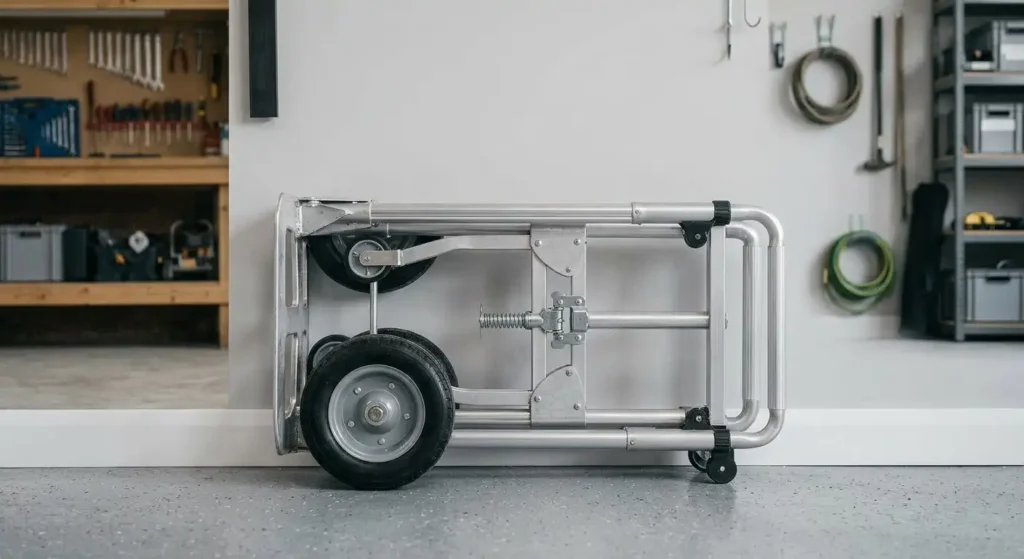
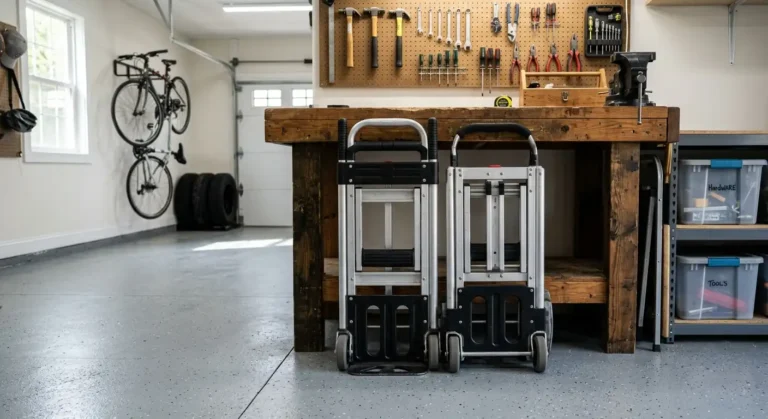
After unloading your cargo, fold the hand truck to prevent it from rolling away or taking up unnecessary space in your storage area.
General Folding Process
- Ensure the toe plate is empty and clean.
- Stand behind or beside the upright unit on a level floor.
- Release the primary locking bar, buttons, or frame slide pins as directed by the model instructions.
- Lower the handle downward into the frame until it collapses fully.
- Fold the toe plate upward against the frame rails. On models with interconnected wheel linkage, folding the toe plate will pivot the wheels inward automatically.
- Confirm the frame locks in its collapsed position so it does not spring open during carrying.
Folding the COSCO Shifter
- Remove any remaining items from the platform or toe plate.
- If the Shifter is in four-wheel cart mode, squeeze the crossbar release lever and lift the handle to bring the unit back into the upright two-wheel position until the pins click.
- Fold the toe plate upward until it rests flat against the vertical frame.
- Squeeze the central crossbar release handle located on the upper section.
- Slide the handle downward toward the wheels until the unit collapses into its compact, flat storage profile.
Never force a stuck joint or strike release pins with tools. If the frame binds, check for debris caught in the sliding channels.
COSCO Hand Truck Safety Tips
- Complete a visual inspection before every shift or moving job.
- Keep the center of gravity low by placing heavy items on the bottom of the load.
- Strap rounded, tall, or slick cargo to the vertical frame rails.
- Never operate a hand truck if your forward vision is blocked by the stack.
- Keep your fingers away from hinges, sliding collars, and folding wheel linkages.
- Wear closed-toe work shoes with non-slip soles.
- Never run while operating a hand truck; maintain a controlled walking pace.
- Slow down and secure the load carefully when navigating ramps or uneven pavement.
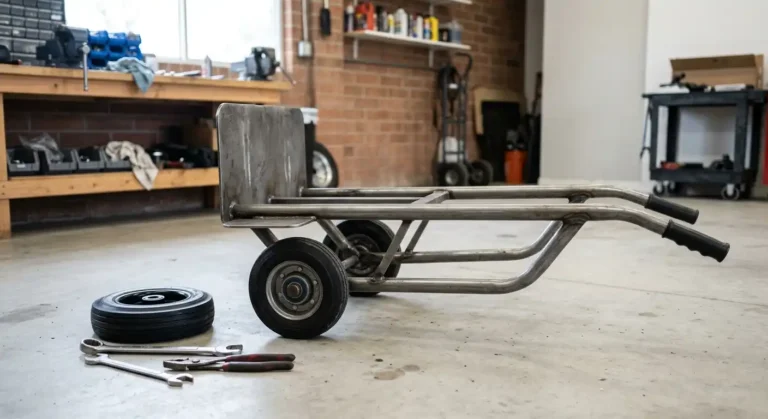
- Take damaged hand trucks out of service immediately for repair or replacement. If your cart has damaged running gear, read our guide on how to replace hand truck wheels.
- Never allow anyone to ride on the hand truck frame or platform.
Frequently Asked Questions
Inspect the frame and wheels, then unlock the release mechanism to fully extend and secure the handle and toe plate. Slide the nose plate completely under your centered load, balance the weight over the wheels, and tilt back carefully. Push the hand truck forward at a controlled pace, lower it smoothly to unload, and fold the frame for storage.
Place the unit upright on a stable surface. Locate the locking bar, side pins, or center push-button specified for your model. Release the latch and pull the handle upward until the frame locks in place. On many folding models, extending the handle automatically deploys the wheels and toe plate. Confirm all pins are clicked shut before loading.
Clear all cargo from the unit and position it on level ground. Squeeze or press the release bar, button, or side latches that hold the frame rigid. Lower the telescoping handle, then pivot the toe plate upward against the frame rails. Ensure the frame settles into its collapsed storage lock without forcing the mechanism.
Weight capacity varies widely depending on the model and operating configuration. For example, the COSCO Shifter supports up to 300 lbs in both two-wheel and four-wheel positions, while commercial multi-position convertible models support up to 800 lbs in upright mode and 1,000 lbs in horizontal cart mode. Always check the capacity label on your specific frame.
No, Most standard folding and convertible COSCO hand trucks are not designed or rated for navigating stairs. Dropping a loaded folding truck across stair steps can bend axles, damage folding joints, and cause loss of load control. Only use dedicated models built and rated specifically for stair climbing when moving cargo over steps.
A hand truck usually fails to fold or open because a spring pin has not fully disengaged, debris is trapped in the sliding channels, or the frame has bent from overloading. Never strike or force the linkages. Check the release mechanism, relieve any physical tension on the joints, and refer to your model manual for alignment steps.
Learning how to use a COSCO hand truck safely comes down to following clear operational steps. Take time to inspect the frame, unfold the unit until all locking pins seat correctly, load your cargo evenly, and push the cart at an even, controlled pace.
When your task is complete, unload carefully and fold the unit according to its design. Because operating mechanisms and weight ratings vary across folding, convertible, and multi-position models, always review your specific model manual to ensure safe material handling.