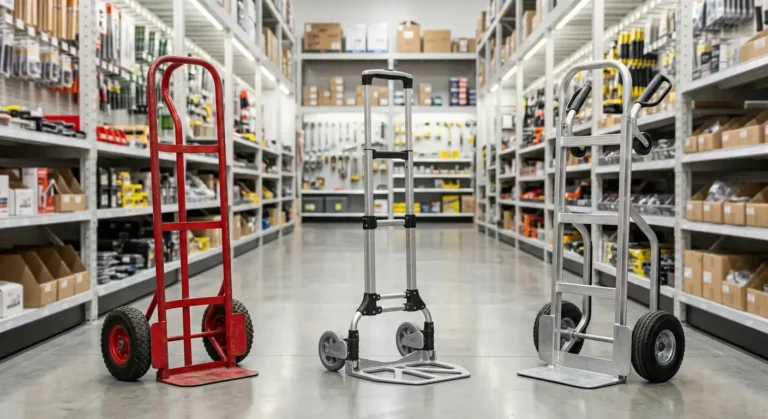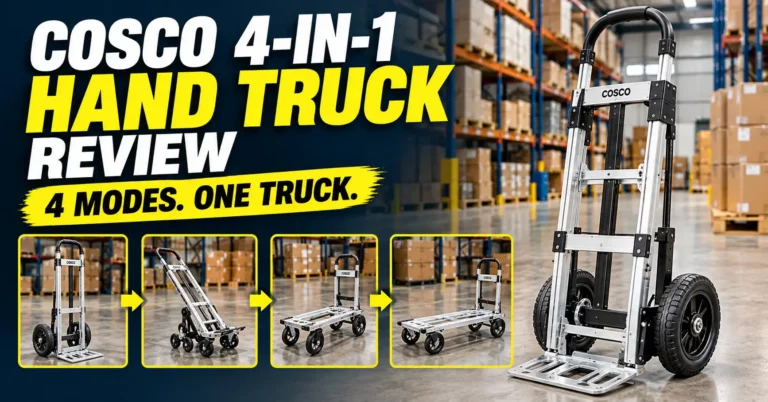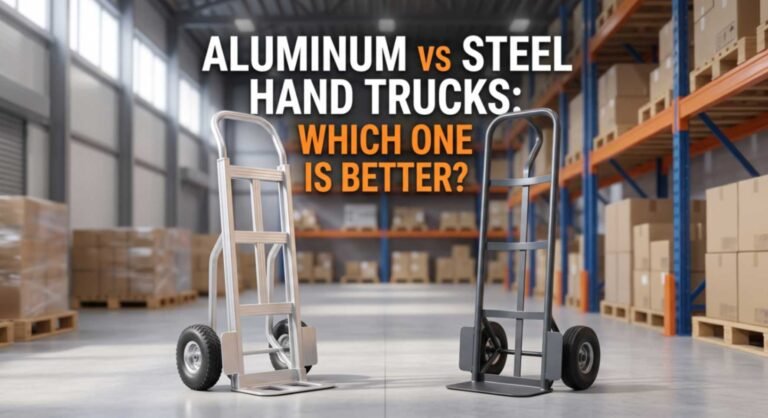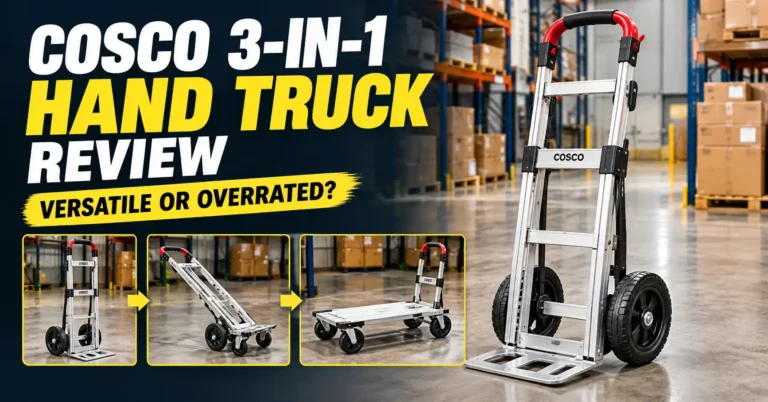

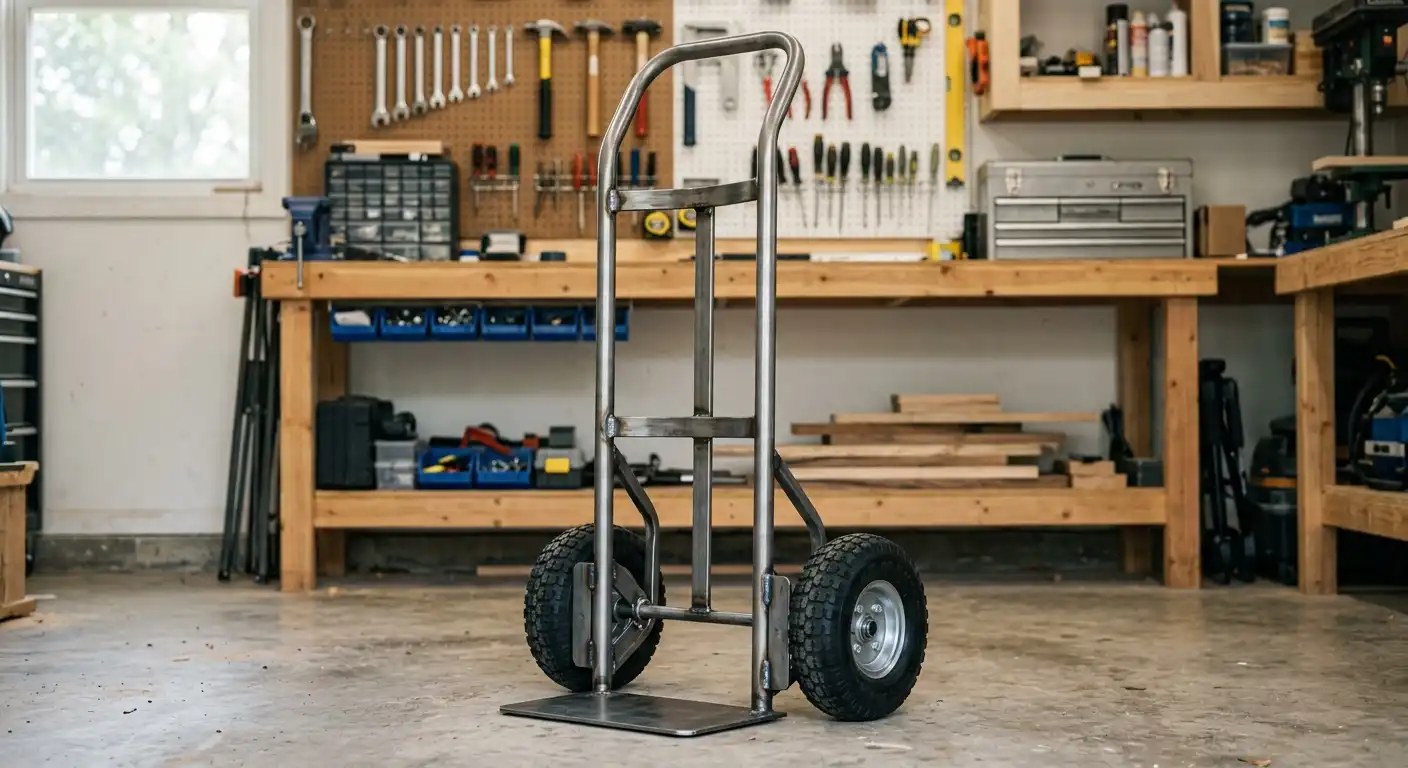
Learning how to make a hand truck is a practical project for anyone who needs to move light items around a garage, shop, or yard. A standard hand truck uses an L-shaped design consisting of an upright frame, a top handle, a bottom toe plate, an axle, and two wheels.
While building a homemade hand truck allows you to customize the dimensions to your needs, equipment safety depends entirely on your design, material choices, and assembly quality.
This guide walks you through the planning, building, and testing steps needed to build your own hand truck safely using basic metalworking skills.
What You Need to Make a Hand Truck?
Before starting your DIY hand truck project, gather all necessary materials and tools. Because the right material dimensions depend entirely on your intended load, select parts that can handle the items you plan to carry.
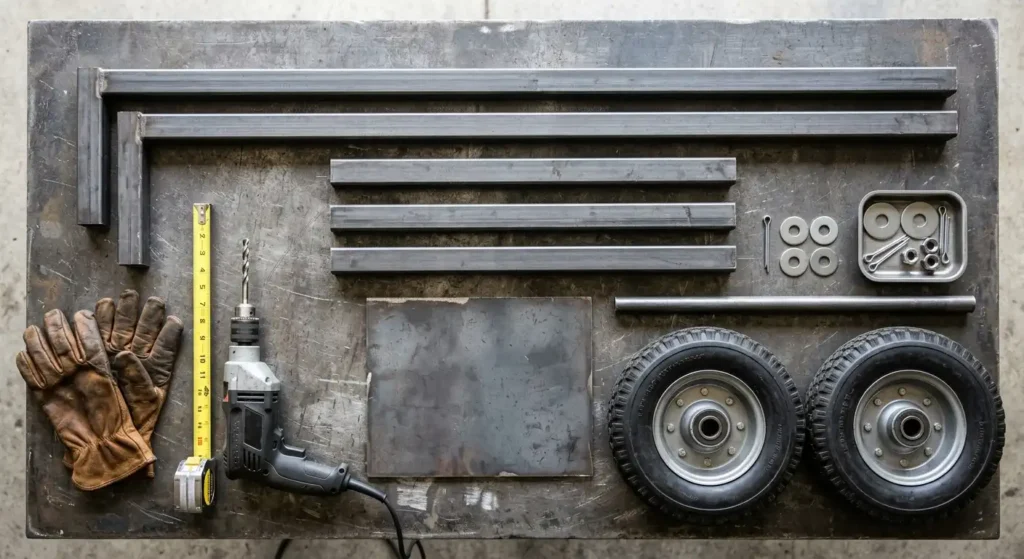
Common materials include:
- Steel or aluminum tubing for the vertical frame and cross supports
- Solid metal plate for the bottom toe plate
- Solid round steel bar for the wheel axle
- Two compatible wheels rated for your expected load
- Steel axle brackets or pre-drilled angle iron to support the axle
- Axle hardware, including heavy flat washers and cotter pins or retaining collars
- High-strength bolts, lock nuts, and washers if building a bolted frame
- Appropriate welding wire or rods if welding your joints
Essential tools and safety gear include:
- Tape measure and steel square
- Metal marking tool or paint pen
- Metal cutting tool, such as a metal-cutting chop saw or angle grinder
- Heavy-duty drill and drill bits for metal
- Set of wrenches and sockets
- Several sturdy metal clamps
- Welding equipment if you choose to weld the frame
- Safety glasses, work gloves, hearing protection, and a welding helmet if welding
Plan the Hand Truck Before Building It
Planning every detail on paper prevents wasted materials and structural mistakes. If you are unfamiliar with standard layouts, reviewing what is a hand truck can help you visualize how the parts interact.
Decide on the overall height, frame width, and toe plate depth before cutting any stock. A frame that stands between 48 and 52 inches tall works well for most operators. The width of the frame should comfortably clear the inner hubs of your wheels while leaving enough space to carry typical boxes.
Think about how the load rests against the frame. When you tilt the hand truck back onto its wheels, the center of gravity shifts over the axle. Positioning the axle slightly behind the vertical frame rails balances the weight over the wheels rather than forcing your arms to carry the load.
Plan for enough wheel clearance so tires never rub against the frame rails or the load. Wheel diameter also plays a role in mobility. Selecting larger diameter wheels makes rolling over minor bumps or packed dirt much easier than using small casters.
Step by Step Guide on How to Make a Hand Truck
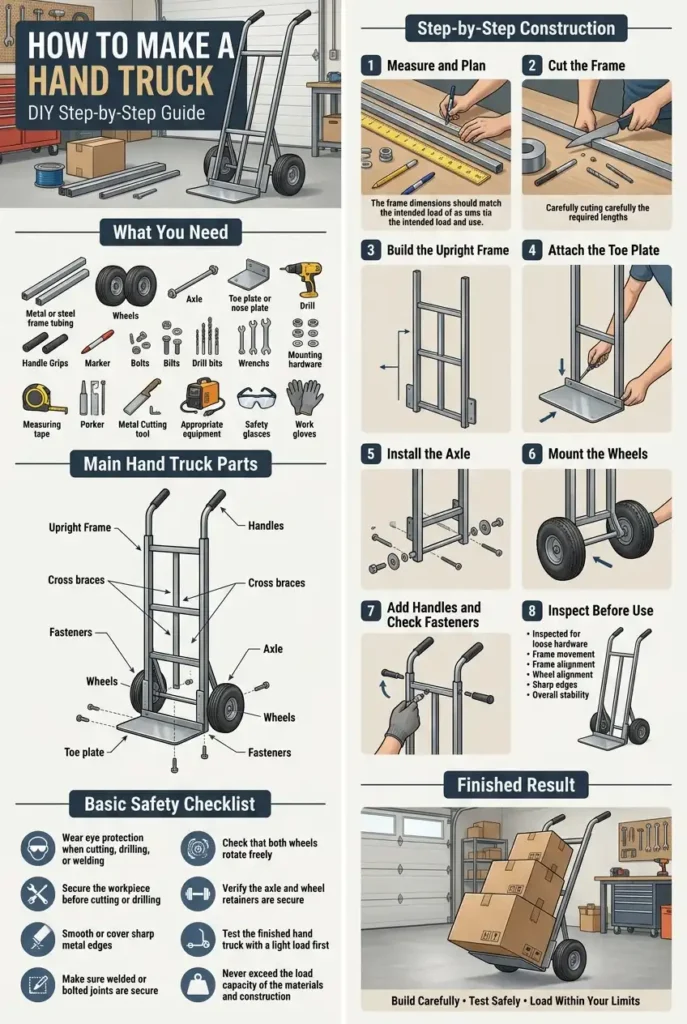
Follow these sequential steps to assemble the frame, running gear, and hardware.
1. Build the Main Frame
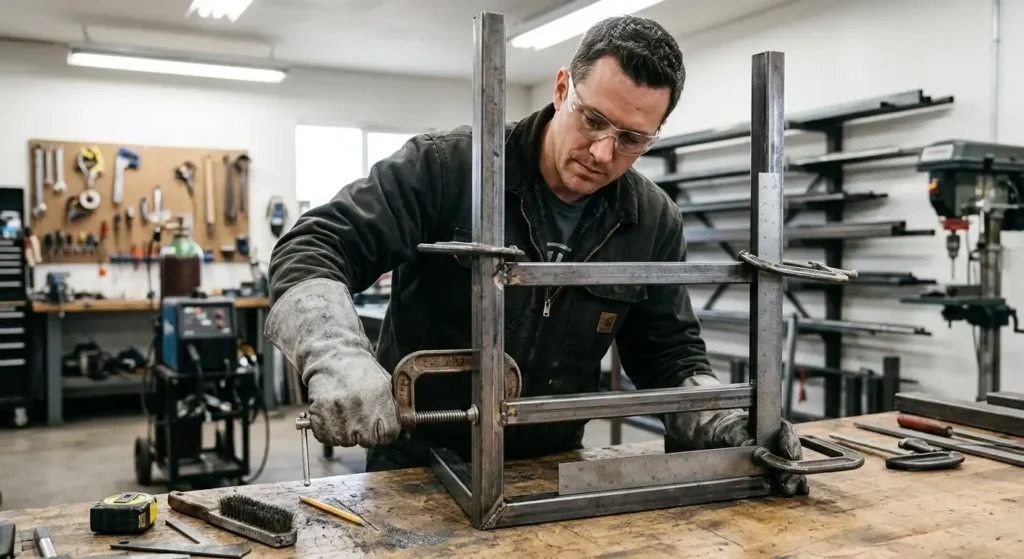
Begin by measuring and cutting your two vertical frame tubes to equal lengths. Cut two to four horizontal cross braces of equal length to fit between the vertical rails.
Lay the frame pieces flat on a clean workbench. Use your clamps and a steel square to ensure the rails sit completely parallel and the corners form crisp 90-degree angles. Any twist or misalignment in the frame now will cause the completed truck to track crookedly later.
If you are welding the frame, clean all joints down to bare metal with an angle grinder. Clamp the assembly securely, tack-weld each joint, and re-check the frame for squareness. Complete the welds using proper heat settings to ensure good metal penetration. Welding should only be performed by someone with the proper skill, protective gear, and equipment.
If you are assembling a bolted frame, mark your hole locations accurately. Drill clearance holes through both walls of the tubing. Use high-grade hardware with locking nuts so vibrations do not loosen the joints during normal use.
2. Make and Attach the Toe Plate
The toe plate, or nose plate, slides under the cargo and supports the bottom of the load. Cut a flat piece of steel plate to match the width of your frame rails. Chamfer the leading front edge slightly with an angle grinder so the plate slides easily under boxes and cartons.
Position the plate flat against the bottom front edge of your vertical frame rails. The toe plate requires strong support, as lifting a heavy box puts substantial leverage on this joint. Clamp the plate securely in place. Weld the plate solidly along both frame contact points, or use heavy mounting brackets and through-bolts to lock it to the frame. Smooth all edges to remove metal burrs.
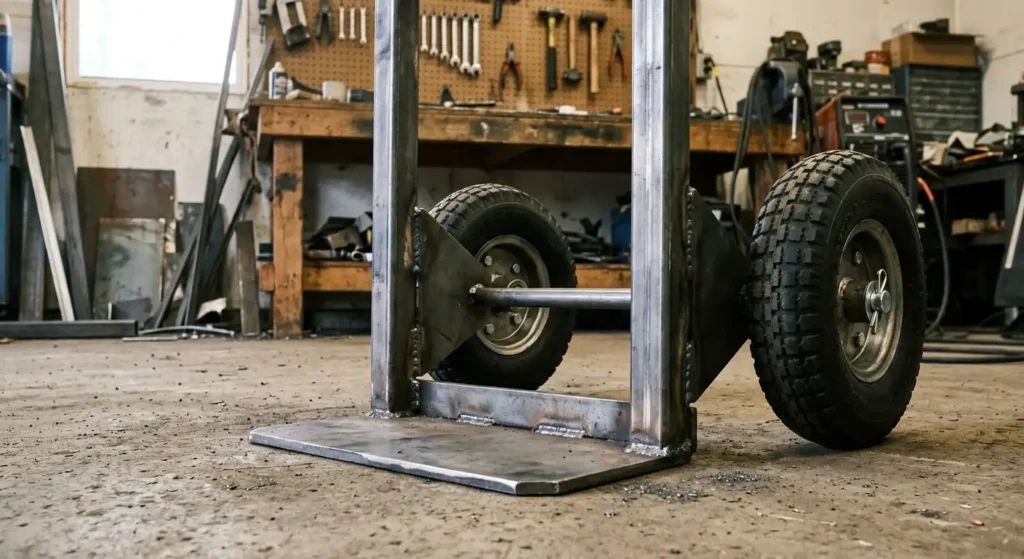
3. Install the Axle Supports
The axle cannot simply sit against the bottom tubing. It requires dedicated structural supports on both sides of the frame. Fabricate two axle brackets from heavy steel plate, flat stock, or angle iron. Drill matching holes through both brackets to accept your solid steel axle rod.
Align the supports carefully on the rear of the vertical frame rails, just behind the toe plate. Both mounting holes must sit at the exact same height and distance from the frame. If the axle supports are misaligned, the axle will sit crooked, causing uneven tire wear and pulling the hand truck to one side during movement. Secure the supports rigidly to the frame using continuous welds or through-bolts.
4. Install the Axle
Slide your solid round steel axle through both axle support brackets. Ensure the axle is perfectly centered across the frame width.
The axle rod must extend past the outside edge of each bracket with enough length to hold an inner washer, the wheel hub, an outer washer, and the retaining pin or locking collar. Secure the axle rod to the frame supports so it cannot slide side to side. You can weld the axle rod directly to the brackets or lock it in place using cross-pins through the brackets.
5. Install the Wheels
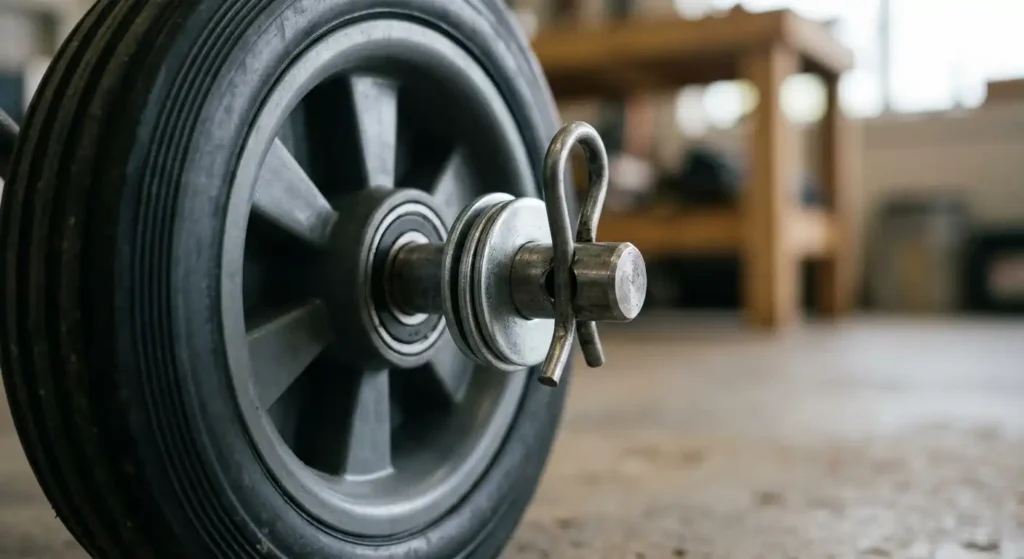
Slide an inner steel washer onto each axle end to prevent the wheel hub from rubbing directly against the axle bracket. Slide your wheels onto the axle shafts. Verify that the inner bore of the wheels matches the outside diameter of your axle rod snugly. Excessive play between the axle and wheel hub causes severe wobbling.
Add an outer flat washer and install your retaining hardware. You can use cotter pins through cross-drilled holes in the axle ends, or fit locking shaft collars with set screws. Spin each wheel by hand. Check that both wheels turn freely without binding, rubbing against the frame, or sliding excessively along the axle.
6. Add or Finish the Handles
Finish the top of the frame so you can grip and tilt the truck securely. You can weld a horizontal cross bar between the vertical rails, bend the top of the rails backward slightly, or add welded loop handles.
Inspect the entire frame carefully. Grind down sharp weld splatter, deburr all drilled holes, and round off sharp corners on the metal tubing. Wipe down the metal to remove cutting oils, apply a rust-inhibiting primer, and finish with a durable outdoor spray paint to protect the steel against corrosion.
How to Choose Wheels for a Homemade Hand Truck?
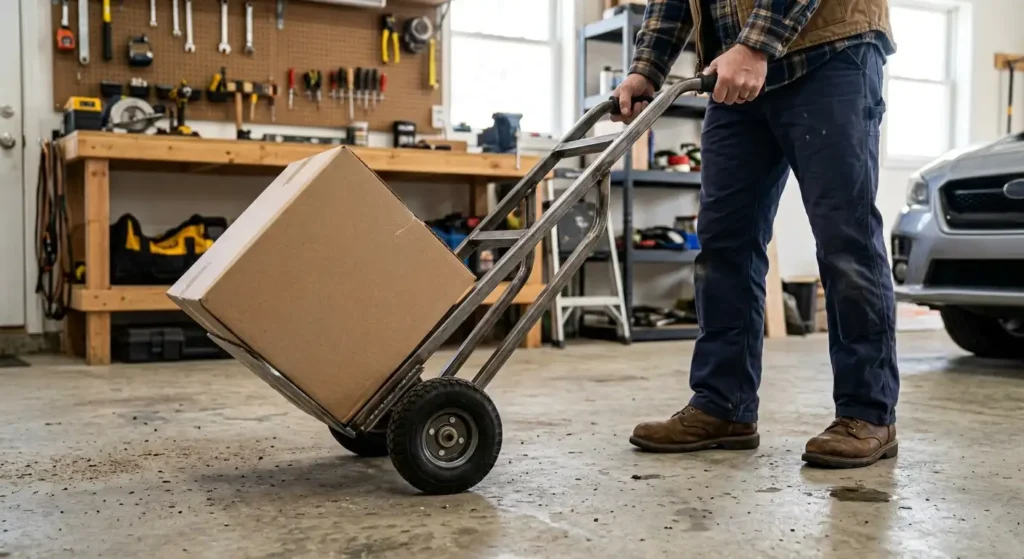
Wheel selection dictates how smoothly your hand truck rolls across different surfaces. For detailed sizing help, check our hand truck wheel size guide.
Consider these common wheel styles:
- Pneumatic wheels: These air-filled tires provide good shock absorption and roll easily over rough outdoor ground, gravel, and grass. They require regular pressure checks and can go flat if punctured.
- Solid rubber wheels: These wheels never lose pressure and resist punctures from nails or metal shavings. However, they transmit more vibration into the frame and roll poorly over loose gravel.
- Flat-free polyurethane wheels: These wheels feature solid dense foam inside a tough rubber tread. They provide cushioning similar to air tires without the risk of punctures.
Always choose wheels with an individual load rating high enough to support your planned cargo. Make sure the hub width and axle bore match your fabricated axle rod.
How Much Weight Can a Homemade Hand Truck Carry?
There is no universal weight capacity for a homemade hand truck. Commercial hand trucks undergo formal engineering, structural testing, and load-rating certification before receiving a factory capacity rating. A homemade hand truck does not possess an official rating.
Your actual carrying capacity depends entirely on:
- Frame material choice and wall thickness
- Frame width, height, and geometry
- Strength and penetration of your welds or the grade of your bolts
- Diameter, material, and span of the axle rod
- Manufacturer load ratings of the wheels
- Toe plate thickness and weld strength
- How well the cargo is centered over the axle
You can learn more about commercial ratings in our hand truck weight capacity guide. For a DIY build, never assume your truck can carry heavy loads. Always operate conservatively, keep weights modest, and retire the truck immediately if the frame flexes or joints show fatigue.
How to Test a Homemade Hand Truck Safely?
Never test a newly built hand truck by immediately loading it with a heavy object. Test the equipment gradually in a controlled setting:
- Visually inspect every weld, bolted connection, and wheel retainer.
- Confirm both wheels spin smoothly by hand with no binding or rubbing.
- Place a light, rigid load weighing around 25 to 40 pounds onto the toe plate.
- Center the load flat against the frame rails.
- Tilt the truck back slowly to feel how the balance holds over the axle.
- Push the loaded truck across a flat, level concrete floor at walking speed.
- Set the load down and check every joint, bolt, and weld for movement or bending.
Simple load testing helps confirm basic functionality, but it is not a substitute for professional engineering certification.
Homemade Hand Truck Safety Tips
Operating any material handling equipment requires care, and following proper guidance on how to use a hand truck protects both you and your cargo. OSHA notes that poorly maintained wheels increase physical strain on operators, and underinflated tires make movement much harder.
Follow these safety principles during construction and use:
- Wear safety glasses and gloves when cutting, grinding, or drilling metal.
- Always use a proper welding helmet and protective leathers when welding.
- File down all sharp metal edges and burrs before handling the finished frame.
- Keep your loads centered side to side and stacked low against the frame.
- Inspect wheel cotter pins, retaining collars, and fasteners before every use.
- Check pneumatic tire pressure frequently to prevent uneven rolling resistance.
- Keep your travel path clear of debris, cords, and standing water.
- Do not attempt to move heavy furniture, major appliances, or fragile items.
- Never use a basic homemade hand truck on stairs or steep slopes.
Stairs place massive dynamic shock loads on the axle, toe plate, and wheels. Losing control of an unrated hand truck on a staircase can cause severe personal injury or property damage. Use flat ground or gentle ramps instead.
Common DIY Hand Truck Mistakes
Avoiding these common fabrication mistakes will help you build a safer tool:
- Thin tubing: Using thin conduit or weak thin-wall pipe that bends easily under load.
- Unsupported axles: Running a long axle through weak brackets without proper reinforcement, causing the axle rod to bow.
- Undersized wheels: Using small caster wheels that catch on minor floor cracks and tip the cart forward.
- Weak fasteners: Using standard hardware store zinc bolts instead of high-strength fasteners with locking nuts.
- Poor axle alignment: Mounting the axle supports unevenly, which forces the hand truck to veer sideways constantly.
- Ignoring the balance point: Placing the axle too far behind the frame, making the truck heavy and difficult to tilt back.
- Assuming commercial strength: Treating a homemade project like a factory-certified commercial cart.
Is It Better to Build or Buy a Hand Truck?
Deciding whether to build or buy depends on your tools, skills, and intended application. You can review how to choose the right hand truck or compare designs in our guide on hand truck vs dolly to see what commercial options offer.
Building a hand truck makes sense when:
- You need a custom frame height or width for a specific lightweight task.
- You already own metalworking tools, steel stock, and welding equipment.
- You enjoy workshop fabrication and understand structural metal assembly.
- The truck will only be used for light, casual duties around your personal property.
Buying a commercial hand truck is the better choice when:
- You need to move appliances, heavy machinery, or dense materials.
- The truck will be used daily in a commercial or workplace environment.
- You need an official, certified load capacity rating for liability and safety.
- You need stair-climbing treads, brake systems, or specialized accessories.
- You do not have the metalworking skills, tools, or welding ability to build one safely.
Frequently Asked Questions
You can build a light-duty hand truck from dense hardwoods, but wood has significant limitations compared to metal. The joint connecting the toe plate to the vertical frame experiences heavy leverage forces that can crack wooden members or loosen wood screws over time. If using wood, reinforce all high-stress corners with heavy steel angle plates and through-bolts.
Steel and aluminum are the most reliable materials. Steel is affordable, stiff, and easy to weld or bolt with common home shop tools. Aluminum is significantly lighter and naturally resists corrosion, but it requires specialized welding equipment and careful design to achieve comparable rigidity.
Most builders use wheels between 8 and 10 inches in diameter. Wheels in this size range roll smoothly over small thresholds, garden hoses, and uneven pavement. Smaller 6-inch wheels work only on smooth concrete, while larger 12-inch wheels add extra weight and require taller axle brackets.
There is no universal wall thickness for every hand truck frame. The required thickness depends on your tubing shape, overall frame height, the spacing between cross supports, and your intended cargo weight. Thicker structural tubing provides stiffness, while thin-gauge decorative metal will easily deform under load.
A homemade hand truck has no certified weight rating. Its true strength depends on the quality of your welds, bolt strength, axle thickness, toe plate rigidity, and wheel ratings. Always keep loads modest and conservative unless your design has been professionally engineered and verified.
Yes, you can build a sturdy frame using structural metal tubing connected with heavy steel angle brackets, grade 5 or grade 8 through-bolts, and nylon-insert lock nuts. Ensure all holes are drilled cleanly and all bolted joints are torqued down firmly to prevent loosening over time.
Building a functional hand truck requires an upright frame, a supportive toe plate, a rigid axle, two rated wheels, and a comfortable handle. Sound construction, careful joint alignment, and cautious load testing are far more important than attempting to copy arbitrary dimensions from an existing cart.
If your project involves moving very heavy cargo, moving across stairs, or working in a commercial setting, investing in an engineered, factory-rated commercial hand truck is always the safer path.