
To use Milwaukee hand truck equipment, slide the nose plate fully under your load, strap tall items, tilt the frame back to a balanced 45-degree angle, and push rather than pull.
Gear needed to use your Milwaukee hand truck
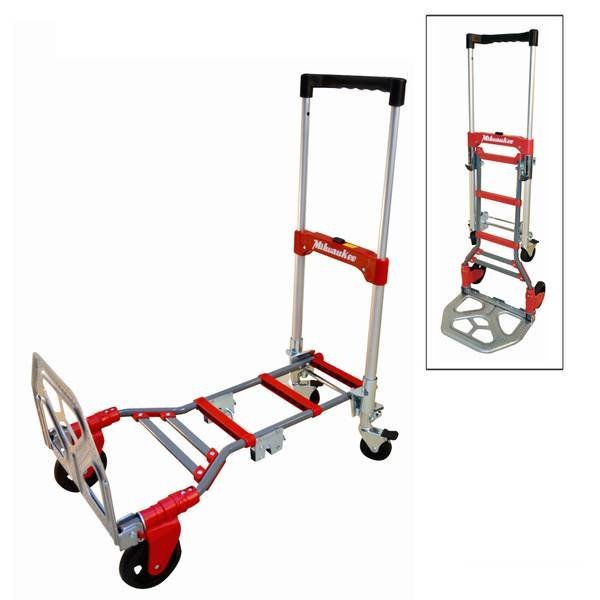 Photo: www.farmandfleet.com on Google
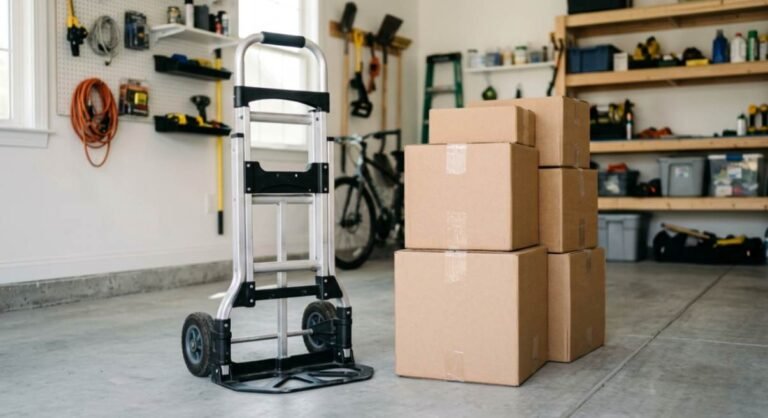
- A genuine Milwaukee hand truck suited to your load, such as an 800-pound D-handle or a 1,000-pound heavy-duty model with pneumatic or solid rubber tires.
- One or two 1-inch wide polyester ratchet tie-down straps with secure hooks.
- Steel-toe work boots and textured grip work gloves to protect your feet and hands.
- Wooden loading ramps if you need to bridge steps, curbs, or high van sills.
Loose elastic bungee cords will stretch, slip, and dump the cargo.
Step-by-step
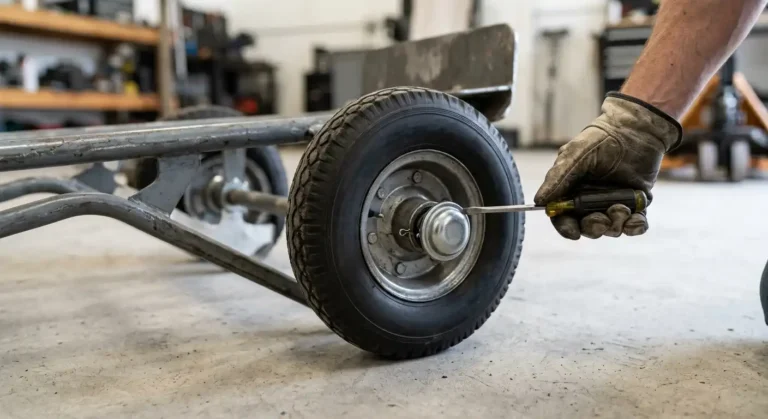
- Inspect the steel frame, wheel cotter pins, and tire pressure, inflating pneumatic tires according to manufacturer specifications without exceeding the maximum PSI printed on the tire sidewall before loading.
- Center the base of the heaviest object flush against the frame, sliding the steel nose plate all the way beneath the cargo until the back of the item touches both upright rails. Careful: Stacking heavy items on top of light items will make the cart flip forward; always place the largest, densest box at the bottom.
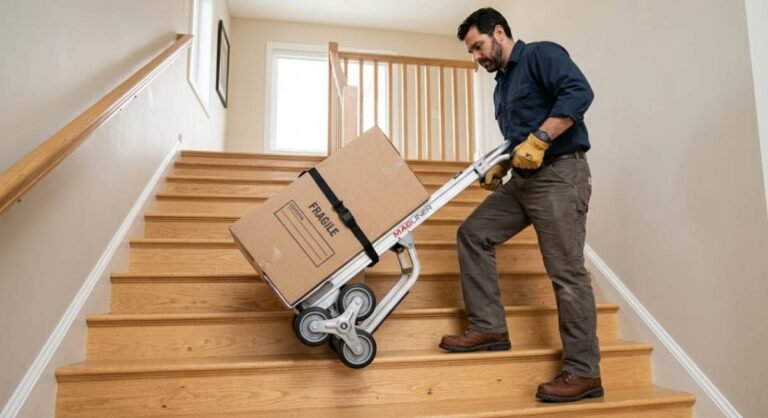
- Secure the middle and top sections of your stack with a 1-inch ratchet strap, tightening it until the frame and cargo move as one single unit.
- Place the ball of your foot firmly against the wheel axle next to a tire or on the base support to hold the truck steady.
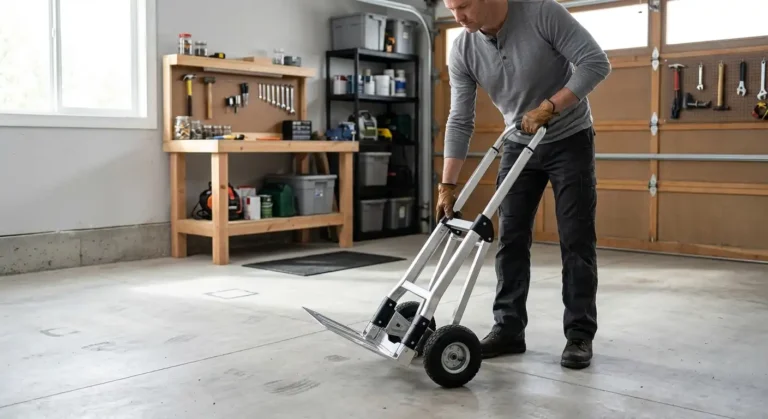
- Grasp the handle grips with both hands and pull the frame backward to roughly a 45-degree balance point where the load weight sits directly over the wheels. Tip: This varies by model — check the label to confirm your specific frame limit and recommended tilt balance.
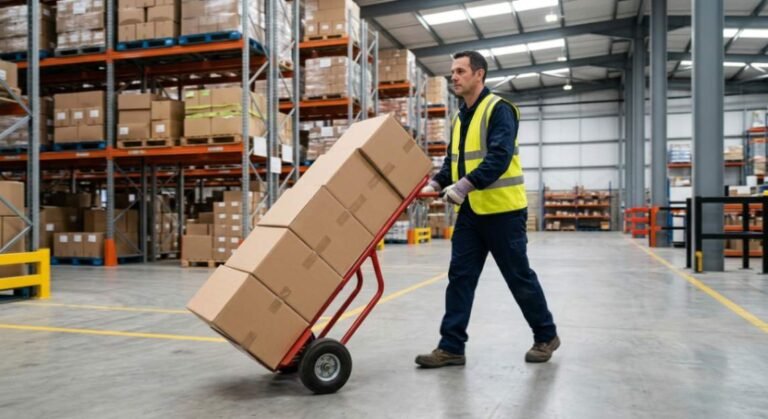
- Walk forward at an even pace, pushing the cart ahead of you while keeping both hands firmly on the upper grip bar.
- Step backward slowly when descending a curb, keeping your body above the cart so the weight rolls down gently against the nose plate rather than pulling away. Careful: If your route involves climbing steep residential staircases with loads over 200 pounds, stop and hire two-person professional movers with powered stair-climbing machinery.
- Ease the nose plate back down flat onto the floor by bracing the axle with your foot and letting the frame rotate upright slowly.
Load sizes and handling limits
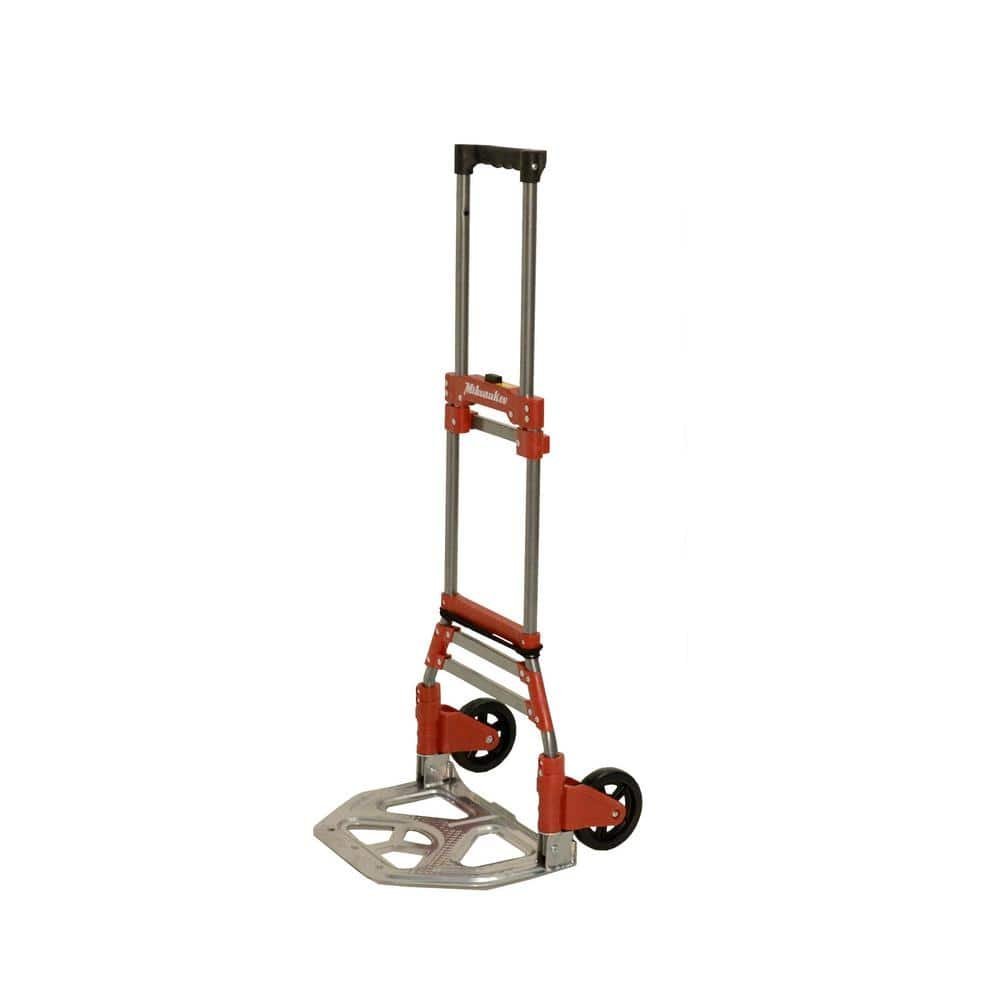 Photo: www.homedepot.com on Google
Cargo characteristics change the balance point, physical effort, and travel speed you experience during each move.
| Cargo Setup | Physical Effort | Handling Differences | Main Risk to Watch |
|---|---|---|---|
| Single compact crate | Very low; 1 person | Weight sits low near the axle | Shifting side-to-side |
| Stacked moving boxes | Moderate; 1 person | High center of gravity catches wind | Top boxes tumbling forward |
| Large upright refrigerator | High; 2 people needed | Thick profile demands deeper tilt | Frame bottoming out on steps |
| Heavy steel drum | Very high; 2 people needed | Rounded shape rolls off flat nose | Strap slippage on curved metal |
It’s always safer to carry smaller stacks and make two trips than to pile boxes above your eye line and drop the entire run on your first try.
How to tell you did it right
A correct setup feels light in your hands because the wheel axle supports almost all of the weight. You should be able to hold the handles with relaxed arms while the cart balances smoothly between your palms.
Operational safety and equipment storage
OSHA guidelines recommend keeping the load low, pushing forward, and securing materials. When your moving job is finished, wipe away dirt from the axle sleeves, release your tie-down straps, and store the cart upright against a flat wall or flat on its back out of walkways.
Alternatives for heavy transport
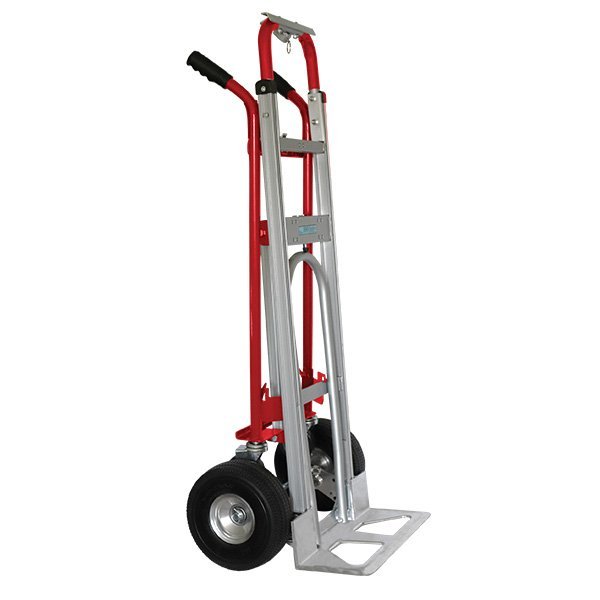 Photo: www.milwaukeehandtrucks.com on Google
Platform utility cart
A four-wheel flat platform cart keeps cargo low and stable without requiring tilt balance. This cuts physical arm strain entirely on long warehouse hallways, though it can’t maneuver easily through tight domestic doorways or over outdoor curbs.
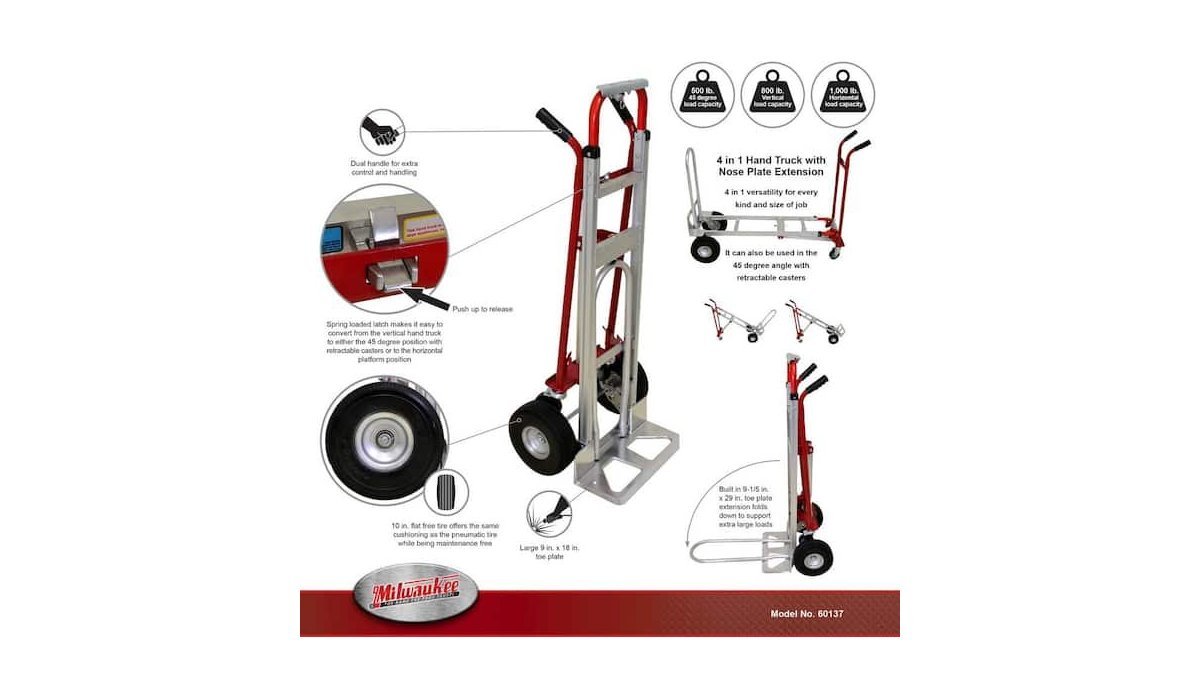
Convertible 4-in-1 truck
A convertible hand truck releases from a two-wheel upright dolly into a rolling horizontal cart. This switch adds carrying capacity for long furniture, but the frame mechanism adds overall tool weight and costs more than a fixed welded frame.
Professional appliance dolly
An appliance cart adds built-in stair-climbing treads and integrated rub rails to protect cabinet paint. It handles massive commercial freezers safely on steps, but its bulky steel frame makes it heavy to lift into small truck beds.
Frequently asked questions
Can one person safely move a washing machine with this cart?
Yes, provided you secure the appliance to the frame using a heavy ratchet strap. Keep your knees bent and pull the handles back steadily to find the balance point before you start moving forward.
Why do the cart wheels wobble under weight?
Wobbling usually happens when tire air pressures are uneven, wheel bearings or bushings are worn, or axle fasteners have worked loose. Check your tire gauge and inspect the wheel hardware before loading heavy freight.
How much weight can a Milwaukee hand truck hold?
Most standard models support between 600 and 1,000 pounds, depending on whether you have a steel tubular frame or an aluminum build. Always check the stamped metal rating plate on your specific frame.
What happens if you stack boxes above the top handle?
Tall boxes will tip backward over the handle and strike you, or slide forward off the nose plate when you tilt the frame. Keep all stacks level with or below the top loop.
Is it safe to pull the hand truck backward on flat ground?
No, pushing forward is the safer standard method because pulling forces you to walk blind. You only pull backward when stepping down single low curbs with the load controlled above you.