
A dolly is not always the same as a hand truck, though people often use the terms interchangeably. A traditional hand truck features an upright frame, two wheels, and a toe plate that slides under loads. A dolly usually refers to a flat, horizontal platform on wheels or casters, though the word can describe several types of wheeled equipment.
Is a Dolly the Same as a Hand Truck?
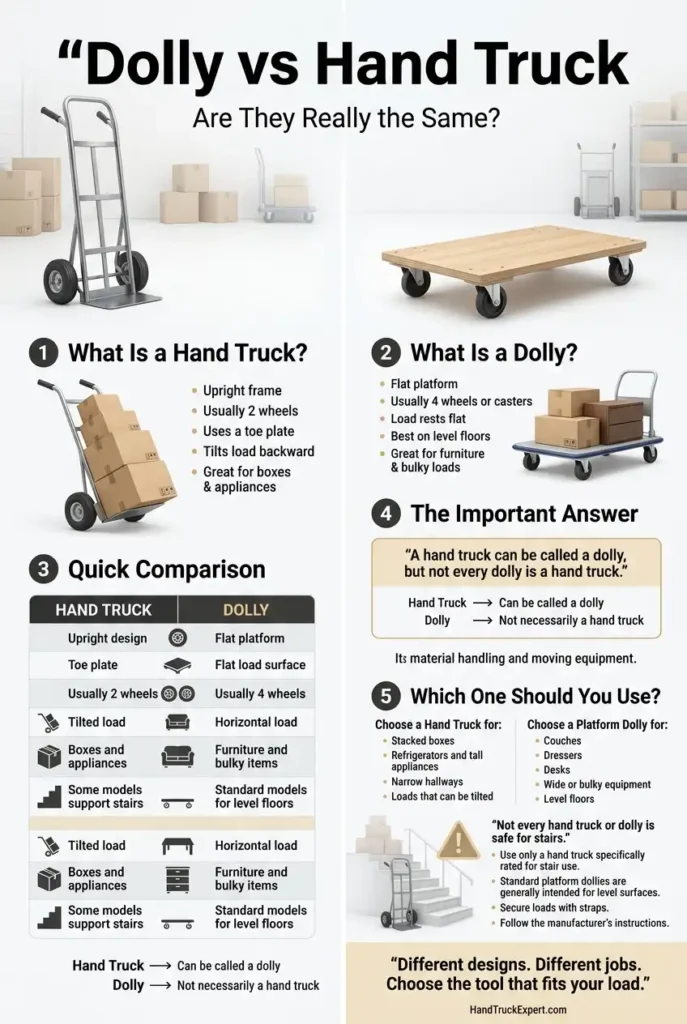
The short answer is sometimes, but not always. People often mix up these two terms because both tools help you roll heavy items from one place to another. Hardware stores, equipment rental shops, and moving companies frequently use the words loosely, which causes confusion for anyone planning a move.
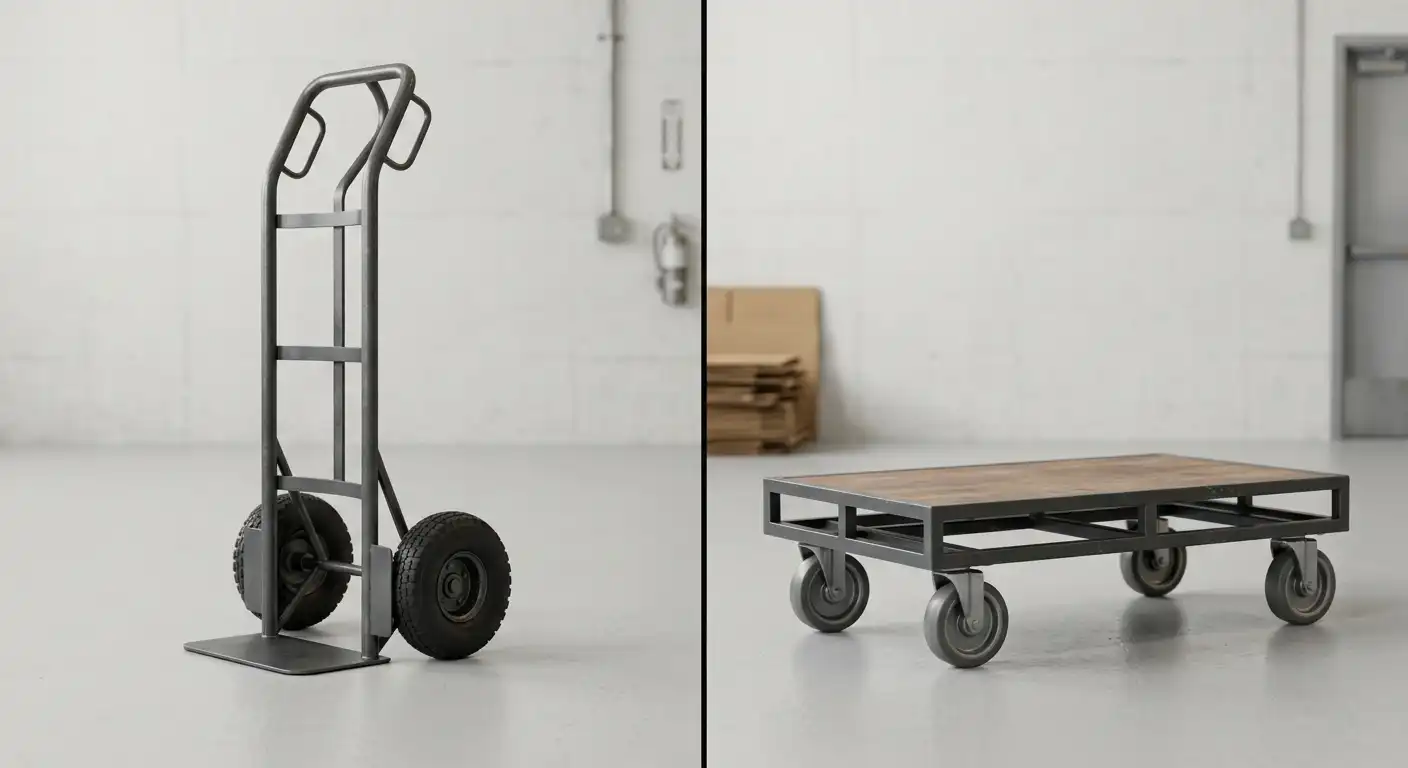
In everyday material handling, a traditional hand truck has an upright frame, two wheels, and a bottom toe plate. In contrast, a typical platform dolly uses a flat horizontal deck set on wheels or casters. While their functions can overlap, they are built differently and handle cargo in distinct ways.
What Is a Hand Truck?
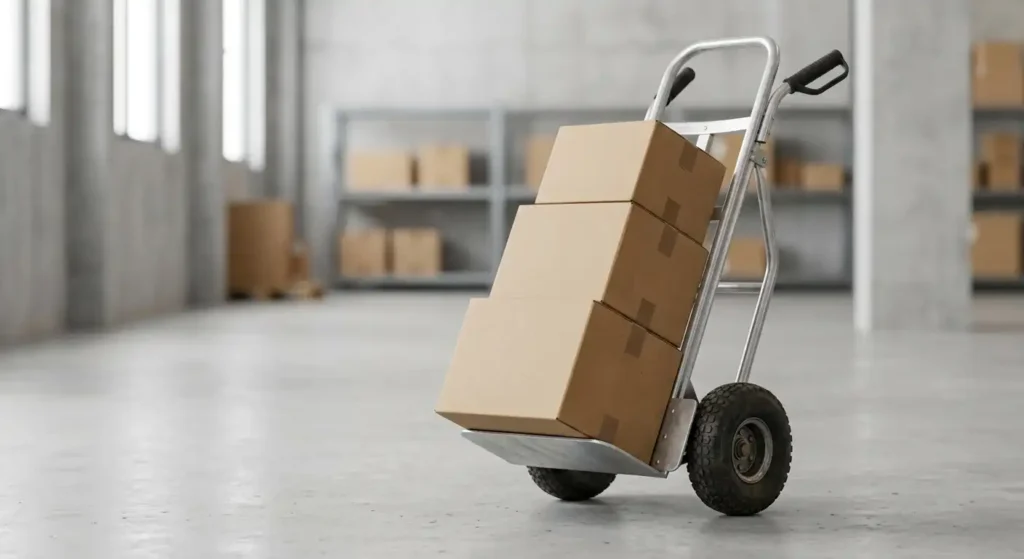
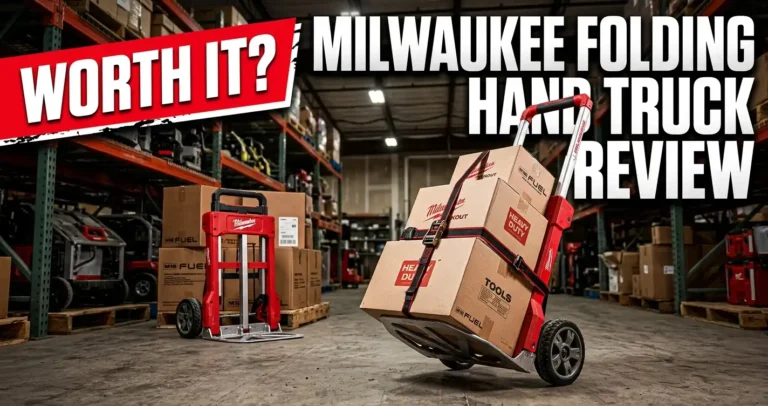
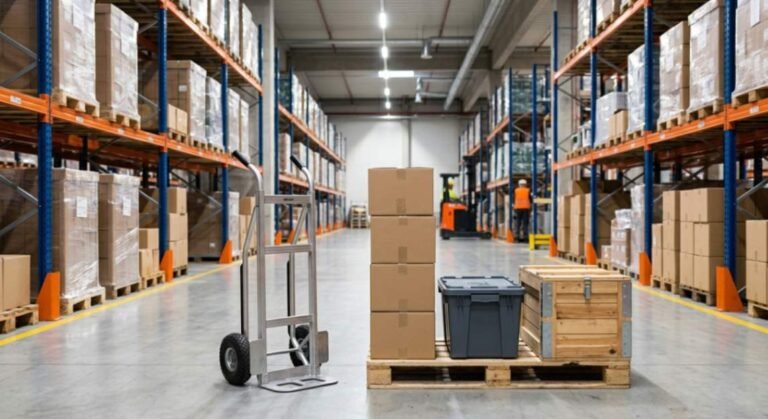
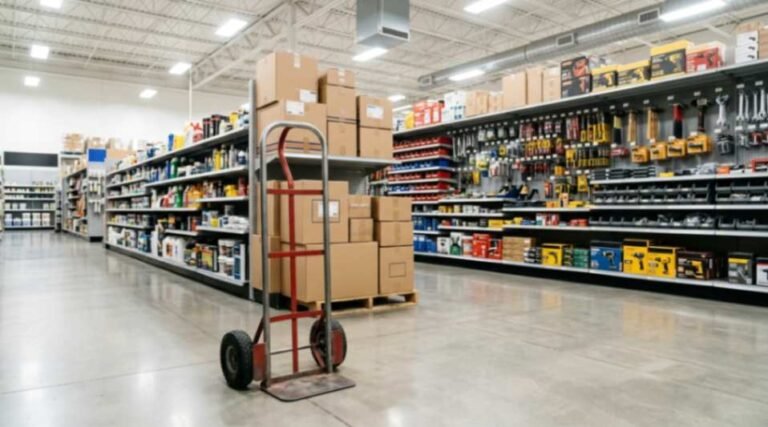
A traditional hand truck is an upright, L-shaped piece of equipment designed for leverage. It features a tall metal or aluminum frame, handles at the top, two sturdy wheels at the base, and a small bottom ledge called a toe plate or nose plate.
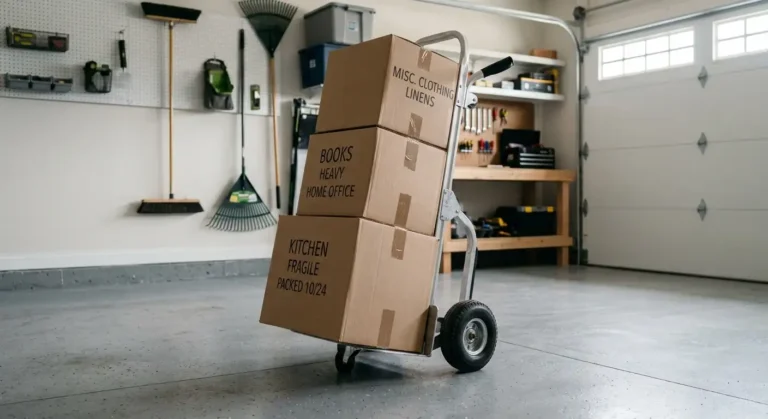
To move cargo, you slide the flat toe plate directly underneath an object, pull the top handles toward you, and tilt the load backward onto the wheels. This balance shifts the weight off your body and lets you push or pull the load with minimal effort.
Hand trucks work exceptionally well for stacked cardboard boxes, tall appliances, crates, and heavy containers. To learn more about standard designs and parts, read our full guide on what is a hand truck.
What Is a Dolly?
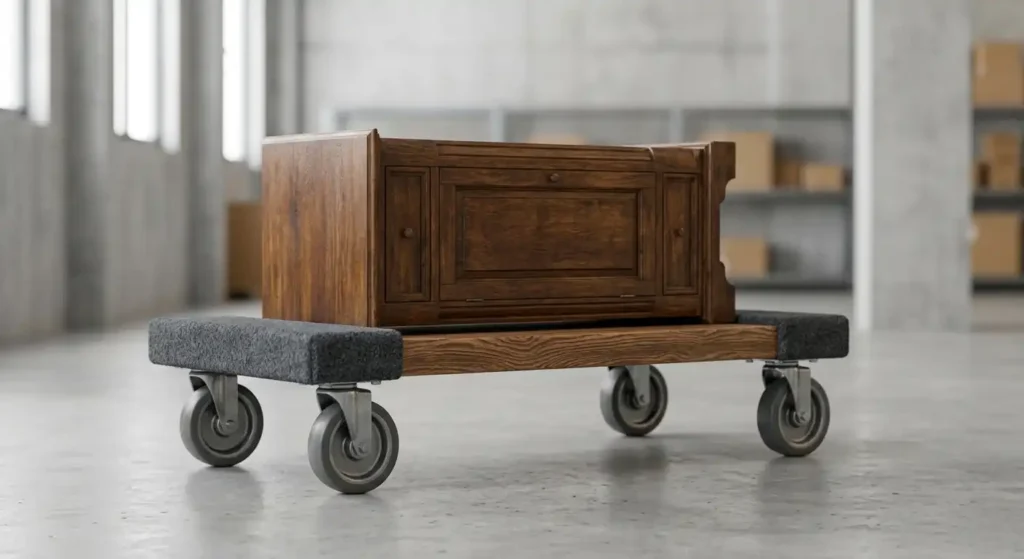
The word “dolly” is a broader category name that describes several types of wheeled material handling devices. Most often, the term refers to a platform dolly or furniture dolly. These tools typically consist of a flat, horizontal deck mounted on four wheels or swiveling casters.
Unlike an upright tool, a dolly carries its cargo completely flat on its horizontal base. You lift the object up and set it on top of the platform, then roll it across the floor. Dollies are helpful for moving wide, bulky items such as dressers, couches, large musical instruments, and machinery.
However, because “dolly” is a popular catch-all word, some manufacturers also market upright hand trucks as dollies. Review our detailed hand truck vs dolly guides to understand better.
Dolly vs Hand Truck: What Is the Difference?
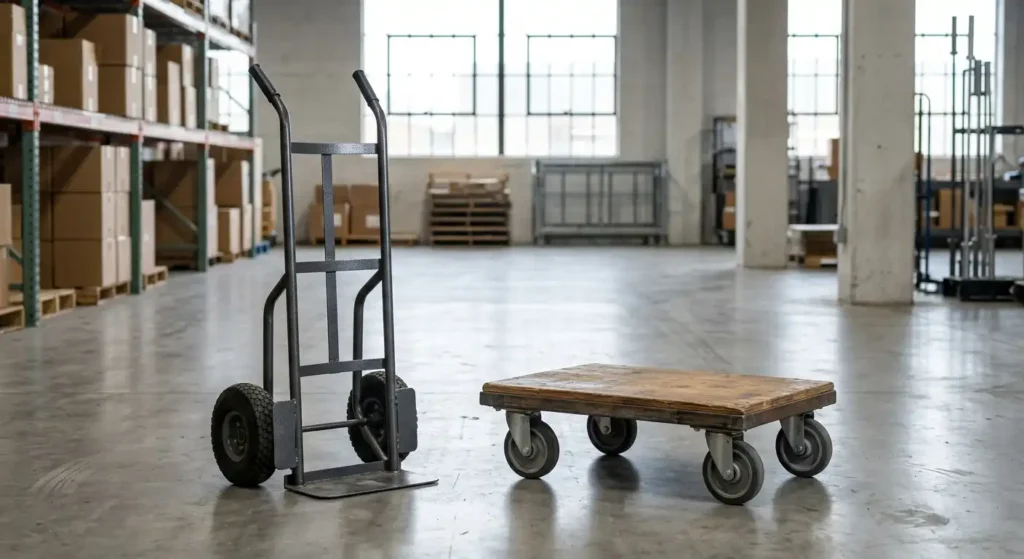
While both tools reduce physical strain during a move, their design and loading methods differ. The table below outlines how a standard hand truck compares to a standard platform dolly.
| Feature | Hand Truck | Dolly |
| Typical design | Upright, vertical frame | Often a flat, horizontal platform |
| Load position | Usually tilted backward during movement | Usually rests flat on the base |
| Load support | Toe plate and upright frame | Flat platform or open frame deck |
| Common wheels | Often two main wheels, with some models using extra casters | Often four wheels or casters, depending on design |
| Common uses | Boxes, appliances, tall or stacked loads | Furniture, bulky items, wide equipment |
| Stairs | Some models are designed for stairs | Most standard platform dollies are intended for level surfaces |
| Terminology | Specific equipment type | Broader term that can refer to different wheeled equipment |
The most practical difference comes down to how you load each tool. With a hand truck, you simply slide the flat toe plate under an item on the floor and tilt it back. You do not need to lift the object entirely off the ground.
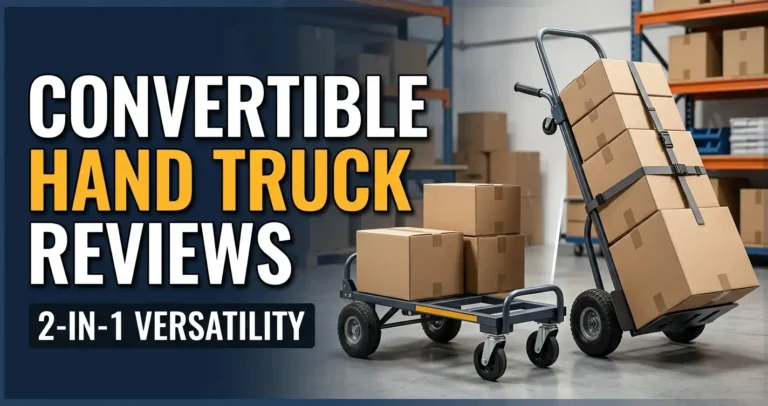
With a traditional platform dolly, you must lift the item and set it on top of the rolling deck. Keep in mind that equipment designs vary, and convertible models can switch between an upright hand truck and a four-wheel rolling cart.
Is a Hand Truck Considered a Dolly?
Yes, many people consider a hand truck to be a type of dolly. In casual conversation, people regularly ask for a “box dolly,” “appliance dolly,” or “hand dolly” when they are actually looking for an upright hand truck.
Equipment catalogs and retail stores often use these terms loosely to match common search habits. However, the reverse is not true. While an upright hand truck can be called a dolly in everyday speech, a flat four-wheel platform dolly is never called a hand truck. In simple terms: a hand truck can be called a dolly, but not every dolly is a hand truck.
Which One Should You Use?
Choosing the right tool depends on your load, the layout of your space, and the ground surface. Always check the manufacturer’s rated weight limit before moving heavy items.
A traditional hand truck is usually the right pick for:
- Stacking and moving cardboard boxes
- Moving tall, heavy appliances like refrigerators or water heaters
- Rolling cargo through tight doorways and narrow hallways
- Moving single heavy items quickly without full-body lifting
A platform dolly is usually better for:
- Moving wide furniture like couches, desks, and dressers
- Hauling several medium boxes side by side across a level floor
- Keeping large equipment completely horizontal during transit
- Moving bulky, odd-shaped items that would fall off a small toe plate
Can You Use a Hand Truck or Dolly on Stairs?
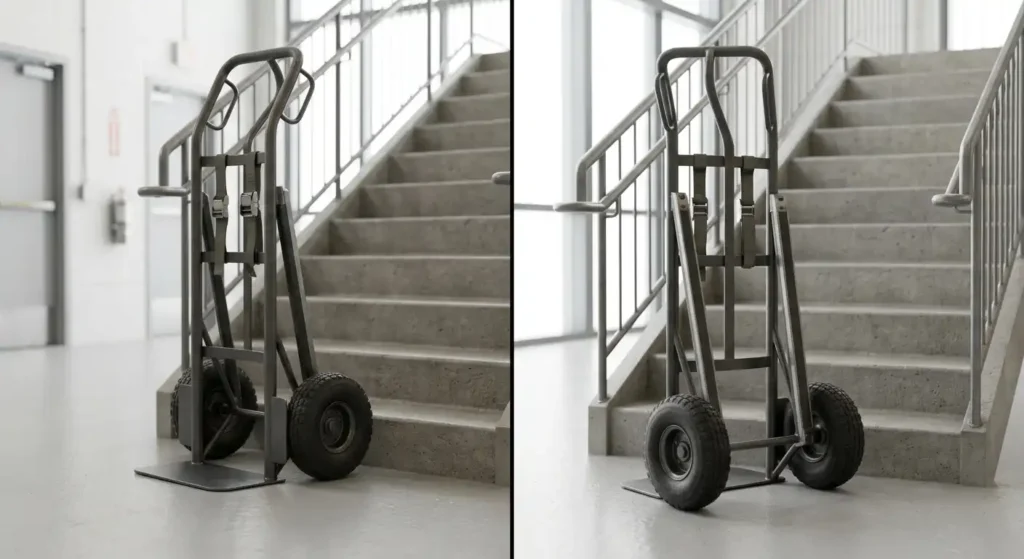
Standard platform dollies are made strictly for flat, level surfaces and should never be rolled down or pulled up stairs.
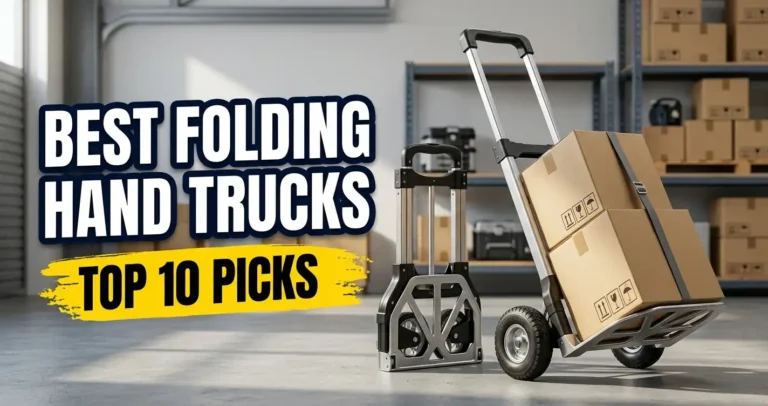
Standard two-wheel hand trucks are also not automatically safe for steps. However, certain heavy-duty hand trucks feature built-in stair-climber glides or rotating three-wheel assemblies designed specifically for steps.
If you must move items across steps, choose an equipment model specifically rated for stair use, keep the load secured with straps, and strictly follow the manufacturer’s safety instructions. Read our guide on how to use hand truck on stairs safely.
Frequently Asked Questions
They are not always the same. A hand truck is a specific upright, two-wheel tool with a toe plate, while a dolly is a broader term that usually refers to a flat, four-wheel rolling platform.
People use “dolly” as an informal catch-all term for many types of wheeled moving tools, including upright hand trucks.
Neither is universally better. A hand truck is better for leverage, tall items, and narrow paths, while a platform dolly is better for wide furniture and flat rolling on level floors.
Yes. A platform dolly can easily carry heavy boxes, provided you stack them safely and do not exceed the manufacturer’s maximum weight capacity.
Only if the specific hand truck model is designed and rated for stair use. Standard hand trucks should not be used on stairs without proper features and load straps.
A hand truck and a dolly are not always identical, but the names often overlap. A traditional hand truck uses an upright frame, a bottom toe plate, and two wheels to move loads via leverage. A dolly is a broader category that most commonly features a flat platform riding on four wheels. The right option simply depends on the shape of your cargo, your floor surface, and the manufacturer’s design.